Deer Carts on Michigan Two-Tracks
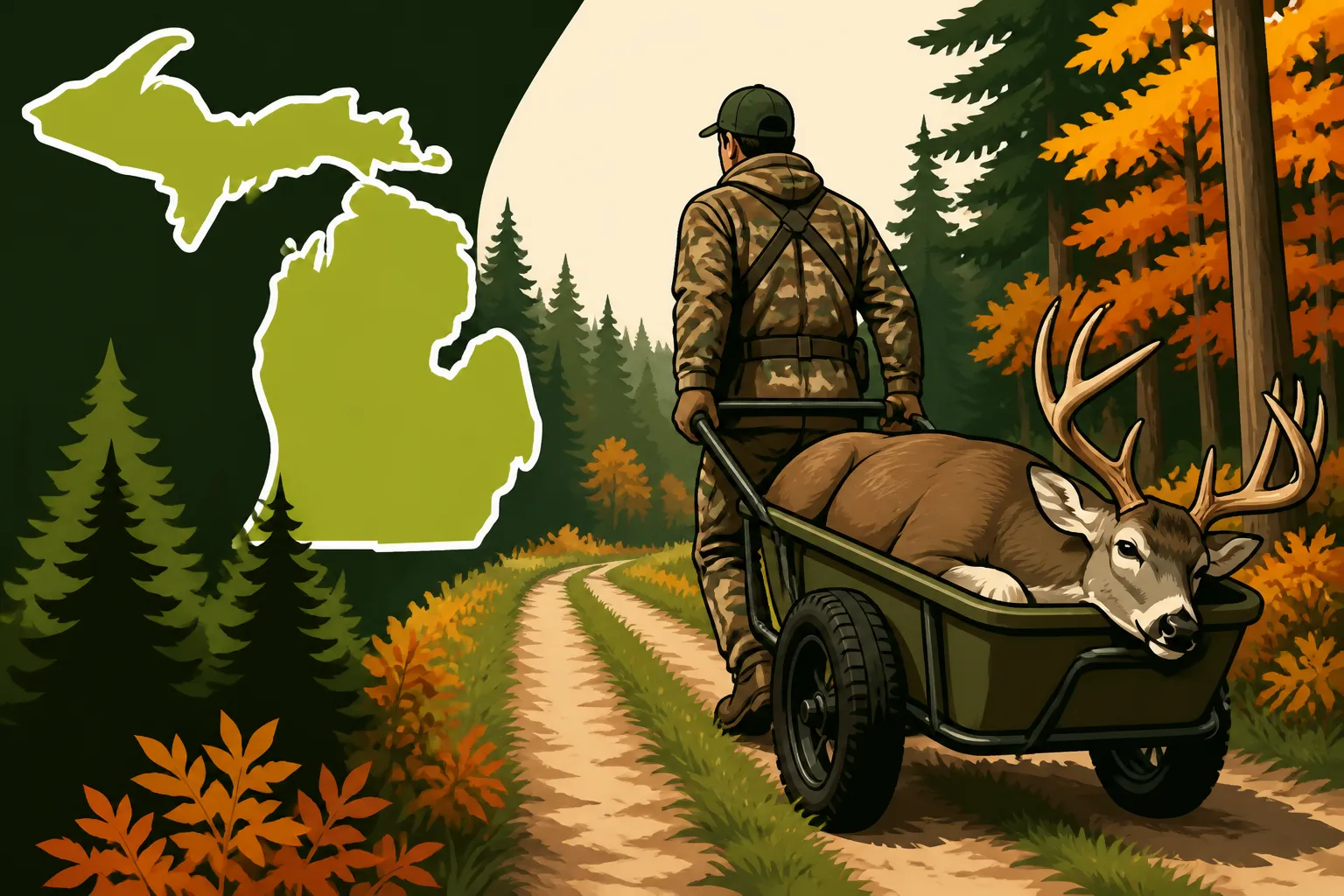
Dragging a big Michigan buck out of a cedar swamp or across a mile of two-track can absolutely break a hunter's spirit, not to mention their back. We've all been there, wondering if that ten-point was really worth the Herculean effort to get it back to the truck. This guide is all about making that retrieve easier, focusing on how deer carts can be your best friend when hunting Michigan's varied terrain, especially those endless two-tracks and winding trails.
The Back-Breaking Reality of Hauling Deer in Michigan
Let's face it, hunting in Michigan offers incredible opportunities, but it also presents its fair share of challenges once you've made a successful harvest. Whether you're miles deep in state forest land, tucked away on a remote corner of a public game area, or trying to navigate the tangled brush of a private woodlot, getting your deer from where it falls to your vehicle is often the hardest part of the hunt. Many of us have tried every trick in the book: the old deer drag rope over the shoulder, team-dragging with buddies, even gutting the deer completely in the field to reduce weight. While these methods can work, they’re rarely efficient and almost always leave you exhausted, aching, and possibly regretting that extra long walk back to the truck.
Think about a typical Michigan two-track. It might start out as a relatively smooth path, but quickly devolve into a muddy mess, riddled with hidden potholes, exposed roots, and fallen logs. Dragging a mature whitetail through this kind of obstacle course isn't just physically taxing; it's also hard on the deer, potentially damaging the hide and meat, especially if you're not careful. This struggle is why so many hunters swear by the utility of a good deer cart. It transforms a grueling, multi-hour ordeal into a manageable, often much quicker, and far less painful task. It's about preserving your energy for the next hunt and ensuring the quality of your hard-earned venison.
Why Michigan Two-Tracks Demand More Than a Drag Rope
Michigan's landscape is incredibly diverse. We have vast expanses of northern timber, dense cedar swamps, rolling hills, and flat, agricultural lands in the south. But one common thread that runs through almost all public and many private hunting areas are those ubiquitous two-tracks. These aren't always perfectly maintained roads; often, they are old logging trails, utility easements, or just paths carved by years of vehicle use. They can be narrow, overgrown, and feature everything from deep sand and sticky mud to loose gravel and treacherous ruts. Trying to muscle a deer over these surfaces with just a rope is like trying to pull a boat through treacle – you make progress, but it feels like you’re doing ten times the work.
When you factor in the sheer weight of an average Michigan whitetail – a mature buck can easily top 200 pounds live weight, and even a good-sized doe is a substantial load – the physics quickly turn against you. The friction of dragging a deer directly on the ground, especially through mud or over rough terrain, exponentially increases the effort required. A deer cart lifts the animal off the ground, putting the weight on wheels, which dramatically reduces friction and allows you to glide over obstacles rather than fighting through them. This is especially true after a good rain, when those two-tracks turn into a sloppy, energy-sapping quagmire that can make even a short drag feel like an odyssey.
Choosing the Right Deer Cart for Michigan Terrain
Selecting a deer cart isn't a "one size fits all" proposition, especially when you consider the varied landscapes you'll encounter across Michigan. What works great on a flat, dry farm field might be utterly useless trying to navigate the tangled undergrowth of an Upper Peninsula cedar swamp. The key is to think about the primary type of terrain you hunt and match the cart's features to those conditions. Before you even start looking, consider how far you typically have to go and the average size of the deer you expect to harvest. Resources like GoHunt often feature user reviews and gear breakdowns that can give you a real-world perspective on different models and how they perform in varied conditions.
There are a few main types of deer carts, and each has its strengths and weaknesses. Understanding these can help you make an informed decision that will save your back and sanity for years to come. Don't just grab the cheapest option; an investment in a good cart is an investment in many more enjoyable hunts.
Single-Wheel vs. Two-Wheel Carts
This is often the first decision you'll face when looking at deer carts, and each design has a very different application:
- Single-Wheel Carts (Game Carriers): These typically resemble a heavy-duty wheelbarrow, with a single large wheel positioned beneath the load.
- Pros: Excellent for navigating narrow trails, dense brush, and areas where maneuverability is paramount. They can weave through tight timber and around obstacles that would snag a wider cart. This design also distributes weight more efficiently for balancing over uneven ground. If you're often Hunting Michigan Cedar Swamps or other areas with thick cover, a single-wheel model might be your best bet.
- Cons: Requires constant balancing, much like a wheelbarrow. If you have a very heavy deer, or if the terrain is extremely uneven, this can still be quite taxing on your arms and shoulders. It's not ideal for very long hauls over open, smoother terrain where stability is more important than extreme maneuverability.
- Two-Wheel Carts: These are more common and feature two wheels, usually on an axle, with the deer strapped between them.
- Pros: Far more stable, especially with heavy loads. They reduce the amount of direct lifting and balancing you need to do, making them excellent for longer hauls over relatively open ground like wide two-tracks, field edges, or logging roads. Many models fold flat for easier transport in your vehicle, a significant advantage for hunters traveling to public land.
- Cons: Wider stance can make them cumbersome in very dense brush or tight timber. They can get hung up on trees or rocks that a single-wheel cart would easily pass. The wider wheel base also means they might struggle on narrow, single-track paths.
Wheel Type and Tire Considerations
The wheels are perhaps the most critical component of any deer cart, as they dictate how well it will perform on various surfaces.
- Pneumatic (Air-Filled) Tires:
- Pros: These are generally the best choice for Michigan's diverse terrain. The air in the tires acts as a shock absorber, making the ride smoother for you and the deer, especially over roots, rocks, and uneven ground. They offer superior traction in mud, sand, and even light snow. The ability to adjust tire pressure slightly can also be an advantage – lower pressure for softer ground, higher for firmer trails.
- Cons: Susceptible to flats. A puncture in the field can render your cart useless, turning your easy retrieve back into a grueling drag. Carrying a patch kit or sealant is a good idea.
- Solid (Flat-Free) Tires:
- Pros: Never go flat! This is a huge peace of mind for hunters who venture deep into remote areas where a flat tire would be disastrous. They are maintenance-free in terms of air pressure.
- Cons: Lack the shock absorption of pneumatic tires, leading to a bumpier ride. They also tend to have less grip on slippery surfaces like mud or wet leaves and can struggle more in deep sand.
When considering wheel size, generally, larger diameter wheels perform better over obstacles and in softer ground. A larger wheel rolls over roots and rocks more easily than a small one, and its larger surface area (when paired with a wide tire) helps distribute weight in soft sand or mud. Pay attention to the tread pattern as well; aggressive treads are better for off-road use. If you're doing your research, GoHunt articles about gear often emphasize the importance of robust wheels for backcountry hunting.
| Cart Type | Best For | Pros | Cons |
|---|---|---|---|
| Single-Wheel | Tight timber, dense brush, very narrow trails | Highly maneuverable, good for weaving through obstacles, balanced weight | Requires continuous balancing, more physically demanding over long distances |
| Two-Wheel | Wide two-tracks, logging roads, field edges | Very stable, less physical strain over long distances, often foldable | Wider stance can get snagged in dense cover, less nimble on tight trails |
Strategies for Using a Deer Cart on Michigan Two-Tracks
Having the right deer cart is only half the battle; knowing how to use it effectively on Michigan's challenging two-tracks is equally important. It's not just about strapping a deer on and pushing; there are techniques and considerations that can make your retrieve smoother and safer. These strategies apply whether you're bringing out a big buck from Southern Michigan Farm Country Deer Hunting or an antlerless deer from public land up north.
Loading and Securing Your Harvest
Proper loading is paramount for both ease of transport and the integrity of your deer.
- Field Dressing First: While some carts can handle a whole deer, field dressing the animal first is highly recommended. It significantly reduces weight, making the cart easier to handle, and starts the cooling process for the meat. This is especially important during early archery season when temperatures might still be warm.
- Positioning the Deer: Lay the deer on the cart with its backbone along the center axis. Try to balance the weight as evenly as possible over the wheels. If using a two-wheel cart, having the deer's head or hindquarters extending slightly over one end can sometimes provide a natural 'handle' for steering. For single-wheel carts, ensuring the weight is directly over the wheel minimizes balancing effort.
- Secure Strapping: Use heavy-duty ratchet straps or cam buckle straps to secure the deer tightly to the cart frame. You want it snug enough that it won't shift or bounce excessively as you move. A shifting load can cause the cart to tip or make it incredibly difficult to maneuver, especially over uneven ground. Double-check all straps before you start moving.
Navigating Challenging Terrain Features
Michigan's two-tracks are rarely pristine. You'll encounter a variety of obstacles that require specific techniques.
- Mud and Soft Ground: These are common culprits for bogging down a cart. Maintain momentum if possible, but don't try to power through if it feels like you're digging in. If you're sinking, it's often better to stop, lighten the load if possible, and try to find a firmer path, even if it means a slight detour. Wiggle the cart from side to side to help the wheels gain purchase. If you frequently hunt very muddy areas, consider wider tires or even an ATV-style pull-behind cart if permissible and practical.
- Roots and Rocks: Approach these slowly. Lift the front of the cart slightly to get the wheels over the obstacle, then gently push the rest of the cart over. Don't ram the cart into them, as this can damage the cart or dislodge the deer. For larger obstacles, you might need to lift and pivot the entire cart.
- Hills and Inclines: Going uphill with a loaded cart can be a strenuous workout. Take short breaks, and if possible, enlist a hunting partner. Some carts have braking mechanisms or sturdy kickstands that can hold the cart in place on an incline while you rest. Going downhill requires control; let gravity do some work, but maintain a firm grip to prevent the cart from running away from you. This is where a partner is invaluable, one pushing from behind and one pulling or guiding from the front.
Working with a Partner
While deer carts are designed to make solo retrieves easier, they truly shine when you have a partner.
- Two-Person Push/Pull: On flat ground or gentle inclines, one person can pull from the front, while another pushes from the back. This distributes the effort and provides better control, especially around obstacles.
- Spotting and Guiding: In thick cover or over very rough ground, one person can walk ahead, scouting the best path and clearing small obstacles, while the other maneuvers the cart. This pre-planning can save a lot of struggle and potential snags. This is especially useful in areas where you might be Still-Hunting Michigan Cedar Swamps and suddenly find yourself with a deer deep within.
- Team Lifts: For truly impassable obstacles like large fallen trees or deep ditches, two people can safely lift the cart over. Trying to do this solo can lead to injury. Remember, the goal is to save your back, not break it trying to be a hero.
Cart Care and Maintenance
Like any piece of valuable hunting gear, a deer cart benefits from regular care to ensure it's ready when you need it most.
- Cleaning: After each use, especially if you've been in mud or snow, clean your cart thoroughly. Remove any dirt, blood, or debris. This prevents rust, keeps moving parts free, and is just good practice for hygiene.
- Lubrication: Periodically lubricate the axle and any other moving parts according to the manufacturer's recommendations. This keeps the wheels spinning freely and prevents squeaks and binding.
- Tire Maintenance: If you have pneumatic tires, check the pressure before each hunt. Keep them properly inflated. If you notice any slow leaks, repair them promptly with a tire patch kit or sealant. Always have a small pump or CO2 inflator with you in the field.
- Storage: Store your cart in a dry place to prevent rust. Many models fold down, making them easy to store in a garage or shed. Ensure all straps are clean and rolled up neatly, ready for the next adventure.
By implementing these strategies and caring for your gear, your deer cart will be a reliable workhorse for countless Michigan hunting seasons. Just imagine how much more energy you'll have to enjoy your venison and plan your next trip, perhaps even scouting Entry Routes on Flat Michigan Ground with your cart in mind. You might even find useful discussions on forums or articles on platforms like GoHunt that delve into specific cart modifications for Michigan's unique challenges.
Alternatives and When a Cart Might Not Be Best
While deer carts are incredibly useful tools, they aren't the solution for every single retrieve situation in Michigan. It's important to be realistic about their limitations and consider other methods, or even a combination of approaches, depending on your specific hunting scenario.
When a Deer Cart Might Struggle
There are certain conditions where even the best deer cart can be more hindrance than help.
- Extremely Dense Cover: If you're deep in a thick cedar swamp with incredibly dense undergrowth, large downed trees, and virtually no discernible trail, trying to maneuver a cart can be frustrating. You'll spend more time lifting the cart over obstacles or getting it unstuck than actually making progress. In such cases, a simple drag rope might be faster, especially if you can get the deer to a slightly more open area before considering the cart.
- Very Steep, Rocky Terrain: While Michigan isn't known for its mountainous regions, there are certainly areas with steep grades and significant rock outcrops, particularly in the western Upper Peninsula. Hauling a heavy cart up or down very steep, uneven, and rocky slopes can be dangerous and extremely difficult, even with a partner. The risk of losing control or damaging the cart (or yourself) might outweigh the benefits.
- Deep Snow: While carts with large, wide tires can handle moderate snow, deep, soft snow can still present a challenge. The wheels can sink, acting more like anchors than aids. In these conditions, a good old-fashioned deer sled, sometimes called a deer hauler or utility sled, often outperforms a wheeled cart. Sleds glide over snow, distributing weight over a larger surface area. Many hunters who routinely brave the late season for Muzzleloader Deer Hunting in Michigan or Hunting Michigan's Late Archery Season will swap their cart for a sled once the snow flies. We even have a dedicated article on Deer Sleds for Snow Country.
Other Retrieval Methods to Consider
It's wise to have a few options in your mental toolkit for deer retrieval.
- Deer Sleds/Haukers: As mentioned, these are fantastic for snow. They're also surprisingly effective over certain types of mud, wet leaves, or even bare ground with minimal friction. They protect the deer from abrasion and keep it relatively clean. They're often lighter and more compact than carts, making them easy to strap to a pack.
- Heavy-Duty Drag Ropes or Harnesses: For short distances, or in truly impassable terrain for a cart, a robust drag rope or a specialized drag harness is still indispensable. A good harness that distributes the pull across your hips and shoulders is far superior to just pulling with your hands and arms. These can be combined with field dressing to make the job more manageable.
- Game Bags and Backpacking: For exceptionally remote kills, or if you're targeting areas where vehicle access is non-existent, the "gutless method" combined with boning out the meat and packing it out in game bags is often the only realistic option. This means multiple trips or a large, sturdy frame pack. This method protects the meat and allows you to cover difficult ground more easily without the bulk of a whole deer. While a cart can haul more in one trip, sometimes breaking it down is the only way. For insights on what to carry, check out Packs for a Day on State Land.
- Calling for Backup: Never underestimate the power of a phone call to a friend. Even if you have a cart, an extra set of hands can make all the difference, especially on those longer hauls or when navigating tricky spots. This is part of the tradition of Michigan Deer Camp Traditions!
Ultimately, the best retrieval method is the one that gets your deer out safely, efficiently, and with the least amount of effort and potential for injury. For most Michigan two-track scenarios, a quality deer cart will be your best friend. But being aware of its limitations and having alternative plans will ensure you're prepared for whatever Michigan's wild lands throw at you.
Disclaimer
This article is for general informational purposes only and does not constitute professional advice. Laws, prices and regulations vary by location and change over time. Consult a qualified professional for guidance on your specific situation.