Hunting a Standing Cornfield in the Thumb
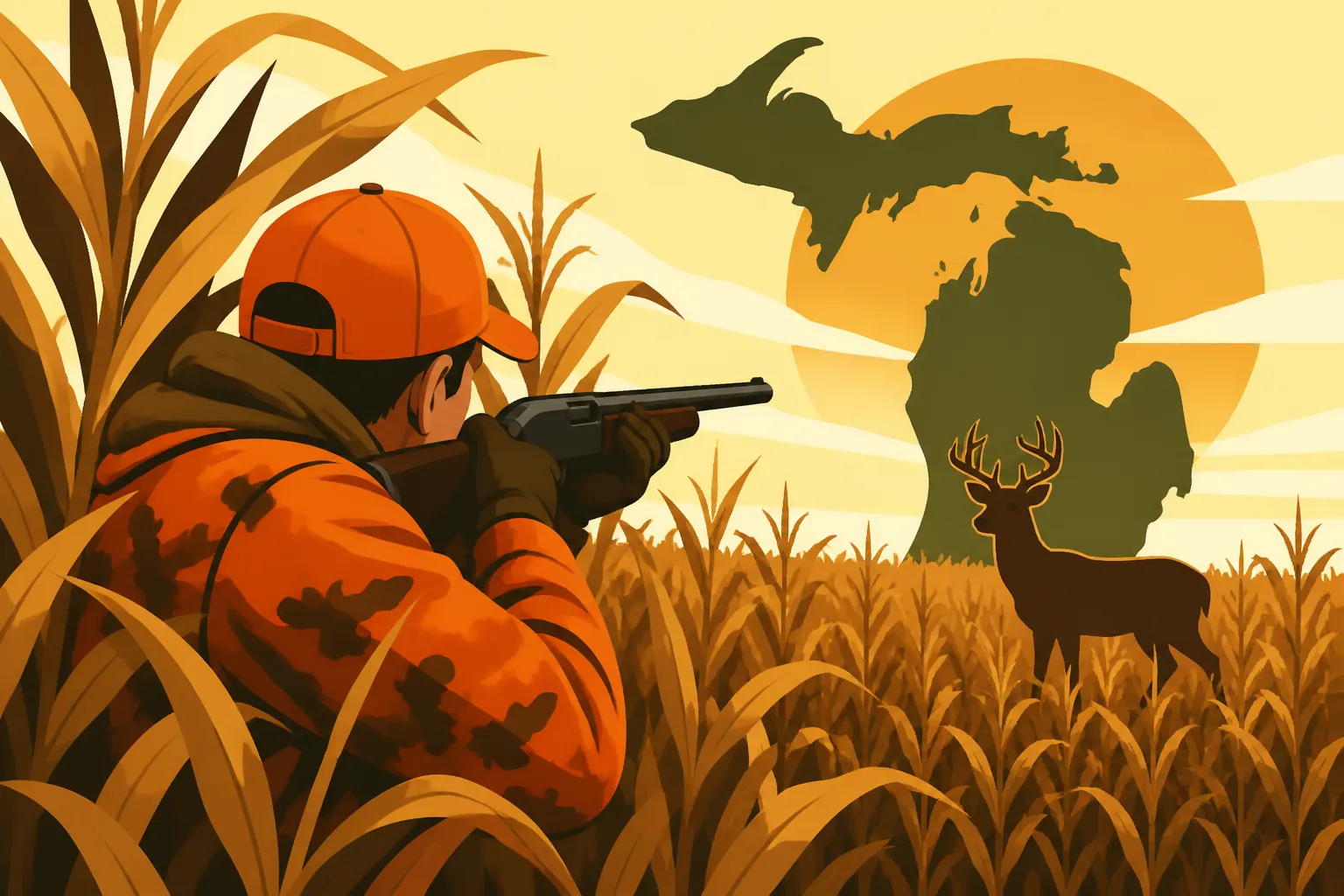
There’s nothing quite like the sight of a vast, golden Michigan cornfield standing tall in the fall, stretching seemingly forever under an autumn sky. It’s beautiful, isn't it? But for us deer hunters in Michigan’s Thumb, that beauty quickly turns into a frustrating puzzle. You know they're in there, sometimes dozens of them, munching away and hiding in plain sight, mocking you from within those towering stalks. It feels like they just vanish, doesn't it? This guide is all about peeling back the layers of that cornfield mystery, giving you the real-world strategies to find and hunt those elusive whitetails that call Michigan's corn country home.
The Cornfield Ecosystem: A Whitetail Heaven
Michigan's Thumb region is prime agricultural land, and for good reason. The rich soil and relatively flat terrain make it perfect for growing massive amounts of corn, soybeans, and even sugar beets. What's often seen as just a crop field by non-hunters, we know is a five-star hotel for deer. It provides everything they need, often in abundance, and that makes hunting it both challenging and incredibly rewarding.
Why Deer Love Standing Corn
Let's be honest, if you were a deer, where would you rather be? Out in the open, vulnerable to every predator (including us), or tucked away in a dense, chest-high labyrinth of food and cover? It's a no-brainer. Standing corn offers an irresistible combination of resources that deer simply can't pass up, especially as the season progresses and other food sources diminish.
First and foremost, it's a fantastic food source. Corn is packed with carbohydrates, providing the high-energy boost deer need to put on weight for the upcoming rut and the harsh Michigan winter. They'll browse the lower leaves and, once the kernels mature, they'll feast on the ears. This isn't just a snack bar; it's an all-you-can-eat buffet that can last well into the late season. Beyond the obvious food, the thick stalks provide unparalleled security cover. A mature buck can literally disappear just a few yards into a standing cornfield, becoming utterly invisible. This isn't just hiding from hunters; it's also a safe haven from coyotes and other predators. As temperatures drop, especially with those biting November winds off the Great Lakes, the dense corn also offers significant thermal cover, sheltering deer from the elements. And let's not forget the moisture; dew on the leaves and even puddles after a rain shower can often provide enough water, meaning they rarely have to leave their safe haven for a drink.
Understanding Deer Movement Within Corn
Deer don't just randomly wander through cornfields. They're creatures of habit, even within this dense environment. Over time, they'll create their own internal travel routes – narrow, winding tunnels that serve as highways and bedding areas. These aren't always straight lines; they might zig-zag to specific patches of better browse, a slight dip in terrain, or just to avoid a particularly thick section. Identifying these can be like finding a hidden treasure map.
The real key, however, lies in understanding how deer use the edges and pinch points. They don't just teleport in and out. Deer will use natural features adjacent to the cornfield to enter and exit. This could be a ditch, a narrow finger of timber, a hedgerow, a power line cut, or even a low spot where the corn meets a CRP field. These areas become natural funnels where deer movement is concentrated. While deer often bed deep within the corn during the day, they'll often stage in these edge covers before slipping into the corn or emerging into an adjacent soybean field after dark. Your job is to find those consistent Entry Routes on Flat Michigan Ground and set up accordingly. During legal shooting hours, especially if there's hunting pressure, deer are far more likely to be bedded down inside the standing corn, only venturing out into more exposed areas under the cover of darkness. This means daytime movement within the corn is often subtle and localized.
Scouting Secrets for Cornfield Success
Hunting standing corn isn't something you just show up and do on opening day. It requires dedication, a keen eye, and a lot of planning. The better you understand the specific cornfield you're hunting, the higher your chances of success. It's truly a game of patience and observation.
Pre-Season Reconnaissance: Before the Stalks Stand Tall
The absolute best time to scout a cornfield you plan to hunt is before the corn is planted, or at the very least, when it's only a few inches high. This gives you an unobstructed view of the terrain and allows you to identify critical features that will be completely hidden once the corn grows. You'll be able to see historical bedding areas in adjacent woodlots or brush, identify subtle drainage ditches that deer will surely use for cover, and locate natural travel corridors that lead to or from the field.
Think about it: if you can walk the field in April or May, you can see where deer currently enter and exit, where old rub lines stand, and where a tiny finger of woods extends into the middle of what will be a cornfield. This allows you to visualize how deer will utilize the cover once it's mature. Tools like GoHunt maps are invaluable here; you can analyze satellite imagery for past years, looking for patterns of planting and identifying those crucial woodlots, wetlands, or uncultivated pockets within or bordering the fields. These maps can help you virtually Reading Aerial Photos for Swamp Deer, and the same principles apply to field edges and corn. If you're hunting public land, it's also a great time to do your Scouting Michigan Public Land Before Season and get a jump on understanding the pressure in the area. And don't underestimate the power of a friendly conversation. If you're hunting private land, a respectful chat with the farmer who owns or leases the ground can provide a wealth of information about deer activity, common travel patterns, and even harvest dates.
Reading the Edges: Post-Planting Clues
Once the corn is up and standing tall, your scouting shifts to the perimeter and any visible internal features. This is where you become a detective, looking for fresh clues that tell you where deer are entering, exiting, and potentially even bedding.
Focus on finding fresh entry and exit points. Look for heavily worn trails in the dirt or grass along the field edges, especially where the corn meets a fenceline, a woodlot, or a brushy ditch. You'll want to see fresh tracks, droppings, and maybe even a few rubs on saplings or fence posts indicating bucks are using these areas. Don't just look for obvious trails; sometimes deer will use low spots or natural depressions to sneak in. Pay close attention to any Scrape Lines Along a Two-Track or old logging roads that border the corn, as these can be major highways for deer.
Beyond the edges, try to identify any hidden pockets of cover within or immediately adjacent to the cornfield. This could be a small clump of trees, a marshy area, or a brushy draw that provides an extra layer of security. Deer will often stage in these pockets before committing to the open field or deep corn. Trail cameras are your best friend here. Place them on those identified trails leading into and out of the corn, or at the intersection of two internal "tunnels." Just be mindful of minimizing your disturbance. You don't want to alert deer to your presence by leaving too much human scent or breaking too many stalks. Check your cameras sparingly, perhaps once a week, to maintain stealth.
Strategic Approaches to Hunting Standing Corn
Once you've done your homework and identified key areas, it's time to choose your hunting strategy. There are several effective ways to hunt deer in standing corn, each with its own advantages and challenges. The method you choose will often depend on the specific field, the time of year, and your personal hunting style.
Ambush Tactics: Stands and Blinds
For many Michigan hunters, the most common and often most successful approach is to ambush deer as they enter or exit the corn. This usually involves a well-placed treestand or a ground blind.
Treestand placement is critical. You'll rarely hang a stand within the cornfield itself, as suitable trees are scarce and visibility is nil. Instead, look for a sturdy tree on the edge of an adjacent woodlot or a finger of timber that extends into the field. You want to be positioned downwind of known entry/exit points, with a clear shooting lane into the corn's edge or a staging area. Consider Treestand Setups in Michigan Hardwoods that border these fields. For those crisp autumn mornings during Michigan Archery Deer Season Structure, particularly during Hunting the Pre-Rut in Late October, deer might be moving to and from cornfields, making a well-placed stand invaluable.
Ground blinds are often ideal for cornfields. They offer excellent concealment at ground level, which can be crucial when deer are moving low through the stalks. They also provide protection from the elements, which can be a huge bonus during a cold, rainy Michigan's November Firearm Deer Season. The key is to set up your blind well in advance and make sure it's properly Brushing In a Blind on a Field Edge. You want it to look like a natural part of the landscape. Use corn stalks, branches, and anything else you can find to break up its outline. Place your blind downwind of where you expect deer to emerge, focusing on those Entry Routes on Flat Michigan Ground. Many hunters find morning hunts more productive when deer are moving into the corn to bed, and evening hunts better when they are coming out to feed.
Still-Hunting and Drives: Getting Into the Thicket
Sometimes, waiting on stand just isn't cutting it, or you suspect deer are simply staying in the corn all day. That's when more active hunting methods come into play, though they carry their own set of difficulties.
Still-hunting through the corn is a legitimate but extremely challenging tactic. It requires immense patience, slow movement, and impeccable wind judgment. You're essentially moving through the corn, taking one slow step at a time, pausing for long periods to listen and look for any sign of deer. The noise of the dry cornstalks rubbing against your clothing can be a significant deterrent. It's a game of inches, where spotting a deer before it spots you is paramount. Focus on moving parallel to suspected internal trails or along features like ditches within the field. This method works best on a windy day when the rustling corn can help mask your sound.
Deer drives can be incredibly effective for pushing deer out of large cornfields, especially during Michigan's November Firearm Deer Season. However, they require careful planning, ample participants, and a strict adherence to safety rules. You need enough hunters to effectively cover the width of the field, with "drivers" pushing deer towards "posters" positioned at the opposite end or along key escape routes. Remember, these can be chaotic, and identifying your target clearly is absolutely paramount. Deer Drives With Three or Four Hunters can be effective on smaller parcels, but larger fields demand more manpower. Always have a clear communication plan and ensure everyone knows their role and the boundaries.
Archery vs. Firearm Considerations
The type of weapon you're carrying will also influence your tactics in corn country.
Archery hunting in standing corn demands precise shot placement and extremely close encounters. Visibility is your biggest enemy. You'll need deer to be within 20-30 yards for a clean, ethical shot, which means focusing heavily on those tight entry and exit points. Bowhunting early in the Michigan Archery Deer Season Structure, especially before the corn gets too dry and noisy, can be very productive. Later in the archery season, especially as other crops are harvested and deer become more reliant on standing corn, those same pinch points become even hotter.
When it comes to firearm season, you have a bit more leeway with visibility and shot distances. Many parts of Michigan's Thumb fall into the Limited Firearm Zone, meaning you'll be using straight-wall cartridges or shotguns with slugs. Understanding Legal Firearms for Michigan Deer in this zone is crucial. A powerful straight-wall cartridge like the .450 Bushmaster is excellent for cornfields, offering good knock-down power and a flat trajectory out to reasonable distances, which might be necessary if a buck breaks cover a bit further out than expected. Your biggest advantage with a firearm is being able to take a shot across a lane, a small opening, or at a deer that might be moving more quickly. The challenges of limited visibility for positive target identification, however, remain.
Navigating the Challenges and Staying Safe
Hunting standing cornfields offers unique rewards, but it also comes with its own set of challenges, particularly when it comes to scent control, noise, and hunter safety. A successful hunt isn't just about bagging a deer; it's about doing it safely and ethically.
Wind, Scent, and Noise Management
In any hunting scenario, wind and scent are critical, but in a cornfield, they take on an even greater importance. Deer in cornfields rely heavily on their sense of smell because their vision is so limited. A swirling wind can quickly give you away, especially if you're trying to move through the stalks. Even in flat corn country, the wind acts much like Wind and Thermals on Michigan Ridges, creating unpredictable currents around field edges, ditches, and any slight change in elevation. Always, always play the wind. Have multiple stand or blind locations for different wind directions, and be prepared to audible if the wind shifts unexpectedly. Scent control is absolutely critical; wash your clothes in scent-free detergent, shower with scent-free soap, and use scent-eliminating sprays. Every little bit helps.
Noise is the other silent killer of cornfield hunts. Dry cornstalks are incredibly loud. Every step, every brush against your clothing, can sound like a cannon shot to a deer trying to navigate the field. When still-hunting or entering/exiting a blind, move as slowly and deliberately as possible. Pick up your feet, avoid dragging them, and use any ambient noise (like a gust of wind) to cover your movement. This slow, methodical approach is often the difference between success and failure.
Hunter Safety and Ethics
The dense cover of standing corn, while fantastic for deer, also presents significant hunter safety concerns. Visibility for hunters is extremely limited, increasing the risk of accidents.
- Visibility: Even if not legally required for your specific season (like during archery), wearing hunter orange is a smart choice when hunting near or in standing corn, especially during Michigan's November Firearm Deer Season. It helps other hunters identify you and prevents potential mishaps. Always be aware of other hunters who might be in the same field or adjacent properties. How Much Orange Michigan Requires is a good reference.
- Shot Identification: Positive target identification is paramount. Never take a shot at movement, sound, or a "patch of brown." You must clearly see and identify your target (and what's beyond it) before pulling the trigger or releasing an arrow. The ethical responsibility falls entirely on you.
- Recovery: Tracking a deer in thick standing corn can be one of the most challenging aspects of cornfield hunting. Even a perfectly shot deer can vanish into the labyrinth, making blood trailing a monumental task. Have a detailed plan for recovery. Mark the spot where the deer was last seen, and use GPS (
GoHunthas excellent GPS capabilities) to mark your entry point and your path. Take your time, look for every drop of blood, and if daylight fades, be prepared for Blood Trailing After Dark in Michigan with good headlamps and a careful approach. If you’re fortunate enough to hunt with a blood-trailing dog, this is where they truly shine.
| Tactic | Best Season | Ideal Conditions | Pros | Cons |
|---|---|---|---|---|
| Treestand Ambush | Early Archery, Rut | Consistent wind | High vantage, quiet, good for spotting deer exiting corn | Limited visibility into corn, fixed location |
| Ground Blind Ambush | Archery, Firearm | Consistent wind, rain, snow | Excellent concealment, mobile if pre-set earlier, good for shooting deer entering/exiting corn | Limited visibility, low vantage, setup time |
| Still-Hunting | Archery, Firearm | Light wind, soft ground, or very windy conditions to mask sound | Active, covers ground, good for deep-bedded deer | High noise risk, easy to spook deer, low success rate without experience |
| Deer Drive | Firearm | Late season, group hunt | Can push deer out, exciting, good for larger fields | Requires multiple hunters, significant safety risks, hard to coordinate |
Successfully hunting a standing cornfield in Michigan's Thumb is a chess match with nature. It requires planning, patience, and a deep respect for the animal and the environment. But when that big buck finally steps out of the golden rows, your efforts will be rewarded with a truly unforgettable experience.
Disclaimer
Hunting is an inherently dangerous activity. Always prioritize safety, adhere to all local, state, and federal hunting regulations, and ensure you have proper training and licensing before heading into the field. The advice provided here is for informational purposes only and does not supersede official hunting regulations or safety guidelines.