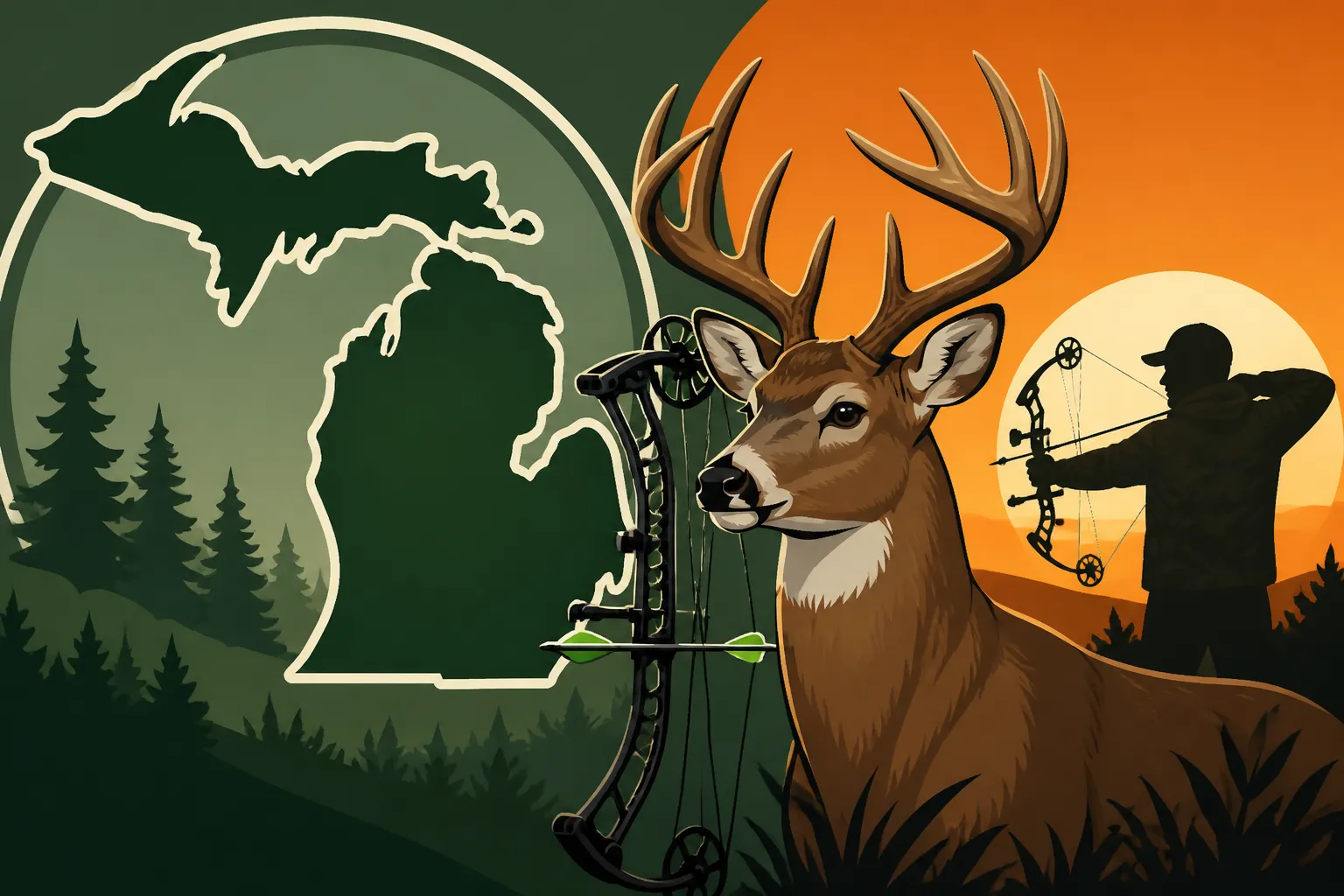
Michigan Archery Deer Season Structure
Oh, the Michigan archery deer season. It's not just a simple "open and close" period, is it? Many hunters, new and seasoned alike, can feel a bit overwhelmed by the distinct segments, rules, and how they all intertwine. Trying to figure out when to hunt, where to hunt, and what tags you need can turn excitement into a headache. This comprehensive guide is here to untangle the Michigan archery deer season structure, offering clear insights into the different phases, what to anticipate in each, and how to strategize your hunts for maximum success.
Understanding Michigan's Archery Deer Season Overview
Michigan’s archery season is unique, offering a generous timeframe for bowhunters to pursue whitetails. However, it's crucial to understand that it's not a monolithic block of time. Instead, it's punctuated by specific periods, most notably the mid-November firearm season, which dramatically changes the landscape for bowhunters. This structure provides varied opportunities, from early-season patterns to the frantic rut, and then a quieter late season.
The Core Archery Period
The traditional core of Michigan's archery deer season kicks off on October 1st each year. This is a time eagerly awaited by bowhunters across the state, marking the true beginning of deer hunting for many. From October 1st, hunters have the opportunity to pursue deer with a bow or crossbow right up until November 14th. This initial period covers a wide range of deer behavior, from early-season feeding patterns to the very early stages of the pre-rut, making it an exciting and often unpredictable time to be in the woods. The weather during this stretch can be incredibly varied, swinging from warm, almost summer-like days in early October to frosty mornings by early November, demanding adaptable hunting strategies and clothing choices.
The vibe during this core archery period is often one of anticipation and patience. Deer are still largely focused on food sources, gradually transitioning from lush summer forage to acorns and agricultural crops as the season progresses. Hunters will spend their time observing travel corridors between bedding and feeding areas, often relying on stealth and well-placed stands. This is also when hunters begin to see the first signs of the approaching rut, with bucks becoming more visible and less cautious as their hormones start to kick in.
The Archery Split and Its Purpose
The most defining feature of Michigan's archery season structure is undoubtedly the "split." From November 15th to November 30th, the archery season effectively goes on hiatus as the statewide firearm deer season takes center stage. This two-week break can be a source of frustration for dedicated bowhunters who wish the archery season would just continue straight through. However, there's a very practical reason behind this structure. The state's management philosophy prioritizes the firearm season as a significant harvest opportunity, and separating the seasons helps manage hunter pressure and deer movement during this critical period.
Once the firearm season concludes, the archery season reopens on December 1st and continues all the way through January 1st. This second segment is often referred to as the "late archery season." Understanding Why Michigan Splits Its Archery Season is key to appreciating how this impacts deer behavior and hunter success. The intense pressure of firearm season pushes deer into thicker cover, changes their routines, and can make them far more wary. For archers, this means a completely different hunting challenge, one that often requires shifting tactics from early-season patterns to focusing on post-pressure refuge and remaining food sources. The late season can be incredibly rewarding for those willing to brave the cold and adapt their approach, offering a unique opportunity to target deer that have survived the firearm onslaught.
Key Dates and Periods within Archery Season
Michigan's archery season, while long, isn't uniform. Deer behavior, weather patterns, and hunter success rates fluctuate significantly through its various segments. Knowing these distinct periods and their characteristics is vital for planning successful hunts. It's not just about when Michigan's Archery Season Opens, but how the season unfolds.
Early Archery Opportunities
The early archery season kicks off on October 1st and generally runs through mid-October. This period is characterized by relatively warm weather, often Indian summer days, which can make long sits in a treestand challenging. Deer are still very much in their late-summer patterns, primarily focused on filling their bellies before winter. Food sources like acorns, soft mast (apples, wild berries), and standing agricultural crops such as alfalfa or soybeans are prime locations to focus your efforts. These early hunts can be tough, as deer activity is often confined to low-light hours, making morning and evening sits crucial.
Successful early archery hunting often hinges on stealth and precision. Deer haven't been pressured yet, but they're still incredibly cautious. Accessing your stand without spooking deer is paramount. You might find success by setting up on trails leading to and from preferred food sources, especially near water or natural funnels where deer movement is concentrated. Patience is a virtue, as deer might not move until just before dark, making every minute count. Keep the wind in your favor, as deer scent control is absolutely critical in these warmer temperatures when deer rely heavily on their noses.
The Pre-Rut and Peak Archery Action
As October gives way to November, Michigan's woods begin to buzz with increased activity. This is the pre-rut, a magical time for bowhunters when bucks start to shed their summer laziness and become more active in their search for does. This period, roughly from the last week of October through the first two weeks of November, sees bucks establishing dominance, making rubs, and checking scrape lines. Their focus isn't solely on food anymore; the urge to breed starts to take precedence, often leading to more daytime movement. If you're looking for action, this is arguably the best time to be in the woods with your bow.
Many seasoned Michigan hunters would agree that this is the absolute sweet spot for archery. Bucks are cruising, scent-checking, and far more responsive to calling. This is when tactics like Rattling and Grunting in Michigan can be incredibly effective. Setting up near bedding areas, pinch points, or known travel corridors where bucks are likely to pass through is a prime strategy. Our guide on Hunting the Pre-Rut in Late October delves deeper into capitalizing on this shift in behavior, and for the full frenzy, understanding Hunting the Peak Rut Week in Michigan will tell you all about the first two weeks of November. It's a time of unpredictable encounters and unforgettable moments, but it's also brief, so make sure your gear, especially your bow setup, is dialed in.
Late Archery Opportunities Post-Firearm
The late archery season, running from December 1st to January 1st, presents a completely different challenge. After the intense pressure of Michigan's November firearm season, deer behavior shifts dramatically. They've been pushed, chased, and often become incredibly nocturnal and wary. Their focus now is survival: finding secure refuge and the most energy-rich food sources available to survive the impending winter. This period is often colder, with snow becoming a common presence, which can both help and hinder hunters.
Success in the late archery season hinges on identifying sanctuaries and key food sources. Deer will seek out the thickest cover they can find – cedar swamps, dense conifer stands, or overgrown clearcuts – for bedding. Your hunting strategy needs to revolve around those thermal cover areas and the most attractive, high-calorie food left. This might include standing corn, untouched food plots (like brassicas or winter rye), or areas with remaining acorns under a persistent oak. Our article on Hunting Michigan's Late Archery Season provides a deep dive into these tactics. Additionally, understanding Late-Season Food Sources for Whitetails is paramount to finding where deer are concentrating their efforts during this critical time. It's a grind, often cold and slow, but for those willing to put in the time and adapt their approach, it can yield opportunities at mature, pressured deer that have proven their resilience.
Licensing and Tagging Specifics for Archery Hunters
Navigating the licensing and tagging requirements can sometimes feel like a puzzle. Michigan has a system designed to offer flexibility while also managing the deer herd effectively. For archery hunters, understanding your options and obligations is crucial before you ever step foot in the woods.
Michigan Deer Licence and Combo Options
To legally hunt deer in Michigan, every resident and non-resident hunter must first purchase a Base License. This foundational license is your entry ticket to hunting small game, and it’s a prerequisite for buying any deer hunting licenses. For archery deer hunting, you then have a couple of primary options for deer licenses themselves. The most common is the Michigan Deer License, which allows you to harvest one antlered deer. This is a great choice if you're primarily focused on a single buck for the season.
However, many archery hunters opt for the Michigan Deer Combo License. This popular choice provides two deer tags: one regular antlered deer license (sometimes referred to as the "buck tag") and one restricted antlered deer license, or an antlerless deer license. What makes the Deer Combo attractive is its flexibility. The regular antlered tag typically allows for the harvest of any legal antlered deer. The restricted tag, however, might come with specific antler point restrictions depending on the Deer Management Unit (DMU) you're hunting in, or it can be used for an antlerless deer. Our comprehensive guide on Michigan Deer Licence and Combo Options breaks down all these choices, making it easier to select what's right for your hunting goals. Don't forget that antlerless tags are crucial, especially if you're trying to fill the freezer, and there are specific rules for purchasing and utilizing them which are detailed in Michigan Antlerless Deer Licences.
Antler Point Restrictions (APRs) and Archery
Antler Point Restrictions (APRs) are a significant part of deer management in many Michigan Deer Management Units (DMUs), particularly in the Lower Peninsula. APRs dictate that an antlered deer must have a certain number of antler points, typically 3 or 4 points on one side, to be legally harvested with an antlered deer tag. These regulations are in place to allow younger bucks to mature, theoretically leading to an older age structure in the buck herd and potentially more opportunities for larger deer down the line. For archery hunters, APRs add an extra layer of challenge and responsibility.
It's absolutely vital to know if the DMU you are hunting in has APRs in effect, and to understand exactly what those restrictions entail. This information can be found in the Michigan DNR Hunting Digest or by checking online maps like those offered by GoHunt, which can quickly show you specific DMU boundaries and their associated rules. For a detailed breakdown of these rules, refer to Michigan Antler Point Restrictions by DMU. The challenge for archers often comes down to making an accurate assessment of antler points in low light, through thick cover, and often under adrenaline-fueled circumstances. What truly Counts as an Antler Point in Michigan is also clearly defined: a point must be at least one inch long, measured from the base of the point to its tip. Miscounting can lead to unknowingly harvesting an illegal deer, so if you're unsure, it's always best to let the buck walk. This emphasis on careful identification means archery hunters need to be even more diligent with their scouting and shot selection, ensuring they have a clear, ethical shot on a legally harvestable animal.
Strategic Considerations for Archery Success
Archery hunting in Michigan isn't just about showing up in the woods with your bow. It's a chess match that requires planning, adaptability, and a deep understanding of deer behavior. Success often hinges on doing your homework before the season even begins and being able to react to changing conditions once you're out there.
Scouting and Stand Placement
Effective scouting is the bedrock of successful archery hunting, especially in Michigan's diverse landscapes. It's not a one-time activity; it's a year-round commitment. Pre-season scouting, well before opening day, allows you to identify key bedding areas, crucial travel corridors that deer use to move between bed and food, and the best food sources for different times of the season. Look for old rubs and scrapes from previous years, fresh tracks, and worn trails. Tools like the Michigan DNR's Mi-HUNT map or commercial apps like GoHunt can be invaluable for analyzing aerial imagery, identifying property lines, and pinpointing potential hotspots from the comfort of your home. They can help you find overlooked pockets of public land or identify ideal areas on private ground. Our guide on Scouting Michigan Public Land Before Season provides excellent strategies for finding those hidden gems.
Once you've identified promising areas, the next critical step is stand placement. For archery, getting close is paramount. This means focusing on natural funnels, pinch points, and cover transitions. Consider prevailing winds, sun direction (to avoid silhouetting yourself), and your entry and exit routes to the stand. A well-placed treestand or ground blind can mean the difference between seeing deer at 60 yards and having a clean 20-yard shot. Always consider how deer will approach and react to your setup. For instance, in heavy timber, a climbing stick setup might be best, allowing you to get high enough to see over obstacles and improve your shot angle. In open field edges, a well-brushed-in ground blind might be the stealthier option, especially if you're hunting an agricultural field.
Adapting to Weather and Pressure
Michigan's fall weather is famously unpredictable, and adapting to it is a non-negotiable for archery hunters. Early in the season, warm temperatures mean deer move less during daylight, making scent control an absolute priority. A sudden cold front, however, can kick deer activity into high gear, especially around food sources. Snowfall, particularly during the late season, can be a game-changer, revealing fresh tracks and driving deer to thermal cover and specific food sources. Learning to read these weather patterns and adjust your hunting times and locations accordingly is a skill honed over many seasons.
Hunting pressure is another huge factor, particularly on Michigan's vast public lands. During the early and peak archery seasons, popular spots can see a lot of activity. Come the firearm season and the subsequent late archery, deer become incredibly wary, seeking out unpressured sanctuaries. If you're hunting public land, be prepared to walk further than most hunters are willing to go, often into thick, nasty cover that others bypass. Opening Day Crowds on Michigan State Land can be daunting, but with a solid plan and willingness to put in the effort, you can often find unpressured pockets. On private land, pressure might come from neighbors, so understanding deer movement across property lines is key. The most successful archers are the ones who can scout for new sign, observe how deer react to pressure, and adjust their strategy on the fly, whether that means moving a stand, changing their entry route, or simply targeting different times of the day.
The Role of Food and Cover
For Michigan whitetails, food and cover are the two most critical elements determining their movement and survival, especially for archery hunters looking to intercept them. During the early archery season, deer are still relatively unpressured and focusing heavily on available food sources. This means soft mast (apples, pears, wild berries), acorns (if it's a good mast year), and agricultural fields like alfalfa, soybeans, or standing corn. A severe Hunting After an Acorn Failure year can dramatically alter deer patterns, forcing them to concentrate on other food sources, and hunters need to adapt quickly. Identifying these primary food sources and understanding deer feeding preferences in your area is paramount.
As the season progresses and especially into the late archery season, thermal cover becomes equally, if not more, important than food. After the firearm season, deer seek out dense, protective cover to escape the cold and evade predators. This often includes thick conifer swamps, such as cedar swamps, or dense stands of pine or spruce. Understanding how to interpret Reading a Michigan Cedar Swamp for Deer for bedding and travel can give you a significant advantage. The remaining food sources during this late season are often high-energy options like standing corn, brassicas, or unharvested food plots. Focusing your efforts on the transition zones between these secure bedding areas and limited, high-calorie food sources will be your best bet for encountering deer during the colder, post-firearm archery period.
Navigating Public and Private Land as an Archery Hunter
Michigan is blessed with an abundance of diverse hunting land, but knowing how to best utilize both public and private options is a skill in itself. Each comes with its own set of advantages and challenges for the archery hunter.
Opportunities on Michigan State Land
Michigan boasts a staggering amount of public hunting land, particularly in the northern Lower Peninsula and throughout the Upper Peninsula. State forests, state game areas, and national forests offer vast tracts for archers to roam. This accessibility is a huge benefit, as it means almost anyone can find a place to hunt. However, this accessibility also means that public land can be subject to significant hunting pressure, especially during peak times. Our general guide on Public Hunting Land in Michigan provides a broad overview, while Michigan State Forest Hunting delves into specifics for those expansive timber tracts.
For the savvy archery hunter on public land, success often comes down to strategy and effort. You might need to walk further, deeper into areas that others won't bother with. Finding forgotten corners, small pockets of thick cover, or isolated food sources off the beaten path can yield surprising results. Using mapping tools like those from GoHunt or Mi-HUNT to identify terrain features, water sources, and remote clearcuts away from roads can give you a significant advantage. Remember to always know the specific rules for public land, which include regulations on treestand placement, ground blind use, and trail camera rules. While it takes more effort, the reward of harvesting a deer on Michigan's public land is incredibly satisfying.
Private Land Access and Permission
While public land offers quantity, private land often offers quality – in terms of less pressure and potentially more mature deer. Gaining access to private land can dramatically increase your chances of a successful archery season. Farmland in southern Michigan, for instance, often holds a high density of deer and, with less hunting pressure, can produce some truly impressive bucks. The challenge, of course, is securing that permission.
Successfully Getting Private Land Permission in Michigan often boils down to respect, polite communication, and sometimes a little legwork before the season. Start by identifying landowners in areas you're interested in. A knock on the door, dressed neatly and with a friendly demeanor, goes a long way. Be prepared to introduce yourself, explain your intentions, and offer to help out around the property in exchange for hunting privileges. This could mean helping with chores, sharing game camera photos, or even offering to help control nuisance animals. Some landowners participate in the Michigan Hunting Access Program (HAP), which provides incentives for them to open their land to public hunting, offering another avenue for access. Regardless of how you gain access, always treat private land with the utmost respect, following any specific rules the landowner sets, and express your gratitude. Building a good relationship with a landowner can secure you a prime hunting spot for years to come.
| Archery Period | Typical Dates | Key Deer Behavior | Common Challenges | Recommended Tactics |
|---|---|---|---|---|
| Early Season | Oct 1 – Mid-Oct | Focused on food (acorns, soft mast, ag crops) | Warm weather, low daylight movement, scent control | Hunt water sources, trails to food, morning/evening sits |
| Pre-Rut | Late Oct – Nov 14th | Increased buck movement, rubbing, scraping, cruising | Unpredictable buck patterns, managing excitement | Hunt bedding transitions, pinch points, rattling/grunting |
| Late Season | Dec 1 – Jan 1st | Focused on thermal cover & high-calorie food, wary | Cold, snow, nocturnal deer, high pressure | Hunt dense cover transitions, standing corn, food plots |
Disclaimer
Hunting is an inherently dangerous activity. This guide provides general information based on Michigan hunting regulations and common practices. Regulations can change, and it is every hunter's responsibility to consult the most current Michigan DNR Hunting Digest for specific rules, dates, and licensing requirements before hunting. Always prioritize safety, ethical hunting practices, and respect for wildlife and landowners.