Tracking a Deer in Michigan Snow
There are few moments in a Michigan deer hunt as gut-wrenching as making a good shot, only to watch your buck disappear into a fresh blanket of snow, leaving behind a faint trail that quickly becomes a puzzle. The pristine white landscape that once filled you with hope now feels like an endless maze. This guide is here to walk you through the precise steps and crucial considerations for effectively tracking a deer in Michigan snow, transforming that anxious search into a confident recovery.
The Art and Science of Reading Snow Sign
When the snow flies in Michigan, it provides an incredible canvas for hunters to read the story of the woods. Every track, every disturbed flake, every drop of blood tells a tale. Understanding how to interpret these signs is paramount to a successful recovery.
Fresh Tracks Versus Old Tracks
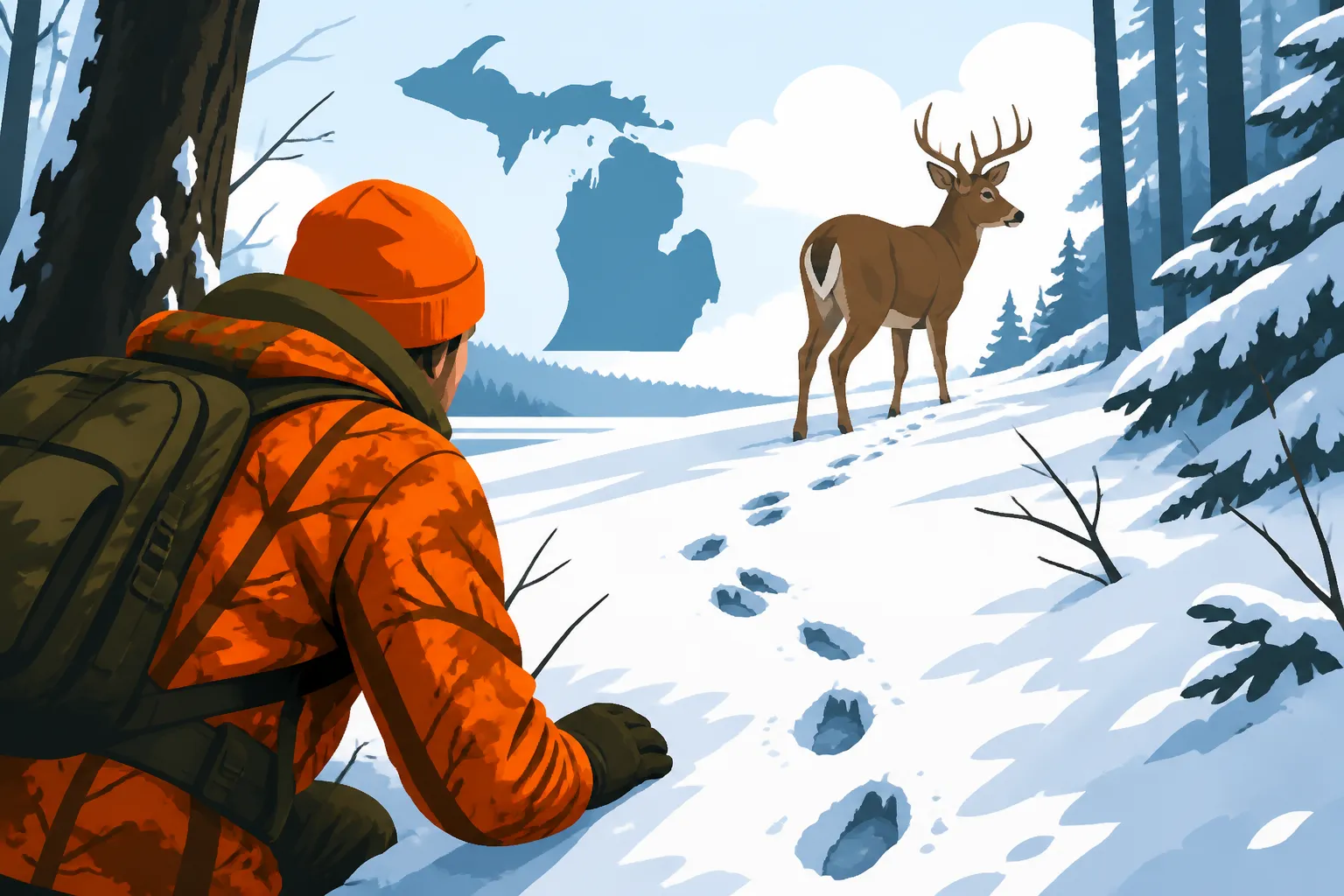
Differentiating between fresh and old tracks is the very first lesson in snow tracking, and it's not always as simple as it sounds. A fresh track will have crisp, sharp edges, almost as if it was just pressed into wet clay. The snow within the track will often appear granular and undisturbed. As time passes, especially with changes in temperature or wind, those sharp edges begin to melt, round off, or get filled with blowing snow, making the track look softer, less defined, and sometimes even smaller. If you're tracking in a fresh snowfall that's still coming down, you might notice new flakes settling in the tracks, which is a clear sign the deer passed through some time ago. Always pay attention to the surrounding snow – is there any other activity that happened after the track was laid, like rabbit tracks or falling twigs? This helps timestamp the sign.
Consider the ambient temperature as well. If it's warm and the snow is melting, even a relatively fresh track will begin to lose its crispness quickly. In contrast, on a frigid day with powdery snow, tracks can remain incredibly sharp for hours, even a full day. You also need to watch for wind. A strong breeze can fill in tracks with loose snow, making them appear older than they are, or even erase them entirely in exposed areas. This is where experience really starts to pay off, and learning to read these subtle cues becomes second nature. It’s also why understanding Still-Hunting After a Michigan Snow can be so beneficial, as you learn to spot these subtle differences even when you're just out for a walk.
Deciphering the Deer's Gait and Behavior
Beyond just knowing when a deer passed, understanding how it moved is critical, especially when you're on a blood trail. A walking deer leaves distinct, evenly spaced tracks, often with the hind foot landing in or very near the front foot track. If it was trotting, the stride lengthens, and the tracks will be more widely spaced, showing a diagonal gait. A bounding deer, especially one that's been hit, will show very long gaps between clusters of four tracks where it leaped. This indicates a high level of alarm and speed, and potentially a good hit if you also see blood associated with this panicked movement.
Perhaps the most important sign for a wounded deer is a "drag mark." This is a continuous scrape or groove in the snow between hoof prints, often created by a leg being dragged, or a low-hanging gut. Any kind of persistent drag mark is a huge indicator of a wounded animal. Look closely at the depth of the tracks too; a deer struggling to put weight on a leg might dig in more with the other legs. If you notice an unusually short stride on one side, or an obvious hesitation in the track pattern, those are further clues. Pay attention to changes in direction or sudden stops – a deer may be trying to bed down or is struggling with its injury. When you're actively Hunting the Michigan Rut in November, knowing these subtleties can mean the difference between finding your trophy and coming home empty-handed.
Following the Blood Trail in a Winter Wonderland
Snow might obscure tracks, but it also brilliantly highlights blood. However, not all blood trails are created equal, and knowing what you're looking at can provide vital clues about the shot placement and the deer's condition.
The Nuances of Blood on Snow
Blood on snow is a powerful indicator, but you need to read it like a detective. Bright red, frothy blood with tiny bubbles is the holy grail – it usually means a lung hit, which is typically fatal within a short distance. This kind of blood is often ejected with force, creating a spray pattern on trees or low brush. Darker red, non-frothy blood, sometimes with clots, suggests a liver or muscle hit. This is still a good hit, but the deer might travel further. If the blood is very dark, almost purplish, and mixes with partially digested stomach contents or green matter, you're looking at a gut shot. This is a tough scenario, as these deer often travel long distances and require a lengthy waiting period to ensure a clean recovery.
The amount and consistency of blood are also key. A steady drip or good puddles of bright red, frothy blood means you're likely very close. Small, sparse flecks or widely spaced drops, especially with dark blood, indicate a less immediately lethal hit or a deer that has clotted up. Sometimes, especially with an exit wound that's high or quickly clots, you might find blood only when the deer beds down and then stands up again. That's why marking your last known blood sign is so crucial, so you don't lose the line.
Slow and Steady Wins the Race
Patience, my friends, is not just a virtue in deer hunting; it's a non-negotiable requirement when tracking in snow. Your pace should be agonizingly slow, deliberately scanning every square inch of snow for the next sign. Many experienced Michigan hunters use a "two-person" method: one person tracks the blood, while the other walks 10-20 yards ahead, looking for the deer itself or the next blood sign. This prevents overrunning the animal and spooking it, which can turn a manageable track into a nightmare. If you lose the blood trail, don't just blindly wander. Go back to the last confirmed blood you found and methodically search in a circular or grid pattern.
Every time you find blood, mentally (or physically with surveyor's tape, if allowed) mark the spot. This creates a breadcrumb trail you can always return to if you get disoriented or lose the sign further ahead. Snow can be tricky; patches of bare ground, fallen leaves under pines, or even dense brush can make blood disappear. In these situations, revert to pure track reading. Did the deer jump? Did it change direction? Where is the path of least resistance it would have taken? Sometimes, you might be Blood Trailing After Dark in Michigan, and a reliable headlamp or flashlight becomes your best friend, highlighting blood you might otherwise miss.
Strategic Considerations for a Successful Recovery
Beyond the actual mechanics of tracking, there are strategic choices you need to make that heavily influence your chances of success.
When to Push and When to Back Off
This is arguably the most critical decision in tracking a deer. If you believe you made a solid lung or heart shot (indicated by bright red, frothy blood and the deer's initial reaction), waiting an hour or two can allow the deer to bleed out and lie down, making for an easy recovery. Pushing too soon on a mortally wounded animal can cause it to run further, sometimes for miles, and often into dense, impenetrable cover.
However, if you suspect a gut shot (dark blood with stomach contents, no immediate reaction from the deer, or a hunched-up posture), the rule of thumb is to back out and wait a minimum of 6-8 hours, or even overnight if temperatures are cold enough to prevent spoilage. This gives the deer time to stiffen up and expire quietly. Pushing a gut-shot deer is almost guaranteed to make it run indefinitely. Factors like temperature are huge here; on a warm day, you can't wait as long due to meat spoilage, but in a Michigan winter, cold temperatures often allow for an overnight wait if necessary. Always consider predator activity too, especially in the Upper Peninsula where coyotes and even wolves are present; a long wait might mean less deer left for you.
Utilizing Technology and Assistance
In today's hunting world, technology can be a tremendous asset. GPS apps like OnX Hunt, BaseMap, or even GoHunt can be invaluable. Use them to mark your shot location, the last blood you found, and the direction of travel. This allows you to easily reference your position, identify potential escape routes, and stay oriented, especially in vast public lands. The ability to drop pins on your phone helps you visualize the deer's path and prevent you from walking in circles. Scouting With Michigan's Mi-HUNT Map or using your GoHunt app can help you identify property lines, dense cover, or water bodies where a deer might head.
Don't be afraid to call in a friend or two for assistance. More eyes on the ground can make a huge difference in spotting that next drop of blood or seeing the deer bedded down. If all else fails and the blood trail completely vanishes, consider calling a certified tracking dog handler. Michigan has licensed trackers with dogs specifically trained to follow blood trails, even days after the shot. There are strict rules governing their use, so make sure you understand them before calling. These dogs can perform miracles, often saving an otherwise lost animal.
Recovering Your Deer and Getting it Out
Finding your deer after a long track in the snow is one of the most rewarding feelings in hunting. But the job isn't quite done yet.
The Final Approach and Confirming the Kill
As you approach the suspected bedding area or the end of the blood trail, slow down. Way down. Approach cautiously from downwind, if possible, scanning the area ahead. A wounded deer might still be alive and could jump up or even charge. Use your binoculars to scan the area before walking right up to the deer. If it's lying down, look for movement in its ears or eyes. If you're unsure, approach from behind and use a stick or your boot to gently poke the deer to confirm it's expired. Safety is paramount; a wounded animal, especially a buck with antlers, can be dangerous.
Once you've confirmed the deer is down for good, take a moment. Appreciate the animal, the hunt, and the effort you put into the recovery. This is part of the hunting tradition, a respectful moment of gratitude. Then, it's time to validate your tag and get to work. Remember to complete your Reporting a Michigan Harvest in 72 Hours requirement.
Field Dressing and Transport in Snow
Field dressing a deer in the snow has its pros and cons. The cold helps preserve the meat, but it can also make the task itself feel more arduous. Try to get the deer into a relatively clean, snow-free spot if possible, or lay down a tarp. The snow will also absorb blood and other fluids, which is nice for cleanup, but ensure you keep any precious cuts of meat clear of the ground. Knowing how to do a proper Field Dressing a Deer in Cold Weather can make this process smoother and prevent chilling the meat too quickly, which can affect its quality.
Getting the deer out of the woods, especially after a long track through deep Michigan snow, can be the hardest part of the entire hunt. This is where a deer sled truly shines. These simple plastic sleds, like those from Pelican or even a heavy-duty children's toboggan, allow you to slide a deer over snow with significantly less effort than dragging it directly. If the snow isn't too deep, a good deer cart can also work, but they tend to get bogged down in deep powder or slush. For deep snow in the Upper Peninsula, a dedicated Deer Sleds for Snow Country is a game-changer. If you're really out in the remote big woods, consider the "gutless method" of field dressing and quartering the animal to pack it out, especially if you're alone or have a long haul. It's a lot more work initially, but far easier on your back in the long run.
Ultimately, tracking a deer in Michigan snow is a skill built on observation, patience, and a deep respect for the animal. It’s a challenging but incredibly rewarding aspect of the hunt that connects you even more deeply to the wild landscape.
| Blood Color/Consistency | Indicates | Recommendation |
|---|---|---|
| Bright Red, Frothy | Lung/Heart Hit | Wait 1-2 hours, then track. |
| Dark Red, Non-Frothy | Liver/Muscle Hit | Wait 3-4 hours, then track cautiously. |
| Dark Red with Clots | Vein/Artery, Muscle Hit | Wait 3-4 hours, track steadily. |
| Dark Red with Stomach | Gut Shot | Wait 6-8 hours or overnight (if cold), then track. |
| Pinkish/Watery | Minor Muscle/Flesh Wound | Track quickly, but expect a long recovery or loss. |
Disclaimer
The information provided in this guide is for educational purposes only and is not a substitute for adhering to all Michigan hunting laws and regulations. Always consult the latest Michigan Department of Natural Resources (DNR) hunting digests for specific rules, season dates, and reporting requirements. Hunting involves inherent risks, and safety should always be your top priority.