Blood Trailing After Dark in Michigan
There's nothing quite like the adrenaline rush of making a good shot on a Michigan whitetail, only to have the evening creep in, casting long shadows and making a clear blood trail vanish before your eyes. It’s a gut-wrenching feeling, knowing your deer is out there, but you just can't quite piece together the puzzle of where it went in the fading light. This guide is here to walk you through the essential steps and strategies for successfully blood trailing after dark, giving you the best chance to recover your hard-earned deer.
The Immediate Aftermath: Patience is Your Best Friend
It’s completely natural to want to jump out of your stand or ground blind the second your arrow or bullet connects. That surge of excitement, mixed with a little anxiety, is part of the hunt. But here’s where discipline truly pays off, especially if the light is already starting to fade. The biggest mistake you can make is to immediately pursue a deer that might not be mortally wounded or has only traveled a short distance before bedding down. Rushing in can spook a still-alive deer, causing it to run farther, potentially pushing it off your property or into thicker cover where the trail becomes almost impossible to follow.
Instead, take a deep breath. Assess the shot. Did you hear the tell-tale "thwack" of an arrow hitting vitals, or the solid "thump" of a bullet? Did the deer mule-kick, hunch up, or bolt away with its tail tucked? These are all critical clues. If it’s a suspected gut or liver shot, or if you’re just not sure about the shot placement, an absolute minimum of four to six hours should pass before you even think about starting a blood trail. For a solid lung or heart shot, an hour is usually sufficient, but if it’s getting dark, stretching that to two or three hours will give the deer time to expire and cool down, making recovery much easier and ensuring your meat is in the best condition. Use this waiting time to gather your gear, tell someone where you're going, and mentally prepare for the task ahead.
Essential Gear for a Successful Night Trail
Blood trailing in broad daylight is challenging enough, but once the sun dips below the horizon, the degree of difficulty skyrockets. You absolutely cannot go out ill-equipped. Having the right tools won’t guarantee success, but it will dramatically increase your odds and make the process less frustrating. Think of it as preparing for a mini-expedition into the dark woods.
First and foremost, you need good quality lights – and more than one. A powerful headlamp is non-negotiable; it keeps your hands free for flagging, marking, and pushing aside brush. But also carry a powerful handheld flashlight, preferably one with a bright, focused beam. LED lights, especially those with a neutral or slightly warm tint, often make blood "pop" better than cool, blue-tinted lights. Even better, some hunters swear by UV or specialized blood-tracking lights, which can make even minute blood drops fluoresce, though they aren't a magic bullet for every situation. Always carry spare batteries for all your lights; getting stranded in the dark with dead batteries is a terrible feeling.
Next, you need marking tools. Rolls of bright, biodegradable flagging tape are your best friend. Tie a piece of tape every time you find a spot of blood, creating a breadcrumb trail that allows you to easily find your way back to the last known sign, or to retrace your steps if you get turned around. Small flashlights or reflective tacks can also be useful for marking specific spots or for establishing a grid pattern during a wider search.
Don't forget navigation. A GPS unit or a reliable hunting app on your smartphone, like GoHunt, is indispensable. You can use GoHunt to mark your starting point, every significant blood find, and track your search path. This prevents you from inadvertently circling back on yourself or getting lost in unfamiliar terrain. Ensure your phone is fully charged, and consider carrying a portable power bank. While most of Michigan’s public land is accessible, knowing precisely where you are in relation to property lines, especially with a downed deer, is critical.
Lastly, carry basic survival essentials: a knife, a small first-aid kit, a compass, some water, and perhaps a protein bar. Even if you're just a short walk from your vehicle, things can go wrong quickly in the dark. If you're hunting in particularly rugged or remote areas of the Upper Peninsula, a First Aid Kits for Remote Upper Peninsula Ground might be a smart addition to your pack.
Strategies for Effective Night Trailing
Once you've given the deer enough time and assembled your gear, it's time to hit the trail. The key here is to slow down, be methodical, and work as a team if you have hunting partners.
Start at the shot location or the last spot you saw the deer. Mark it clearly with flagging tape. From there, begin your search in concentric circles or a grid pattern, moving slowly and systematically. One person, typically with the brightest light, should focus intently on the ground for blood, while another person can assist by scanning ahead or to the sides for disturbed vegetation, tracks, or other signs. Don’t just look for bright red blood; sometimes it will be dark, clotted, or even foamy, depending on the wound. Even tiny speckles on leaves, grass, or bark can indicate the deer's path.
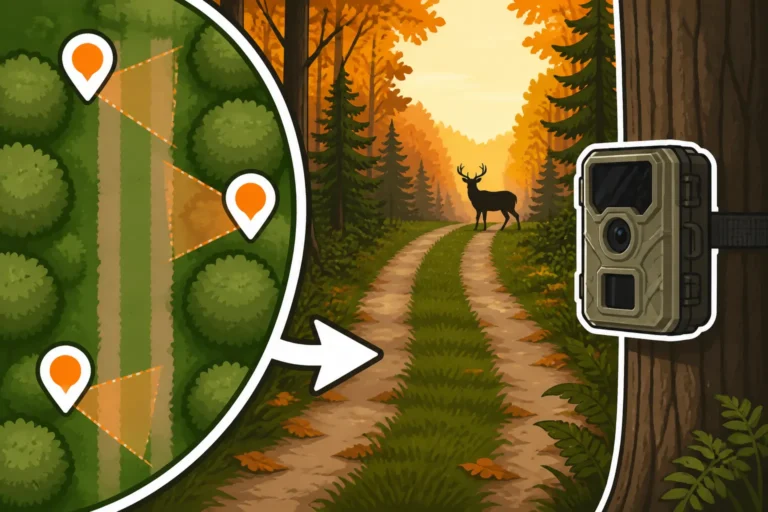
When you find blood, mark it immediately with flagging tape. Place the tape high enough on a branch so it’s visible from a distance, but not so high that it gets lost in the canopy. This creates a visual trail. Once you mark a spot, don't move until you find the next one. If you have multiple people, one person can stay at the last blood while the other searches ahead. This method ensures you always have a known reference point. If you’re utilizing a mapping app like GoHunt, drop a pin at each blood spot you find. This creates a digital trail that complements your physical flagging. The ability to see your path on a map, especially if you get turned around on flat Michigan ground or in a thick Reading a Michigan Cedar Swamp for Deer, is invaluable.
Pay attention to more than just blood. Look for tracks, especially scuff marks where a deer might have stumbled. Broken branches, pushed-aside leaves, or even strands of hair caught on thorns can provide crucial clues. If you find stomach contents, it’s a sure sign of a gut shot, which means a much longer wait is necessary, often until morning. This is a critical piece of information that helps you decide if you need to Blood Trailing After Dark in Michigan or if it’s better to back out and return at first light.
In areas of thick cover, such as a dense aspen cut or swamp edge, deer often won’t leave a copious blood trail, especially if they’re still moving. If the blood trail becomes sparse or disappears, go back to the last piece of sign you found. From there, expand your search outwards in a wider circle or a zig-zag pattern. Think about where a deer might naturally go: downwind, towards thick cover, or to water. If you've been Scouting Michigan Public Land Before Season, you might already have an idea of bedding areas or escape routes the deer would take. Consider the direction of travel the last time you saw the deer and use that as a guide. When the trail is tough, a slow, meticulous approach is always better than a fast, frantic one.
Knowing When to Call for Help or Return in the Morning
This is perhaps the hardest decision a hunter faces: when to admit defeat for the night and either call in reinforcements or wait until dawn. It takes maturity and a deep respect for the animal to make the right call. Continuing a cold trail in the pitch black when you’re tired and frustrated often leads to more mistakes and a lost deer.
When to consider calling for help:
- The trail disappears completely: You’ve gone back to the last blood, expanded your search, and found absolutely nothing for a significant distance.
- You're unsure of the shot: If you suspect a non-fatal or marginal hit (like a leg muscle or brisket), the deer could still be alive and bedded. Pushing it further could send it running a long way.
- You're on unfamiliar ground or property lines are near: Losing a deer onto land you don't have permission to enter, especially after dark, complicates things immensely. Your GoHunt app can help identify these boundaries quickly, allowing you to react appropriately.
- Weather changes: Rain or heavy dew can quickly wash away or obscure blood, making an already tough job nearly impossible.
- You're losing confidence or getting lost: Frustration breeds mistakes. If you feel overwhelmed, it's time to re-evaluate.
Calling a friend or another experienced hunter who isn't emotionally invested in the trail can often be a game-changer. Fresh eyes, especially those well-versed in Hunting the Michigan Upper Peninsula for Deer or other challenging terrains, can spot signs you've overlooked.
When to back out and return in the morning:
If the blood trail is sparse, the shot wasn't ideal (e.g., gut shot), or you simply can’t find any further sign, backing out until morning is often your best bet. A gut-shot deer will almost always die, but it needs time. If you push it, it will keep going. Leaving it overnight gives it the opportunity to bed down and expire.
Before you leave, mark the very last spot of blood extremely well with multiple pieces of flagging tape and a distinct GoHunt waypoint. Make a mental note of prominent landmarks. If you suspect the deer is still alive and bedded, try to leave the area as quietly as possible, moving in a wide circle around the suspected bedding area so as not to bump it again.
When you return at first light, the conditions will be entirely different. The morning sun can illuminate a blood trail that was invisible under artificial light, and dried blood often contrasts better against dew-covered leaves. You also won’t be battling the mental fatigue and paranoia that comes with trailing in the dark. Be aware of scavenger activity, especially from coyotes, and know that you might have to Tracking a Deer in Michigan Snow if an overnight snowfall occurs.
Here’s a quick decision matrix for when to keep trailing versus when to pause:
| Factor | Keep Trailing | Pause and Return at Dawn |
|---|---|---|
| Shot Placement | Obvious heart/lung (low chest, good exit wound) | Gut, liver, muscle, or unknown shot location |
| Blood Trail | Consistent, good volume, bright red, foamy | Sparse, dark, clotted, stops abruptly, no clear direction |
| Deer Behavior | Ran hard, tail tucked, crashed within earshot | Stumbled, walked away slowly, or trotted with tail down |
| Weather | Clear, cold, minimal chance of rain/snow | Rain, heavy fog, high humidity (washes away sign) |
| Time of Night | Early evening, still energized, fresh trail | Late into the night, fatigued, lost confidence |
| Terrain | Open woods, visible sign, easy to navigate | Thick swamp, dense brush, rocky ground, steep hills |
| Resources | Multiple lights, charged phone/GPS, team members | Alone, low battery, limited flagging, no clear plan |
Remember, the goal is a successful recovery and ethical harvest. Sometimes, the best strategy is a patient retreat. Trust your instincts, use your tools, and never give up until you’ve exhausted every reasonable option. This respect for the animal is a core part of Michigan Deer Camp Traditions and hunting ethics.
Disclaimer
Please note that hunting regulations and best practices can change. Always consult the Michigan Department of Natural Resources (DNR) official website or current hunting digest for the most up-to-date information on seasons, licensing, and rules before heading afield.