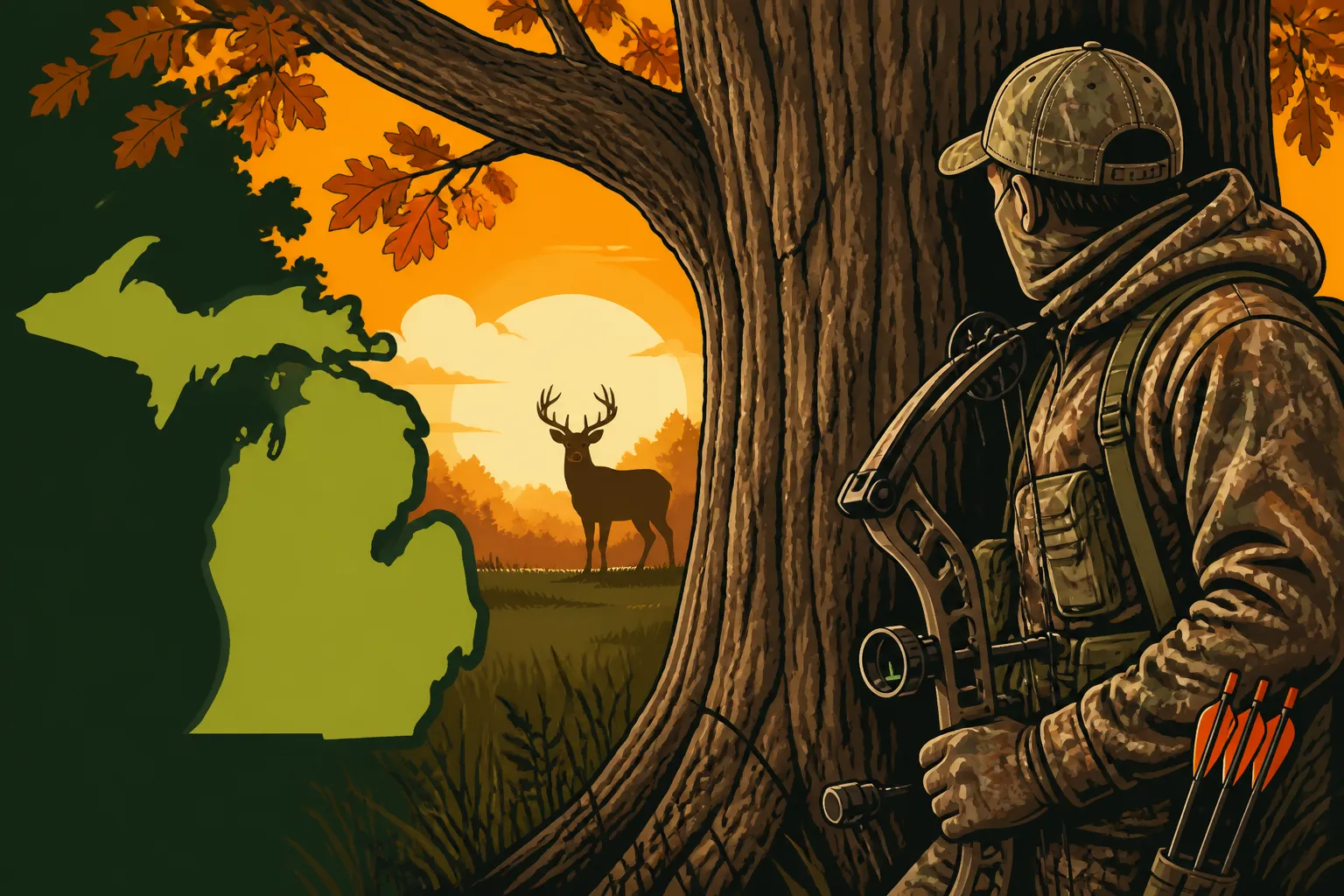
Setting Up Against a Big Oak
There’s nothing quite as frustrating as seeing deer sign everywhere – rubs, scrapes, tracks – but never actually laying eyes on the deer themselves. It’s a common frustration for hunters, especially in the diverse and sometimes challenging Michigan landscape. This comprehensive guide is here to help you unlock the secrets of one of nature's most reliable deer magnets: the majestic big oak, and precisely how to set up your hunting spot to capitalize on its undeniable draw.
Why Big Oaks are Deer Magnets in Michigan
When you're trekking through Michigan's woods, especially in the Lower Peninsula or parts of the U.P., it’s easy to get lost in the sea of maples, beeches, and pines. But if you truly want to pinpoint where the deer are spending their time, you need to start looking for the oaks. These trees aren't just another part of the forest; they're a vital part of the whitetail's diet and daily routine.
The Allure of Acorns
Acorns are, without a doubt, one of the most important food sources for white-tailed deer in Michigan. They are packed with carbohydrates, fats, and protein – essentially, nature's energy bar for deer. When acorns are dropping, deer will often abandon other food sources, even lush food plots, to gorge themselves on this calorie-rich bounty. This preference is so strong that understanding the acorn drop can be the key to your success.
Michigan boasts several species of oak, each with its own characteristics. White oaks, like the common white oak and swamp white oak, produce acorns that are less bitter, lower in tannins, and generally preferred by deer. These acorns tend to drop earlier in the fall, often from late September through October. Red oaks, which include species like northern red oak, black oak, and pin oak, have more bitter acorns due to higher tannin content. They usually drop later in the fall, from late October through November, and can even persist into the early winter, providing a critical food source when other options are scarce. Knowing the difference and identifying the dominant oak species in your hunting area is crucial for timing your hunts. If you've been having trouble finding deer, especially in the late season, it might be worth investigating if there's been an Hunting After an Acorn Failure in your area, or if the deer have simply shifted to a different species of oak dropping later.
Cover and Security Features
Beyond the edible gold they produce, big oaks often grow in mature timber stands, providing a sense of security and cover for deer. A large oak with a sprawling canopy offers shade on warm early season days and some protection from the elements as the weather turns colder. The sheer size of a mature oak often means it's surrounded by older growth, which can provide good bedding cover nearby or act as a staging area before deer move into more open feeding grounds.
Deer are constantly seeking out areas that offer both food and security, and a cluster of large oaks perfectly fits this bill. In areas with significant hunting pressure, deer become incredibly sensitive to feeling exposed. A large oak provides a solid anchor point in the landscape, a landmark they recognize and associate with safety while feeding. They might not bed directly under the biggest oak, but the immediate vicinity often offers thicker saplings, fallen logs, or subtle terrain features that create ideal bedding spots within a short, comfortable walk of their primary food source. This synergy of food and cover makes mature oak stands irresistible to whitetails throughout the fall and early winter.
Deciphering Deer Sign Around Your Oak
Locating a big oak is only the first step; understanding how deer are using it is what truly unlocks its potential. Michigan's diverse landscapes mean deer behavior can vary slightly from one region to another, but the universal language of deer sign remains constant. You need to become a detective, piecing together clues to predict their movements.
Identifying Active Feeding Zones
When deer are feeding heavily on acorns, they leave behind tell-tale signs. The most obvious, of course, are droppings. Fresh droppings, soft and dark, indicate recent activity. Look for clusters of droppings directly under the canopy of the oak, especially if they’re scattered, suggesting a deer spent a good amount of time browsing. You might also notice disturbed leaf litter, particularly if the ground is soft or damp. Deer paw and root through the leaves to uncover buried acorns.
Focus your scouting efforts on the ground beneath the canopy. Are there areas where the acorns seem to be disappearing faster? Is the soil disturbed in a way that suggests consistent pawing? These are your hot spots. In Michigan, with its often thick underbrush, finding these exact feeding zones can be tricky, but mapping apps like GoHunt can help you overlay aerial imagery with topo maps to get a better sense of canopy cover and potential food sources from a distance. Once you're on the ground, you can then confirm your suspicions by finding the actual sign. If you’re seeing sign under a variety of oaks, prioritize the ones with the freshest and most concentrated droppings. This tells you which specific trees are currently dropping the most palatable acorns or are being visited most frequently.
Locating Travel Corridors
Deer don't just appear under an oak; they travel to it. Your goal is to identify the main arteries and smaller capillaries that lead them to their feast. Look for well-worn trails radiating out from the oak. These trails will often connect to bedding areas, water sources, or other preferred food plots. Pay attention to the size and freshness of the tracks on these trails. Larger, deeper tracks indicate a bigger deer, and fresh tracks are always a good sign.
In Michigan's varied terrain, these travel corridors could be anything from a subtle path through a cedar swamp to a well-defined two-track road. Bucks, especially, will often skirt the edges of thick cover or use natural funnels to approach a feeding area. Keep an eye out for rub lines leading to or from the oak, as these often mark a buck's preferred travel route. A line of rubs, perhaps along a Scrape Lines Along a Two-Track or a ridge, can be a clear indication of a mature buck's presence and direction of travel. Knowing these routes is critical for placing your stand where you can intercept deer moving to or from the oak, rather than directly over the feeding area itself, which can be disruptive. Finding Sign in Big Timber takes patience, but it’s essential to understanding deer movement.
Rubs and Scrapes
While droppings and trails tell you where deer are feeding and moving, rubs and scrapes are direct communications from bucks. A rub is where a buck has polished its antlers on a sapling or tree, signaling its presence and dominance. Scrapes are pawed-out areas of bare earth, often under an overhanging branch, where bucks deposit urine and scent from their forehead glands. These are essentially calling cards.
Around a big oak, especially during the pre-rut and peak rut, you might find scrapes and rub lines nearby. Bucks will often check these food sources while cruising for does or marking their territory. An active scrape near an oak can be an absolute magnet. Pay attention to the size of the rubs – larger rubs on bigger trees usually indicate a more mature buck. While the primary focus is often food, if you find fresh rubs and scrapes, it adds another layer to the oak's appeal, turning it into a social hub for deer. Remember, if you're thinking of making calls, understanding the surrounding sign can help you decide on the appropriate calling volume; for instance, Rattling and Grunting in Michigan can be highly effective near an active scrape line.
Strategic Treestand Placement for a Big Oak
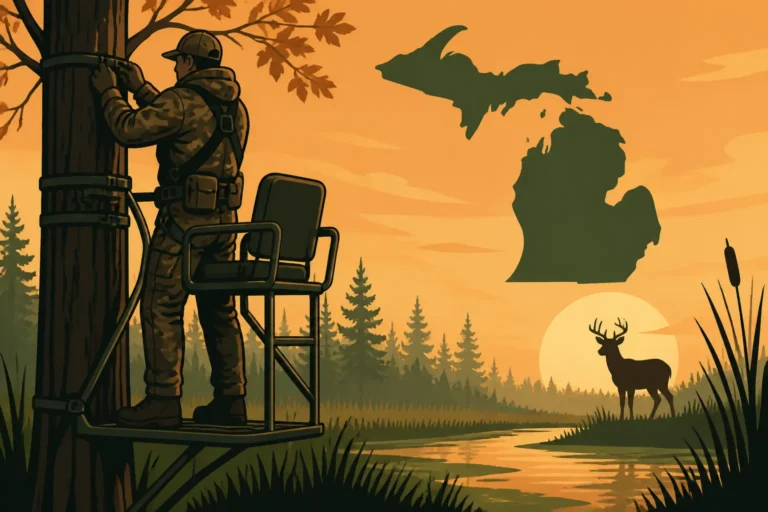
Once you've found a productive oak and deciphered the deer sign, the next critical step is positioning your stand. This isn't just about finding any tree to climb; it's about meticulous planning to maximize your chances and minimize your impact.
Playing the Michigan Wind and Thermals Correctly
This is perhaps the single most important factor in treestand placement, especially in Michigan where winds can shift unpredictably, and terrain can create subtle thermal currents. Your scent will travel, and a deer's nose is its primary defense. You absolutely must position yourself so that your scent cone is blowing away from where you expect deer to approach and feed. This often means having multiple stand locations for different wind directions, or at least being prepared to move if the wind isn't right.
In areas with varied topography, like Michigan's rolling hills or river bottoms, thermals can be just as crucial. Early in the morning, cold air sinks, carrying your scent downhill. In the evening, rising warm air can carry your scent uphill. This dynamic can override prevailing winds in certain situations. Always consider how your scent will move, not just horizontally, but vertically. Using a reliable app like GoHunt can give you real-time wind direction and speed, helping you make informed decisions before you even step foot in the woods. Failing to account for wind or thermals is a surefire way to educate deer and blow your spot. It’s a harsh lesson many Michigan hunters learn the hard way, but crucial for success, especially when considering Wind and Thermals on Michigan Ridges.
Silent Access and Exit
Even the perfect stand location is useless if you spook deer getting in or out. Deer are incredibly sensitive to noise and movement, and educating them about your presence in their sanctuary will make them nocturnal or push them off your property entirely. Your access route should be as discreet as possible. Think about using natural features for concealment – creek beds, logging roads, fence lines, or dense thickets – that allow you to get close without being seen or heard.
Plan your route well in advance, scouting it during daylight, preferably not during hunting season. Consider what time of day you'll be entering and exiting. If deer are typically feeding at first light, you need an entry route that doesn't cross their likely path. Conversely, if you plan to hunt until dark, you need an exit that won't bump deer still feeding. Sometimes, the best approach might mean taking a longer, roundabout path to avoid disturbing the core area. For hunters utilizing public land, understanding how to plan effective Entry Routes on Flat Michigan Ground can significantly reduce pressure on your chosen oak.
Optimal Shot Angles and Lane Clearing
Once you've considered wind and access, think about the shot itself. How will the deer typically approach? What are the most likely feeding spots under the oak? Position your stand to give you dominant shooting lanes into these areas. Ideally, you want to be able to take a comfortable, ethical shot without excessive movement.
This often means clearing some shooting lanes, but do so judiciously and well before the season, if possible. You don't want to create a glaring "shooting tunnel" that makes deer suspicious. Instead, prune small branches or clear brush that would obstruct an arrow or bullet. Think about the sun's position throughout the day; you don't want to be staring directly into the rising or setting sun. Also, consider the background. Having a dark, cluttered background behind where you expect a deer to appear can help conceal your movements. For more general advice on stand placement, revisiting strategies for Treestand Setups in Michigan Hardwoods can be highly beneficial.
Hunting Tactics for Maximum Success Near Oaks
Hunting a big oak isn't a one-size-fits-all endeavor. Deer behavior changes throughout the season, and your tactics need to adapt accordingly. Understanding these shifts is key to making the most of your time in the stand.
Pre-Rut and Peak Rut Strategies
During the early stages of the pre-rut, typically in late October in Michigan, bucks start to get on their feet more, marking territory with rubs and scrapes, and beginning to check traditional doe feeding areas. A productive oak can be a hot spot during this time, as does will still be frequenting it for food, and bucks will cruise through, hoping to catch a scent of a receptive doe. This is an excellent time to target a big oak that's showing signs of both feeding and buck activity. You might even observe younger bucks sparring under the canopy as they test their dominance.
As the rut peaks, usually the second week of November in Michigan, deer movement becomes less predictable, but big oaks still play a role. While bucks might be more focused on chasing and breeding, they (and the does they're pursuing) still need to eat. An oak stand surrounded by thick cover can be an ideal ambush point, as a buck might push a doe into it for a brief reprieve or a quick snack. Hunting these periods requires patience and being ready for action at any moment. Targeting the Hunting the Pre-Rut in Late October or hitting the woods during the Hunting the Peak Rut Week in Michigan around these key food sources can lead to incredible encounters.
Late Season Acorn Exploitation
When Michigan's harsh winter weather sets in, and other food sources like agricultural crops or green browse become scarce, acorns, particularly from red oaks that drop later, become an even more critical lifeline for deer. If you've got a stand of red oaks still dropping, or if deer have stashed acorns, you've found a gold mine. This is when deer will concentrate their feeding efforts, often visiting the same trees repeatedly.
Hunting these late-season acorn sources can be challenging due to cold weather and often more wary deer. However, the payoff can be huge. Deer need calories to survive the winter, and they will hit these spots hard, often mid-day when the sun provides a bit of warmth. If you're out during Muzzleloader Tactics in December Cold, or even during the late archery season, focusing on these specific oak stands can significantly increase your odds. Bundle up, stay warm, and be prepared for less movement, but more concentrated activity.
Managing Pressure
One of the biggest mistakes hunters make is over-hunting a productive spot. When you find that magical big oak, it's tempting to sit it every time you go out. However, excessive pressure will quickly turn deer nocturnal or push them to a different, less disturbed area. Deer learn quickly. If they constantly detect human scent or see your presence, they will adapt.
Instead, think of your big oak as a valuable asset to be used strategically. Hunt it sparingly, perhaps only when the wind is perfect, or when fresh sign indicates peak activity. Consider rotating between a few different setups, even if they're not all as productive. Use your mapping tools like GoHunt to identify other potential oak stands in your area, or even transition areas where deer might be moving through before hitting your primary oak. Spreading out your hunting pressure is vital for long-term success, especially on public land. The more you understand Hunting Pressure on Michigan State Land, the better you can manage your spots to keep them hot throughout the season.
| Oak Species | Acorn Preference by Deer | Typical Drop Time (Michigan) | Tannin Content | Notes |
|---|---|---|---|---|
| White Oak | High | Late September – October | Low | Often preferred first due to sweetness; critical early season food. |
| Swamp White Oak | High | Late September – October | Low | Similar to White Oak, found in wetter areas; highly palatable. |
| Northern Red Oak | Moderate – High | Late October – November | Moderate | Becomes more palatable after a few frosts; key late-season food source. |
| Black Oak | Moderate | Late October – November | High | More bitter, but still eaten, especially when preferred sources are scarce. |
| Pin Oak | Moderate | November – Early December | Moderate | Often one of the last oaks to drop, providing crucial winter food. |
Disclaimer
Hunting is an inherently dangerous activity. Always prioritize safety, understand and follow all Michigan hunting regulations, and obtain appropriate licenses and tags. The information provided in this guide is for informational purposes only and should not replace proper hunter education or professional guidance. Always verify current regulations with the Michigan Department of Natural Resources (DNR).