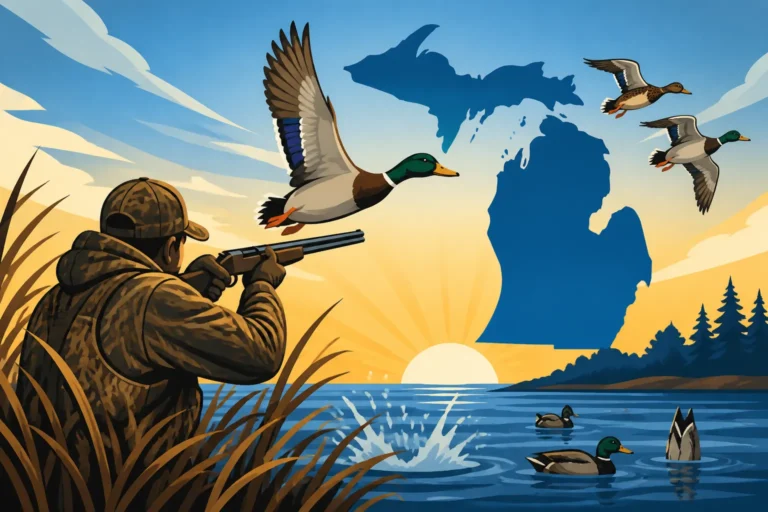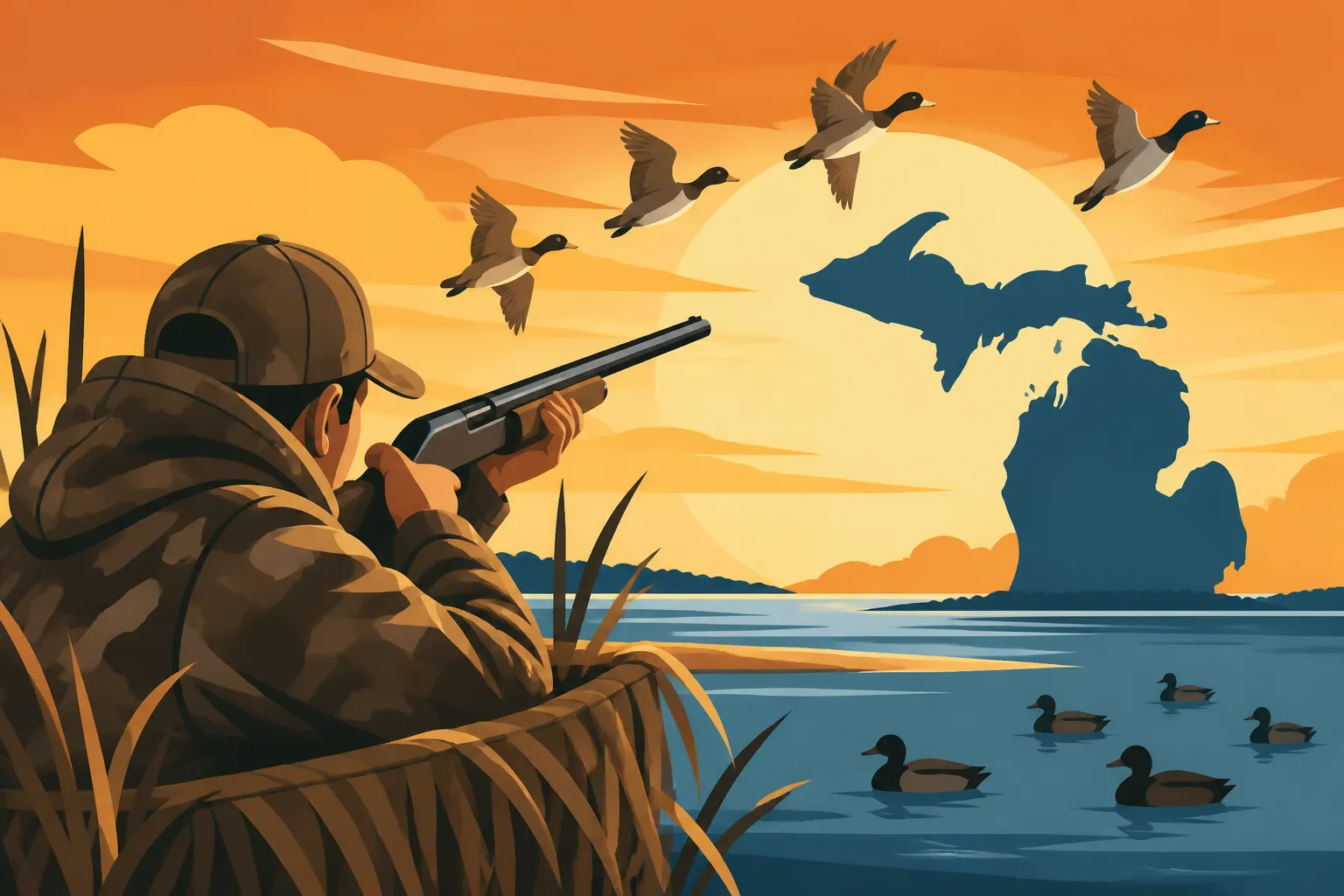
Layout Hunting Saginaw Bay
There's nothing quite like the allure of big water hunting, but for those of us who've faced the vast, unpredictable expanse of Saginaw Bay, we know it's a challenge unlike any other. The sheer size, the swift changes in weather, and the relentless currents can make or break a hunt, leaving many feeling overwhelmed or even unsafe. This guide aims to pull back the curtain on successful layout hunting on Saginaw Bay, helping you navigate its unique demands and put more diver ducks in your strap.
Understanding Saginaw Bay for Layout Hunting
Saginaw Bay, an enormous freshwater bay on Lake Huron, is a true gem for waterfowl hunters, especially those chasing diver ducks. However, its immense size and exposure to the elements demand a level of respect and preparation that differs significantly from hunting smaller marshes or inland lakes. Ignoring these factors can quickly turn a hopeful morning into a precarious situation.
The Unique Challenges of Big Water
The biggest frustration with Saginaw Bay, hands down, is its unpredictable nature. One moment, you might have calm, glass-like conditions, perfect for setting decoys and enjoying the sunrise. The next, a stiff breeze can whip up whitecaps, turning a smooth ride into a choppy, bone-jarring ordeal. These rapid weather changes are not just uncomfortable; they can be downright dangerous. Currents, often unseen until you're trying to anchor or retrieve a downed bird, can drag your spread or push your boat off course faster than you'd expect. The sheer exposure means there's little to no shelter once you're out there, emphasizing the critical need for a reliable boat, extensive safety gear, and a keen eye on the forecast. It’s not a place to take shortcuts or venture out ill-prepared.
Key Waterfowl Species and Migration
Saginaw Bay is a major stopover for a wide array of waterfowl during their annual migrations, making it a hotspot for diversity. While you might encounter mallards or other dabblers closer to shore, the true stars of the big water are the divers. Bluebills (scaup) are probably the most common, often seen in vast rafts, but you’ll also find respectable numbers of redheads, canvasbacks, goldeneyes, and buffleheads. These birds thrive in the open water, feeding on submerged vegetation and invertebrates. Their migration patterns dictate the best times to hunt. Early in the season, you'll see a mix, but as November rolls in and the weather turns colder, the diver numbers really swell, bringing in fresh waves of migrating birds from further north. Understanding these movements is key to being in the right place at the right time.
Navigating Access and Public vs. Private Areas
Accessing Saginaw Bay for layout hunting requires careful planning. While there are numerous public launch sites, knowing which ones are suitable for launching a tender boat and getting out to your desired hunting grounds is crucial. Places like Bay City State Park, Linwood Beach, and various points around Quanicassee offer public access, but ramp conditions, parking, and proximity to good hunting spots can vary. It’s also vital to be aware of property lines and regulations. While much of the bay is public water, there are private shorelines and designated safety zones or sanctuaries you absolutely must avoid. Using mapping tools like the Mi-HUNT map from the DNR or layers on commercial apps like GoHunt can help you identify public land boundaries and avoid accidental trespass. Always confirm regulations for specific areas, as rules can change, particularly around certain managed waterfowl areas that might have their own unique access points or restrictions. You can find more details on Saginaw Bay Public Access Sites to help plan your launch.
Essential Gear and Boat Setups for Saginaw Bay
Success on Saginaw Bay hinges not just on knowing where to go, but on having the right equipment. This isn't your grandpa's johnboat for pond hunting; big water demands specialized gear and a well-thought-out setup to ensure both effectiveness and, most importantly, safety.
The Layout Boat and Tender Boat Combination
The heart of layout hunting on Saginaw Bay is the tandem setup: a low-profile layout boat from which you shoot, and a larger, more stable tender boat. The layout boat, specifically designed to blend in with the water's surface, allows you to hide effectively amidst your decoys, appearing as just another clump of vegetation or a floating log to wary ducks. Brands like Bankes, TDB, or Momarsh offer various models, each with slightly different features, but all share the common goal of concealment and stability. However, these small boats are exposed and offer minimal protection, which is why the tender boat is absolutely critical.
The tender boat is your command center, safety vessel, and mobile base. It's typically a larger, more seaworthy boat—often a V-hull or similar design, at least 16-18 feet—capable of handling choppy conditions and equipped with a powerful, reliable outboard motor. This vessel serves several vital roles: it transports your layout boat, decoys, gear, and hunting partners to the hunting grounds, acts as a safe haven during inclement weather, and is used to retrieve downed birds and hunters from the layout boat. It must be able to deploy your decoy spread, anchor securely, and remain safely out of sight but within communication range. Never, ever attempt layout hunting on Saginaw Bay without a properly equipped and operated tender boat. The tender boat operator plays a crucial role, often spending the hunt observing from a distance, ready to react to changes in weather or an emergency.
Decoy Spreads for Diver Ducks
When it comes to diver ducks on Saginaw Bay, bigger is almost always better for decoy spreads. These birds travel in large groups, and a small, anemic spread simply won't cut it. You're typically looking at spreads of 100 to 200 decoys, sometimes even more. The key is to create a massive, visible "blob" or "U" shape that simulates a resting raft of ducks. Diver decoys, like bluebills, redheads, and canvasbacks, should dominate the spread, mimicking the species you're targeting. Some hunters mix in a few coots or geese on the edges to add realism.
Unlike puddle duck spreads, diver spreads often involve long lines—lengths of heavy cord with multiple decoys spaced along them, anchored at both ends. This allows you to deploy a vast number of decoys efficiently and keeps them from tangling in heavy currents or strong winds. Positioning your layout boat within the "cup" or open part of your "U" spread, downwind, is crucial. This placement encourages incoming birds to fly over the decoys and directly into your shooting lane, offering optimal shots. For more detailed insights into different configurations, check out Diver Decoy Spreads and Long Lines. Quality decoys that ride the waves realistically and hold up to the harsh conditions of big water are an investment that pays off season after season.
Safety Gear and Communication
Hunting Saginaw Bay without adequate safety gear is a gamble you should never take. The vastness and potential for rapid weather changes make a comprehensive safety plan paramount. First and foremost, everyone on board both the tender and layout boat must have a U.S. Coast Guard-approved life jacket, and it's highly recommended they be worn at all times, not just stored away. Beyond that, a reliable VHF radio is non-negotiable for communicating with your tender boat operator and, if necessary, with the Coast Guard or other vessels. Cell phones can be unreliable or lose signal far out on the bay.
A GPS unit, whether standalone or integrated into your chartplotter, is essential for navigation, marking your hunting spot, and finding your way back to the launch, especially in fog or low light. Flares or other visual distress signals are vital for attracting attention in an emergency. A working kill switch on your tender boat's motor, attached to the operator, is a critical safety device that prevents the boat from running away if the operator falls overboard. Don't forget basic emergency supplies like a first-aid kit, extra warm clothing (even on mild days), a bailing bucket, a spare anchor, and a knife. Before heading out, always let someone on shore know your float plan – where you're going, who's with you, and when you expect to return. This simple step can be a lifesaver. For a more comprehensive look at what to pack, refer to Big Water Safety in a Layout Boat.
| Safety Item | Why It's Critical on Saginaw Bay | Notes |
|---|---|---|
| Life Jackets (PFDs) | Essential for everyone; big water is unforgiving. | Wear at all times, not just stored. USCG approved. |
| VHF Radio | Reliable communication with tender, other boats, Coast Guard. | Cell phones can fail. Test before each trip. |
| GPS Unit | Navigation in fog, low light; finding marked spots. | Mark your launch, hunting spots, and any hazards. |
| Flares/Distress Sig. | Visual signal for help in emergencies. | Check expiration dates. |
| Kill Switch | Prevents runaway boat if operator falls overboard. | Always attach to operator. |
| Anchor (Main & Spare) | Secure tender and layout boat in currents/wind. | Sufficient weight and line for conditions. |
| First-Aid Kit | Basic medical needs for cuts, scrapes, minor injuries. | Waterproof and easily accessible. |
| Extra Warm Clothes | Hypothermia risk is real even on warmer days if wet. | Stored in dry bags. Wool/synthetics are best. |
| Bailing Bucket | Manual removal of water from boat. | Always have one, even with bilge pumps. |
| Navigation Lights | For safe travel in low light or darkness. | Ensure all lights are functional. |
Tactics for Successful Layout Hunting on the Bay
Once you've got your gear dialed in, it's time to talk strategy. Saginaw Bay’s temperament means you can't just drop decoys anywhere; you need a thoughtful approach to scouting, setup, and adapting to the elements.
Scouting and Location Selection
The golden rule of hunting applies double on Saginaw Bay: you can’t shoot ducks where they aren’t. Scouting is paramount. Before you even think about putting a boat in the water, spend time observing from shore with good optics. Look for rafts of diver ducks feeding or resting. Pay attention to their flight paths, especially in relation to the wind. Divers often prefer certain depths, shoals, or areas with specific submerged vegetation. Using tools like GoHunt or Michigan DNR's interactive maps can help identify these underwater contours and potential weed beds, which are prime feeding grounds.
Wind direction is a critical factor when selecting your hunting spot. Ducks typically land and take off into the wind, so you want your spread and layout boat positioned to take advantage of this behavior. A consistent west wind, for example, might push birds along a certain flyway or into a protected pocket of the bay. Don’t be afraid to change spots if your initial choice isn’t producing. Saginaw Bay is huge, and what worked yesterday might not work today due to subtle shifts in bird behavior or weather. Early season scouting can reveal patterns that will pay off throughout the fall, giving you a valuable edge.
Setting Up Your Spread and Hiding Your Tender
The art of deploying a layout spread involves precision and efficiency. Once you've chosen your location, the tender boat is used to systematically set out your long lines of decoys. Remember, you're trying to create a realistic, inviting environment for incoming divers. The "U" or "J" shape is popular, with the opening facing into the prevailing wind. Your layout boat will then be anchored within this "cup," allowing ducks to approach over the decoys before getting within shooting range. The goal is to make the layout boat appear as part of the decoy spread, a subtle bump in the water rather than a threat.
After the layout boat is deployed and the hunter is settled in, the tender boat must retreat a significant distance – often a half-mile or more – and be completely hidden from the view of approaching birds. This usually means finding a deeper spot where it can drop anchor and the crew can wait out the hunt, sometimes using a pop-up blind or natural cover if available. Maintaining discreet communication via VHF radio between the layout boat hunter and the tender boat operator is crucial, especially for retrieving downed birds or in case of an emergency. This meticulous setup, while time-consuming, is what ensures birds will commit to your spread without flaring.
Reading the Wind and Weather
Saginaw Bay is a master of disguise when it comes to weather. A beautiful sunrise can quickly give way to a squall, and a gentle breeze can escalate into a gale force wind in a matter of hours. Constantly monitoring the wind and weather forecast is not just good practice, it’s a non-negotiable safety measure. The wind directly impacts how your decoys ride the waves, how birds approach your spread, and most importantly, the safety of your tender and layout boats.
A strong wind can make it incredibly difficult to shoot accurately, cause excessive decoy movement that looks unnatural, and make retrieving birds a significant challenge. Changing winds might also shift bird flight paths, rendering your perfectly placed spread ineffective. Always check the marine forecast before heading out, paying close attention to wave heights, wind speed, and direction. Be prepared to pull up stakes and head for shore if conditions deteriorate. No duck is worth risking your life or your boat. Learning to predict these changes and having a contingency plan is a hallmark of an experienced Saginaw Bay layout hunter. You can often predict big changes by watching cloud formations or subtle shifts in wave patterns.
Legal Considerations and Best Practices
Michigan has specific regulations to ensure safe and responsible waterfowl hunting, and Saginaw Bay, being part of the Great Lakes, has its own unique nuances. Adhering to these rules isn't just about avoiding fines; it's about preserving the resource and ensuring the safety of all water users.
Michigan Waterfowl Regulations
Navigating waterfowl regulations can feel like a maze, but it's essential for a successful and legal hunt. First, you'll need a Michigan Base License, a Michigan Waterfowl License, and a Federal Duck Stamp. Don't forget to complete your Michigan Migratory Bird Hunter Information Program (HIP) survey. These are all mandatory before you even set foot in a boat. You can find information about these requirements, including costs, on the DNR website. Also, familiarize yourself with the specific season dates and bag limits, which can vary by species and by zone. Saginaw Bay falls within the Michigan Duck Zone Boundaries, so understanding which zone you're in and its specific dates is vital.
Additionally, pay close attention to the Michigan Duck Daily Bag Limit for various species, as some have tighter restrictions than others. For example, pintails or canvasbacks might have much lower limits than bluebills. Remember, nontoxic shot is legally required for all waterfowl hunting, so leave the lead at home. Hunters also need to be aware of legal shooting hours, which are typically from 30 minutes before sunrise until sunset. Always carry a copy of the current Michigan Waterfowl Hunting Guide, either digitally or physically, to quickly reference any rules if needed. Make sure you're up-to-date on your Michigan Federal Duck Stamp Rules and Michigan HIP Certification for Bird Hunters.
Ethical Hunting and Conservation
Beyond the legal requirements, ethical considerations are crucial for any responsible hunter, especially on big water. Minimizing disturbance to other hunters and wildlife is paramount. Give other hunting parties ample space; Saginaw Bay is vast, so there's usually no need to crowd anyone. Be mindful of boat traffic, especially around busy channels or during fishing seasons.
When shooting, ensure you take clean, ethical shots that lead to quick kills. Wounded birds on big water can be incredibly challenging to retrieve, and leaving crippled birds is a disservice to the resource. Your tender boat operator plays a key role here, acting as a spotter and swiftly retrieving downed birds to prevent them from drifting away in currents or being lost in the waves. Always retrieve every bird you shoot; that’s part of the hunter’s unspoken contract with the game. Proper care of harvested birds, like gutting and cooling them quickly, also demonstrates respect for the animal. Participating in conservation efforts, even just through purchasing your licenses and stamps, contributes directly to habitat preservation and healthy waterfowl populations for future generations to enjoy.
Disclaimer
The information provided in this guide is for general informational purposes only and is not a substitute for official regulations. Hunting laws and regulations in Michigan can change frequently. Always consult the current Michigan Department of Natural Resources (DNR) hunting digests and local ordinances before engaging in any hunting activities. Safety should always be your top priority.