Michigan Waterfowl Seasons and Zones
Trying to make sense of Michigan's waterfowl seasons and zones can feel like trying to hit a fast-flying teal with a slingshot – confusing, challenging, and often frustrating! With different opening and closing dates, varying bag limits, and specific regulations for ducks versus geese, it’s a lot to keep straight. This comprehensive guide is here to untangle the complexities, ensuring you understand exactly what you need to know to pursue ducks and geese across the Great Lake State, from the big water to the back forty.
Understanding Michigan's Waterfowl Zones
Michigan's diverse geography, from the vast expanse of the Great Lakes to the winding rivers and inland marshes, means that waterfowl migration patterns vary significantly across the state. To effectively manage these migratory birds and provide equitable hunting opportunities, the Michigan Department of Natural Resources (DNR), in cooperation with the U.S. Fish and Wildlife Service, has divided the state into distinct waterfowl zones. Each zone has its own set of season dates, tailored to better align with the arrival and departure of different species.
The Three Main Duck Zones
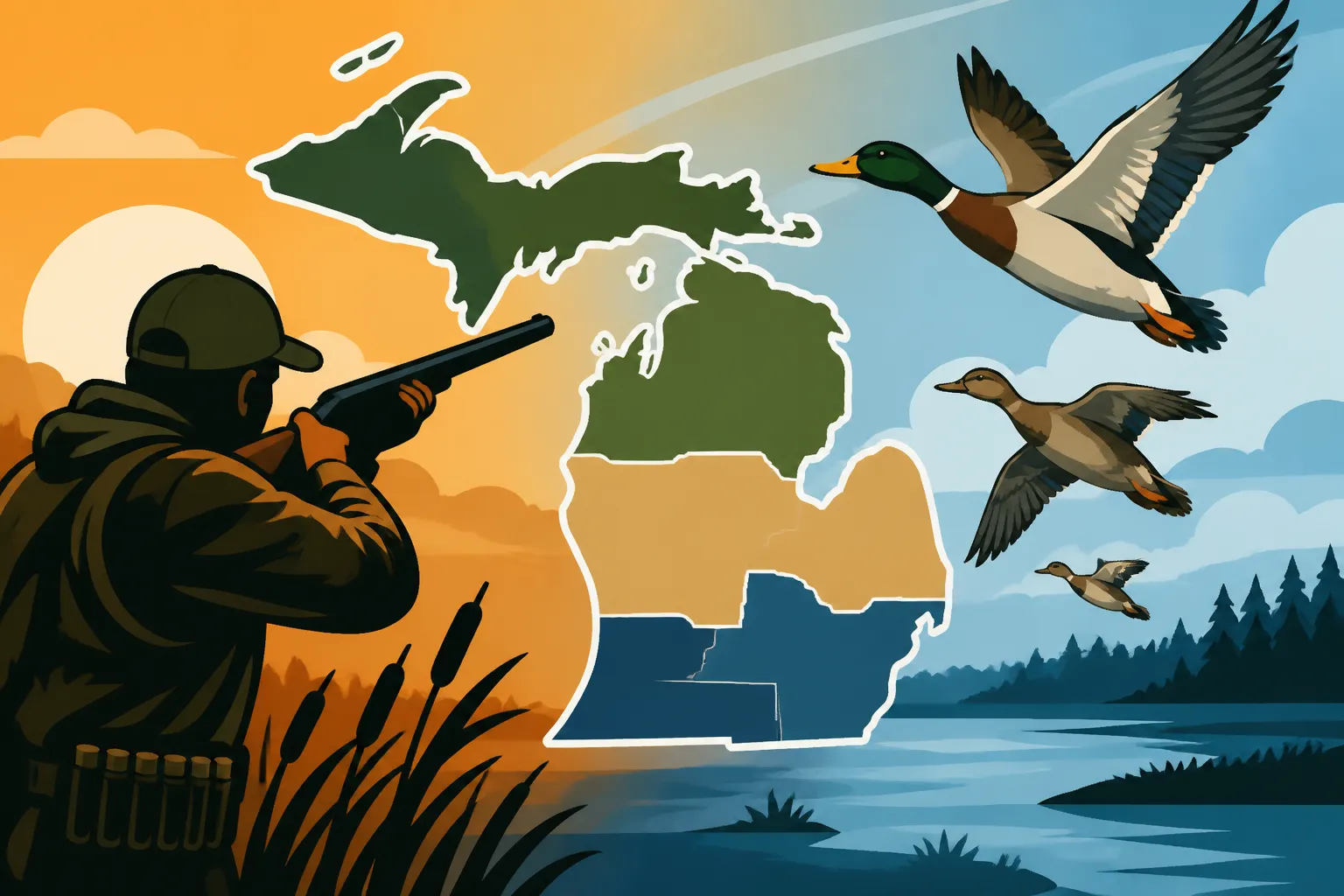
Michigan is primarily segmented into three duck zones: the North Zone, the Middle Zone, and the South Zone. These zones are meticulously drawn to reflect the progression of fall migration, with seasons generally opening earlier in the northern reaches and later as you move south. The logic here is simple: ducks and geese typically move south as colder weather sets in, pushing them out of their northern breeding grounds.
The North Zone covers the entire Upper Peninsula and the northernmost tip of the Lower Peninsula. This zone experiences the earliest freezes and, consequently, the earliest migrations. Hunters here often target resident birds and the first wave of migrants, enjoying a season that kicks off in late September. It’s a rugged landscape, often characterized by vast state forests and remote lakes.
Moving south, the Middle Zone encompasses a significant portion of the northern Lower Peninsula, extending down to a line roughly from Muskegon across to Bay City. This zone's season usually opens a week or two after the North Zone, catching the bulk of the early to mid-fall migration. Waterfowl here often utilize the larger inland lakes and the numerous rivers that feed into the Great Lakes. Hunters in this zone might find themselves battling early season crowds on popular waters but can also find solitude in more remote areas.
Finally, the South Zone covers the vast majority of the southern Lower Peninsula, the most populated part of the state. Its seasons open the latest, typically in mid-October, designed to coincide with the peak migration of ducks and geese pushed down from the zones to the north and Canada. This is often where hunters experience the "grand finale" of the migration, with a mix of puddle ducks, diver ducks, and Canada geese. Farm fields, larger rivers like the Saginaw River, and extensive marsh systems define much of the hunting here. Understanding which zone you are hunting in is not just a suggestion; it's a fundamental requirement, and the season dates can vary by several weeks between zones. Always double-check the official DNR regulations before heading out.
Goose Management Units and Seasons
While ducks are managed through the three primary zones, goose hunting, especially for Canada geese, introduces another layer of complexity with specific Goose Management Units (GMUs). These units are designed to manage different populations of Canada geese, particularly the abundant resident populations versus the migratory flocks. It’s not uncommon for goose season dates and bag limits to differ from duck seasons, even within the same geographic zone.
The Early Canada Goose Season, for instance, typically runs statewide in September, often before the regular duck seasons even begin. This season is specifically designed to target the numerous resident Canada geese that breed and raise their young in Michigan. These birds can be quite a nuisance in urban and agricultural areas, and the early season provides an opportunity to reduce their numbers before migratory birds arrive and complicate identification. Hunters participating in this early period often find success in agricultural fields, small ponds, and even urban green spaces where these geese congregate. The bag limits during this season are usually very generous, reflecting the DNR's goal to manage these local populations. For some helpful tips on how to capitalize on this opportunity, you might want to read more about Early Goose Season Tactics in Michigan.
Beyond the early season, regular goose seasons are often structured within larger goose management units that can overlap or differ slightly from the duck zones. These units might include the North Zone, Middle Zone, and South Zone, but also specific units like the Saginaw County Goose Management Unit or the Allegan County Goose Management Unit. These smaller, more localized units often have unique season dates and quotas due to specific management objectives, often related to localized populations or agricultural damage concerns. For example, Allegan County has historically had very specific goose regulations, including draw hunts and reporting requirements, due to its importance as a staging area for migrating geese and its proximity to state game areas managed for waterfowl. It’s absolutely critical to consult the Michigan Waterfowl Hunting Guide each year, as these units and their specific rules can change.
Unique Seasons for Specific Birds
Beyond the main duck and goose seasons, Michigan offers special hunting opportunities for specific species, allowing hunters to target particular birds when their populations are peaking or when management objectives call for it. Two prime examples are the early teal season and, to a lesser extent, the seasons for woodcock and snipe, which are often pursued by bird hunters even though they're not technically "waterfowl" in the same category as ducks and geese.
The Early Teal Season is a beloved fixture for many Michigan waterfowlers, typically running for a week or two in early to mid-September, just before the regular duck seasons. This specialized season targets early-migrating blue-winged teal, offering fast-paced action and a chance to get into the marsh before the full fall migration is underway. Teal are incredibly quick and acrobatic flyers, providing a challenging shoot. The season is timed to specifically target blue-winged teal before other duck species have migrated south, minimizing the chance of misidentification. Positive identification is paramount, as shooting other duck species during the teal-only season is illegal. Hunters often find success in shallow marshes, flooded fields, and slow-moving rivers where teal prefer to feed on aquatic insects and seeds. You’ll need to be especially vigilant in distinguishing blue-winged from green-winged teal, as both can be present, and it's essential to only target the species legally open.
While not waterfowl, woodcock and snipe seasons often overlap with duck and goose seasons and are pursued by wingshooters. Woodcock, with their distinctive long bills and erratic flight, are forest-dwelling migratory birds often found in young, regenerating aspen stands and alder thickets. Their season typically opens in late September and runs into November, aligning with their southward migration through Michigan. Snipe, on the other hand, are shorebirds that inhabit wet, marshy areas, often found in the same environments as ducks. Their season is usually similar to the woodcock's. While specialized hunts for these birds exist, it’s not uncommon for a duck hunter to encounter a woodcock flushing from dense cover on the way to a blind or to jump a snipe from a marsh edge. For those interested in pursuing woodcock, remember that finding good habitat is key, often coinciding with areas managed for Grouse Hunting Michigan Aspen Cover or Woodcock Hunting Michigan Alder Runs. These birds provide an additional challenge and an excellent excuse to spend more time afield during the autumn months.
Navigating Michigan Duck Seasons and Bag Limits
Understanding the overarching zone structure is just the first step. The real challenge comes in knowing the specific season dates and the often-complex daily bag and possession limits for various duck species. These regulations are designed to ensure sustainable populations while providing hunting opportunities. Ignoring them can lead to serious consequences, not to mention a negative impact on the resource we all cherish.
Key Dates and Season Lengths
Michigan's duck seasons, while governed by the three main zones, still feature specific opening and closing dates that change slightly year to year based on federal frameworks and state biological recommendations. However, there's a predictable pattern to these dates that you can generally rely on.
The North Zone typically kicks off its duck season in late September, usually around the 23rd or 24th of the month. This allows hunters to pursue early migrants and resident birds before harsh weather pushes them further south. The season in the North Zone usually runs for about 60 days, often split with a short closure in between, usually in early to mid-October, before reopening for a longer stretch. This split is designed to avoid hunting during a period when few birds are moving through, maximizing opportunities when migration is more active.
The Middle Zone generally opens its duck season about a week or two after the North Zone, usually in early October. Like the North Zone, it typically has a split season, often with a closure around the same time in October. The middle zone also runs for about 60 days. This timing is critical for intercepting the main push of ducks from Canada and the northern parts of Michigan.
The South Zone has the latest opening date, usually in mid-October. This timing is calculated to hit the peak of the fall migration when a substantial number of ducks have moved into the region, often following major cold fronts. Its season is generally continuous, running for the full 60 days without a split, often extending into December, providing late-season opportunities, especially in larger bodies of water or where food sources persist.
These general timelines are important for planning, but it cannot be stressed enough: always consult the current year's Michigan Waterfowl Hunting Guide published by the DNR. Small adjustments, like a day or two shift in opening dates, can occur, and staying informed is crucial. The season lengths are set federally but often adjusted by the state to optimize hunting opportunity against conservation goals. Also, keep in mind that "season length" refers to the number of hunting days, not calendar days, so weekends and holidays play a big role in actual hunting pressure and success rates. Understanding Michigan Waterfowl Migration Timing can give you an edge in predicting when birds might show up in your area.
Daily Bag and Possession Limits for Ducks
This is often where hunters, particularly newcomers, can get tripped up. Duck bag limits are not a simple "six ducks per day" across the board. Instead, they are species-specific, a complex system designed to manage individual duck populations that may be thriving or struggling. It requires hunters to correctly identify ducks in flight before pulling the trigger, which is a skill developed over many hours in the marsh.
The general daily bag limit for ducks in Michigan is currently six. However, this "six-duck" limit is highly nuanced and comes with specific restrictions on certain species. For example, within that six-duck limit, you might only be allowed:
- 4 mallards (no more than 2 hens)
- 3 wood ducks
- 2 redheads
- 2 black ducks
- 2 canvasbacks
- 1 pintail
- 1 mottled duck (very rare in Michigan but included in federal frameworks)
- 1 scaup (sometimes two, depending on the framework, but often restricted)
These restrictions mean that while you might shoot six ducks, you can't, for instance, shoot six mallards or six wood ducks. You must adhere to the species-specific sub-limits. This complexity demands excellent duck identification skills. A common scenario for a hunter might be taking three mallards (one hen, two drakes), two wood ducks, and a green-winged teal, totaling six ducks within the legal sub-limits.
The possession limit is typically three times the daily bag limit. So, if the daily limit is six ducks, the possession limit would be 18 ducks. This means you can have up to 18 ducks in your possession at home, in your freezer, or while traveling, provided they were legally harvested over multiple days. This is important for hunters who make multi-day trips or who accumulate ducks over the season. Always make sure that any birds in your possession can be legally accounted for.
Special Restrictions and Species Identification
The emphasis on accurate species identification cannot be overstated. Mistaking a hen mallard for a legal drake, or an over-limit scaup for a ring-necked duck, can lead to fines and loss of hunting privileges. The DNR and federal regulations are stringent because they are critical for the conservation of vulnerable species.
One common challenge for hunters is distinguishing between various diving ducks. Scaup, often called "bluebills," sometimes have reduced bag limits (like one or two per day) due to population concerns. However, telling a scaup from a ring-necked duck, especially in low light or at long distances, can be tricky. Both are dark-backed, white-sided divers. Experienced hunters learn subtle cues: the scaup's larger bill, the ring-neck's distinct ring on its bill and neck, and their slightly different flight patterns.
Hen mallards are another frequently restricted bird. While drake mallards often have a generous limit, the limit for hens is usually much lower (e.g., two). This is because hens are crucial for reproduction. Differentiating between a hen mallard and other brown ducks like a black duck (which also has a low limit) or even a Gadwall hen requires a keen eye. The green speculum of a mallard, even on a hen, is a key identifier.
Furthermore, hunters must use nontoxic shot for all waterfowl hunting in Michigan. This is a federal requirement aimed at preventing lead poisoning in waterfowl and other birds of prey that might ingest lead shot from feeding areas. This means no lead shot in your shells when pursuing ducks, geese, coots, or snipe. Most hunters opt for steel shot, but alternatives like bismuth, tungsten, or various blends are also popular. For more details, refer to Where Nontoxic Shot Is Required in Michigan. Ignoring this rule is a serious violation. The importance of positive identification extends to species like canvasbacks and pintails, which often have very low daily limits due to their population status or recovery efforts. A clear view and confident identification are not just good practice, they're essential for ethical and legal hunting.
Deciphering Michigan Goose Seasons and Quotas
Goose hunting in Michigan, particularly for Canada geese, offers some of the most consistent and exciting opportunities for waterfowlers. However, just like ducks, geese are managed with specific seasons and often by distinct management units designed to address resident populations, migratory flocks, and local agricultural concerns. Understanding these nuances is crucial for a successful and legal hunt.
Early Canada Goose Seasons
The Early Canada Goose Season is a fantastic opportunity that kicks off before most other waterfowl seasons, typically starting in early to mid-September and lasting for a couple of weeks. This season is specifically designed to manage Michigan's burgeoning resident Canada goose population. These are the birds that breed and raise their young right here in Michigan, and their numbers have grown significantly in recent decades, leading to conflicts in urban areas and agricultural damage.
The early season provides a chance to harvest these local birds before the influx of migratory geese from Canada. This distinction is important for management purposes. Hunters in the early season often find great success in agricultural fields, particularly cut corn or wheat stubble, where geese are feeding heavily. Small ponds, stormwater retention areas, and larger inland lakes can also be productive. The bag limits during this period are usually quite generous, often around five birds per day, reflecting the DNR's goal to reduce the resident population. For tips on how to scout and set up for these early-season birds, you might want to explore Field Hunting Geese in Southern Michigan. This season is particularly popular in the more agricultural and populated southern Lower Peninsula, where resident goose numbers are highest. It's a great way to shake off the off-season rust and enjoy some early-fall action.
Regular Season Goose Management Units
Once the early season concludes, Michigan transitions into its regular goose seasons, which are managed within specific geographic units that sometimes align with the duck zones, but often have their own unique boundaries and regulations. These Goose Management Units (GMUs) are critical for tailoring harvest strategies to distinct goose populations—migratory birds that nest far to the north and funnel through Michigan, as well as the remaining resident birds.
The primary GMUs are often designated as the North Zone, Middle Zone, and South Zone, mirroring the duck zones but with their own specific goose season dates and bag limits. For instance, the South Zone might have a longer, continuous goose season extending well into December or even January in some years, to capitalize on late-migrating birds or those that short-stop in Michigan due to mild winters.
Beyond these broad zones, Michigan also utilizes highly specific GMUs with unique rules. The Saginaw County GMU and the Allegan County GMU are prime examples. These areas are historically significant staging grounds for large numbers of geese, and management here is often more intensive. Hunters in these units might find shorter season segments, lower bag limits, or even special reporting requirements (like mandatory registration of harvested geese) to closely monitor local populations and hunting pressure. For example, Allegan County has often had a "point system" or very restricted permit system to hunt geese on state-managed lands within its unit. These specific GMUs are designed to mitigate local depredation issues, provide quality hunting, and ensure sustainable harvest. It is absolutely paramount to consult the annual Michigan Waterfowl Hunting Guide, as these unit boundaries and rules can fluctuate significantly from year to year.
Late Season Opportunities and Harvest Reporting
For those who crave the thrill of goose hunting in colder weather, Michigan often provides late-season opportunities in specific GMUs, particularly in the southern Lower Peninsula. These seasons can extend into late December and even January, targeting geese that have lingered in the state, utilizing open water and abundant food sources in agricultural fields. These hunts can be challenging, as geese are often "decoy shy" and wary by this point in the season, having been pressured for months. Success often requires excellent concealment, realistic decoy spreads, and precise calling. These late seasons are usually designed to provide additional harvest opportunities for resident and sub-arctic populations that might overwinter in Michigan.
Beyond the hunt itself, harvest reporting is an often-overlooked but critically important aspect of waterfowl hunting, especially for geese. All waterfowl hunters must participate in the Harvest Information Program (HIP) by getting certified annually. This program collects data on migratory bird harvests, which is essential for setting future season dates and bag limits. You can easily get HIP certified when you purchase your Michigan hunting licenses. Additionally, if you happen to harvest a banded goose, it is crucial to report the band number. This data provides invaluable information to biologists about migration routes, survival rates, and population dynamics. You can report banded birds online through the U.S. Geological Survey website. This simple act contributes directly to the conservation and management of these incredible birds, ensuring future generations have the same hunting opportunities we enjoy today. For hunters who want to contribute to the data, services like GoHunt offer digital tools to help track harvest details and stay compliant with reporting.
Essential Licenses, Permits, and Stamps
Before you even think about setting out decoys or blowing a call, you need to ensure you're fully licensed and compliant with all the necessary state and federal requirements. Waterfowl hunting involves a few more pieces of paper than a general deer hunt, and missing just one can turn an exciting day afield into a costly encounter with law enforcement.
Michigan Hunting Licenses and Federal Stamps
To legally hunt waterfowl in Michigan, you'll need several key items in your possession. First and foremost is a valid Michigan Base License. This is your foundational hunting license, required for any hunting activity in the state, whether you're after deer, turkeys, or ducks. The cost of a Michigan Hunting Licences and What They Cost varies slightly between residents and non-residents, and there are different options for juniors and seniors. This license goes to support general wildlife conservation efforts across the state.
In addition to the Base License, you'll need a specific Michigan Waterfowl License. This state-level license helps fund waterfowl management programs within Michigan, including habitat restoration, research, and public access improvements. It's a mandatory add-on for anyone pursuing ducks, geese, mergansers, or coots.
Then comes the federal requirement: the Federal Migratory Bird Hunting and Conservation Stamp, more commonly known as the Federal Duck Stamp. This is a physical stamp that you must sign across its face and carry with you while hunting. The revenue generated from the sale of Federal Duck Stamps goes directly into the Migratory Bird Conservation Fund, which is used to purchase or lease wetlands and wildlife habitats for the National Wildlife Refuge System. This means every duck stamp you buy contributes directly to protecting crucial habitat for migratory birds across North America.
Finally, you must be Harvest Information Program (HIP) certified. This isn't a license or stamp but a mandatory registration with the U.S. Fish and Wildlife Service, indicating that you intend to hunt migratory birds. When you get HIP certified (usually a quick question at the point of license purchase), you'll answer a few questions about your previous year's hunting success. This data is vital for migratory bird managers to estimate harvest rates and set future hunting seasons. Without HIP certification, even with all your licenses and stamps, you are not legally allowed to hunt migratory birds.
Youth Hunters and Special Opportunities
Michigan is committed to fostering the next generation of hunters, and this extends to waterfowl hunting. There are specific provisions and opportunities designed to make it easier and more accessible for young hunters to get involved.
The Michigan Mentored Youth Hunting Program is a fantastic initiative that allows youth under the age of 17 to hunt migratory birds without first having to complete a hunter education course. Under the Michigan Mentored Youth Licence Rules, the youth must be accompanied by a licensed adult mentor (aged 21 or older) who has a valid hunting license for the species being hunted. The mentor must be within arm's reach of the youth and is responsible for ensuring the youth's safety and adherence to all hunting regulations. This program makes it much simpler for parents or guardians to introduce children to the sport, removing a significant barrier to entry.
Beyond the Mentored Youth Program, the Michigan DNR often designates Youth Hunt Days for waterfowl. These special days, which usually occur before the regular season openers, provide an exclusive opportunity for youth hunters (often defined as those 16 years old and younger) to hunt ducks and geese. These days are invaluable for allowing young hunters to experience hunting with less pressure, often with higher success rates, and to learn from experienced mentors. It’s an ideal setting to teach identification, calling, and ethical hunting practices. These special youth hunts are also often supported by various conservation organizations like Ducks Unlimited or Pheasants Forever, which may host mentored hunts or educational events. Always check the Michigan Waterfowl Hunting Guide for specific dates and rules regarding youth hunts each year.
Applying for Managed Waterfowl Hunts
For many Michigan waterfowlers, some of the most sought-after hunting experiences are found on the state's managed waterfowl areas. These areas, like Pointe Mouillee, Nayanquing Point, and Fish Point, are intensively managed wetlands that draw enormous numbers of ducks and geese, offering exceptional hunting when conditions are right. However, access to these areas during peak times is often regulated through a lottery or draw system.
The process for applying for Michigan Managed Waterfowl Area Draws typically involves an online application period, usually in late summer. Hunters apply for specific hunt dates and locations, often indicating their preferred hunting parties. Due to the high demand, a draw system is used to allocate hunting positions. It's not uncommon to build up "preference points" in some of these systems, meaning that for every year you apply and don't get drawn, you accrue a point that increases your odds in subsequent years. This system is designed to give persistent applicants a better chance over time.
Managed waterfowl areas are equipped with designated hunting units, often including blinds, dikes, and controlled water levels, all optimized for waterfowl. Hunters who are drawn for a hunt typically check in at a management unit office, receive their assigned hunting location, and are provided with any specific rules for that day and location. These hunts can be incredibly productive, providing access to prime waterfowl habitat that might otherwise be inaccessible or heavily pressured. While the draw system can be competitive, applying annually is highly recommended for anyone serious about Michigan waterfowl hunting. Information on application periods, preference point accumulation, and unit-specific rules can be found on the Michigan DNR website or through their GoHunt app, which streamlines the application process and provides mapping data.
Waterfowl Hunting Hotspots and Public Access
Michigan boasts an incredible diversity of landscapes, which translates into a wide array of waterfowl hunting opportunities. From the vast expanse of the Great Lakes to intimate inland marshes and agricultural fields, there's a spot for every type of waterfowler. Knowing where to go and how to access these areas is key to consistent success.
Great Lakes and Associated Bays
Michigan’s position in the heart of the Great Lakes basin makes it a premier destination for waterfowl, especially during peak migration. The sheer scale of these freshwater seas and their associated bays attracts enormous numbers of ducks and geese, particularly diving ducks.
Saginaw Bay, a large, shallow inlet of Lake Huron, is legendary among Michigan waterfowlers. Its expansive shallow waters, vast beds of submerged aquatic vegetation, and surrounding marshlands make it a magnet for canvasbacks, redheads, scaup, and various puddle ducks. Hunters here often utilize layout boats or traditional marsh blinds. The weather on Saginaw Bay can turn nasty quickly, so safety and reliable equipment are paramount. Similarly, Lake St. Clair, nestled between Lakes Huron and Erie, is another diver duck mecca, particularly famous for its incredible numbers of canvasbacks. The St. Clair Flats, including the Pointe Mouillee State Game Area, offers extensive marsh habitat. Hunting the big water requires specialized gear and safety protocols, as detailed in Layout Hunting Michigan Big Water.
The coastal marshes and nearshore waters of Lake Erie in southeastern Michigan also provide exceptional opportunities, especially for puddle ducks and Canada geese. Areas like Sterling State Park and the Lake Erie Metropark often have managed hunt opportunities or excellent public access for wade-in hunting. The challenges of hunting these large bodies of water include volatile weather, strong currents, and the need for specialized boats and navigation skills. However, the rewards—the chance to be among thousands of migrating birds—are often unparalleled.
Inland Lakes, Rivers, and Flooded Timber
While the Great Lakes capture a lot of attention, Michigan's interior offers a wealth of waterfowl hunting opportunities on its countless inland lakes, winding rivers, and even unique flooded timber environments. These areas often provide a different kind of hunt, focusing more on puddle ducks and resident geese.
Numerous inland lakes across the Lower and Upper Peninsulas hold migratory ducks and resident geese. Larger, shallow lakes with good emergent vegetation or surrounding agricultural fields can be magnets for mallards, wood ducks, and Canada geese. Access can be from public boat launches or by gaining permission on private shorelines. Smaller lakes and ponds, particularly those surrounded by timber, are ideal for jump shooting or setting up a small spread of decoys for wood ducks and mallards.
Michigan's extensive river systems, such as the Grand River, Kalamazoo River, and the iconic Au Sable and Manistee Rivers, also offer excellent jump shooting and occasional blind hunting. Ducks, especially mallards and wood ducks, often utilize river corridors for feeding, roosting, and travel. Floating a river in a canoe or small boat, jumping birds as you round bends, can be an exhilarating experience. Always be aware of property lines and safety zones when hunting along rivers.
While not as common as in southern states, some areas of Michigan feature flooded timber or beaver flowages that provide fantastic wood duck and mallard habitat. These hunts are often intimate, requiring stealth and careful decoy placement among the trees. Finding these hidden gems usually requires extensive Scouting Michigan Public Land Before Season or access to private land. The key to successful inland hunting is often stealth, good camouflage, and adapting to the specific conditions of smaller water bodies.
State Game Areas and Managed Wetlands
Michigan's network of State Game Areas (SGAs) and Managed Waterfowl Areas (MWAs) are invaluable resources for public land waterfowlers. These properties are specifically acquired and managed to enhance wildlife habitat, and many are crucial for waterfowl.
State Game Areas like the Allegan State Game Area, Shiawassee River State Game Area, and Fish Point State Wildlife Area offer diverse habitat, from vast marshes to agricultural fields and timber. While some SGAs may have special draw hunts (as discussed earlier), many also provide general public access for walk-in hunting, wade-in hunting, or small boat access. These areas are often intensely managed, with controlled burns, water level manipulations, and food plot plantings to maximize waterfowl use. It is always wise to scout these areas thoroughly, as hunting pressure can be high, especially on opening day. Understanding the lay of the land, finding less-pressured pockets, and observing flight patterns are critical.
The Managed Waterfowl Areas such as Pointe Mouillee, Nayanquing Point, and Fish Point are specifically designed and managed for waterfowl hunting. These areas provide unparalleled hunting opportunities through their draw systems, but also offer significant non-draw access. Pointe Mouillee, for example, is famous for its marsh units and for its "Morning Draw" and "Afternoon Draw" that allocate hunting locations. Learning how to navigate a managed area draw, understanding the specific rules for entry, boat use, and decoy limits, is essential. For those who are lucky enough to draw a good spot, the hunting can be exceptional. Reading up on Hunting a Marsh After the Morning Draw can be beneficial for understanding the dynamics of these popular areas. The DNR's Mi-HUNT map and services like GoHunt offer invaluable mapping tools and property boundary overlays that are incredibly helpful for navigating both SGAs and MWAs, ensuring you know exactly where you can legally hunt.
Crucial Regulations Beyond Seasons
Beyond understanding when and where you can hunt, a successful and legal waterfowl hunt in Michigan hinges on adhering to a range of other critical regulations. These rules cover everything from the equipment you use to how you interact with the environment and other hunters. Familiarizing yourself with these often-overlooked details can prevent a costly mistake and ensure a safe, ethical hunt.
Legal Shooting Hours and Equipment
One of the most fundamental rules of waterfowl hunting, or any hunting for that matter, is adhering to legal shooting hours. For migratory birds in Michigan, these hours are strictly regulated and typically begin one-half hour before sunrise and extend until sunset. The specific times will vary daily throughout the season, so it's absolutely crucial to consult the current year's Michigan Waterfowl Hunting Guide or a reliable source like the DNR's website or the GoHunt app for the precise shooting hours for your specific date and location. Showing up too early or staying too late can result in a serious violation. You can learn more about Michigan Legal Shooting Hours for all hunting.
Regarding equipment, there are several key regulations that waterfowl hunters must follow. As previously mentioned, all waterfowl hunting in Michigan requires the use of nontoxic shot. This means lead shot is strictly prohibited. Most hunters use steel shot, but bismuth, tungsten-iron, and other composite alternatives are also legal and increasingly popular. Your shotgun must also be plugged so that it cannot hold more than three shells (one in the chamber, two in the magazine). This applies to all migratory bird hunting. Failure to have a plug in your shotgun is a common violation.
While electronic calls are legal for some species like coyotes, they are prohibited for waterfowl. You must use traditional mouth-blown calls. Similarly, motorized decoys like spinning-wing decoys are generally legal, but their use can sometimes be restricted in specific managed areas or during certain periods, so always double-check local rules. Understanding these equipment rules is vital for staying on the right side of the law.
Baiting and Feeding Restrictions
Michigan has some of the most stringent baiting and feeding regulations in the country, largely due to concerns over Chronic Wasting Disease (CWD) in deer and Bovine Tuberculosis (TB). While these rules primarily target deer hunting, they have significant implications for waterfowl hunters, especially when hunting near agricultural lands.
The statewide ban on baiting and feeding deer in the Lower Peninsula (and specific areas of the Upper Peninsula) means that scattering any kind of grain, fruit, vegetables, hay, or other food material to attract deer is illegal. For waterfowl hunters, this becomes critical when hunting over agricultural fields. While hunting waterfowl over standing crops or crops that have been manipulated (e.g., mowed, cut, or rolled) according to standard agricultural practices is generally legal, scattering grain on the ground specifically to attract waterfowl is considered baiting and is illegal.
The key distinction is "normal agricultural practice" versus "baiting." A field of standing corn or a cut corn field where grains are naturally present is legal. However, if you add additional corn to that field to attract ducks or geese, that constitutes baiting. There are specific federal regulations that govern what constitutes a "baited area" for migratory birds, which generally means placing grain, salt, or other feed in an area for the purpose of luring migratory game birds. This restriction also extends to food plots. While a legal food plot planted for deer or other wildlife might attract waterfowl, scattering additional feed around that plot to attract ducks would be illegal. It’s a complex area, and if you have any doubt, it's always best to err on the side of caution or contact the DNR for clarification. Ignoring these rules can lead to severe penalties, including federal charges. For more on the broader Michigan Baiting and Feeding Rules, it's worth a read.
Decoy Rules, Boat Operation, and Safety
There are also specific regulations and crucial safety considerations related to decoy use and boat operation in Michigan waterfowl hunting. While generally, there aren't strict limits on the number of decoys you can use in most open water or general public land scenarios, some managed waterfowl areas might have decoy restrictions. For example, a particular managed unit might limit hunters to a specific number of decoys per blind or hunting party to ensure fair chase and prevent overcrowding. Always check the specific rules for any managed area you plan to hunt.
Boat operation and safety are paramount, especially when hunting Michigan's larger bodies of water like the Great Lakes or expansive inland lakes. Michigan law requires certain safety equipment for all vessels, including life jackets for all occupants, throwable flotation devices, visual distress signals, and navigation lights for operating after sunset or before sunrise. For waterfowlers, this means ensuring your boat is properly equipped before heading out, especially for early morning or late evening hunts when light conditions are poor. Hypothermia is a serious risk on Michigan waters, particularly in the colder months, so wearing appropriate layers and understanding cold-water immersion safety is critical. If you're going Layout Hunting Michigan Big Water, you need an even higher level of safety gear and awareness due to the inherent risks of hunting from a small, low-profile vessel in open water.
Finally, remember trespass laws and the ethical retrieval of downed birds. While a downed bird should always be retrieved, you cannot trespass onto private land without permission to do so. If your bird falls on private property, you must obtain permission from the landowner to retrieve it. Respecting private property and the rights of landowners is fundamental to maintaining a positive public image for hunters. Always be aware of safety zones around occupied dwellings (usually 150 yards) where hunting is prohibited, even on public land. These comprehensive rules are in place not to make hunting harder, but to ensure the safety of all participants and the public, and to conserve the waterfowl resource for generations to come.
Waterfowl Season and Zone Overview
To help visualize the general structure of Michigan's waterfowl seasons and zones, here's a simplified overview. Remember, exact dates vary annually and you must consult the official Michigan Waterfowl Hunting Guide for current year information.
| Zone / Unit | Typical Season Start (Ducks) | Typical Season End (Ducks) | Special Goose Season Start | Regular Goose Season Notes | Key Species |
|---|---|---|---|---|---|
| North Zone | Late September | Mid-November | Early September | Often runs concurrently with duck season; specific units apply | Mallards, Wood Ducks, Scaup, Bufflehead, Canada Geese |
| Middle Zone | Early October | Late November | Early September | Similar to North, may extend longer in some areas | Mallards, Wood Ducks, Divers, Green-winged Teal, Canada Geese |
| South Zone | Mid-October | Early December | Early September | Often includes late-season opportunities (Dec-Jan) for geese | Mallards, Pintails, Redheads, Canvasbacks, Canada Geese |
| Early Teal Season | Early September | Mid-September | N/A | Teal-only, statewide | Blue-winged Teal |
| Saginaw Co. GMU | N/A | N/A | Early September | Specific, often shorter, regulated seasons | Canada Geese |
| Allegan Co. GMU | N/A | N/A | Early September | Highly regulated, often draw-based for prime locations | Canada Geese |
Note: The table above provides general guidelines. Always check the official Michigan DNR Hunting and Trapping Digest for precise and up-to-date regulations before heading afield.
Disclaimer
Please remember that hunting regulations, season dates, and bag limits are subject to change. This guide provides general information based on typical Michigan hunting frameworks. It is the individual hunter's responsibility to review and comply with all current Michigan Department of Natural Resources (DNR) regulations and federal migratory bird laws before engaging in any hunting activity. Always consult the most recent official Michigan Waterfowl Hunting Guide published by the DNR for definitive rules and dates.