Reporting a Michigan Deer Harvest
Okay, you've just brought down a deer in Michigan, a moment of triumph and gratitude, but then that little voice in your head pipes up: "Now what about the paperwork?" It's a common feeling, that fleeting moment of confusion or anxiety, especially if you're new to hunting or coming from a state with different rules. Nobody wants to mess up the reporting process and inadvertently run afoul of the Michigan Department of Natural Resources (DNR). This guide is here to walk you through every step of reporting your Michigan deer harvest, ensuring you're compliant, contribute to vital conservation efforts, and can get back to celebrating your successful hunt without a worry.
Why Reporting Your Deer Harvest Matters Beyond Just Following the Law
Let's be real, after the excitement of a successful hunt, the last thing many of us want to think about is paperwork. But in Michigan, reporting your deer harvest isn't just a bureaucratic hurdle; it's a fundamental part of wildlife management and conservation. It's how we, as hunters, directly contribute to the health and future of the deer herd that we cherish.
The DNR's Need for Accurate Data
Every single deer harvest report contributes a piece of the puzzle that the Michigan DNR uses to make informed decisions. Think of it like a giant, real-time census of our deer population. Without accurate data, biologists would essentially be flying blind when it comes to understanding herd dynamics. They need to know how many deer are being harvested, where they're being taken, and the sex and age class of those animals.
This data is crucial for setting season dates, determining antler point restrictions, and establishing antlerless tag quotas for specific regions. For example, if harvest reports consistently show declining numbers in a particular Deer Management Unit (DMU), the DNR might adjust future regulations to help that local herd rebound. Conversely, if a DMU shows a healthy and robust harvest, they might maintain or even increase opportunities. Your report helps identify trends, like whether a specific area is seeing a higher harvest of young bucks versus mature ones, which directly influences management strategies designed to maintain a balanced herd age structure. It helps the DNR evaluate the impact of different hunting seasons, from the general firearm season to Michigan's Late Antlerless Firearm Season.
Ethical Hunting and Conservation
Beyond the scientific data, reporting your deer harvest is a core component of ethical hunting and responsible conservation. It's a public commitment to the principle of sustainable use, ensuring that we're taking only what the population can support and leaving enough for future generations. When you fill out that report, you're not just checking a box; you're actively participating in the stewardship of Michigan's natural resources.
It validates the trust placed in hunters as conservationists. Our hunting privileges are directly linked to our responsible behavior, and accurate reporting reinforces that trust. It’s about more than just avoiding a fine; it’s about upholding the integrity of our hunting heritage. When you consider the effort the DNR puts into understanding Michigan Deer Population Estimate, your individual report becomes a powerful tool in that larger effort. This commitment to transparency and data collection helps maintain public support for hunting and ensures that Michigan remains a fantastic place to hunt for years to come.
Step-by-Step Guide to Reporting Your Michigan Deer
Successfully harvesting a deer is a memory you'll carry forever. But before you get too caught up in the stories and the processing, there are a few critical steps to ensure you've properly reported your deer to the Michigan DNR. It’s a straightforward process once you know the ropes, but missing a step can lead to unnecessary stress.
The 72-Hour Deadline and Initial Tagging
The first, and most immediate, step happens right there in the field. As soon as you recover your deer, you are legally required to attach your kill tag to the deer. This isn't just a suggestion; it's a critical legal mandate. You must immediately validate your kill tag by recording the date and time of kill, the sex of the deer, and if applicable, the number of antler points. Use a pen with permanent ink – nothing is more frustrating than a smudged tag when you're trying to be compliant.
Once the tag is securely attached, you have a 72-hour window from the time of harvest to formally report your deer to the Michigan DNR. This 72-hour deadline is firm. It doesn't matter if you're taking your deer to a professional processor or taxidermist; the responsibility to report still falls on you, the hunter, within that timeframe. Failing to report within 72 hours can lead to penalties, so it's best to take care of it as soon as you can. For more details on the validation process itself, you can check out information on Michigan Deer Tag Validation Rules.
Online Reporting Through the DNR Website or App
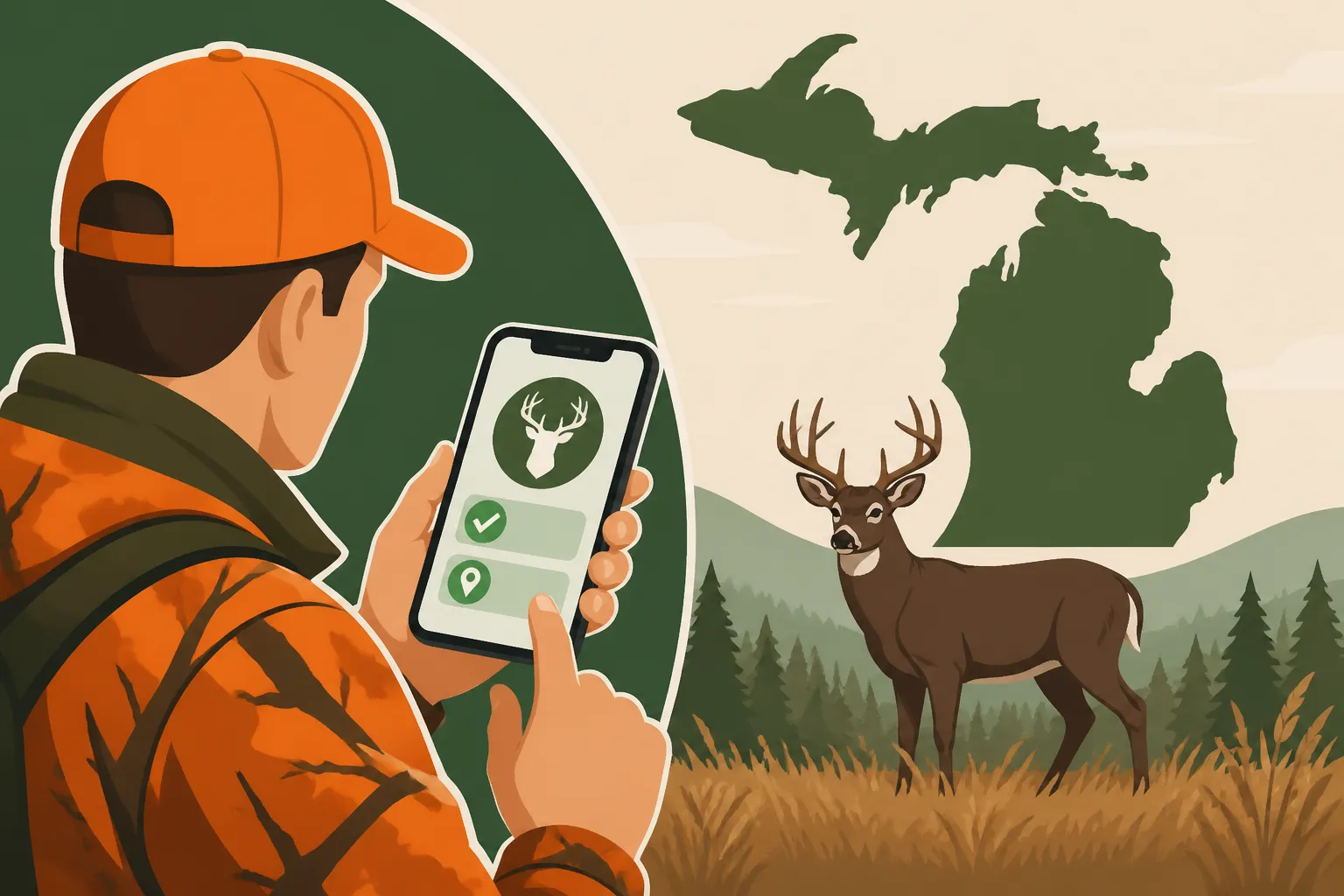
Michigan offers two primary, convenient methods for reporting your deer harvest: through their official website or via the handy mobile app. Both are designed to be user-friendly, though as with any technology, they can sometimes present minor quirks.
Using the Michigan DNR Website
Head to the Michigan DNR's harvest reporting page, typically found at Michigan.gov/DNRHarvestReport. You'll need to have specific information readily available. This includes:
- Your Michigan hunting license number.
- The specific deer kill tag number that you attached to your harvested deer.
- The exact date and time the deer was harvested (which you should have written on your tag).
- The sex of the deer (buck or doe).
- If it was an antlered deer, the number of antler points on one side, and whether it met any antler point restrictions in your specific DMU. For insights into how to count those points, refer to Counting Antler Points Under Michigan APRs.
- The county where the deer was harvested.
- The specific Deer Management Unit (DMU) where the deer was harvested. Knowing your DMU is really important; if you're unsure, you can often find maps online or use a tool like the Michigan Mi-HUNT map to pinpoint your location.
- The type of property where the deer was harvested (e.g., private land, state land, federal land).
The website will guide you through a series of prompts. Double-check all your entries before submitting to ensure accuracy. It's a pretty intuitive process, and you'll receive a confirmation number once it's successfully submitted, which is a good thing to keep for your records.
Utilizing the Michigan DNR Hunt Fish App
For many modern hunters, the convenience of a smartphone app is unbeatable. The Michigan DNR Hunt Fish App is available for both iOS and Android devices and allows you to report your harvest directly from your phone. The information required is identical to the website: your license details, kill tag number, date, time, sex, antler points, county, DMU, and property type.
The app is especially useful if you find yourself with cellular service while still in the field or shortly after your hunt. It streamlines the process and can even store your license information for quick access. While technology can sometimes feel like an extra step, these tools are designed to make compliance easier and faster. Just remember to ensure your app is updated to the latest version to avoid any technical glitches.
Overcoming Common Reporting Hiccups
Even with the best intentions, things can sometimes go sideways. It's important to be prepared for common issues that can arise during the reporting process.
No Cell Service in Remote Areas
Michigan has vast tracts of wilderness, particularly in the Upper Peninsula or even deeper pockets of the Northern Lower Peninsula, where cell service is non-existent. This is a common frustration, especially if you're trying to report immediately after a harvest. The key here is preparedness:
- Write everything down: Before you even leave home, write down your license number and kill tag numbers on a small note card or in your hunting journal. After the harvest, jot down the date, time, sex, and antler points right away.
- Report when you have service: Don't panic if you can't report from your hunting spot. The 72-hour clock starts ticking from the moment of harvest, so prioritize getting to a location with reliable cell service or internet access as soon as is practical. Many hunters will wait until they are back at camp or home.
- Use offline mapping tools: While not directly for reporting, tools like GoHunt or other mapping apps can help you accurately determine your county and DMU even without cell service, which is crucial information for your report. Just make sure to download offline maps before you head out.
Technical Difficulties
Sometimes, it's not the cell service; it's the technology itself. The website might be slow, the app might glitch, or you might simply forget your login information.
- Keep your login handy: Store your Michigan e-license login in a secure but accessible place.
- Try the other method: If the app is acting up, try the website on a computer. If the website is slow, give the app a shot.
- Contact the DNR: If you've tried everything and are genuinely stuck, don't hesitate to reach out to the Michigan DNR for assistance. It's far better to ask for help than to miss the reporting deadline. You can usually find their contact information on their main website.
Remember, the goal is to get your information submitted accurately and on time. A little forethought can save a lot of headaches later.
What Happens After You Report: Data in Action
You’ve done your part, filed your report, and can now truly unwind after a successful hunt. But have you ever wondered what actually happens with all that data you just submitted? Your individual harvest report contributes to a much larger, ongoing effort to manage Michigan's incredible deer resource, shaping the hunting landscape for years to come.
Understanding Your Deer Management Unit (DMU)
When you reported your deer, you included the Deer Management Unit (DMU) where the harvest occurred. This seemingly small piece of information is incredibly important. Michigan is divided into numerous DMUs, each with specific geographic boundaries and, often, unique management objectives and regulations. For example, some DMUs might have specific Michigan Antler Point Restrictions by DMU in place, while others do not. The regulations are tailored to the local deer population, habitat conditions, and hunting pressure within that particular area.
By reporting your harvest within the correct DMU, you are providing localized data that helps biologists track population trends, monitor herd health, and assess the impact of those specific regulations at a micro-level. If a DMU shows a low buck-to-doe ratio based on harvest reports, for instance, the DNR might consider implementing or adjusting antler point restrictions to help protect younger bucks. Conversely, if antlerless harvest numbers are consistently low in an area with an overpopulation of does, they might increase the number of available Michigan Antlerless Deer Licences. Your DMU selection is not just a formality; it’s a direct input into the targeted management of deer populations across the state.
Contributions to Michigan's Deer Management
The individual harvest reports from thousands of hunters across Michigan are aggregated into a massive dataset that forms the backbone of the DNR's deer management program. This data allows wildlife biologists to:
- Estimate Population Trends: By comparing current year harvest data with historical trends, the DNR can estimate whether the overall deer population is increasing, stable, or decreasing in various regions. This helps them understand the impact of factors like winter severity, habitat changes, and hunting pressure.
- Monitor Herd Health: Harvest data provides clues about the health of the herd. For example, if a large number of fawns are harvested, it can indicate a healthy reproductive rate. Conversely, if antler development seems poor across a region, it might suggest nutritional deficiencies or overpopulation stress. Furthermore, harvest reports are critical for tracking the spread and prevalence of wildlife diseases like Chronic Wasting Disease in Michigan or Bovine Tuberculosis, allowing the DNR to implement targeted testing and management strategies.
- Evaluate Regulation Effectiveness: Every new regulation, whether it’s a change in season length, weapon restrictions, or antler point requirements, is put in place with a specific goal in mind. Harvest data is the primary tool used to assess whether these regulations are achieving their intended outcomes. Without your reports, the DNR would have no way of knowing if their management efforts are working or if adjustments are needed.
- Inform Future Opportunities: Ultimately, this data directly influences future hunting opportunities. It helps the DNR decide How Many Deer You Can Take in Michigan each year, where antlerless tags will be available, and what the overall structure of Michigan Deer Seasons and Tags will look like. Your accurate and timely report ensures that future generations of Michigan hunters will have robust and well-managed deer populations to pursue. It's a testament to the collaborative spirit between hunters and wildlife agencies in ensuring the longevity of our shared passion.
Here's a quick summary of essential reporting details:
| Requirement | Detail | Important Notes |
|---|---|---|
| Initial Tagging | Immediately affix validated kill tag to deer. | Record date, time, sex, and antler points (if applicable) on tag with permanent ink. |
| Reporting Deadline | Within 72 hours of harvest. | This is a legal requirement; failure to report within this timeframe can result in penalties. |
| Reporting Methods | Michigan DNR Website (Michigan.gov/DNRHarvestReport) or DNR Hunt Fish App | Both require the same information. Choose the most convenient method for you. |
| Information Needed | Hunter's license #, deer kill tag #, date/time of kill, sex, antler points, county, DMU, property type. | Have this information ready. Using pre-season tools like GoHunt to understand your DMU can be helpful. |
| Confirmation | Receive a confirmation number after successful submission. | Keep this number for your records as proof of reporting. |
| Common Issues | No cell service, technical glitches, forgotten info. | Report when service is available, write down details beforehand, try both website/app, or contact DNR if truly stuck. |
Disclaimer
The information provided in this article is for general guidance and informational purposes only. While we strive to offer accurate and up-to-date content, hunting regulations, season dates, and reporting procedures can change. Always consult the official Michigan Department of Natural Resources (DNR) website or their current hunting digest for the most precise and legally binding information before heading afield.