EHD Die-Offs in Michigan Deer
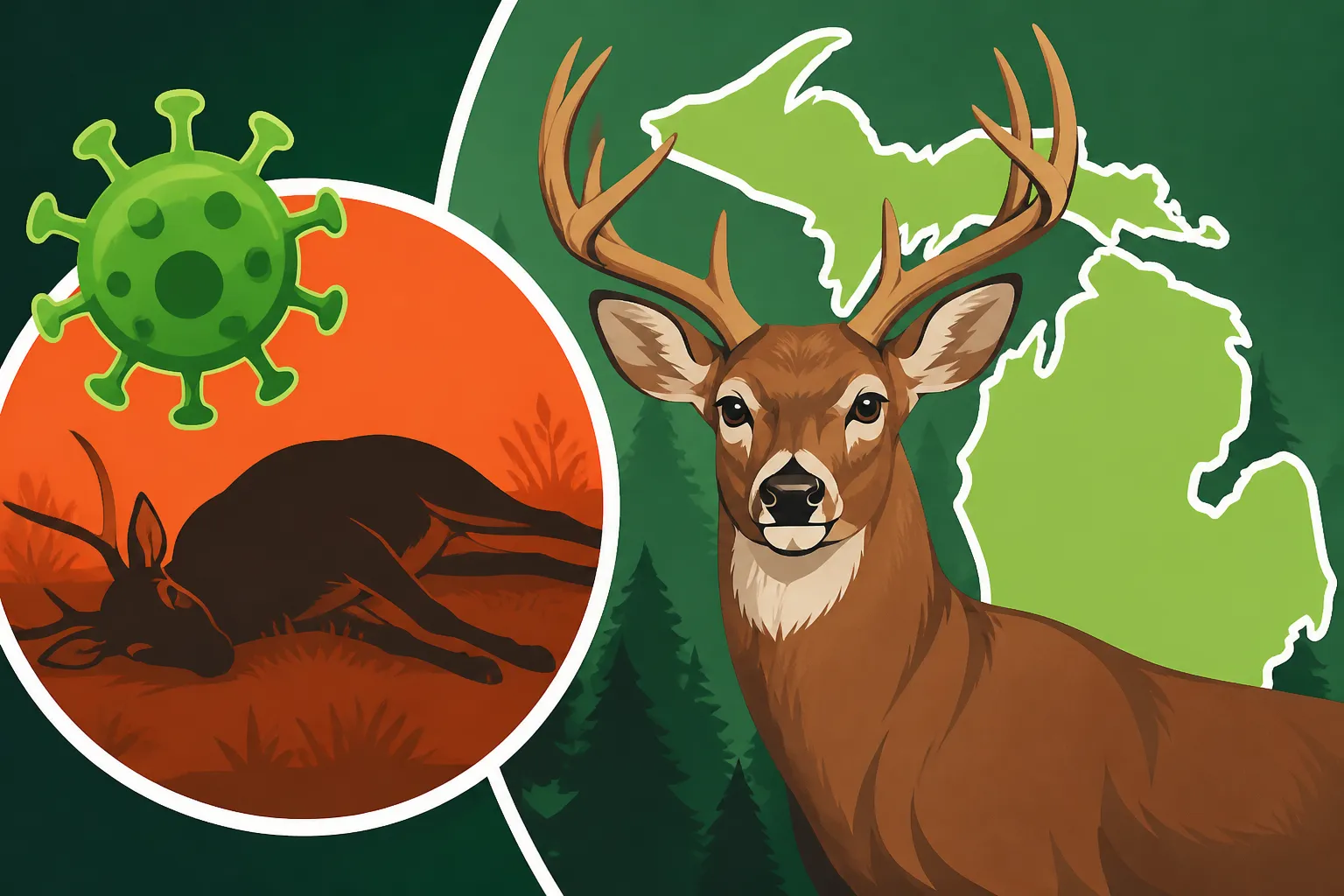
It's a disheartening sight for any Michigan hunter: stumbling upon a deer carcass by a creek bed in late summer or early fall, with no obvious bullet wound or car accident to explain its demise. This often points to Epizootic Hemorrhagic Disease, or EHD, a recurring, naturally occurring viral illness that can devastate local deer populations, leaving us all wondering what it means for the upcoming hunting season. This guide will help you understand EHD, recognize its signs, understand its impact on our deer, and know what steps to take when you encounter it.
Understanding EHD: The Silent Scourge of Summer Deer
For many Michigan hunters, EHD can feel like a sudden, unseen force sweeping through our whitetail woods. You might hear whispers from fellow hunters, see reports on social media, or even find evidence yourself, and the worry about its impact on the local deer herd is completely understandable. It's a frustrating situation because, unlike other factors we can influence, EHD is a natural event.
What is Epizootic Hemorrhagic Disease (EHD)?
At its core, Epizootic Hemorrhagic Disease (EHD) is a viral infection that primarily affects white-tailed deer, though it can occasionally be found in other ruminants. It's caused by an orbivirus, and while it's not typically a threat to humans or domestic animals, it can be absolutely devastating to deer. Think of it like a severe flu for deer, but with far more dire consequences. The virus attacks the deer's circulatory system, causing internal bleeding, swelling, and a host of other debilitating symptoms.
The frustrating thing is that there's no vaccine for EHD in wild deer, and no practical treatment. It simply runs its course through the susceptible population until the conditions that allow it to spread change. This natural, cyclical nature means that some years we might not hear much about it, while others, it feels like it's everywhere, leaving a real sense of helplessness among those of us who care deeply about our deer.
How EHD Spreads and Why It Peaks in Late Summer
The EHD virus doesn't spread from deer to deer directly. Instead, it relies on a tiny, biting insect called a midge, often referred to as a "no-see-um" or sand gnat. These midges pick up the virus from an infected deer, then transmit it to healthy deer when they take their next blood meal. This means that outbreaks are highly dependent on the presence and abundance of these specific midges.
This reliance on midges explains why EHD outbreaks almost always peak in late summer and early fall, usually from August through October here in Michigan. This is when midge populations are at their highest, and warm, dry conditions create ideal breeding grounds for them in muddy creek beds and stagnant water sources. When deer congregate around shrinking water sources during a drought, it creates a perfect storm for transmission, allowing the virus to spread rapidly through the herd. The good news, if there is any, is that the first hard frost of the year typically kills off the midges, bringing an abrupt end to the EHD outbreak for that season.
Recognizing the Signs: What to Look For in Michigan Deer
Spotting EHD can be tough because deer are wild animals and often good at hiding illness until they're severely debilitated. However, knowing what to look for can help you identify a potential outbreak early, allowing you to report it and assist wildlife officials in tracking its spread and impact. It also helps you make informed decisions about your hunting plans.
Common Physical Symptoms of EHD
When EHD takes hold, it affects deer in a very specific way, leading to a range of noticeable and often gruesome symptoms. The initial infection causes a high fever, which drives the deer to seek water. You might find dead deer near ponds, streams, or even puddles. Internally, the virus damages blood vessels, leading to widespread hemorrhaging. This can manifest externally in several ways:
- Swelling: One of the most common and visible signs is swelling of the head, neck, tongue, and eyelids. The deer's face might appear puffy and distorted.
- Oral Lesions: Ulcers and sores can form on the tongue, inside the mouth, and along the lips.
- Lameness: Infected deer often become lame due to hemorrhaging in the joints and hooves. They might walk stiffly, limp, or be unable to stand at all. Their hooves might even crack or slough off in severe cases or in deer that survive the initial infection.
- Bloody Discharge: In some advanced cases, you might observe a bloody discharge from the nose or mouth.
It’s truly a sad sight to see an animal in such distress. As hunters, we develop a keen eye for healthy deer, and these stark physical changes are impossible to ignore.
Behavioral Changes and Where to Find Affected Deer
Beyond the physical symptoms, EHD-infected deer also exhibit significant behavioral changes. The high fever makes them incredibly thirsty, so they will invariably gravitate towards water sources. If you're scouting or out enjoying the woods in late summer, pay extra attention to creek bottoms, pond edges, and marshy areas. This is often where you'll find affected deer, either alive and struggling, or already deceased.
Affected deer often appear lethargic, weak, and disoriented. They might lose their natural fear of humans, standing still or moving slowly even when approached, which is a stark contrast to the usual skittish nature of wild whitetails. You might see them drooling excessively due to the mouth sores and difficulty swallowing. Sadly, many will die within 1-3 days of showing symptoms. If you encounter such an animal, it's best to keep your distance and report it to the proper authorities.
Distinguishing EHD from Other Deer Diseases
It's crucial to be able to differentiate EHD from other diseases that can affect Michigan's deer herd, as some, like Chronic Wasting Disease (CWD) or Bovine Tuberculosis (TB), pose different management challenges and potential risks. While the symptoms of EHD are often quite distinctive, some overlap can occur, particularly with deer found dead without obvious cause.
- EHD vs. CWD: CWD is a neurological disease, often causing emaciation, excessive drooling, abnormal behavior (like walking in circles or loss of coordination), and a lack of fear. Unlike EHD, CWD is always fatal and is spread deer-to-deer through bodily fluids, not insects. EHD-affected deer typically have a quicker onset of severe physical symptoms like swelling and lameness and are often found near water. You can learn more about Michigan CWD Rules and Test Sites to understand testing and prevention efforts.
- EHD vs. Bovine TB: Bovine TB primarily affects the lungs and lymph nodes, though it can cause lesions throughout the body. While it can lead to emaciation and respiratory distress, it doesn't typically present with the acute swelling and rapid die-off characteristic of EHD. The geographical distribution of TB in Michigan is also much more localized. You can find more information about Bovine TB Rules in Northeast Michigan.
- EHD vs. Other causes: Sometimes a deer simply dies from stress, old age, or injury. If you find a deer carcass that doesn't show the characteristic swelling, oral lesions, or hemorrhaging, it might not be EHD. The timing is also a big clue: EHD is almost exclusively a late summer/early fall phenomenon.
When in doubt, always report unusual deer deaths. The Michigan DNR relies on hunter observations to monitor the health of the herd.
The Ripple Effect: EHD's Impact on Michigan's Deer Population
The sight of dead deer in the woods is jarring and naturally raises questions about the overall health and future of our beloved whitetail population. EHD outbreaks can indeed have a significant impact, but the severity and longevity of that impact can vary greatly depending on several factors. It’s a complex dance between the virus, the environment, and the deer themselves.
Localized Die-Offs Versus Widespread Devastation
One of the most important things to understand about EHD is that its impact is often highly localized. While a specific township or even a few square miles might experience a significant die-off, neighboring areas just a few miles away might be completely unaffected. This "patchy" nature of EHD is due to several factors, primarily the distribution of the midges that carry the virus and the movement patterns of deer. A particular drought-stricken creek system, for instance, might become a hotbed for midge breeding and deer congregation, leading to a severe outbreak in that immediate vicinity, while another area with more consistent water sources and fewer midges remains relatively healthy.
It's rare for EHD to cause a widespread, statewide devastation of the entire Michigan Deer Population Estimate. We might see reports from numerous counties, but usually, it's specific pockets within those counties that are hit hard. This localized impact is something many hunters understand from experience; you might have a banner year for deer numbers on your property, while your buddy just a few miles down the road tells stories of finding several dead deer. This variability makes managing the disease challenging but also means that the overall state herd often recovers robustly.
Long-Term Effects on Deer Numbers and Age Structure
While the localized impact can be severe in the short term, the long-term effects on Michigan's deer numbers are typically less dramatic than many hunters fear. Deer are remarkably resilient creatures, and their reproductive potential is high. While a particular area might see a noticeable dip in numbers immediately following an outbreak, the herd often demonstrates impressive bounce-back capabilities.
However, EHD can temporarily alter the age and sex structure of the local herd. Bucks, especially mature bucks, often suffer higher mortality rates than does and fawns. This could be due to their larger home ranges, greater movement during the breeding season (which might overlap with midge activity), or simply different behavioral patterns. A significant EHD event might mean fewer mature bucks for a year or two in a heavily hit area. Additionally, fawns born to does that survived EHD but were weakened might have lower survival rates, impacting future recruitment. For those who use tools like GoHunt to analyze game populations and predict hunting success, understanding these localized EHD impacts can be crucial for adjusting expectations and scouting efforts.
Recovering from EHD: How Herds Bounce Back
Deer herds are incredibly adaptable and, given favorable conditions, can recover surprisingly quickly from EHD outbreaks. The recovery process primarily relies on two key factors: reproduction and immigration. Does that survive an EHD outbreak will continue to breed, producing fawns that help replenish the population. Since EHD does not typically affect fawn survival directly (they often develop some immunity if exposed to the virus through their mothers' milk), the next generation helps fill the void.
Furthermore, deer from surrounding, unaffected areas will often move into areas where populations have been reduced. This natural immigration helps to recolonize depleted areas and reestablish healthy numbers. Because the disease is self-limiting (it ends with the first hard frost, and surviving deer develop some immunity), it usually doesn't create a persistent problem year after year in the same intense way. While the immediate aftermath of an EHD outbreak can be disheartening, hunters should take heart that Michigan's whitetail population is well-equipped to recover. Understanding this resilience is important for long-term hunting strategy and expectations.
Hunting Responsibly in EHD-Affected Areas
When EHD strikes, it changes the landscape, both literally and figuratively, for Michigan hunters. It's a natural phenomenon, but our response to it can make a difference in terms of monitoring the health of the herd and ensuring our own safety. Dealing with EHD requires a bit more vigilance and a commitment to responsible hunting practices.
Reporting Sick or Dead Deer
This is perhaps the single most important action any hunter or outdoor enthusiast can take when encountering potential EHD cases. The Michigan Department of Natural Resources (DNR) relies heavily on public reports to track outbreaks, understand their geographical spread, and assess their severity. This data is critical for wildlife managers to make informed decisions about herd health and management.
If you find a sick deer exhibiting EHD symptoms, or a deer carcass with no obvious cause of death (especially if it’s near water and in late summer/early fall), please report it. The DNR has specific channels for reporting wildlife observations. Don't touch the animal unnecessarily, and make note of the exact location (GPS coordinates are best!). Your observation is a vital piece of the puzzle for Michigan Wildlife Disease Monitoring. Even if you just use your phone to quickly log the location on a mapping app like GoHunt, that information can be invaluable for wildlife biologists.
Safe Handling of Deer Carcasses
While EHD is not known to be transmissible to humans, it's always wise to exercise caution when dealing with sick or deceased wildlife. General hygiene practices are paramount. If you encounter a deer that you suspect died from EHD, here are some guidelines:
- Do not consume meat from visibly sick animals: This is a golden rule for any wild game. If a deer appears ill before you harvest it, or if you find a harvested deer showing suspicious symptoms, it's best to err on the side of caution. Even though EHD is not a human health risk, a sick animal's immune system is compromised, making it more susceptible to other bacterial infections that could be harmful.
- Wear gloves: When field dressing any deer, but especially one found deceased or if you have concerns, wear rubber or latex gloves. This protects you from potential bacteria or other pathogens. This advice also extends to Handling Bear Meat Safely or any other game.
- Practice good hygiene: Wash your hands thoroughly with soap and water after handling any animal, even if you wore gloves. Clean your knives and equipment with a bleach solution.
- Disposal of carcasses: If you find a carcass on private land and it's not practical for the DNR to collect it, the best practice is to bury it deeply or allow it to decompose naturally. This prevents further spread of potential pathogens and keeps scavengers from widely dispersing infected material.
- Be aware of your surroundings: When you're scouting or hunting, try to avoid disturbing known die-off areas. The goal is to limit your exposure and prevent accidental spread of anything, however unlikely.
Remember, the goal is to be a responsible steward of the land and its wildlife.
Scouting Strategies When EHD is Present
EHD outbreaks can certainly throw a wrench into your pre-season scouting plans and even your in-season hunting strategy. If you know EHD has affected your hunting grounds, your approach needs to adapt. Instead of simply focusing on typical deer sign, you'll want to prioritize locating healthy animals and unaffected areas.
- Focus on healthy sign: Shift your focus from simply counting deer to looking for vibrant, healthy sign: fresh tracks, active rub lines, and lively feeding areas. A tool like GoHunt can provide overlays for topography and vegetation that might help you identify areas less impacted by drought or with consistent water, which might have avoided the worst of an EHD outbreak.
- Evaluate water sources: Areas with more stable, flowing water sources might have been less prone to midge breeding and deer congregation, potentially sparing them from severe die-offs. In contrast, stagnant puddles or muddy creek beds could indicate higher past midge activity.
- Adjust your expectations: If your usual honey hole was hit hard, be realistic. The Michigan Deer Herd Size might be temporarily reduced in that specific area. This might be a year to explore new areas, perhaps focusing on adjacent properties or even entirely different public land parcels. Techniques like Scouting Michigan Public Land Before Season become even more critical to identify new, productive spots.
- Observe new movement patterns: Deer that survive an outbreak or move into affected areas might change their patterns. They might rely on Late-Season Food Sources for Whitetails earlier than usual if preferred forage was abandoned due to an outbreak. Pay attention to these shifts.
- Consider your harvest goals: While Michigan allows you to know How Many Deer You Can Take in Michigan, if you're hunting in a severely affected EHD zone, you might consider adjusting your personal harvest goals to allow the local population more time to recover. It's a personal choice, but a common one among conservation-minded hunters.
Ultimately, EHD is a part of the natural cycle, and while it's tough to witness, our deer herds are strong. By being informed, reporting observations, and hunting responsibly, we can all contribute to the long-term health of Michigan's whitetails.
Disclaimer
This article is for general informational purposes only and does not constitute professional advice. Laws, prices and regulations vary by location and change over time. Consult a qualified professional for guidance on your specific situation.