Michigan Deer Vehicle Collisions
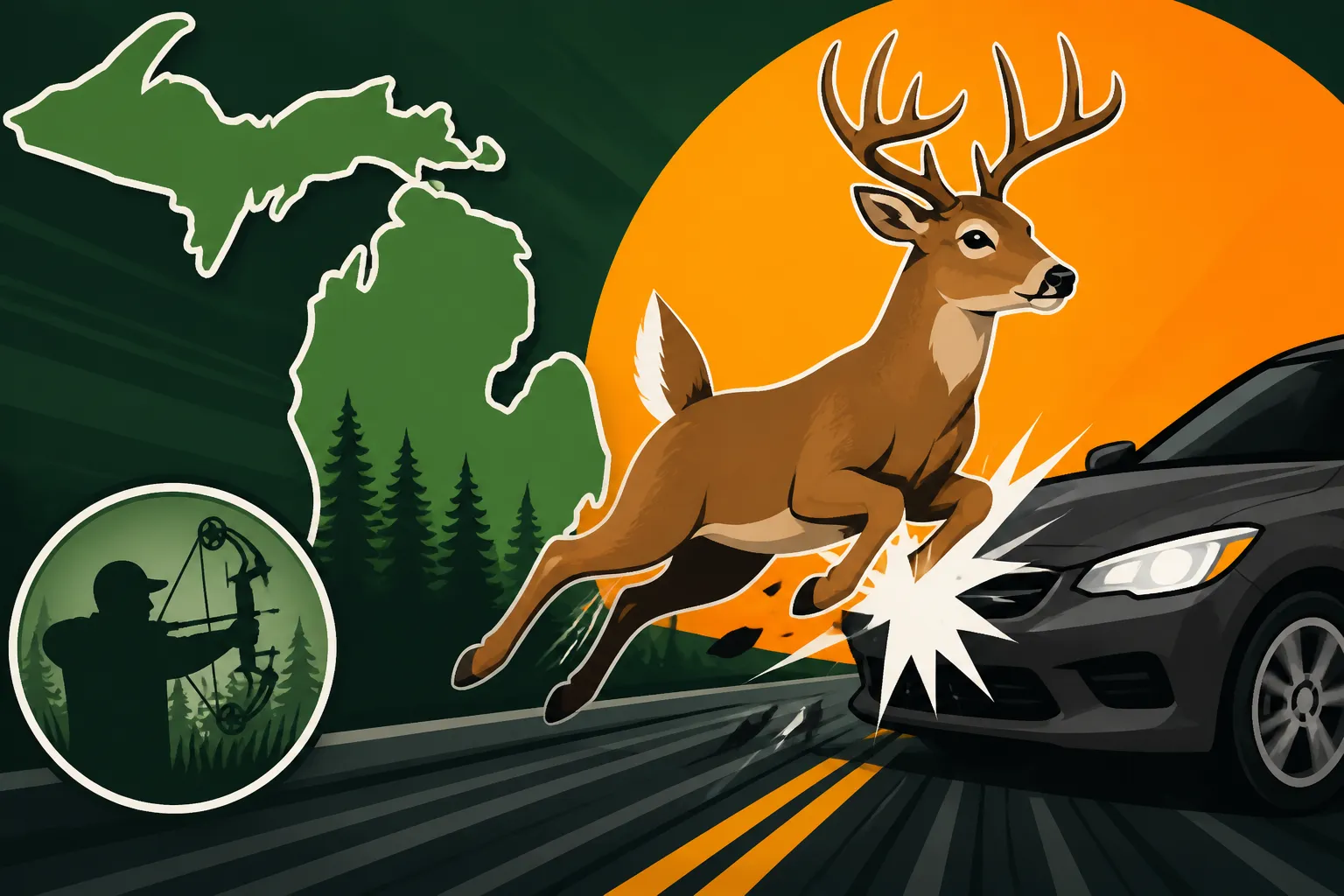
Driving in Michigan, especially during certain times of the year, often feels like playing a high-stakes game of chicken with our white-tailed deer population. It's a frustrating, frightening reality for many drivers: one moment you're cruising along, the next a deer bursts from the tree line, and suddenly you're facing a potential collision that can be dangerous, costly, and emotionally draining. This guide aims to shed light on why these incidents are so common in our beautiful state, equip you with strategies to avoid them, and tell you exactly what to do if you unfortunately find yourself involved in a deer-vehicle collision.
The Alarming Reality of Deer Vehicle Collisions in Michigan
Deer-vehicle collisions (DVCs) are far more than just inconvenient fender-benders; they are a significant safety concern and an economic burden for countless Michigan residents every year. It’s not just about a damaged bumper; these incidents can lead to serious injuries, totaled vehicles, and even fatalities, making them a critical issue for drivers across the state. The sheer unpredictability of deer behavior only adds to the stress and danger.
The Sheer Volume of Incidents
Year after year, Michigan consistently ranks among the top states for deer-vehicle collisions. The numbers are staggering, representing tens of thousands of reported incidents annually, and many more minor collisions likely go unreported. These aren't just statistics; they represent real people, real vehicles, and real costs. Imagine leaving for work in the morning, enjoying a beautiful Michigan sunrise, only for your day to be irrevocably altered by a sudden impact. This scenario plays out daily for someone in our state. The sheer volume creates a pervasive sense of vigilance that every driver must maintain, especially outside of urban cores.
It's a testament to the thriving deer herd across our state, which, while fantastic for hunters and wildlife enthusiasts, presents unique challenges for motorists. Our extensive network of rural roads, combined with vast tracts of state and national forest land, provides ample habitat for deer, bringing them into close proximity with our roadways. The combination of dense cover, agricultural fields, and suburban sprawl means deer are constantly moving between food sources and bedding areas, often crossing busy roads in the process.
Beyond the Numbers: Personal and Financial Impact
Beyond the immediate shock and danger, the aftermath of a DVC can be a true headache. Physically, you might be dealing with whiplash, cuts from deploying airbags, or worse. Emotionally, the suddenness and violence of the impact can leave you shaken for days, weeks, or even months, making you wary every time you get behind the wheel. The anxiety of constantly scanning the roadside for movement becomes a standard part of driving, especially on familiar routes where you know deer are common.
Financially, the costs can spiral quickly. Even a seemingly minor collision can lead to thousands of dollars in repairs. Headlights, fenders, radiators, windshields – these components are expensive to replace. If your vehicle is older, the repair costs might even exceed its market value, leading to a "total loss" designation from your insurance company. Then there's the inconvenience of being without a vehicle, needing rental cars, and dealing with insurance adjusters. For many Michigan families, these unexpected expenses can be a major hit, especially when deductibles come into play. It's a stark reminder that these aren't just wildlife encounters; they're serious automotive incidents with real-world consequences.
When and Where DVCs Are Most Likely to Happen
Understanding the patterns of deer activity is your first line of defense. Deer aren't just randomly darting across roads; their movements are largely dictated by natural rhythms, feeding habits, and seasonal changes. Knowing these patterns can help you anticipate their presence and adjust your driving habits accordingly.
Peak Seasons and Times of Day
Without a doubt, fall and early winter are the absolute worst times for deer-vehicle collisions in Michigan. Why? It's largely due to two factors: the whitetail rut and the shorter daylight hours. From late October through November, deer activity skyrockets as bucks begin their relentless search for does. They are less cautious, more mobile, and often single-minded, making them incredibly prone to crossing roads without warning. This period coincides with Hunting the Michigan Rut in November, a time when hunters are also highly active, further increasing deer movement.
Then there's the clock change, which pushes rush hour into the twilight hours – prime time for deer movement. Dawn and dusk are inherently dangerous because deer are crepuscular, meaning they are most active during these low-light periods. Drivers are heading to and from work, often tired, and the limited visibility makes spotting a deer incredibly difficult until it's too late. The combination of the rut and reduced visibility creates a perfect storm for DVCs.
High-Risk Michigan Locations and Habitats
Deer don't just appear anywhere; they favor certain types of habitat, and understanding this can help you identify high-risk areas. Anywhere there's a transition zone – say, where a dense woodlot meets an open field, or where suburban development encroaches on natural areas – deer are likely to be crossing. These edges provide both cover and food, making them attractive to deer. Hunting Southern Michigan Farm Country is a prime example of an area where deer thrive near human activity, leading to increased road crossings.
Specific geographical features also increase risk. Roads that run parallel to rivers, creeks, or swamp edges often act as travel corridors for deer. Similarly, roads cutting through large tracts of unbroken forest, like those you find when Hunting the Michigan Upper Peninsula for Deer or the Northern Lower Peninsula, are hotbeds for DVCs because deer simply have nowhere else to go. Look for "Deer Crossing" signs, but don't solely rely on them; deer don't read signs. Instead, pay attention to the landscape around you. If it looks like good deer habitat, assume deer are present and proceed with caution.
Tips for Avoiding a Deer Collision
While you can't control wildlife, you absolutely can control your driving behavior. Proactive measures and heightened awareness are your most effective tools in avoiding a costly and dangerous encounter with a deer.
Defensive Driving Strategies
The simplest yet most effective advice is to slow down, especially in known deer areas and during peak activity times. Reducing your speed gives you more reaction time to spot a deer and brake safely. Scanning the road ahead, not just directly in front of your vehicle, is crucial. Look for the reflective gleam of eyes, the twitch of an ear, or just an indistinct shadow at the edge of the road. Deer rarely travel alone; if you see one, assume there are others nearby, perhaps waiting to follow.
Using your high beams when safe and appropriate can significantly extend your visible range, giving you precious extra seconds to react. However, remember to dim them for oncoming traffic to avoid blinding other drivers. Swerving to avoid a deer, while an instinctual reaction, can often be more dangerous than hitting the animal. Swerving can lead to loss of control, hitting other vehicles, trees, or rolling your vehicle. If a collision is imminent, it's generally safer to brake firmly and maintain control of your steering wheel, aiming to strike the deer head-on rather than broadside or losing control.
Utilizing Technology and Awareness Tools
Modern technology can offer some assistance, though nothing replaces good old-fashioned vigilance. Some navigation apps and even dedicated hunting apps like GoHunt can provide overlays showing areas with higher deer densities or recent activity, although it's essential to remember these are based on broad data and not real-time alerts for your specific location at that exact moment. Hunters might use similar tools for Scouting Michigan Public Land Before Season to understand deer movement patterns.
The key is to integrate these tools into your overall awareness strategy. For instance, before a long drive through rural Michigan, checking an app to see if any alerts about increased wildlife activity have been posted along your route can be helpful. However, never let technology lull you into a false sense of security; your eyes and attention remain your primary defense.
Understanding Deer Behavior
Deer are creatures of habit, but also incredibly unpredictable, especially when startled or in rut. They often move along well-worn trails, which sometimes cross roads. A deer that pauses at the edge of the road might suddenly bolt across, or one that has already crossed might inexplicably turn back. Understanding deer behavior means recognizing that they don't follow traffic laws and their reactions can be erratic.
During the fall, the urge to breed drives bucks to cover vast distances, often without regard for human activity. This is also when young deer, dispersed from their mothers, are exploring new territories, making them particularly prone to unexpected movements. Being aware of these natural tendencies helps you anticipate potential scenarios. For example, if you see a doe cross the road, heavily consider that a buck might be trailing her, or that her fawns might be lingering behind. Patience and observation are key here.
| Time of Day | Risk Level | Driving Advice |
|---|---|---|
| Dawn (30 min before to 30 min after sunrise) | High | Drive slowly, use high beams when safe, scan ditches. |
| Dusk (30 min before to 30 min after sunset) | High | Drive slowly, use high beams when safe, scan ditches. |
| Nighttime | Moderate to High | Use high beams, watch for eye shine, assume deer are present. |
| Daytime | Low to Moderate | Still scan edges, especially near woods or fields. |
What to Do if You Hit a Deer
Even with the best defensive driving, accidents can happen. If you find yourself in the unfortunate situation of colliding with a deer, knowing the correct steps to take can protect you, other drivers, and ensure you comply with Michigan law.
Immediate Steps After Impact
First and foremost, pull over to a safe location if your vehicle is still operable. Turn on your hazard lights to alert other drivers. Assess yourself and any passengers for injuries immediately. Even a seemingly minor impact can cause unseen injuries, so take a moment to ensure everyone is okay. Call 911 if there are any injuries, significant vehicle damage, or if the deer is obstructing the roadway. Your safety is paramount.
Do not approach an injured deer. A wounded animal, even one that appears docile, can be incredibly dangerous and unpredictable. They can kick, bite, and cause further injury. Keep a safe distance. If you need to report the incident to your insurance, gather as much information as possible: the location, time, nature of the damage, and any photos you can safely take.
Reporting and Salvaging the Deer
In Michigan, if you hit a deer and want to keep it (salvage it), or if the deer is blocking the road, you are required to report the incident. You have a few options for reporting. You can contact a local law enforcement agency (Michigan State Police, Sheriff's Department, or local police) or the Michigan DNR. They will issue you a salvage permit, which allows you to legally possess the deer. This is an important step to ensure you're in compliance with What Michigan Requires After You Kill a Deer.
Without that permit, possessing a road-killed deer is illegal. Be prepared to provide details about the location of the incident. It's important to remember that the deer must be killed by vehicle collision for you to legally salvage it; you cannot shoot a deer hit by a car to put it out of its misery and then salvage it without a valid hunting license and tag. The rules around Reporting a Michigan Harvest in 72 Hours apply to legally harvested deer, but for roadkill, the salvage permit is the specific requirement.
Understanding Michigan's Deer Population and Its Impact
The prevalence of deer-vehicle collisions is intrinsically linked to the health and distribution of Michigan's deer herd. Our state has a robust population, a testament to effective wildlife management and diverse habitats, but this success also brings challenges beyond just collisions.
Deer Population Trends in Michigan
Michigan boasts a thriving white-tailed deer population across both peninsulas. While Michigan Deer Herd Size fluctuates due to factors like winter severity, habitat changes, and hunting pressure, the overall trend points to a healthy and widespread population. Hunters know that Michigan can produce some impressive bucks, especially in certain areas. You can track Michigan Deer Harvest Trends through DNR reports, which show consistent numbers of legally harvested deer annually.
This healthy population means deer are consistently moving, feeding, and breeding, pushing them into contact with human infrastructure, including roads. The DNR's management strategies aim to balance herd health with public safety and ecological concerns. However, even with various hunting seasons like Michigan Deer Seasons and Tags designed to manage numbers, the sheer scale of the population means DVCs will remain a persistent issue.
Habitat Management and Roadside Considerations
The way our landscape is managed also plays a significant role in DVC frequency. Roads that cut through dense forests or agricultural fields are natural corridors for deer. Habitat improvements in state game areas or state forests, while beneficial for deer health and hunting opportunities, can inadvertently draw more deer to areas near roadways.
From a driver's perspective, understanding where deer feel most comfortable moving between different habitat types is crucial. For example, a new timber cut adjacent to a main road might temporarily disrupt deer movement patterns, pushing them onto the road more frequently as they seek new cover or food sources. Likewise, suburban areas with ample green space and gardens offer attractive food sources, drawing deer into neighborhoods where they are forced to cross busy residential streets. Efforts to reduce DVCs often involve working with townships and counties on roadside brush clearing and strategic fencing, though these can be costly and difficult to implement over vast areas.
Disclaimer
This article is for general informational purposes only and does not constitute professional advice. Laws, prices and regulations vary by location and change over time. Consult a qualified professional for guidance on your specific situation.