Best Michigan Counties for Big Bucks
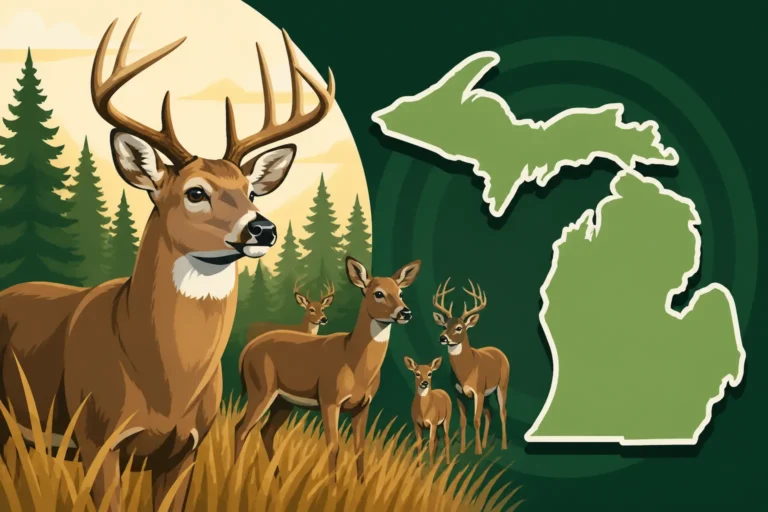
The dream of a true Michigan giant – a mature whitetail buck with heavy antlers and a wide spread – is something many of us chase year after year. It can be incredibly frustrating to put in the time and effort, only to feel like you're hunting areas that just don't have the genetics or the habitat to produce those caliber deer. This guide will cut through the noise and help you understand which Michigan counties consistently offer the best opportunities for encountering and harvesting a truly big buck.
Understanding What Makes a County "Big Buck" Territory
When we talk about "big buck" counties, we're not just talking about any deer. We're focused on those mature animals, typically 3.5 years old or older, that have had the chance to fully express their antler potential. Several critical factors converge to create these prime areas, and it's more than just luck.
The Core Ingredients: Age, Nutrition, and Genetics
At the heart of every trophy buck are three fundamental pillars: age, nutrition, and genetics. A buck simply cannot grow an impressive rack if it doesn't live long enough, regardless of its genetic potential. Bucks reach their peak antler growth between 4.5 and 6.5 years of age, sometimes even later. If hunting pressure is too high in an area, most bucks are harvested before they ever reach this critical age class, meaning fewer opportunities for truly big deer.
Nutrition is equally vital. Antler growth is incredibly demanding on a buck's body, requiring vast amounts of protein, minerals like calcium and phosphorus, and energy. Counties with rich, year-round food sources allow bucks to allocate more resources to antler development. Think about the kind of robust forage and plentiful food necessary for a deer to reach its full potential. This is often why you hear talk about Why Southern Michigan Grows Bigger Bucks, as those areas typically boast superior nutrition.
Finally, while often debated, genetics play a role. While no deer herd is entirely "poor" genetically, some areas naturally have deer that tend to grow larger racks given the chance. When combined with age and top-tier nutrition, these genetic predispositions can lead to truly exceptional antlers. However, it's worth noting that age and nutrition are usually the more controllable and impactful factors for a hunter.
The Role of Habitat Diversity and Food Sources
A "big buck" county almost always boasts diverse and high-quality habitat. This isn't just one type of cover but a patchwork of environments that provide everything a deer needs throughout its life cycle. You'll often find a combination of dense thermal cover (like cedar swamps or thick pines), open hardwoods (especially those with consistent acorn crops), and, crucially, access to abundant agricultural fields or high-quality browse.
These areas provide safe bedding cover where mature bucks can hide and feel secure, escape routes from hunting pressure, and, most importantly, a consistent, nutrient-rich food supply. Agricultural fields, particularly those growing corn, soybeans, or alfalfa, provide a massive caloric and protein boost that can dramatically impact antler growth. Even in more timbered regions, diverse forest management that creates varied age classes of timber provides excellent browse. Understanding Late-Season Food Sources for Whitetails is paramount in these areas, as late-season availability of high-energy food can be a key to survival and antler recovery.
Water sources, mineral licks, and even managed food plots (where legal and applicable) further round out the picture, creating a deer paradise where bucks can thrive and grow old. The more secure and well-fed a buck is, the better its chances of reaching trophy status.
Hunting Pressure and Deer Management
One of the often-overlooked components of a big buck county is the balance of hunting pressure and local deer management. Heavy, consistent hunting pressure, especially on public lands, can make it nearly impossible for bucks to reach older age classes. Hunters are simply too efficient at harvesting younger deer. The best counties often have significant parcels of private land where landowners practice quality deer management, or public land areas that are difficult to access, thus limiting pressure.
Michigan's Antler Point Restrictions (APRs) also play a significant role. These regulations are designed to protect younger bucks and allow them to mature, thereby improving the age structure of the buck herd. You might find that some of the consistently top-producing counties either have voluntary quality deer management practices by local hunters and landowners or are located within Deer Management Units (DMUs) that have Michigan Antler Point Restrictions by DMU. These restrictions ensure that a certain percentage of bucks are allowed to walk another year or two, increasing the likelihood of encountering a mature animal. The cumulative effect of these practices is a healthier, older buck population capable of growing bigger racks.
Top-Tier Counties for Trophy Whitetails in Michigan
While "trophy" can be subjective, certain Michigan counties consistently show up in harvest reports and boast a higher frequency of large-antlered deer. These areas typically offer the perfect storm of habitat, nutrition, and management.
Southern Michigan's Agricultural Powerhouses
Without a doubt, many of Michigan's top big buck counties are found in the southern Lower Peninsula, particularly those with extensive agricultural land. Counties like Hillsdale, Lenawee, Jackson, Calhoun, Branch, and others in the "Thumb" region (such as Sanilac and Tuscola) are often cited. These areas benefit from a trifecta of advantages: incredibly fertile soil leading to protein-rich crops, milder winters than the northern parts of the state, and a higher proportion of private land.
The vast corn and soybean fields provide an almost endless buffet for deer, fueling incredible antler growth year after year. While hunting pressure can still be significant, especially on any accessible public parcels, the sheer amount of high-quality forage often allows some bucks to grow exceptionally large, even if they aren't reaching maximum age. Access to private land, either through ownership or permission, is often key to consistently hunting the largest deer in these areas. For hunters interested in Southern Michigan Farm Country Deer Hunting, these counties are often the first place they look. Understanding landowner patterns and getting permission is crucial here, and digital scouting tools like GoHunt can be invaluable for identifying land ownership boundaries and potential access points.
Northern Lower Peninsula's Transitional Zones
Moving north, the story changes a bit. While the northern Lower Peninsula is renowned for its vast state forests and excellent public land hunting, the deep woods generally don't produce the same caliber of antler as the farm country. However, there are transitional counties where agriculture starts to intersperse with the big woods. Counties like Isabella, Clare, Osceola, Montcalm, and even parts of Newaygo and Mecosta can offer a blend of good habitat and decent agriculture.
These areas provide excellent cover in the timbered regions and still offer agricultural benefits for nutrition. Bucks here might have to work a bit harder for their food than their southern counterparts, but the sheer amount of cover can allow them to age more gracefully and avoid detection. Hunters exploring Hunting the Northern Lower Peninsula should look for areas where timber tracts meet farm fields, as these edge habitats are often where big bucks spend their time. These transition zones represent a unique challenge and reward, often requiring different tactics than either pure farm country or deep wilderness.
Upper Peninsula's Untamed Wilderness
The Upper Peninsula is a different beast entirely. Known for its vast, unbroken tracts of timber, cedar swamps, and brutal winters, it's generally not the first place people think of for "trophy" bucks in terms of antler size. However, the U.P. produces some incredibly tough, resilient deer. A 130-inch buck in the U.P. often represents a far greater accomplishment than one from a farm county, simply due to the harsh environment and lower deer densities. Counties like Iron, Marquette, and Baraga, with their mix of logging activity and remote areas, can yield some impressive animals for the dedicated hunter.
The key to finding big bucks in the U.P. is often related to proximity to logging operations, which create new browse, or yarding areas in severe winters where deer concentrate. While the average antler size might be smaller due to shorter growing seasons and harder winters, the mature bucks that emerge from the U.P. wilderness are true survivors. Hunting the Michigan Upper Peninsula for Deer is an experience unto itself, focusing less on agricultural giants and more on tracking robust, self-sufficient deer in vast, challenging landscapes. When you do find a true old veteran buck in the U.P., it's a testament to its ability to overcome tremendous odds, and that makes it a trophy in its own right.
Beyond County Lines: Local Factors and Hunter Strategy
While knowing the generally good counties is a fantastic starting point, focusing solely on county names without considering micro-level factors and your own strategy is like buying a lottery ticket without scratching it. The real work, and the real rewards, come from digging deeper.
Scouting and Access: The Real Game Changers
Even in the most renowned "big buck" county, you won't find a trophy buck sitting under a billboard waiting for you. Consistent success hinges on thorough scouting and securing access to quality hunting ground. This often means going beyond the obvious and finding those overlooked pockets. Whether it's knocking on doors for private land permission or delving deep into public land areas that most hunters ignore, your effort will directly correlate with your success.
Tools like the Mi-HUNT map are essential for public land hunters. Scouting With Michigan's Mi-HUNT Map allows you to identify state lands, game areas, and even commercial forest lands open to the public. Combine this with detailed aerial photography, topographic maps, and even onX Hunt layers, which can be found through platforms like GoHunt, to pinpoint potential bedding areas, travel corridors, and overlooked corners. Look for habitat transitions, pinch points, and areas with difficult access that might deter other hunters. Remote sections of public land, even in heavily hunted counties, can hold mature bucks that have learned to avoid pressure. It's about finding the "un-findable" spots.
Understanding Local Antler Point Restrictions
Michigan's deer management is often very localized, meaning that antler point restrictions (APRs) can vary significantly from one Deer Management Unit (DMU) to another. It's absolutely crucial to understand the specific APRs for the exact area you plan to hunt. Some DMUs might require bucks to have three points on one side, while others might have different rules or no restrictions at all.
These rules are designed to protect younger bucks and allow them to mature, but they also dictate what you can legally harvest. A buck that would be a legal "shooter" in one DMU might be illegal to tag in another. Before you ever step foot in the woods, consult the most current Michigan Hunting Digest for your specific DMU. Being able to quickly and accurately determine Counting Antler Points Under Michigan APRs in the field is a skill every big buck hunter needs to master. Don't let a misunderstanding of local regulations cost you a tag or, worse, result in a violation.
Time of Year and Hunting Tactics
The "best" county for big bucks can also depend heavily on the time of year you hunt and the tactics you employ. Early archery season in warm weather might require focusing on water sources or early-season food plots. As the season progresses into late October and November, the rut changes everything. Hunting the Peak Rut Week in Michigan can be incredibly productive, as mature bucks become more active during daylight hours, often chasing does with less caution than usual. This is when aggressive tactics like rattling and grunting can pay off.
Later in the season, after the rut, deer return to a more predictable pattern, focusing heavily on available food sources to recover from the breeding season and prepare for winter. Hunting these late-season food sources can be highly effective for intercepting mature bucks. No matter how good the county, your strategic approach to the season and adapting your tactics to deer behavior will always be a major factor in your success. A hunter with excellent woodsmanship can find success in a "mediocre" county, while a less skilled hunter might struggle even in a top-tier area.
| Feature | "Big Buck" Potential Counties | "Quantity" Potential Counties |
|---|---|---|
| Primary Habitat | Mix of agriculture, hardwoods, swamps | Large blocks of state forest, cedar swamps |
| Typical Deer Density | Moderate to High | Moderate |
| Buck Age Structure | Older, more mature bucks | Younger bucks, higher turnover |
| Hunting Pressure | Often higher, especially private land | Varies, can be high on public, low in deep woods |
| Food Sources | Abundant agricultural crops, diverse browse, acorns | Natural browse, mast crops (less consistent) |
| Antler Potential | High (genetics, nutrition, age) | Moderate (age is often limiting) |
| Access Challenge | More private land, permission critical | More public land, but can be dense |
Dispelling Myths and Managing Expectations
Hunting for a truly big Michigan buck is a journey, not a guarantee. It's easy to get caught up in the hype surrounding certain areas, but a dose of realism can go a long way in maintaining motivation and enjoying the process.
"Secret" Spots Don't Stay Secret Forever
One of the biggest myths in big buck hunting is the idea of a magical "secret spot" that consistently produces giants year after year without effort. The truth is, in Michigan, with its vast hunting tradition and access to digital mapping tools like GoHunt, truly secret spots are incredibly rare and usually don't stay secret for long. If an area consistently produces, word gets out, and hunting pressure inevitably increases.
Instead of chasing a mythical secret, focus on developing the skills and knowledge to consistently find and hunt mature deer within any given area. This means understanding deer movement, identifying micro-habitats, and mastering entry and exit routes. You might find that Finding Ground Others Walk Past is more about your skill and willingness to work harder than anyone else, rather than finding a place no one knows about. The consistent hunter who adapts and learns the land will usually fare better than someone bouncing from one "hotspot" rumor to another.
The Grind and the Reward
Hunting big bucks is often a grind. It involves early mornings, late nights, long sits in uncomfortable weather, countless hours of scouting, and many, many frustrating days when you see nothing but squirrels. It requires patience, discipline, and the mental fortitude to keep going when things are tough. Don't expect to just show up in a "top" county and have a giant buck walk past your stand on opening morning. It happens, but it's the exception, not the rule.
The reward, however, is immense. It's not just about the antlers on the wall but the memories forged, the lessons learned, and the deep satisfaction of having outsmarted a truly cunning creature in its own element. Embrace Michigan Deer Camp Traditions and the camaraderie that comes with sharing this passion. The journey of pursuing a big Michigan buck is rich with experiences that go far beyond the kill. Focus on the process, enjoy the time outdoors, and be prepared for the hard work, and when that moment finally comes, it will be all the more meaningful.
Disclaimer
This article is for general informational purposes only and does not constitute professional advice. Laws, prices and regulations vary by location and change over time. Consult a qualified professional for guidance on your specific situation.