Where Michigan Gobblers Roost
Michigan turkey hunters learn roosting habits of gobblers to pinpoint nighttime hideouts and boost spring hunting success.
Know what you’re after.
Big game, small game, upland birds, and waterfowl — identification, behavior, rut and migration timing, and how each species moves through the season.
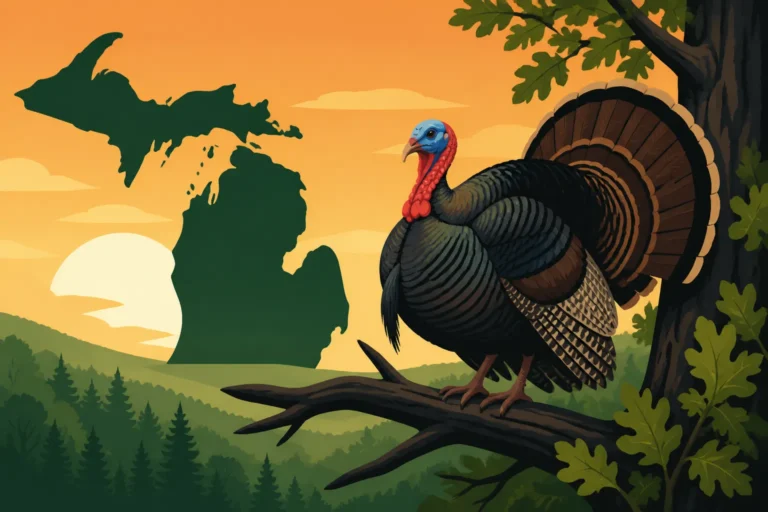
Michigan turkey hunters learn roosting habits of gobblers to pinpoint nighttime hideouts and boost spring hunting success.
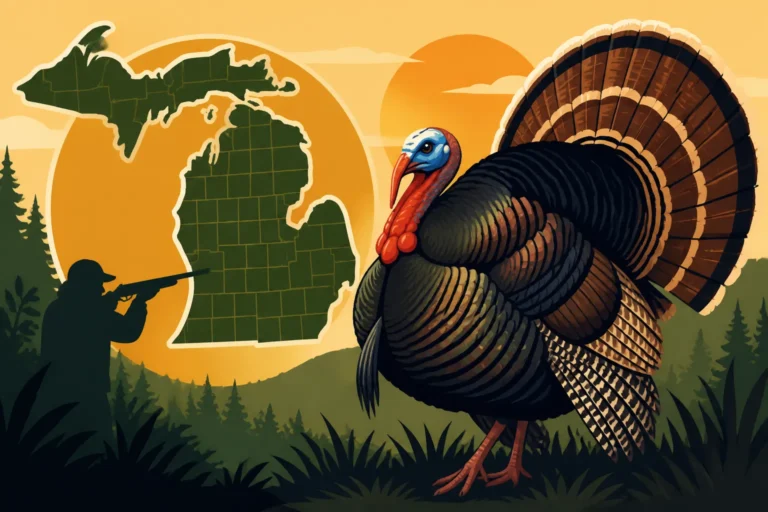
Top Michigan counties for wild turkeys include Otsego, Montmorency, Crawford, Oscoda, and Kalkaska, featuring extensive public lands and ideal habitats.
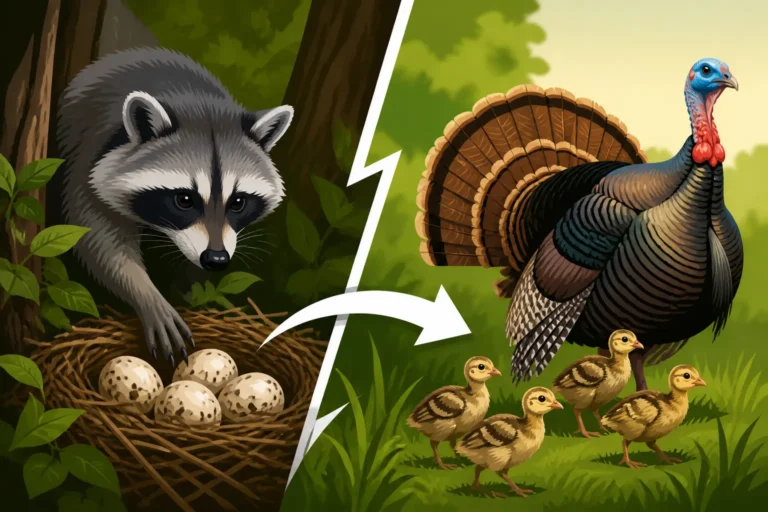
Nest predation and weather impact Michigan wild turkey reproduction during the critical twenty-eight-day incubation period.
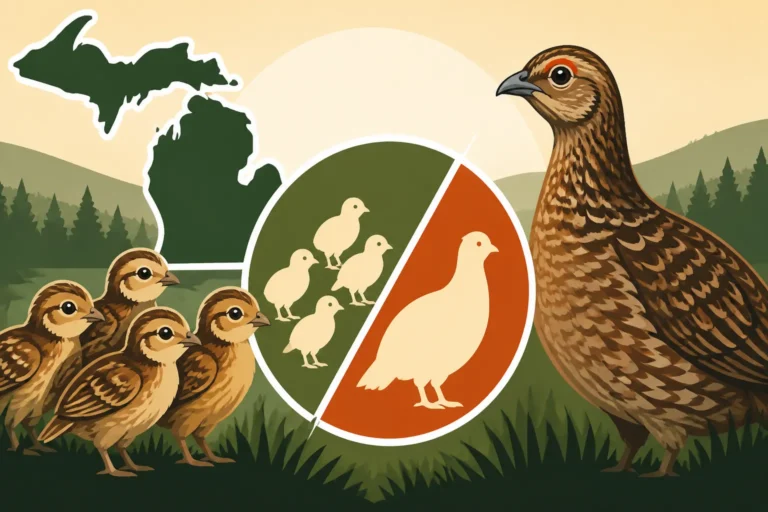
Poult-to-hen ratios measure wild turkey reproductive success and help hunters predict future hunting season population trends.
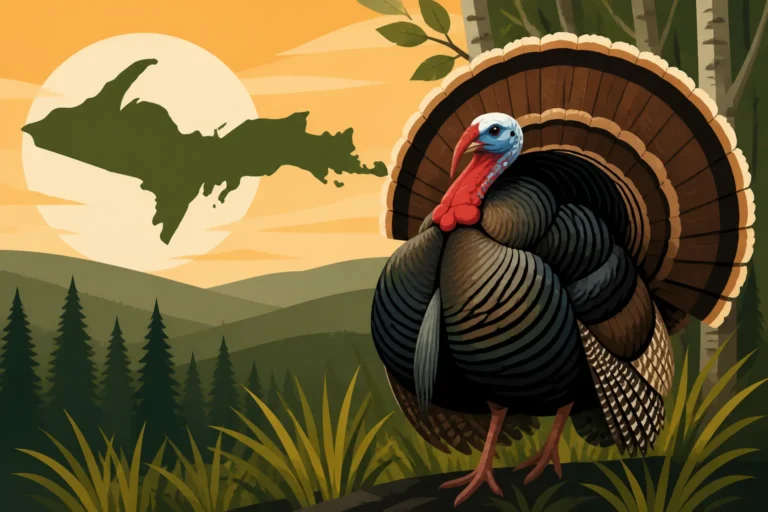
Wild turkeys in Michigan Upper Peninsula explain restoration efforts, population trends, and distinct habitat requirements.
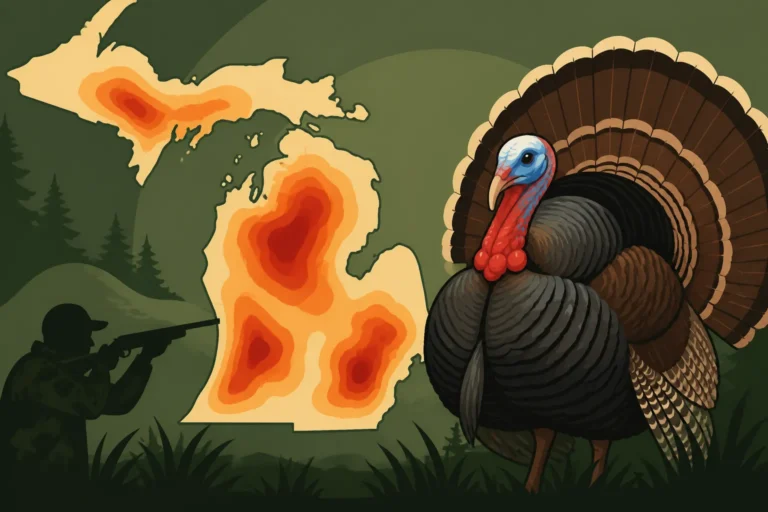
Michigan wild turkey population densities across state regions, highlighting prime edge habitats, food sources, and roosting locations.
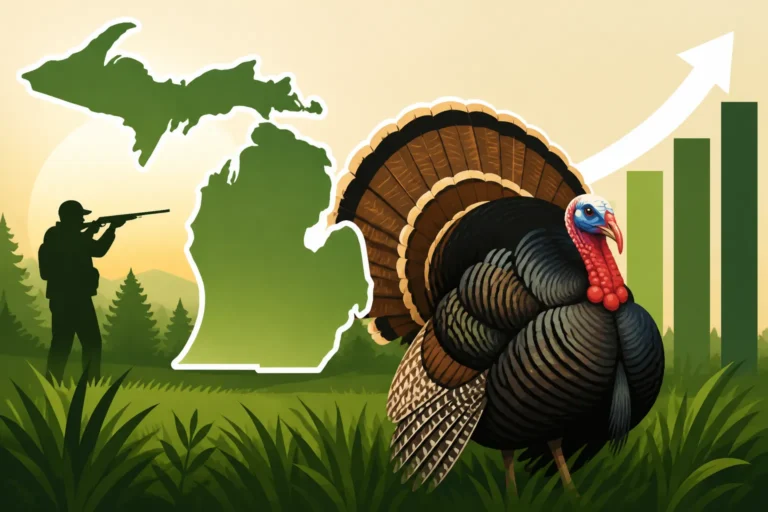
Michigan spring turkey harvest data explains wild turkey population health, hunter success rates, and Department of Natural Resources management.
Michigan wildlife biologists estimate wild turkey population numbers using spring gobbler surveys and summer poult-to-hen observation ratios.
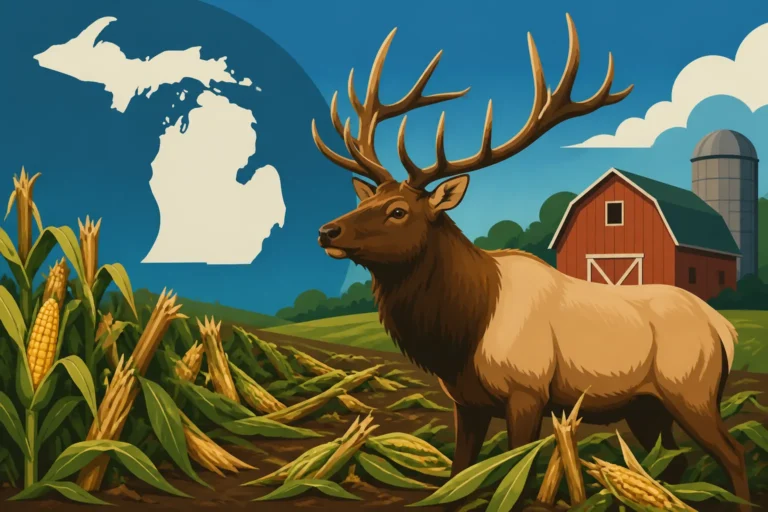
Michigan elk herd expansion causes financial loss for farmers when large animals forage on corn, alfalfa, and potato crops.

Michigan bull elk record book criteria and organizations explaining how a harvested animal qualifies for the state records.