Best Michigan Counties for Turkeys
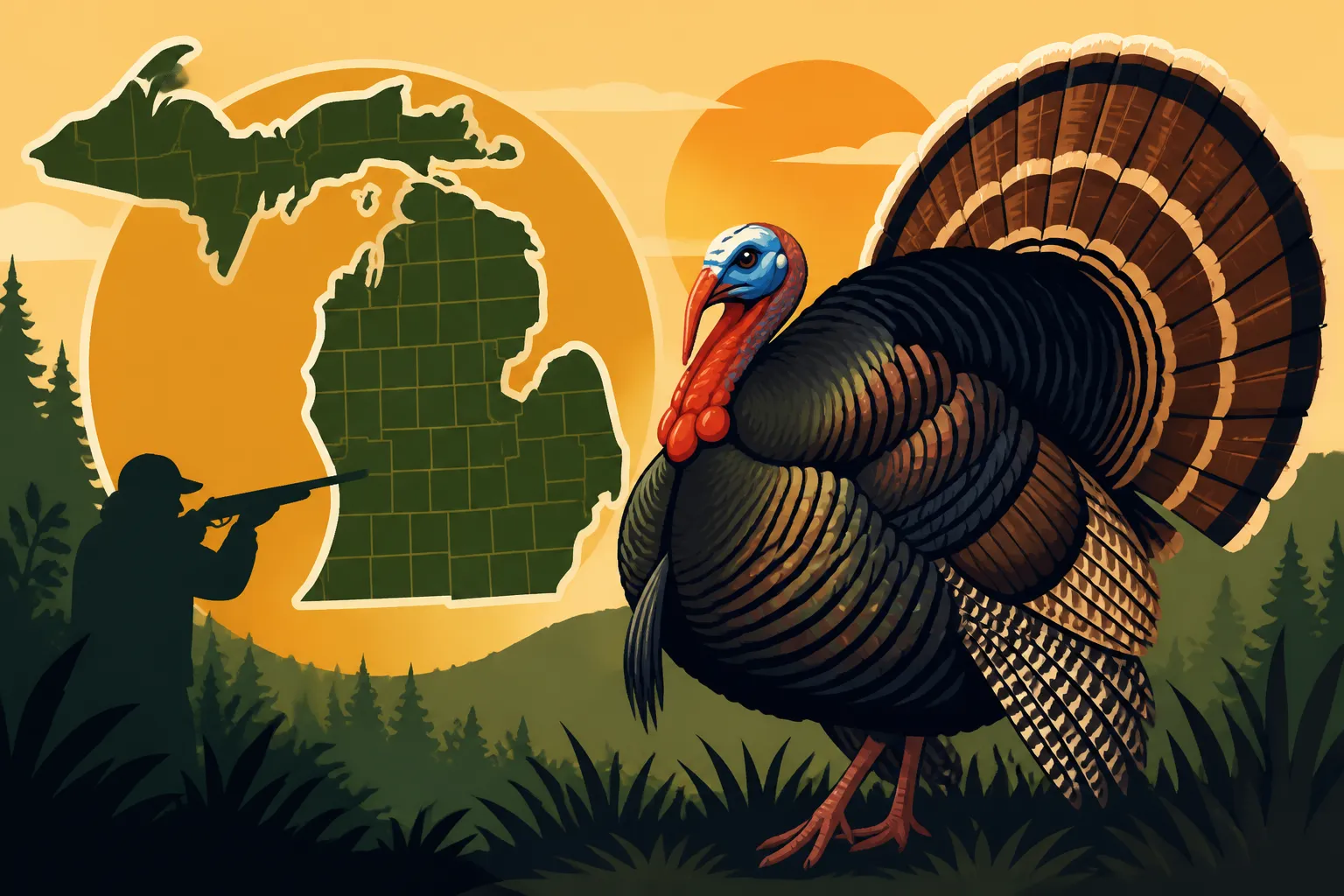
If you've ever found yourself pouring over Michigan's turkey regulations, trying to figure out where to even begin looking for those elusive longbeards, you're not alone. Picking the right spot can feel like a game of chance, especially with varying populations and habitat types across our beautiful state. This guide is here to cut through the confusion and highlight the top Michigan counties where you'll have the best shot at tagging a spring or fall turkey.
Understanding Michigan's Turkey Habitat and Population Distribution
Michigan's wild turkey populations have made an incredible comeback from near extirpation, thanks to diligent restoration efforts. Today, they're found in nearly all 83 counties, a testament to effective wildlife management. However, "found" doesn't mean "flourishing" in every single spot. Turkeys thrive in a specific blend of habitat: mature hardwoods for roosting, open fields or forest clearings for feeding on insects and seeds, and thick underbrush for nesting and cover. The counties that offer this mix in abundance tend to be the most productive for hunters.
We often think of different regions of Michigan as distinct hunting experiences, and turkeys are no exception. The northern Lower Peninsula, for instance, generally boasts larger, more stable flocks due to its vast tracts of mixed forest and interspersed agricultural lands. Meanwhile, the Upper Peninsula, with its harsher winters and different forest types, holds robust but often more spread-out populations. Even southern Michigan, dominated by agriculture, has surprising pockets of excellent turkey hunting where woodlots and river bottoms provide sanctuary and food.
Understanding these regional differences is crucial. A county with a high overall turkey population might still be difficult to hunt if that population is scattered across private land or highly fragmented habitat. Conversely, a county with slightly lower numbers might offer incredible hunting opportunities if those birds are concentrated in accessible public lands with ideal habitat. This nuanced view is what we're after when we talk about the "best" places to chase gobblers. For a broader picture, it's always good to check out Michigan Turkey Population Trends to see how numbers are looking statewide.
Top Counties for Turkey Hunting in the Northern Lower Peninsula
The northern Lower Peninsula (NLP) is arguably the crown jewel of Michigan turkey hunting. The region's expansive state forests, mixed hardwood and conifer stands, and pockets of agriculture create ideal conditions for turkeys to flourish. Hunters here often find strong, vocal birds, especially during the spring season.
Prime Northern Lower Peninsula Turkey Hotspots
When it comes to the NLP, certain counties consistently rise to the top for turkey hunters. Consider Otsego, Montmorency, Crawford, Oscoda, and Kalkaska counties. These areas are characterized by extensive public lands, including portions of the Huron-Manistee National Forests and vast state forest lands. The habitat here is a mosaic of mature oak and maple forests (perfect for acorns and roosting), aspen cuts (great for bugs and nesting cover), and occasional small fields or food plots.
Hunters in these counties often experience success by focusing on transitional areas – the edges where hardwoods meet conifer swamps, or where timber blocks border old farmsteads or open clearings. These are the places where turkeys spend their days feeding, strutting, and moving between roosting and feeding grounds. Using detailed mapping tools, like those offered by GoHunt, can be incredibly helpful for identifying these prime habitat features and public land boundaries before you even set foot in the woods. You can scout out ridge lines, potential roosting areas, and field edges from the comfort of your home. Hunting the Northern Lower Peninsula provides more context on general hunting in this region.
Tactics and Public Land Opportunities in the NLP
Hunting in these NLP counties often means covering a fair amount of ground. Early morning scouting for gobblers on the roost, followed by strategic calling and setting up in known strutting zones, is a classic approach. Public land is abundant, but it can also see pressure, especially closer to roads. Don't be afraid to walk a little further, get away from the easy access points. Sometimes, a half-mile deeper into a state forest can make all the difference.
Another effective tactic is to identify natural pinch points or funnels in the terrain that turkeys might use to travel. Ridge tops, creek bottoms, or narrow strips of timber connecting larger woodlots are all worth investigating. Many of these counties are also part of Michigan's spring turkey application system (like Unit NN or Unit ZZ, depending on the specific location), so understanding Michigan Turkey Unit NN Quota or other regional quotas is vital for planning your hunt. Fall turkey hunting, where it's permitted, often involves locating flocks by covering ground and then trying to break them up to call them back together. It's a different game, but just as rewarding.
Robust Turkey Hunting in the Michigan Upper Peninsula
The Upper Peninsula (U.P.) presents a unique challenge and reward for turkey hunters. While winters can be harsher, leading to more fluctuating turkey populations in some areas, the U.P. still boasts healthy flocks, especially in its southern and central counties. The vast, wild character of the U.P. offers a true big-woods turkey hunting experience, often with less competition than the Lower Peninsula.
Top U.P. Counties for Gobblers
For U.P. turkey hunters, counties like Menominee, Delta, Marquette, and Dickinson often stand out. These counties benefit from a mix of large timber tracts, particularly diverse hardwoods, and significant agricultural influence, especially along the southern tier adjacent to Wisconsin. The agricultural land provides a consistent food source, helping turkeys weather the colder months, while the sprawling forests offer ample roosting and breeding habitat.
The U.P. birds can sometimes be a bit quieter or more spread out, making scouting even more critical. Look for sign: tracks in muddy logging roads, droppings under large roost trees, and dusting bowls in sandy patches. Accessing some of these areas might involve navigating remote two-tracks or hiking into less-traveled public land. GoHunt's detailed maps become invaluable here for identifying public access points, private land boundaries, and potential habitat features within these vast timberlands. Turkeys in the Upper Peninsula goes into more detail about the specific challenges and rewards of hunting these northern birds.
Adapting U.P. Tactics for Success
Hunting U.P. turkeys often requires a blend of traditional turkey hunting skills and big-woods deer hunting tactics. You'll need to be prepared to walk, often silently still-hunting through the timber, listening intently for distant gobblers. Locator calls, such as owl hoots or crow calls, can be particularly effective in these large, quiet landscapes to get a bird to give up its position. Once you locate a bird, the run-and-gun approach can be very effective in this expansive terrain. Run-and-Gun Turkey Tactics on State Land details this method perfectly.
The sheer size of the public land in the U.P. means that finding undisturbed birds is often possible if you're willing to put in the effort. Don't overlook the edges of wilderness areas or remote logging clearcuts, which can be hotspots for feeding birds, especially in the afternoon. Setting up against large, mature trees or natural terrain features that break up your silhouette is always a good practice, as U.P. turkeys can be particularly wary.
Southern Michigan's Hidden Turkey Gems
While the focus often shifts north for Michigan turkey hunting, southern Michigan holds its own, often overlooked, opportunities. This region, characterized by extensive agriculture and smaller, fragmented woodlots, can still produce fantastic turkey hunting, especially for those willing to do their homework and secure access.
Unexpected Success in Farm Country
Counties like Jackson, Washtenaw, Lenawee, Hillsdale, and Lapeer might not immediately come to mind for turkeys, but they offer consistent hunting for those who know where to look. Here, the turkeys thrive in the patchwork of hardwoods, river bottoms, and CRP (Conservation Reserve Program) fields that break up the vast agricultural lands. These woodlots, even if relatively small, provide crucial roosting and nesting cover, while the surrounding farm fields offer an endless buffet of grains and insects.
The key to success in southern Michigan is often gaining access to private land. Building relationships with landowners can unlock incredible hunting opportunities on properties that might not see much pressure. However, there are also state game areas and smaller parcels of public land that can hold surprising numbers of birds. These public spots tend to be heavily pressured, so early scouting and hunting during the week can increase your odds. For specific strategies in this environment, Turkey Tactics for Southern Michigan Farms is an excellent resource.
Navigating Southern Michigan Turkey Hunting
Hunting southern Michigan means adapting your approach. You might find birds roosted along a creek bottom, feeding in a freshly tilled field, or strutting along the edge of a woodlot. Often, turkeys here become accustomed to human activity, which can make them either incredibly wary or surprisingly tolerant, depending on the individual flock and the specific property.
Calling tactics in these areas might need to be more subtle at times, as birds can be "call-shy" from previous encounters. Ground blinds can be very effective, especially when set up on the edge of a field where birds are known to frequent. Remember that detailed maps, like those available through GoHunt, are indispensable for identifying private versus public land boundaries, which is absolutely critical when hunting in these often-interspersed landscapes. Knowing exactly where you are and whose land you're on prevents accidental trespass and keeps those landowner relationships strong.
The table below provides a quick overview of some of Michigan's top turkey hunting counties across different regions:
| Region | Top Counties | Primary Habitat | Key Advantage |
|---|---|---|---|
| Northern Lower Peninsula | Otsego, Montmorency, Crawford | Mixed Hardwood & Conifer Forests, interspersed agriculture | Extensive public land, robust and vocal turkey populations. |
| Upper Peninsula | Menominee, Delta, Marquette | Large Timber Tracts, Oak-Maple Forests, agricultural pockets | Big-woods experience, less pressure, resilient birds. |
| Southern Lower Peninsula | Jackson, Lenawee, Lapeer | Woodlots, River Bottoms, CRP Fields adjacent to agriculture | Consistent food sources, strong local populations, potential for private land access. |
Ultimately, the "best" county for turkey hunting in Michigan is often the one you scout thoroughly and hunt smartly. Every year brings new challenges and opportunities, but by focusing on areas with a proven track record and understanding the local habitat, you'll significantly increase your chances of calling in a Michigan gobbler. Don't forget to review Michigan Spring Turkey Season Dates before you head out, and happy hunting!
Disclaimer
This article is for general informational purposes only and does not constitute professional advice. Laws, prices and regulations vary by location and change over time. Consult a qualified professional for guidance on your specific situation.