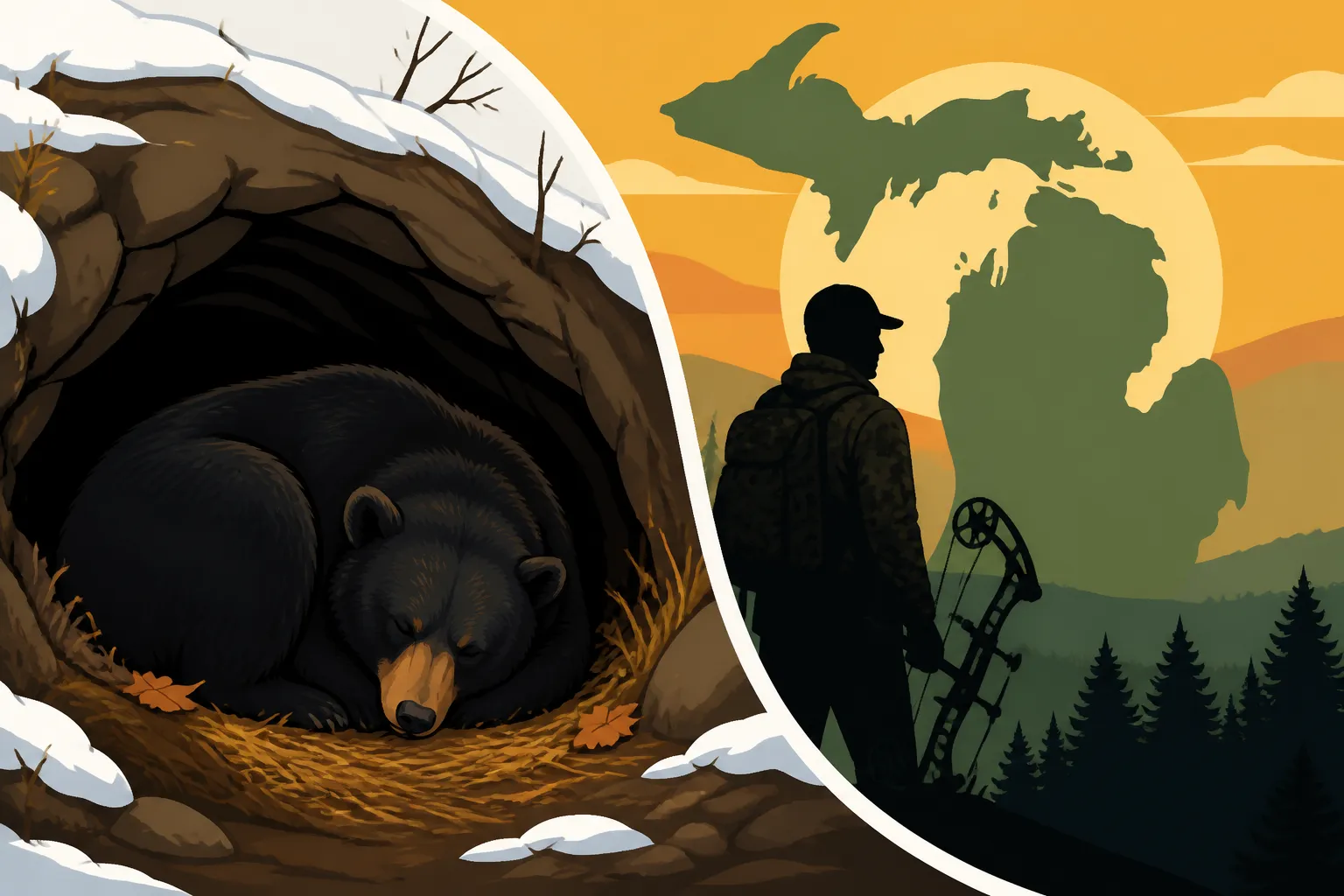
Michigan Bear Denning Behaviour
For those of us who spend time in Michigan's woods, especially during the colder months or while scouting, understanding the behavior of our resident black bears is crucial. Whether you're a seasoned hunter hoping to understand bear patterns better or simply an outdoor enthusiast curious about their winter habits, stumbling upon a bear den can be a surprising, sometimes startling, experience. This guide will take a deep dive into Michigan black bear denning behaviors, shedding light on why and where they choose to hibernate, what happens inside those cozy winter homes, and how to safely and ethically navigate an unexpected encounter.
Why Michigan Black Bears Den
Black bears in Michigan, like their counterparts in many northern climates, enter a state of dormancy known as hibernation (though technically it's a deep sleep or torpor, not true hibernation) to survive the lean winter months. This isn't just about escaping the cold; it's a complex survival strategy rooted deeply in their biology and the environmental conditions they face each year.
The Urge to Hibernate
As autumn wanes and the air crisps, a black bear's internal clock begins to shift. Their metabolism slows, their heart rate drops, and their body temperature decreases significantly, though not to the extreme lows seen in true hibernators. This isn't an overnight process; it's a gradual change driven by declining food sources and dropping temperatures. For a bear, denning is less about being cold and more about conserving energy when food is scarce. They've spent all summer and fall packing on the pounds, sometimes consuming up to 20,000 calories a day to build up those vital fat reserves.
This physiological shift means they can sustain themselves solely on their stored fat for months, without eating, drinking, or even defecating. It's an incredible feat of nature, allowing them to ride out Michigan's harsh winters in relative safety and comfort, emerging thinner but healthy once spring arrives. This period of inactivity prevents them from expending energy foraging for food that simply isn't available under a blanket of snow.
The urge to den is so strong that bears will spend weeks, sometimes even months, scouting for the perfect spot. They're looking for something secure, insulated, and well-hidden from predators and the elements. This instinct is hardwired, ensuring the survival of the species through countless generations of Michigan winters.
Reproduction and Cub Rearing
Beyond survival, denning is absolutely critical for the reproduction of black bears. Female bears, known as sows, typically give birth in the den, usually in late January or early February. These tiny cubs, born blind, toothless, and nearly hairless, are incredibly vulnerable at birth. Weighing only about half a pound, they would have virtually no chance of survival outside the warmth and protection of the den.
The den provides a safe, insulated nursery where the cubs can grow rapidly, nourished by their mother's rich milk. The sow remains in a deep sleep, but her maternal instincts are still active; she will shift positions to allow the cubs to nurse and will protect them if disturbed. This ensures the cubs have a critical head start, allowing them to gain significant size and strength before emerging into the challenging spring environment.
This denning period allows the mother to recover from the strenuous process of giving birth while her offspring develop in a safe, secluded environment. By the time they emerge in April or May, the cubs are much larger, typically weighing several pounds, and are ready to follow their mother and learn the ways of the forest. The whole cycle of life for a Michigan black bear is intrinsically linked to the den.
Environmental Triggers
Several environmental factors signal to Michigan's black bears that it's time to find a den. The most obvious is the shortening of daylight hours and the consistent drop in ambient temperatures, especially overnight. While bears can tolerate cold, prolonged frigid conditions and heavy snowfall make foraging incredibly difficult, if not impossible.
The diminishing availability of natural food sources is perhaps the strongest trigger. As acorns, beechnuts, berries, and agricultural crops disappear under snow or are consumed by other wildlife, bears find it harder and harder to meet their immense caloric needs. When the energy expenditure for finding food outweighs the caloric gain, denning becomes the most efficient survival strategy.
Additionally, some research suggests a connection between precipitation levels and denning. A heavy, early snowfall can drive bears into dens sooner, as it not only covers food but also offers natural insulation for a den site. Conversely, a mild, late autumn with abundant food might see bears remaining active later into the year. These environmental cues work in concert, guiding each bear to seek out its winter sanctuary.
Where Michigan Bears Choose to Den
Michigan's diverse landscape offers a variety of denning opportunities for black bears, from the dense conifer swamps of the Upper Peninsula to the rolling hardwood forests of the northern Lower Peninsula. Bears are incredibly resourceful when it comes to selecting a den, prioritizing security, insulation, and concealment.
Common Den Structures
Black bears are not particularly picky, but they are pragmatic. Their dens can range from remarkably simple scrapes under a brush pile to elaborate dug-out chambers. One of the most common den types is a "tree den," which often involves finding a large, hollow log or a cavity at the base of a standing tree, especially older, larger trees that have begun to decay. These natural hollows offer excellent insulation and protection. Sometimes, bears will simply create a "bed" in a thicket of dense evergreens, especially cedar or spruce, and allow snow to pile up around them, providing natural insulation.
In rockier areas, particularly in parts of the Upper Peninsula, bears might utilize natural rock crevices or small caves. Another common den is a "dug den," where a bear excavates a chamber under the roots of a fallen tree, under a dense brush pile, or even directly into a steep bank. These dug dens can be surprisingly complex, with a small entrance tunnel leading to a larger, insulated chamber. No matter the type, the goal is always the same: a secure, concealed place to rest through winter. If you're using a mapping tool like GoHunt to scout for promising hunting areas, paying attention to areas with these kinds of natural features can give you an idea of potential bear habitat.
Importance of Seclusion and Cover
Regardless of the physical structure, the most critical factor for a bear den is seclusion and dense cover. A bear, especially a sow with cubs, needs to feel absolutely secure from disturbance. This means choosing locations far from human activity, roads, and well-traveled trails. Think deep in a cedar swamp, a remote stand of thick pines, or a seldom-visited ravine.
Dense vegetation, such as thick stands of young hardwoods, regenerating clearcuts, or the aforementioned conifer swamps, provides not only concealment from predators but also valuable insulation from winter winds and snow. The thicker the cover, the more hidden and protected the den will be. A bear will often create a small entrance that is barely noticeable, further enhancing its camouflage.
This drive for seclusion extends to their pre-denning behavior. Bears will often become more secretive and move into denser cover as denning approaches, making them harder for hunters to locate during the late fall seasons. Understanding this preference for deep, quiet places can sometimes help in predicting where you might find a bear during active seasons or where they might be overwintering.
Regional Differences in Den Sites
Michigan's geography plays a role in the types of den sites bears utilize. In the vast, rugged expanses of the Upper Peninsula, where much of Michigan's Black Bear Population resides, you'll find a higher prevalence of tree dens in large, old-growth timber, as well as dug-out dens in the more remote, hilly terrain. The thick cedar swamps also offer incredible refuge.
Moving into the Northern Lower Peninsula, where there's still significant timber but perhaps fewer large rock formations, bears might rely more heavily on dug dens under brush piles, hollow logs, or dense conifer plantations. Bears in the Northern Lower Peninsula face different landscape pressures, sometimes leading them to adapt their denning strategies to more fragmented habitats. Even within these regions, microclimates and specific habitat features will influence individual den choices.
For example, a bear in a managed forest might den in a massive brush pile left over from a logging operation, while another in a wilder area might favor a natural rock overhang. The common thread, however, remains the same: the drive for safety, warmth, and concealment during their long winter sleep. Knowing these regional differences can inform your scouting, whether you're looking for signs of active bears or simply appreciate their natural history.
The Denning Cycle and What Happens Inside
The denning cycle of a Michigan black bear is a remarkable testament to adaptation, involving precise timing and incredible physiological changes that allow them to survive and reproduce during the harshest months of the year.
Timing of Den Entry and Emergence
The timing of when bears enter their dens can vary a bit based on individual factors like age, sex, and fat reserves, as well as broader environmental conditions. Generally, pregnant sows are the first to den, often settling in by late October or early November. They have the most critical need for a stable, secure den for raising cubs. Other adult bears, particularly males, might remain active later, sometimes into December, especially if food sources like late-dropping acorns are still available.
Juvenile bears, or those who didn't gain enough weight, might also den later. The average is typically from mid-November to early December for most Michigan black bears. The emergence from dens usually occurs in late March to mid-April, again influenced by snowmelt and the first signs of green-up. Sows with cubs will often emerge a bit later, taking advantage of more favorable weather and food availability for their young.
This timing is crucial for their survival. Emerging too early can expose them to late-season snowstorms and a lack of forage, while staying in too late might mean missing out on early spring food sources. Hunters pursuing Michigan Black Bear Hunting need to understand these timelines, as bear activity levels drastically drop during denning.
Physiological Changes During Denning
What happens inside a bear during denning is truly astounding. It's far more complex than just "sleeping." A bear's heart rate can drop from around 40-50 beats per minute to as low as 8-10 beats per minute. Their respiration slows dramatically, and their body temperature decreases, though not to the near-freezing levels of many small hibernators. This allows them to be somewhat responsive if disturbed.
During this period, bears do not eat, drink, or urinate. They reabsorb their waste products, using metabolic water and nitrogen from their fat stores. This incredible efficiency prevents muscle atrophy and bone loss, which is a major challenge for other animals undergoing long periods of inactivity. They essentially recycle their own body chemistry, a biological marvel that scientists are still studying intently.
Their bodies also produce a natural "plug" called a tappen, which is a compacted mass of fecal matter, hair, and other digestive residue that clears their system before denning and is passed upon emergence. This unique physiological adaptation allows them to remain clean and healthy throughout their long dormancy, ready to resume normal function as soon as they emerge.
Cub Development in the Den
For expectant sows, the den is where new life truly begins. Cubs are born tiny and helpless, completely dependent on their mother. Inside the den, they nurse frequently on their mother's rich, high-fat milk, growing rapidly in the dark, warm chamber. By the time they are a few weeks old, their eyes will open, and they'll start to develop a thick coat of fur.
As spring approaches, the cubs are still relatively small, usually weighing between 5 to 10 pounds, but they are mobile and much more aware of their surroundings. They'll spend their final weeks in the den playing, wrestling with their siblings, and exploring the immediate vicinity of the den entrance. This period is crucial for their physical development and for forging the strong bond with their mother that will last for the next year and a half.
When the family eventually emerges, the cubs are ready to face the world, albeit under the watchful eye of their mother. The den has served its purpose, providing a safe haven for gestation, birth, and early development, ensuring the continuation of How Many Black Bears Michigan Has.
Encountering a Den and Ethical Considerations
While unlikely, it's not impossible to stumble upon a bear den, especially if you're out scouting during late fall or early spring, or participating in a specific hunting season like Muzzleloader Deer Hunting in Michigan which can run into December. Knowing how to react is crucial for both your safety and the bear's well-being.
Accidental Den Discovery
Imagine you're still-hunting Michigan cedar swamps, quietly pushing through dense cover in late November, and you suddenly hear a low growl or a snort from a brush pile. Or perhaps you're out Shed Hunting on Michigan State Land in March and spot a small, dark opening at the base of a huge oak, with a faint trail leading in and out. These could be signs of an active bear den.
If you accidentally discover a den, the most important thing is to remain calm and leave the area quietly and immediately. Do not approach the den, attempt to look inside, or try to get a closer photograph. A disturbed bear, especially a sow with cubs, can be dangerous. They are not in a full hibernation state and can awaken quickly, becoming defensive. Their primary concern will be the safety of their cubs or their own security.
Make a wide detour around the area, continuing your activity well away from the den. If you have a mapping app like GoHunt on your phone, you might mark the location, not to return, but to ensure you avoid it in the future, and perhaps even notify the Michigan DNR if it's in an area of high public traffic or raises particular concerns. Respecting these den sites is paramount for both human and wildlife safety.
Respecting Den Sites
The ethical responsibility when encountering a bear den is simple: leave it undisturbed. Interfering with a den, whether intentionally or unintentionally, can have severe consequences for the bears. Disturbing a sow and her cubs could cause her to abandon the den, potentially leading to the death of the vulnerable cubs, particularly in harsh weather.
Even if there are no cubs, disturbing a denning bear causes them to expend valuable energy they've stored for months. This unnecessary awakening and stress can compromise their health and ability to survive the rest of the winter. Remember that these animals are in a critical state of energy conservation, and any disruption can be detrimental.
Hunting seasons are generally set to avoid peak denning periods to minimize these interactions. However, late-season hunting or early-season scouting can overlap with bears entering or exiting dens. Always be mindful of your surroundings, and if you suspect you've found a den, give the bears a wide berth and ensure their continued safety and privacy. This respect ensures healthy wildlife populations and a positive outdoor experience for everyone.
Safety Precautions
While bear attacks from den disturbances are rare, they are possible, and taking precautions is always wise. If you're moving through dense bear habitat during periods when denning is likely (late fall, winter, early spring), consider making a bit more noise than usual to alert any denning bears to your presence. This might mean talking, rattling branches, or simply walking a bit less stealthily than you would when still-hunting.
Carrying bear spray is a good idea in bear country, regardless of the season, and knowing how to use it can be a life-saver in an unexpected close encounter. Always pay attention to your surroundings, look for signs of bear activity, and be aware of potential denning locations like large brush piles, hollow logs, or dense thickets.
Should you inadvertently come too close to a den and a bear reacts aggressively, stand your ground, make yourself look as large as possible, make noise, and be prepared to use bear spray. Do not run, as this can trigger a chase response. Your goal is to convince the bear that you are not a threat to its den or cubs, but also that you are not an easy target. Ultimately, avoiding den areas altogether is the safest and most responsible course of action for everyone involved.
Disclaimer
This article is for general informational purposes only and does not constitute professional advice. Laws, prices and regulations vary by location and change over time. Consult a qualified professional for guidance on your specific situation.