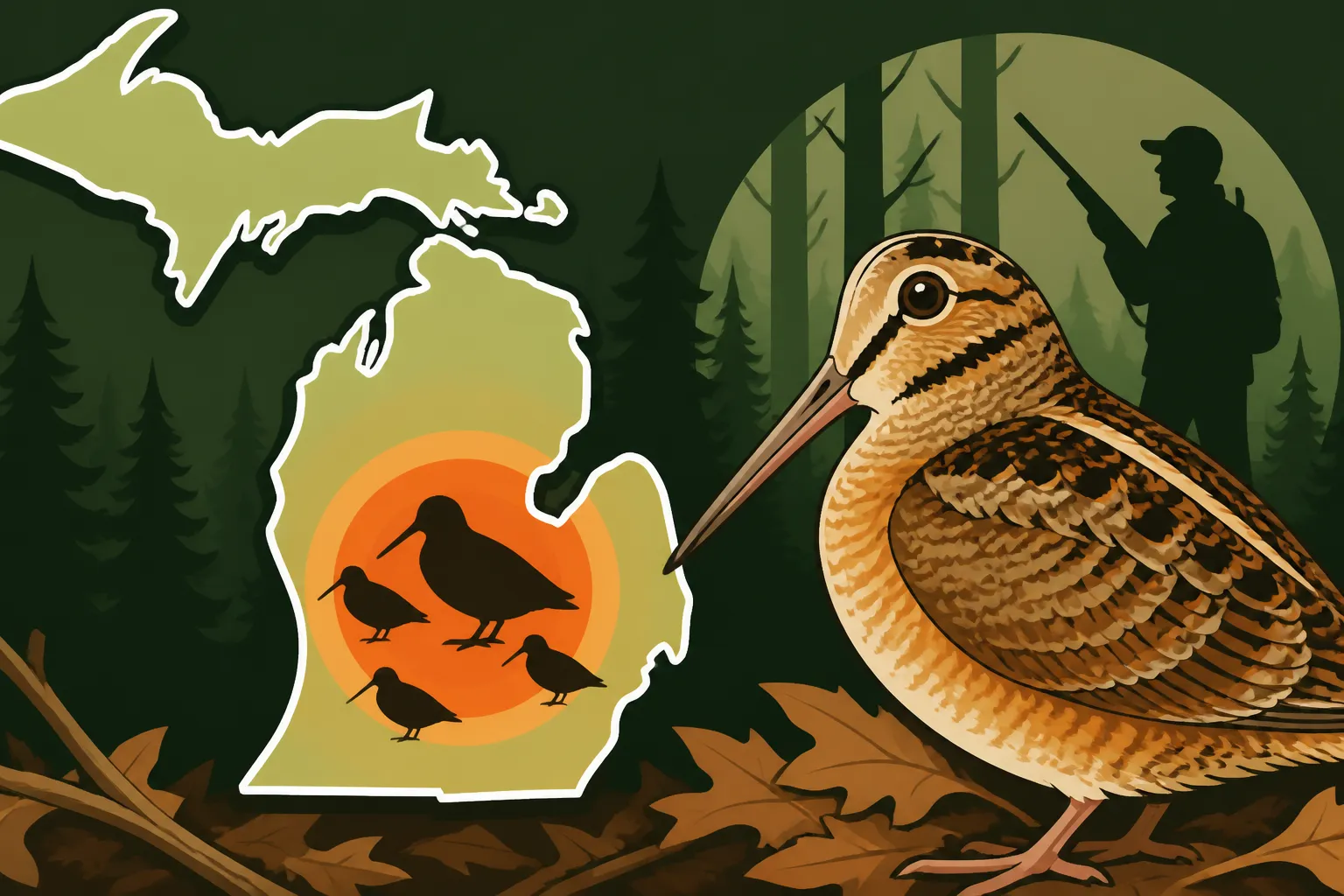
Where Michigan Woodcock Concentrate
It's a common frustration among Michigan upland hunters – you're out chasing grouse, perhaps, and then suddenly, a woodcock flushes from a damp thicket, startling you with its erratic flight. These amazing little "timberdoodles" are often overlooked, yet they offer incredible hunting opportunities if you know where to find them. This guide is here to demystify the woodcock's habits, helping you pinpoint exactly where these migratory marvels concentrate across Michigan.
Understanding Woodcock Habitat Preferences in Michigan
Woodcock are unique in their habitat requirements, often preferring areas that might seem a little too wet or dense for other upland birds. They aren't going to be holding in dry, mature hardwoods or wide-open fields. Instead, think of places that are just a little bit messy, a little bit damp, and full of dense, young growth.
The Allure of Young, Moist Cover
When you're looking for woodcock, the first thing that should come to mind is moisture. These birds feed almost exclusively on earthworms, and earthworms thrive in moist, soft soil. This is why you'll almost always find woodcock near some sort of water source or in areas with high soil moisture. Think bottomlands, creek edges, and low-lying areas.
Beyond the moisture, they absolutely love dense, young cover. Alders, willows, and young aspen stands are prime candidates. These areas offer the perfect combination of overhead concealment from predators and open ground underneath for easy foraging. Imagine a tangle of waist-high alder shoots growing along a meandering stream, with just enough space between the stems for a bird to walk, but so thick overhead you can barely see the sky. This is classic woodcock country. The leaves of these young trees also hold morning dew longer, keeping the soil damp and the worms accessible. You might be walking through what feels like an impenetrable jungle, but to a woodcock, it's home. These dense stands often occur where wetlands meet uplands, creating that perfect edge habitat.
Beyond Alders: Other Key Cover Types
While alders and young aspen often steal the show, woodcock aren't exclusively tied to these specific plants. Any dense, shrubby cover in a moist environment can hold birds. This includes old fields that are reverting to forest, especially if they have a lot of dogwood, sumac, or young maple saplings. Even some very young conifer plantings, if dense enough and near a water source, can hold birds, offering protection from the wind and elements.
Consider the edges of larger swamps or marshy areas. Often, the higher, drier ground on the fringe of a true wetland will feature a strip of dense, transitional cover that woodcock find irresistible. This might be a mix of tag alders, gray dogwood, and young cottonwoods. I've even flushed them from thick patches of multiflora rose (an invasive, but effective cover) in southern Michigan farmland. The key is always that combination of thick cover and moist, workable soil for their long bills. Don't be afraid to poke into those areas that look "too thick" for anything else; often, that's precisely where these secretive birds will be hiding. When Grouse and Woodcock Hunting in Michigan you'll find that the best areas for one often overlap with the other, especially in those younger forest types.
Migration Patterns and Timing for Michigan Woodcock
Michigan is a critical stopover and breeding ground for American woodcock. Understanding their migration patterns is key to finding concentrations of birds, especially the "flight birds" that move through our state. It's not just about where to look, but when to look.
The Early Birds: September Arrivals
As September rolls around, Michigan's resident woodcock are already present, having hatched and matured in our thick cover. These local birds can offer some great early season hunting. However, the first push of migratory birds often starts arriving from points north – Canada and the Upper Peninsula – as early as mid-September. These early migrants are often triggered by the first significant cold front of the autumn.
During this time, you might encounter woodcock mixed in with grouse in those classic grouse covers of young aspen and alder. They haven't been pressured much, so they might hold a little tighter. The leaves are typically still full, making visibility challenging, but it's a great time to be out if you're patient. Grouse Hunting Michigan Aspen Cover can often yield a bonus woodcock flush. Pay close attention to areas where aspen stands meet a low, damp alder bottom; these transition zones are magnets for both species. If you're out early, you're more likely to find small pockets of birds rather than massive concentrations, but these can still offer fantastic shooting opportunities.
The Peak Migration: October's Main Event
October is, without a doubt, the prime month for woodcock hunting in Michigan. This is when the main waves of migratory birds, often referred to as "flight birds," make their way south. The precise timing of these pushes is heavily influenced by weather. A strong cold front, especially one accompanied by north winds and rain, can trigger a mass movement of birds. They'll drop into suitable cover, often resting and feeding for a day or two before continuing their journey.
This is the time when you can walk into a patch of cover and experience multiple flushes, sometimes a dozen or more birds in a relatively small area. The leaves are usually starting to drop by mid-October, improving visibility and making for easier shooting. Key areas during peak migration will be those moist, dense covers that are also along major flyways or river corridors. The eastern side of the Lower Peninsula, particularly the Thumb region and areas south of Saginaw Bay, can be particularly good during these pushes, as birds funnel down towards Lake Erie. Don't forget that a tool like GoHunt can help you visualize these migration corridors by showing large contiguous blocks of public land along water features. Timing the Michigan Woodcock Flight is all about watching those weather patterns.
Late Season Holdouts: When the Frost Hits
Even after the main migration has passed, you can often find woodcock lingering in Michigan, especially in the southern half of the Lower Peninsula, until hard freezes truly set in. As the temperatures drop and the ground begins to freeze, earthworms become less accessible, forcing the birds further south. However, sheltered areas that retain moisture longer or have a natural spring can hold birds well into November.
Think about areas with thick overhead canopy that might trap heat and prevent frost, or south-facing slopes near water that get more sun. These pockets can act as late-season sanctuaries. While concentrations won't be as high as during the peak migration, finding these last few birds can be incredibly rewarding. It’s a game of attrition, with the birds holding out as long as possible until the ground truly locks up. Knowing Michigan Woodcock Season Dates can help you plan your late-season hunts to catch these last remaining birds.
Pinpointing Productive Areas: Tools and Tactics
Finding woodcock isn't just about stumbling into them; it's about strategic scouting, understanding habitat, and utilizing modern tools to put yourself in the right place at the right time. These birds are small and blend in well, so a focused approach makes all the difference.
Leveraging Digital Mapping Tools
In today's hunting world, digital mapping applications are indispensable, and they're particularly useful for finding woodcock cover. Services like GoHunt allow you to overlay property lines with satellite imagery and habitat classifications, making it easy to identify promising spots from the comfort of your home. Look for areas marked as lowland brush, young deciduous forest, or regenerating clearcuts adjacent to water features like creeks, swamps, or marsh edges.
When I'm planning a woodcock hunt, I'll use a mapping app to zoom in on state game areas or state forests. I'll look for those tell-tale signatures of alder thickets – often appearing as darker, very dense green patches in low-lying areas, especially along drainage ditches or small streams that might not even be named. I then cross-reference these spots with public land boundaries and access points. This kind of pre-hunt scouting saves an immense amount of time and effort, guiding you directly to high-potential cover without just blindly wandering. It's also great for figuring out Entry Routes on Flat Michigan Ground to avoid disturbing birds before you're in position.
Boots on the Ground: Scouting and Reading Sign
Even with the best digital maps, nothing beats good old-fashioned boots-on-the-ground scouting. Once you've identified potential areas, it's time to walk them. Woodcock leave very distinct sign that can tell you if birds are present. Their feeding holes, often called "borings" or "probing holes," are small, pencil-sized punctures in the soft earth where they've probed for worms. These are a dead giveaway. You'll also find their chalky, splash-like droppings, which are usually white or gray with a dark center.
When walking, move slowly and deliberately. Woodcock have incredible camouflage and will often hold tight, relying on their natural patterns to blend into the leaf litter. Pay close attention to the ground in front of you. Work through the densest cover; don't shy away from the tangles. Often, the more difficult the cover is to walk through, the better it is for woodcock. They aren't going to be in sparse, open woods. Finding Woodcock in Alder Runs often means pushing through some pretty dense stuff. If you find fresh sign, slow down even more, grid the area, and be ready for a flush.
Considering Hunting Pressure and Public Land
Like any game bird, woodcock can be influenced by hunting pressure. While they are migratory, local birds and those resting during a flight can learn to flush wild if continually disturbed. On heavily hunted public land, birds might concentrate in the nastiest, most overlooked corners. This means hiking a little further, or looking for smaller, isolated pockets of habitat that other hunters might bypass.
A good strategy is to find those patches of ideal woodcock cover that are a bit of a walk from a two-track or parking area. Most hunters tend to stick closer to easy access, leaving the deeper sections undisturbed. Also, consider hunting during the week rather than on weekends to encounter fewer people and potentially more settled birds. By using tools like GoHunt and combining them with your knowledge of habitat, you can often find unpressured gems even in well-known public hunting areas. Don't be afraid to Hunting Pressure on Michigan State Land by walking past the obvious spots.
Here's a quick summary of key woodcock habitat characteristics and migration timing:
| Feature | Ideal Habitat Characteristics | Migration Timing |
|---|---|---|
| Cover Type | Dense, young deciduous growth (alders, willows, young aspen, dogwood, sumac) | Early September to Mid-November |
| Moisture | High soil moisture, near wetlands, creek bottoms, drainage ditches, swamp edges | Triggered by cold fronts, especially strong north winds |
| Soil Type | Soft, workable soil for probing (loam, sandy loam, organic-rich) | Peak migration typically mid-October |
| Density | Very thick, overhead canopy for concealment, relatively open understory at ground level for foraging | Birds will linger in southern Michigan until hard freezes lock up the ground |
| Food Source | Abundant earthworms | Early migrants (local/northern birds) arrive mid-September, main flight mid-October |
Understanding these preferences and patterns will significantly increase your chances of finding where Michigan woodcock concentrate. It's a challenging but deeply rewarding hunt, offering a unique experience in the Michigan woods.
Disclaimer
This article is for general informational purposes only and does not constitute professional advice. Laws, prices and regulations vary by location and change over time. Consult a qualified professional for guidance on your specific situation.