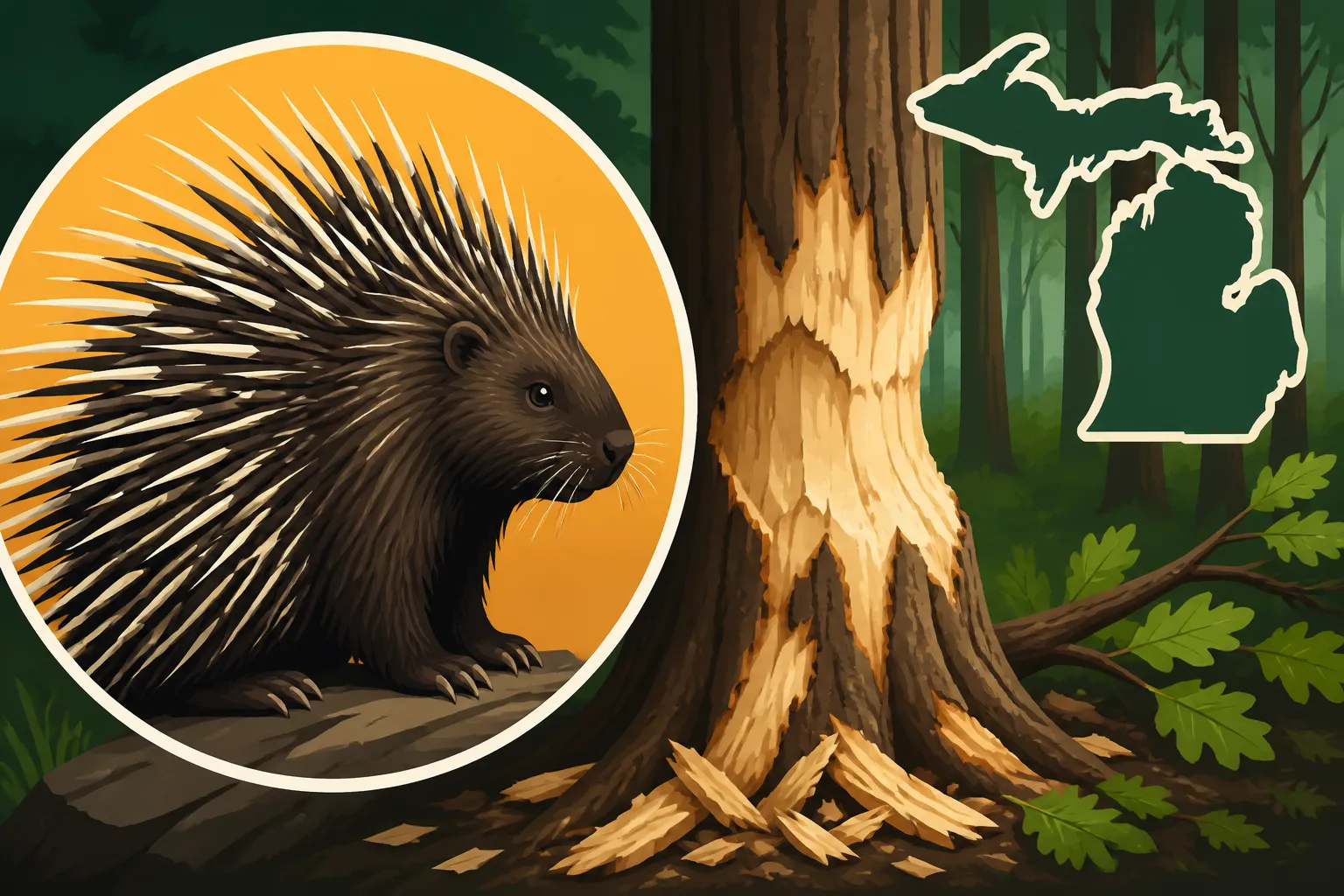
Porcupines and Michigan Timber Damage
It's incredibly frustrating to spend years nurturing your land, only to find valuable trees scarred or even killed by something you might not even see coming. Porcupines, those prickly, slow-moving bundles of quills, can cause significant and often surprising damage to timber in Michigan, leaving landowners and hunters scratching their heads about how to protect their woodlots. This guide will walk you through understanding porcupine behavior, identifying their distinct damage, and exploring various strategies to mitigate their impact on your Michigan timber.
Understanding the Michigan Porcupine: More Than Just a Quilled Friend
Porcupines are a unique and often misunderstood part of Michigan's wildlife. While most people recognize them by their impressive defense mechanism, few realize the extent of their impact on forest health and timber value. They're primarily herbivores, and their diet shifts with the seasons, often leading them directly to your prized trees, especially during winter months when other food sources are scarce or hard to access.
Porcupine Habits and Habitat Preferences
In Michigan, porcupines are most commonly found in the northern Lower Peninsula and throughout the Upper Peninsula, thriving in mixed conifer and hardwood forests. They prefer areas with a good mix of mature trees, especially hemlock, pine, and various hardwoods, which provide both food and shelter. You'll often find them denning in rock crevices, hollow logs, brush piles, or even abandoned buildings. They're primarily nocturnal but can be seen foraging during the day, especially in colder weather. Their slow, deliberate movements and reliance on quills for defense mean they spend a lot of time in trees, where they feel safest and find ample food. Upper Peninsula Deer Yarding and Winter Movement areas, for example, often share prime porcupine habitat.
During the warmer months, porcupines will consume a variety of plant material, including buds, twigs, leaves, and herbaceous plants. As winter tightens its grip and snow piles up, their dietary options become much more limited. This is when they turn to the inner bark (cambium) of trees, which is a critical source of nutrients for them when other greens are unavailable. This shift in diet is where the real problem for timber owners begins.
Identifying Porcupine Damage vs. Other Critters
Distinguishing porcupine damage from that of other animals like deer, rabbits, or even insects is crucial for effective management. Porcupines leave very specific calling cards. You'll typically see gnawing marks high up in trees, often around the branches or the main trunk, especially on the sunny side where sap might be flowing more readily. The bark will be completely removed, exposing the lighter wood underneath, and the tooth marks will be relatively wide and parallel. You might even find piles of wood chips at the base of the damaged tree.
| Damage Type | Animal Responsible | Key Characteristics |
|---|---|---|
| Girdling | Porcupine, Rabbit, Vole | Complete removal of bark around the circumference of the tree, often higher up for porcupines. Rough, wide tooth marks. |
| Browsing | Deer, Rabbit | Clipped twigs and shoots, usually at specific heights depending on the animal. Deer leave ragged tears; rabbits make clean cuts. |
| Rubbing | Deer | Scraped bark on small saplings, often with antler marks. Damage is usually vertical. |
| Fraying | Beaver | Chewing at the base of trees, often felling them, with distinct conical chew marks. |
| Insect Boring | Various Insects | Small holes in the bark, often with sawdust-like frass. Damage is internal before external signs appear. |
Deer, for instance, typically browse on twigs and leaves or rub their antlers on young trees, causing vertical scrapes rather than widespread bark removal. Rabbits and voles can girdle small saplings at ground level, but porcupines operate higher up in the canopy or on larger trunks. Knowing these differences helps you correctly identify the culprit and choose the most appropriate management strategy. If you're out Scouting Michigan Public Land Before Season, keep an eye out for these distinct signs, as it can tell you a lot about the local wildlife.
The Real Impact: How Porcupines Affect Michigan Timber
When a porcupine decides your tree's cambium is its next meal, the consequences can range from minor aesthetic damage to the complete demise of a valuable timber asset. This isn't just about a few scratched trees; it can impact the long-term health and economic value of your forest.
Economic Losses and Forest Health Concerns
The primary damage caused by porcupines is girdling—the removal of a complete ring of bark around the trunk or a large limb. Trees rely on this inner bark layer (the phloem) to transport sugars from the leaves (or needles) to the roots. When this pathway is severed, the tree effectively starves, as its roots can no longer receive the necessary nutrients. A girdled tree will eventually die above the point of damage. This means that even if the entire trunk isn't girdled, a major limb can be killed, reducing the overall timber volume and quality.
For commercial timber growers or even just those managing a woodlot for future harvest, the loss of mature trees or the stunting of younger, promising specimens due to porcupine activity can translate into significant economic losses. Imagine a stand of valuable red pine or hemlock, meticulously managed for decades, suddenly showing signs of widespread porcupine damage. The loss isn't just in the immediate tree, but in the lost growth potential and future harvest revenue. Furthermore, open wounds left by porcupines can make trees more susceptible to insect infestations and diseases, compromising the overall health and resilience of the forest stand.
Preferred Tree Species and Vulnerability
Porcupines aren't picky eaters, but they do show preferences, especially during the lean winter months. Conifers like hemlock, white pine, and red pine are frequently targeted, particularly during winter. Their thick, nutritious bark provides sustenance when deciduous trees are bare. However, they will also feed on various hardwoods, including oak, maple, and aspen. Young, vigorous trees are often more susceptible because their bark is thinner and easier to access, though older, mature trees are by no means immune.
In Michigan, where white pine and hemlock stands are vital components of our forest ecosystems, porcupine damage can be particularly concerning. The loss of these keystone species can have ripple effects on wildlife habitat and forest diversity. The damage often occurs incrementally, making it hard to notice until it's quite extensive, especially if the feeding is high in the canopy. It's not uncommon to find signs of porcupine activity in Hunting Michigan Clearcuts and Aspen Cuts where new growth is appealing, or in older, mixed stands where mature trees offer ample bark.
Strategies for Mitigating Porcupine Timber Damage
While porcupines are a natural part of Michigan's ecosystem, excessive damage to timber is something you can, and often should, address. There are several approaches, ranging from exclusion to deterrents, each with its own pros and cons.
Physical Barriers and Exclusion
One of the most effective, albeit labor-intensive, methods for protecting individual trees or small areas is physical exclusion. This involves installing barriers that prevent porcupines from climbing or reaching the bark.
- Tree Guards and Wire Mesh: For individual trees or young saplings, wrapping the trunk with heavy-gauge wire mesh (hardware cloth) can be very effective. The mesh needs to be at least 30 inches high and ideally buried a few inches into the ground to prevent them from burrowing underneath. Ensure the mesh is loose enough to allow for tree growth, but tight enough to prevent the porcupine from getting between the guard and the bark. This is especially useful for protecting high-value specimen trees or fruit trees in an orchard. You can also form a cone around the trunk to deter them.
- Metal Flashing: Attaching a smooth, wide band of metal flashing (aluminum or galvanized steel) around the trunk can prevent porcupines from climbing. The band should be at least 24-30 inches wide and placed about 3-4 feet off the ground. Porcupines have rough pads on their feet for climbing, but they can't get a grip on smooth metal. Make sure the flashing is attached loosely with springs or expandable fasteners to allow for tree growth, preventing it from girdling the tree itself. This method is often seen in orchards or around specific shade trees, but is impractical for large timber stands.
While exclusion methods are effective for targeted protection, they are generally not feasible for protecting large tracts of forest. The cost and labor involved in guarding hundreds or thousands of trees would be prohibitive. However, for a small patch of particularly valuable trees, or newly planted saplings that represent a significant investment, these physical barriers are often your best bet.
Habitat Modification and Deterrents
Sometimes, making your property less appealing to porcupines or giving them other things to chew on can help. This approach focuses on making their preferred food sources less accessible or less attractive.
- Removing Preferred Food Sources (selectively): While you can't realistically remove all preferred tree species from your woodlot, focusing on removing or harvesting heavily damaged trees can sometimes reduce their localized numbers if those trees were acting as a consistent food source. This can be part of a broader forest management plan. Consider planting less preferred species in areas of new growth if porcupine pressure is consistently high.
- Repellents: There are some commercial repellents available, often capsaicin-based (hot pepper spray) or containing predator urine scents. Their effectiveness can be quite variable and they typically require frequent reapplication, especially after rain or snow. For widespread timber damage, these are generally not a long-term solution, but they might deter an individual porcupine from a specific area for a short period.
- Natural Predators: In Michigan, porcupines have a few natural predators, most notably fishers. Fishers are incredibly agile and are one of the few animals that can effectively prey on porcupines, often attacking them on their unprotected underside. While you can't "introduce" fishers to your property, maintaining healthy forest ecosystems that support these predators can be part of a long-term, hands-off management strategy. These elusive furbearers are a vital part of the natural balance. Fishers and Martens in Michigan are important to our northern forests.
Remember, porcupines are often driven to timber damage by hunger during harsh winters. Ensuring a diverse and healthy forest environment that provides a variety of food sources can sometimes help distribute their feeding pressure.
Trapping and Removal
For persistent porcupine problems impacting specific areas, trapping and removal can be an effective solution, especially if you have a localized issue with a few individuals. However, there are important regulations to consider.
- Live Trapping: Porcupines can be live-trapped using large cage traps. Baiting with apples, carrots, or even a piece of wood smeared with salt can be effective. Once trapped, the porcupine can be relocated, though state regulations on relocating wildlife vary and often require the animal to be moved only a short distance to prevent spreading disease or simply shifting the problem to a neighbor. Always check with the Michigan Department of Natural Resources (DNR) for current regulations on trapping and relocation in your specific area.
- Lethal Trapping/Hunting: In some cases, and according to Michigan hunting and trapping regulations, porcupines can be taken lethally. Porcupines are generally classified as a nuisance animal in Michigan and can be taken year-round without a specific license on private property if they are causing damage. However, you must always verify the current regulations with the Michigan DNR, as these can change. For hunters, knowing their range and habits can be useful information, and mapping tools like GoHunt can help identify habitat features where porcupines might be found, even if you're primarily focused on White-Tailed Deer Across Michigan or Michigan Black Bear Hunting. If you choose this option, ethical and humane dispatch is paramount.
Before engaging in any trapping or removal, it's vital to confirm that porcupines are indeed the culprits and to understand the local laws. Unnecessary removal of wildlife is never a good practice. Always consult the Michigan DNR's guidelines or a local wildlife control professional to ensure you're acting legally and responsibly.
Considerations for Long-Term Forest Management
Effective long-term management of porcupine damage often means integrating it into a broader forest health strategy. This includes understanding the species composition of your forest and monitoring for signs of damage regularly.
- Monitoring and Early Detection: Regularly walking your property, especially in late winter and early spring, can help you detect porcupine activity early. Look for fresh gnaw marks, wood chips, and tracks in the snow leading to specific trees. Early detection allows you to intervene before widespread damage occurs. You might notice damage on specific species, which can inform future planting or harvest decisions.
- Diversity in Tree Species: A monoculture forest, or one dominated by just a few species, can be more vulnerable to a variety of pests and diseases, including porcupine damage. Encouraging a diverse mix of tree species can make your forest more resilient and spread out the potential impact of porcupine feeding. If porcupines prefer hemlock, having a good mix of other hardwoods and conifers might mean the pressure is less concentrated.
- Consulting a Forester: For larger landholdings or significant timber value, consulting a professional forester can be incredibly beneficial. They can assess the extent of the damage, help identify high-risk areas, and develop a tailored forest management plan that includes strategies for mitigating porcupine damage. They can also provide advice on silvicultural practices that promote overall forest health and reduce vulnerability.
Dealing with porcupine damage requires patience and a multi-faceted approach. By understanding these fascinating, yet sometimes destructive, creatures, and employing smart management strategies, you can protect your valuable Michigan timber and maintain a healthy, thriving forest for years to come.
Disclaimer
This article is for general informational purposes only and does not constitute professional advice. Laws, prices and regulations vary by location and change over time. Consult a qualified professional for guidance on your specific situation.