Muzzleloaders for a Michigan December
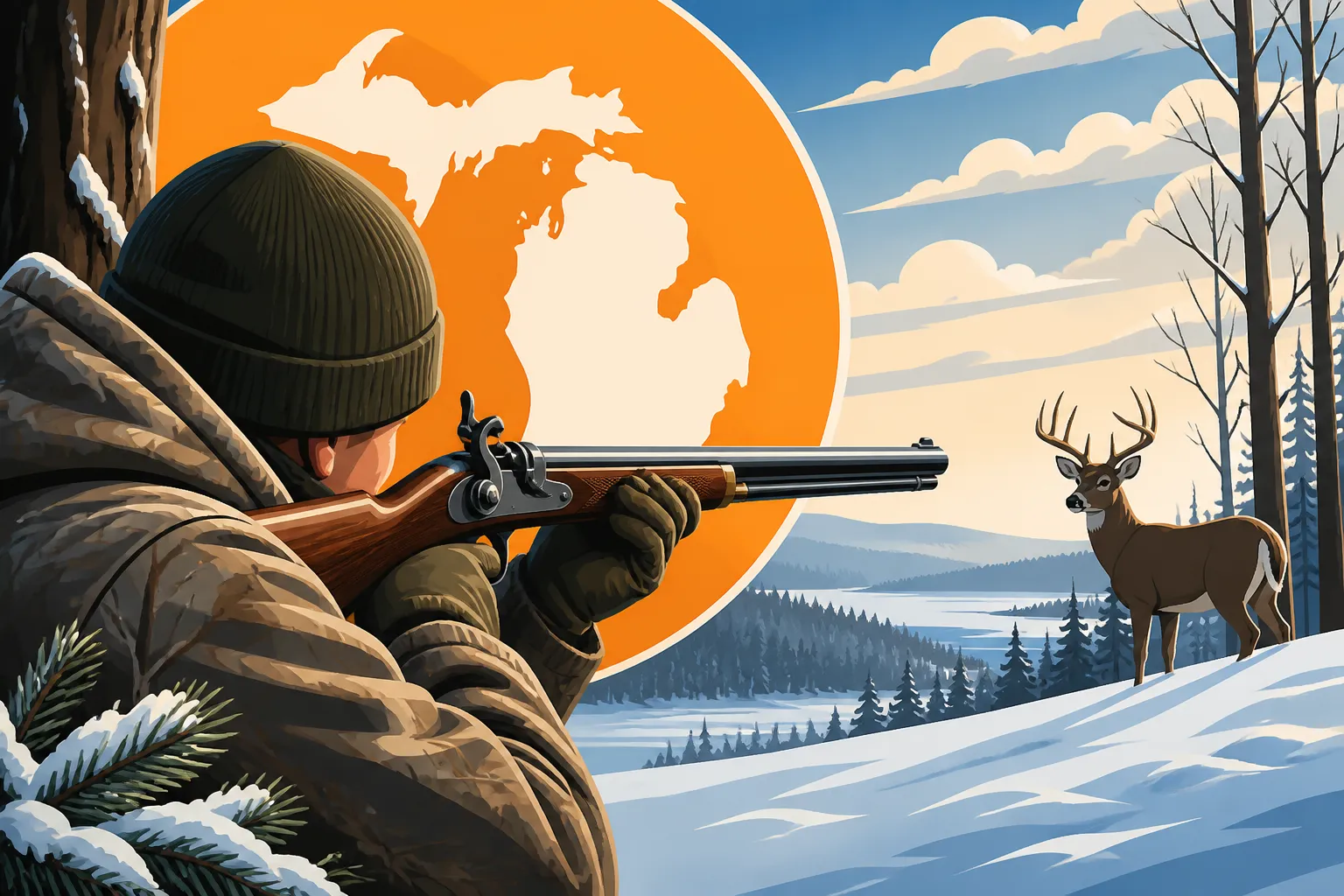
The Michigan late archery and muzzleloader seasons can be brutal, especially when December rolls around with its chilling winds, freezing rain, and often deep snow. It's a time when many hunters have already hung up their gear, feeling defeated by the intense firearm pressure or the early season's lack of deer movement. But for those dedicated few, the muzzleloader season offers a unique, challenging, and incredibly rewarding opportunity to connect with a late-season whitetail. This guide is all about preparing you and your smoke pole for the real grit of Michigan's December deer woods, ensuring you're not just surviving the elements, but thriving in them.
Why Muzzleloaders Shine in Michigan's Late Season
December in Michigan is a different beast altogether. The vibrant fall colors are long gone, replaced by a monochrome landscape of bare hardwoods and evergreens dusted with snow. Most of the primary rut activity has tapered off, and deer are focused on two things: finding remaining food sources and conserving energy. This shift in behavior, combined with fewer hunters in the woods, can create some of the best hunting opportunities of the entire year, especially if you're willing to brave the cold.
The Late-Season Landscape: What December is Like
Imagine stepping into the woods in early December. The air is crisp, biting at any exposed skin, and a thin crust of ice might shimmer on puddles. As the month progresses, those crusts can become thick layers of ice under accumulating snow. Trees are stark, offering clear visibility through once-dense foliage. Food sources that were abundant in October and November are now either buried under snow or completely depleted. Deer movement often becomes highly concentrated around the few remaining high-energy food sources, such as standing corn, brassicas in food plots, or even persistent oak ridges if the snow hasn't gotten too deep. The natural landscape itself dictates deer behavior more than at any other time of the year.
This also means that scouting becomes paramount. You're looking for fresh tracks in the snow leading to those specific food sources, or trails to dense thermal cover where deer bed to escape the bitter cold and wind. Identifying these patterns is key, as deer will often use predictable routes between bedding and feeding areas. Understanding the dynamics of Late-Season Food Sources for Whitetails is absolutely critical right now.
The Thrill of the Smoke Pole: Unique Appeal
There's something incredibly satisfying, almost primal, about hunting with a muzzleloader. It strips away some of the complexities of modern firearms, bringing you back to a more fundamental style of hunting. The single-shot challenge means every shot counts, forcing a level of discipline and focus that can be truly exhilarating. When you pull the trigger, the cloud of smoke, the delay, and the sheer power of the projectile feel earned. In the quiet, often snow-muffled woods of December, that smoky roar is a profound experience.
For many, it's a tradition, a way to connect with the hunting heritage of Michigan. It’s also an opportunity to extend the deer season without the intense competition of the firearm opener. The deliberate pace, the careful loading, and the limited range often encourage a more thoughtful approach to the hunt. It's not just about taking a deer; it's about the entire experience of being out there, pushing your limits in the elements, and earning that success.
Extended Opportunities: How it Fits into the Deer Seasons
While the regular firearm season often feels like a sprint, the muzzleloader season is more of a marathon, a final chance to fill a tag. For many hunters, it provides a much-needed extension after the main firearm season ends in mid-November. The pressure has often dropped significantly by December, especially on public lands where crowds might have been overwhelming earlier. This can make deer more relaxed and predictable, particularly after they've recovered from the initial shock of opening week.
It’s an excellent way to use leftover antlerless tags or specific late-season antlered tags if your Deer Management Unit (DMU) allows it. The season typically runs through much of December, offering several weeks of opportunity. This gives you time to adapt to changing weather conditions, re-scout, and adjust your tactics. Understanding Michigan Deer Seasons and Tags and how the muzzleloader season fits into the broader calendar is essential for planning your hunt.
Michigan's Muzzleloader Season Rules & Regulations
Hunting in Michigan, especially with specific weapon types during particular seasons, always comes with its own set of rules. The muzzleloader season is no exception. It's vital to be fully aware of the regulations to ensure a legal and ethical hunt, avoiding any potential pitfalls or fines.
Key Season Dates and Zones
Michigan’s muzzleloader deer season typically runs for about two weeks in early to mid-December. The exact dates can shift slightly year to year, so always double-check the current hunting digest. Generally, the season is statewide, but it's always wise to confirm this for your specific hunting area.
There are no separate zones for muzzleloader season in the same way there are for duck hunting, but understanding the general geography of Michigan is important for deer management overall. The Upper Peninsula often has more severe winter conditions, which can impact deer density and movement, while the Lower Peninsula, particularly the southern regions, has a higher human population and different deer habitat. Knowing the Michigan Muzzleloader Season Dates is your first step in planning. It’s also important to remember that during the muzzleloader season, firearms other than legal muzzleloaders, shotguns, or specific straight-wall cartridge rifles are typically prohibited for deer hunting.
Legal Muzzleloader Types
Michigan has clear definitions for what constitutes a legal muzzleloader for deer hunting. Generally, this refers to a firearm loaded from the muzzle, where the projectile and powder are loaded separately. Both traditional flintlock and percussion cap rifles, as well as modern in-line muzzleloaders, are typically legal. However, there are nuances:
- Breechloaders are generally not allowed: The key is "muzzle loaded." Modern firearms that use a breech-loading system, even if they fire projectiles designed for muzzleloaders, usually don't qualify.
- Ammunition: You must use black powder or a commercially manufactured black powder substitute. Smokeless powder is strictly prohibited in muzzleloaders during this season.
- Ignition: Percussion caps, musket caps, or 209 shotshell primers are usually the legal ignition sources.
- Sights: Open sights, peep sights, and scopes are generally allowed, though some hunters prefer the classic feel of open sights for the challenge.
It’s crucial to understand these rules, especially with the rise of new muzzleloader technologies. Always consult the official Michigan hunting digest for the most up-to-date and precise legal definitions to ensure your specific setup is compliant. For a broader overview, checking the rules for Legal Firearms for Michigan Deer can clarify what's allowed in various seasons.
| Muzzleloader Type | Loading Method | Ignition System | Typical Range (Yards) | Considerations for Michigan December |
|---|---|---|---|---|
| Traditional | Muzzle-loaded | Flintlock or Percussion | 50-100 | Classic feel, more weather sensitive. Flintlocks demand skill in wet. |
| In-Line | Muzzle-loaded | 209 Primer | 100-200 | More modern, better weather sealing, easier to clean. Popular choice. |
| Straight-Wall Rifle | Breech-loaded | Centerfire Cartridge | 150-250+ | Legal in Limited Firearm Zone, but NOT a muzzleloader. Offers rapid follow-up. |
Note: Straight-wall cartridge rifles are separate from muzzleloaders and are mentioned here for context as they are also legal during the firearm and muzzleloader seasons in the limited firearm zone.
Harvest Reporting and Tags
Just like any other deer season in Michigan, successfully harvesting a deer during the muzzleloader season requires proper tag validation and harvest reporting. This is a critical step that many hunters, especially after a cold, long day, might forget or delay.
- Tagging: Immediately after dispatching your deer, you must validate your kill tag by cutting out the month and day of harvest on the tag. Attach the tag securely to the deer.
- Reporting: Michigan mandates that you report your deer harvest within 72 hours of taking the animal. This can be done online through the DNR's website or via the Michigan DNR Hunt Fish App. This data is incredibly important for wildlife biologists to monitor Michigan Deer Harvest Trends and manage the state's deer population effectively. Failing to report can result in penalties, so don't let the excitement or exhaustion of the hunt make you forget this crucial step.
Choosing the Right Muzzleloader for Michigan's Cold
Selecting the ideal muzzleloader for Michigan's December deer season involves more than just picking up the first one you see. The harsh conditions – cold temperatures, potential for snow and rain, and the need for reliability – play a huge role in what will perform best in the field.
In-line vs. Traditional: Pros and Cons for Cold Weather
The two main categories you'll encounter are traditional (flintlock or cap-and-ball percussion) and in-line muzzleloaders. Each has its devotees and distinct advantages and disadvantages when faced with Michigan's late-season weather.
- Traditional Muzzleloaders: These are often seen as the purist's choice, demanding a higher level of skill and connection to hunting history. Flintlocks, with their exposed pan and frizzen, are notoriously susceptible to moisture. A fine drizzle or wet snow can dampen your priming powder, leading to a frustrating "flash in the pan" and no ignition. Percussion caps are better, but the nipple can still get wet. The longer lock time of traditional firearms also requires more precise shooting technique. However, their simple design can sometimes be an advantage, with fewer moving parts to freeze up. For many, the challenge itself is the reward.
- In-line Muzzleloaders: These are the workhorses of modern muzzleloading. They feature a more direct path for the ignition source (usually a 209 shotshell primer) to the main powder charge, often with sealed or semi-sealed breeches. This design significantly improves reliability in wet and cold conditions, reducing the chance of a misfire due to moisture. They often come drilled and tapped for scopes, and their faster lock time makes them feel more like a modern rifle. If reliability in foul weather is your top priority, an in-line is likely your best bet for a Michigan December.
Given the potential for freezing rain, sleet, and wet snow, an in-line muzzleloader generally offers a significant edge in consistent ignition for late-season Michigan hunting.
Caliber Considerations: What Works Best
For deer hunting, the most common muzzleloader calibers are .50 and .45, with .50 being the overwhelming favorite for Michigan deer.
- .50 Caliber: This is arguably the most versatile and popular choice. It offers excellent knockdown power for whitetails and a wide array of bullet and sabot options. With a heavy .50 caliber projectile, you get good energy transfer, which is crucial for quick, ethical kills, especially on a late-season deer that might have some extra fat and a thick winter coat.
- .45 Caliber: While still effective, .45 caliber muzzleloaders generally shoot lighter projectiles. They can be very accurate, but some hunters prefer the larger diameter and heavier bullet options of the .50 for deer. However, if you prefer less recoil or find a .45 more accurate with your chosen load, it's certainly capable.
Ultimately, the best caliber is one you can shoot accurately and consistently. A well-placed shot from a .45 is far more effective than a poorly placed shot from a .50. Focus on accuracy with your chosen load.
Ignition Systems: Percussion Caps vs. 209 Primers
The ignition system is the heart of your muzzleloader, and its reliability directly impacts your success in adverse weather.
- Percussion Caps: These small copper or brass caps, containing a shock-sensitive compound, are used on traditional percussion lock firearms. They sit on a nipple, and the hammer strikes them to ignite the powder. While they work, they are more exposed to the elements than 209 primers in an in-line system. Keeping them dry is paramount. You can cover the cap and nipple with a piece of electrical tape or even a finger cot to help, but water can still find its way in.
- 209 Shotshell Primers: These are the standard for most modern in-line muzzleloaders. They are hotter and more powerful than percussion caps, leading to more reliable ignition, especially with harder-to-ignite black powder substitutes. Their semi-enclosed nature within the breech plug of an in-line muzzleloader makes them much more resistant to moisture, which is a huge advantage when Keeping a Muzzleloader Dry in Wet Snow is a constant battle. Most in-line systems also have some form of weather sealing around the primer pocket, further enhancing their reliability in harsh conditions. For Michigan in December, a 209 primer-based in-line offers the most consistent ignition.
Ammunition & Projectiles for December Deer
The ammunition you choose for your muzzleloader can make a significant difference in accuracy and terminal performance, especially when hunting cold, tough late-season deer. It's not just about the bullet; the powder and how you load it are equally important.
Powder Types and Storage
For muzzleloaders, you'll be using either traditional black powder or one of its modern substitutes. Smokeless powder is a definite no-go for these firearms during deer season.
- Black Powder: The original. It's corrosive and requires thorough cleaning, but it's consistent. Black powder comes in different granulations (Fg, FFg, FFFg). For .50 caliber rifles, FFg is a common choice. It ignites reliably but creates a large smoke cloud. Storing black powder requires careful attention to safety, keeping it dry and away from ignition sources.
- Black Powder Substitutes: Brands like Pyrodex, Triple Seven, and Blackhorn 209 are popular alternatives. They are generally less corrosive (though still require good cleaning) and produce less smoke.
- Pyrodex: A common substitute, available in granular (like black powder) and pellet forms. It's easier to clean than true black powder but can be sensitive to moisture.
- Triple Seven: Another popular choice, known for cleaner burning and higher velocity than Pyrodex. It's often available in granular or pellet form. It can be a bit more finicky with compression in some guns.
- Blackhorn 209: This is often considered the most advanced substitute. It's non-corrosive, shoots very clean, and offers excellent accuracy and consistency, often rivaling smokeless powder in performance. It requires a 209 primer for reliable ignition and cannot be used with traditional percussion caps. It's often more expensive but many hunters swear by its performance, especially in terms of minimal cleaning after the hunt.
Regardless of your choice, proper storage is paramount. Keep powder in its original container, sealed, and in a cool, dry place. Avoid extreme temperature fluctuations that can cause moisture condensation.
Sabots vs. Conical Bullets: Performance Differences
The projectile you load will greatly impact accuracy, trajectory, and terminal performance. You'll typically choose between sabots with smaller diameter bullets or large, full-bore conical bullets.
- Sabots: A sabot (pronounced "say-bow") is a plastic sleeve that holds a smaller diameter bullet (like a .45 caliber bullet in a .50 caliber muzzleloader) and allows it to fit snugly down the bore. When fired, the sabot peels away, and the bullet continues downrange.
- Pros: Allows for high ballistic coefficient rifle bullets, often leading to better accuracy and flatter trajectories at longer ranges. Easier to load than many conicals.
- Cons: The plastic sabot can foul the bore, requiring swabbing between shots for optimal accuracy. Can sometimes be affected by cold temperatures, making them brittle.
- Conical Bullets: These are full-bore bullets, meaning they are the same diameter as your muzzleloader's bore (e.g., a .50 caliber bullet for a .50 caliber muzzleloader). They rely on soft lead and tight patching for accuracy.
- Pros: Often deliver massive energy transfer due to their weight and diameter. No plastic sabot to deal with, meaning less bore fouling (though lead can still foul). Can be more traditional in feel.
- Cons: Tend to have a more rainbow-like trajectory than sabot-fired bullets, requiring more practice at various ranges. Can be harder to load consistently, especially if the bullet is too tight for the bore.
For Michigan's typically shorter-range timber and swamp shots, both can be highly effective. The key is to find what shoots best out of your particular muzzleloader.
Bullet Construction: Terminal Ballistics for Late-Season Deer
Late-season deer often have thicker coats and can be tougher due to increased body fat and cold-weather adaptation. Therefore, choosing a bullet designed for good expansion and penetration is crucial.
- Lead Soft Points: Many traditional conical bullets are soft lead. These expand readily, but may deform significantly on heavy bone.
- Jacketed Hollow Points/Soft Points: Found in many sabot loads, these are similar to modern rifle bullets. They offer controlled expansion and good penetration. Look for bullets designed for deer-sized game, often in the 250-300 grain range for .50 caliber. Brands like Hornady XTPs, Barnes Expander, and PowerBelt AeroTips are popular.
- Bonded Bullets: Some premium muzzleloader bullets feature bonded cores, which help them retain weight and penetrate deeply, even after hitting heavy bone. This is excellent for ensuring an exit wound and a good blood trail, which can be critical when Blood Trailing After Dark in Michigan or through thick snow.
When selecting, prioritize consistent accuracy from your firearm, then consider bullet construction for reliable terminal performance. A bullet that doesn't expand won't transfer energy efficiently, and one that doesn't penetrate won't reach vital organs.
Keeping Your Muzzleloader Dry and Reliable in Wet Weather
Michigan's December can throw everything at you: wet snow, freezing rain, sleet, and plain old rain. Nothing is more frustrating than having a deer in your sights only to have your muzzleloader misfire. Preventing moisture from reaching your powder and primer is paramount.
Weatherproofing Your Muzzleloader: Preventing Misfires
Proactive steps before you even leave the truck can save your hunt. This isn't just about covering the muzzle; it's about protecting the entire ignition system.
- Muzzle Protection: Always cap your muzzle. A piece of electrical tape, a finger cot, or a dedicated muzzle cap will prevent snow, rain, or debris from entering the bore. This is non-negotiable. Don't worry, the bullet will blow it off without affecting accuracy at typical muzzleloader ranges.
- Breech Protection (In-lines): For in-line muzzleloaders using 209 primers, electrical tape around the breach plug and primer can add an extra layer of defense against moisture. Some hunters will even use a small balloon or finger cot over the entire breach area. The goal is to create a barrier without impeding function.
- Nipple/Cap Protection (Traditional): For percussion caps, a piece of electrical tape over the cap and nipple works well. Some traditional hunters carry small leather or rubber covers. Flintlock users face a greater challenge; keeping the pan and frizzen dry requires constant vigilance. Carrying a small piece of leather or oilcloth to cover the lock mechanism while still-hunting can help, and having a small, waterproof container of dry priming powder is a must.
- Scope Covers: If you're using a scope, good flip-up or bikini covers are essential to keep moisture off the lenses. You don't want to miss a shot because your scope is fogged or covered in precipitation.
- Barrel Swab: Carry a small cleaning patch and a ramrod extension to swab your barrel if you're taking multiple shots, especially with sabots. Moisture inside the bore can affect accuracy and consistency.
These simple steps dramatically increase your chances of a successful ignition when it matters most. For more specific advice, check out Keeping a Muzzleloader Dry in Wet Snow.
Field Maintenance in the Cold: Quick Fixes
Even with the best preparation, things can go wrong in the field. Knowing a few quick fixes can make all the difference.
- Clearing a Misfire: If you get a "click" instead of a "bang," resist the urge to immediately open the breach (for in-lines) or recock (for traditionals). Give it 30-60 seconds, as a hangfire is possible. If it doesn't fire, carefully clear the primer (in-line) or cap (traditional) and replace it with a fresh, dry one. Ensure your powder charge is still dry. If it's compromised, you might need to safely unload the rifle.
- Swabbing the Bore: If you're shooting multiple times (e.g., at the range, or a follow-up shot if legal), cold temperatures can exacerbate bore fouling. A quick swab with a lightly oiled patch or a dry patch will clean out powder residue and plastic fouling from sabots, maintaining accuracy. Do this while keeping your hands warm and moving to prevent your fingers from losing dexterity.
- Protecting Your Hands: Cold, wet hands are useless hands. Keeping them warm with quality gloves or mittens and hand warmers will allow you to perform necessary field maintenance, load, and shoot effectively. You'll thank yourself when you need to quickly change a primer or load a follow-up shot.
Proper Storage Between Hunts: Avoiding Rust and Issues
After a cold, wet day in the Michigan woods, your muzzleloader needs attention to prevent rust and ensure it's ready for the next hunt.
- Immediate Cleaning: As soon as you're home and out of the cold, field strip your muzzleloader (remove the breech plug and barrel) and give it a thorough cleaning. Black powder and most substitutes are highly corrosive, and leaving residue in the barrel, especially in cold, damp conditions, will lead to rust.
- Dry Thoroughly: After cleaning, ensure every part of your muzzleloader is completely dry. Use compressed air if available, or simply let parts air dry in a warm, dry environment.
- Lubrication: Lightly oil all metal parts to protect against corrosion. Pay special attention to the bore, breech plug threads, and any exposed metal.
- Safe Storage: Store your muzzleloader in a climate-controlled environment, ideally in a quality gun safe with a dehumidifier. Avoid storing it in a padded case for extended periods, as these can trap moisture and promote rust, especially if the gun wasn't completely dry when stored.
Taking these steps will ensure your muzzleloader remains reliable, accurate, and ready for many more Michigan December hunts.
Sighting In and Practice for Cold Weather Performance
Sighting in your muzzleloader is crucial, but doing so in comfortable fall weather and expecting the same performance in a frigid Michigan December is a mistake. Cold temperatures affect both the shooter and the firearm.
Compensating for Temperature: Point of Impact Shifts
The harsh reality is that extreme cold can cause minor, but sometimes significant, shifts in your muzzleloader's point of impact.
- Barrel Contraction: Metal barrels contract slightly in extreme cold. While this is often negligible for most hunting distances, it can affect harmonics and, consequently, bullet flight.
- Powder Performance: Black powder and its substitutes can burn slightly differently in very cold temperatures. This might lead to minor changes in muzzle velocity, which then affects bullet drop and trajectory. It's usually not a huge shift, but a few feet per second can add up at longer ranges.
- Primer Ignition: While 209 primers are robust, the overall system might react slightly differently when everything is near freezing.
- Testing is Key: The best way to compensate is to test your load in cold weather. If possible, set up a range session on a day that mimics hunting conditions. Dress warmly, let your muzzleloader sit outside to cool down, and then shoot. This will show you exactly how your setup performs when it's cold. You might find your point of impact shifts a few inches at 100 yards, which is vital to know.
Dressing for the Range: Simulating Hunting Conditions
When you head to the range to sight in for December, don't show up in a T-shirt. Simulate your actual hunting attire and posture.
- Layer Up: Wear your full hunting clothes – base layers, insulation, outer shell, hat, and gloves. The bulk of winter clothing can affect your cheek weld, shoulder mount, and overall shooting ergonomics. A jacket can snag, a glove can interfere with the trigger, and a hat brim can block your sight picture.
- Practice with Gloves: If you plan to shoot with gloves on, practice with them on. You'll quickly discover if your gloves are too bulky for your trigger guard or if they reduce your tactile feel too much. Consider thinner shooting gloves or fingerless gloves if your main gloves are too cumbersome.
- Cold Hands, Cold Mind: If your hands are numb, your trigger control will suffer. Using hand warmers during your range session, just as you would in the stand, will help replicate real hunting conditions and ensure you're as comfortable as possible when it counts.
- Simulate Stands: If you hunt from a treestand or ground blind, practice shooting from similar positions. A rifle feels different when you're bundled up and leaning against a tree compared to shooting from a bench rest. This is especially true when considering Cold Weather Sitting Strategy for extended periods.
Low-Light Optics and Rangefinding: Critical for Late Season
December days are short, and legal shooting light can be fleeting. Having reliable optics is essential.
- Low-Light Scope Performance: If your muzzleloader is equipped with a scope, ensure it has good low-light gathering capabilities. A large objective lens (e.g., 40mm or 50mm) and quality glass will make a significant difference in the dim light of dawn and dusk, which are often prime deer movement times. An illuminated reticle can also be a huge asset in these conditions, providing a clear aiming point against a dark background.
- Binoculars: Don't underestimate the value of a good pair of binoculars. Use them to scan edges, dense cover, and feeding areas for deer. They're far more effective than trying to use your rifle scope for scouting.
- Rangefinder: Knowing your exact range is critical for muzzleloaders due to their arcing trajectory. A good rangefinder, especially one that accounts for angle compensation, is an invaluable tool. Practice with it so you can quickly get a reading and make any necessary holdover adjustments. This is where tools like GoHunt, with its mapping and range estimation features, can be helpful for pre-scouting and identifying potential shot distances in specific terrain.
Hunting Tactics for Muzzleloader Season in Michigan
By December, deer behavior has changed drastically from the rut. Hunters need to adapt their strategies to target deer focused on survival in the cold.
Focusing on Food Sources: What Deer Are Eating Now
After weeks of hunting pressure and dropping temperatures, deer are primarily concerned with securing enough calories to survive. Their activity will revolve around the best available food sources.
- Standing Agricultural Fields: Corn, soybeans, or other grain fields that haven't been harvested yet are absolute magnets for deer in December. They provide both food and thermal cover. Look for trails leading into these fields, particularly around edges and corners. Hunting these requires careful wind consideration and strategic entry/exit routes.
- Brassicas and Food Plots: If you or local landowners have planted brassicas (like turnips or kale) or other late-season food plots, these will be heavily utilized. Deer will dig through snow to get to them.
- Hardwoods with Remaining Acorns: In areas with significant oak stands, if the snow isn't too deep, deer will still paw through it to find acorns. This is especially true for white oaks, which are less bitter.
- Browse: As other food sources diminish, deer will turn to woody browse. Look for areas with young aspen, dogwood, or cedar, showing signs of heavy browsing.
- Thermal Cover to Food: The travel corridors between dense thermal cover (like cedar swamps or thick pines) and these prime food sources will be hotbeds of activity. Understanding these specific deer movements can be aided by studying maps on platforms like GoHunt, identifying dense cover near agricultural lands or persistent oak stands. Focusing on these travel routes and pinch points is a very effective strategy. Hunting the Michigan Rut in November strategies are out the window; now it's all about survival.
Still-Hunting and Tracking in Snow: Using the Environment
December often brings snow, which can be both a blessing and a curse. It makes tracking easier but also makes deer more alert.
- Reading the Snow: Fresh snow reveals deer movement. Look for tracks indicating active feeding areas, bedding sites, and travel corridors. Pay attention to the size and freshness of tracks. The presence of urine and scat can also tell you how recently a deer has been in an area and what it's been eating.
- Wind and Stealth: When still-hunting, always hunt into the wind or with a crosswind. The crunch of snow underfoot can be loud, so move slowly, lifting your feet rather than dragging them. Use the terrain to your advantage, moving from tree to tree, checking ahead with your binoculars before taking another step.
- Tracking Strategies: If there's fresh snow, tracking can be incredibly effective. Follow a fresh set of tracks, paying attention to the deer's gait and behavior. If the tracks are meandering and feeding, the deer is likely relaxed. If they're straight and fast, the deer is probably alerted or moving to distant cover. When the tracks enter dense cover, slow down even more, scanning ahead for a bedded deer. A specific guide on Still-Hunting After a Michigan Snow offers more in-depth advice.
- Patience is Key: Still-hunting is a game of patience. It’s not about covering miles, but about covering yards silently and deliberately. Take frequent breaks to stand still, listen, and glass your surroundings.
Stand Placement for December Deer: Tight Cover and Thermal Hubs
Deer in December are seeking warmth and security, so your stand placement should reflect this.
- Thermal Cover Edges: Focus on the edges of dense thermal cover like cedar swamps, thick pine plantations, or conifer stands. Deer will bed in these areas to escape wind and cold. Look for trails entering and exiting these areas, especially those leading to food sources.
- South-Facing Slopes: In hilly terrain, south-facing slopes receive more sunlight throughout the day, making them warmer. Deer will often bed on these slopes to soak up the sun.
- Pinch Points and Funnels: Deer movements in cold weather can become highly concentrated. Identify natural funnels created by terrain features, changes in vegetation, or fences that channel deer into predictable travel routes. These are prime locations for a stand.
- Consider Access: Always plan your entry and exit routes to avoid disturbing bedding areas. In December, with less foliage, your visibility is higher, but so is the deer's. A noisy or poorly planned approach can blow out deer for the entire day.
- Ground Blinds: A well-brushed-in ground blind can be incredibly effective in cold weather, offering protection from the elements and allowing you to remain still and warm for longer. This is particularly useful in areas without suitable trees for treestands.
By adapting your tactics to the changing deer behavior and the challenges of the Michigan winter, your muzzleloader hunt in December can be incredibly successful.
Essential Gear Beyond the Muzzleloader
While your muzzleloader is the star of the show, having the right supporting gear for a Michigan December hunt is just as critical for comfort, safety, and success. The cold and often wet conditions demand specific considerations.
Clothing for Extreme Cold: Layering Strategies
Staying warm and dry is paramount in a Michigan December. Hypothermia is a real threat, and shivering will ruin your accuracy and concentration. The key is intelligent layering.
- Base Layers: Start with moisture-wicking synthetic or merino wool base layers directly against your skin. These pull sweat away, keeping you dry. Cotton is a definite no-go as it retains moisture and loses its insulating properties when wet.
- Mid-Layers/Insulation: Build warmth with insulating layers. Fleece, down, or synthetic puff jackets work well. Multiple thinner layers often perform better than one thick layer, as they trap more air and allow for better temperature regulation. If you're walking in, remove some layers to avoid sweating, then add them back once you reach your stand.
- Outer Shell: A windproof and waterproof (or highly water-resistant) outer shell is essential. It protects your inner layers from wind and precipitation. Look for quiet fabrics that won't rustle loudly when you move.
- Extremities: Don't forget your head, hands, and feet. A warm hat (or two), insulated gloves or mittens (with thin liners for dexterity), and heavy wool or synthetic socks are critical. Consider hand warmers for pockets and foot warmers for boots.
- Hunter Orange: Remember Michigan's hunter orange requirements. During the muzzleloader season, you must wear hunter orange, often specified as a certain amount visible from all directions. This is for your safety, especially if other hunters are out. How Much Hunter Orange Michigan Requires will detail the specifics. For comprehensive advice on keeping warm, refer to Layering for a Michigan Deer Stand.
Navigation and Recovery Tools: Getting a Deer Out in the Snow
Once you've harvested a deer, the real work begins, especially if there's snow on the ground or the terrain is rugged.
- GPS/Mapping App: A reliable GPS unit or a smartphone app like GoHunt with downloaded offline maps is essential. It allows you to mark your stand, the kill site, and track your path in and out, which is invaluable in unfamiliar terrain or after dark. Knowing property boundaries is also critical on public lands or near private parcels.
- Headlamp/Flashlight: You will likely be walking in and out in the dark. A powerful headlamp with a red light option (to preserve night vision and not spook deer as much) is a must. Carry spare batteries.
- Game Cart/Sled: If there's snow, a deer sled can be a lifesaver, making it significantly easier to drag a deer out. A game cart can be useful on clear, relatively flat trails, but they struggle in deep snow or mud.
- Field Dressing Kit: A sharp knife, gutting gloves, and perhaps a small bone saw are crucial for efficient field dressing. In cold weather, it's easier to field dress, but you still want to work quickly and cleanly.
- Rope/Drag Harness: Even with a sled, a good drag rope or harness will make the recovery much easier on your back.
- First Aid Kit: Always carry a basic first aid kit, especially when hunting in remote areas where help might be a long way off. This should include items for cuts, blisters, and basic emergencies.
Pack Essentials: Comfort and Safety
Beyond your rifle and navigation tools, a few comfort and safety items can make your late-season hunt more enjoyable and secure.
- Water/Hot Beverage: Staying hydrated is important even in cold weather. A thermos of hot coffee, tea, or broth can be a huge morale booster and help keep you warm during a long sit.
- Snacks: High-energy snacks like granola bars, nuts, or jerky provide fuel to keep your body warm and your mind sharp.
- Emergency Fire Starter: A lighter, waterproof matches, or a ferro rod can be crucial in a survival situation.
- Communication Device: A fully charged cell phone (in a waterproof bag) is essential. Consider a portable charger. If hunting in areas with no cell service (common in parts of the U.P. or remote N. Lower Michigan), a satellite messenger or two-way radios (if hunting with a group) can provide vital communication.
- Extra Layers: Always pack an extra hat, pair of gloves, and maybe a fleece jacket. If one gets wet, you have a dry replacement. This is part of a solid Cold Weather Sitting Strategy.
Being prepared for Michigan's challenging December conditions will not only increase your chances of success but also ensure your safety and enjoyment of the hunt.
Disclaimer
This article is for general informational purposes only and does not constitute professional advice. Laws, prices and regulations vary by location and change over time. Consult a qualified professional for guidance on your specific situation.