Layering for a Michigan Deer Stand
One of the biggest struggles for any Michigan deer hunter isn't finding a deer or making a good shot – it's often just staying comfortable and focused on stand when the weather decides to throw everything it has at you. From crisp early October mornings that turn into balmy afternoons to bone-chilling November winds and December snow squalls, our state's weather can be wildly unpredictable. This guide is all about mastering the art of layering, ensuring you stay warm, dry, and alert, no matter what Michigan's woods decide to dish out.
Why Layering is Your Best Friend in Michigan's Deer Woods
It's a tale as old as time for Michigan hunters: you bundle up for a chilly morning sit in October, only to be sweating by 10 AM, removing layers and making noise. Or you misjudge a November cold front, and by midday, you're shivering uncontrollably, forced to cut your hunt short. The reason this happens so often is that Michigan's weather isn't just cold or hot; it's variable. What starts as a frosty dawn can quickly become a mild, sunny afternoon, or a calm morning can give way to blustery winds and rain. This constant fluctuation makes a single, heavy coat utterly useless.
The brilliance of a well-executed layering system is its adaptability. Instead of one thick garment, you wear several thinner ones, each serving a specific purpose. This allows you to add or subtract clothing as conditions change, regulating your body temperature much more effectively. It’s about being proactive, not reactive, to the weather, giving you the power to stay on stand longer and remain more comfortable and alert when that trophy buck finally steps out.
The Michigan Weather Rollercoaster: Early, Mid, and Late Season
Understanding the typical weather patterns for each hunting phase is crucial for planning your layers. Michigan's deer season spans a wide range of conditions, demanding different approaches.
In early archery season, especially in October, mornings can be quite cool, even dipping into the 30s, but once the sun climbs, temperatures often soar into the 50s or 60s, sometimes higher. You’ll be hiking in with a pack, generating heat, and then sitting relatively still. This combination is a recipe for overheating and then getting chilled from sweat if you're not careful. Later in October, the wind can pick up, and the first hard freezes are common, making wind resistance and core warmth more important.
As November rolls around and we hit the firearm season and the peak of the rut, things get serious. While some days can still be surprisingly mild, this is when Michigan truly starts to feel like winter. Cold fronts are frequent, bringing biting winds, rain, sleet, or snow. The thermometer might hover around freezing, or it could plunge into the teens. Sustained cold, especially if you're sitting for hours, demands significant insulation. This is when you're truly putting your gear to the test, and a failure in your layering system can mean the end of your hunt. Don't forget that November is also when the Michigan Firearm Deer Season Structure dictates many hunters will be out.
By late archery and muzzleloader season in December, you're often dealing with the most extreme cold, sometimes single-digit temperatures, and deep snow, particularly in the Upper Peninsula. Prolonged exposure to these conditions without proper layering can lead to hypothermia. Every layer needs to be meticulously chosen for maximum warmth and moisture management. You’ll also want to consider the challenges of Muzzleloader Tactics in December Cold when planning your layering, as waiting for a clear shot can take time.
The Science of Thermoregulation and Staying Dry
At its core, layering is about managing your body's heat and moisture. When you're active, like walking to your stand, your body produces a lot of heat and sweat. If that sweat can't escape, it gets trapped against your skin, and when you stop moving and cool down, that moisture turns cold, chilling you to the bone. This is why cotton is often considered the enemy of a hunter – it absorbs moisture and holds it close.
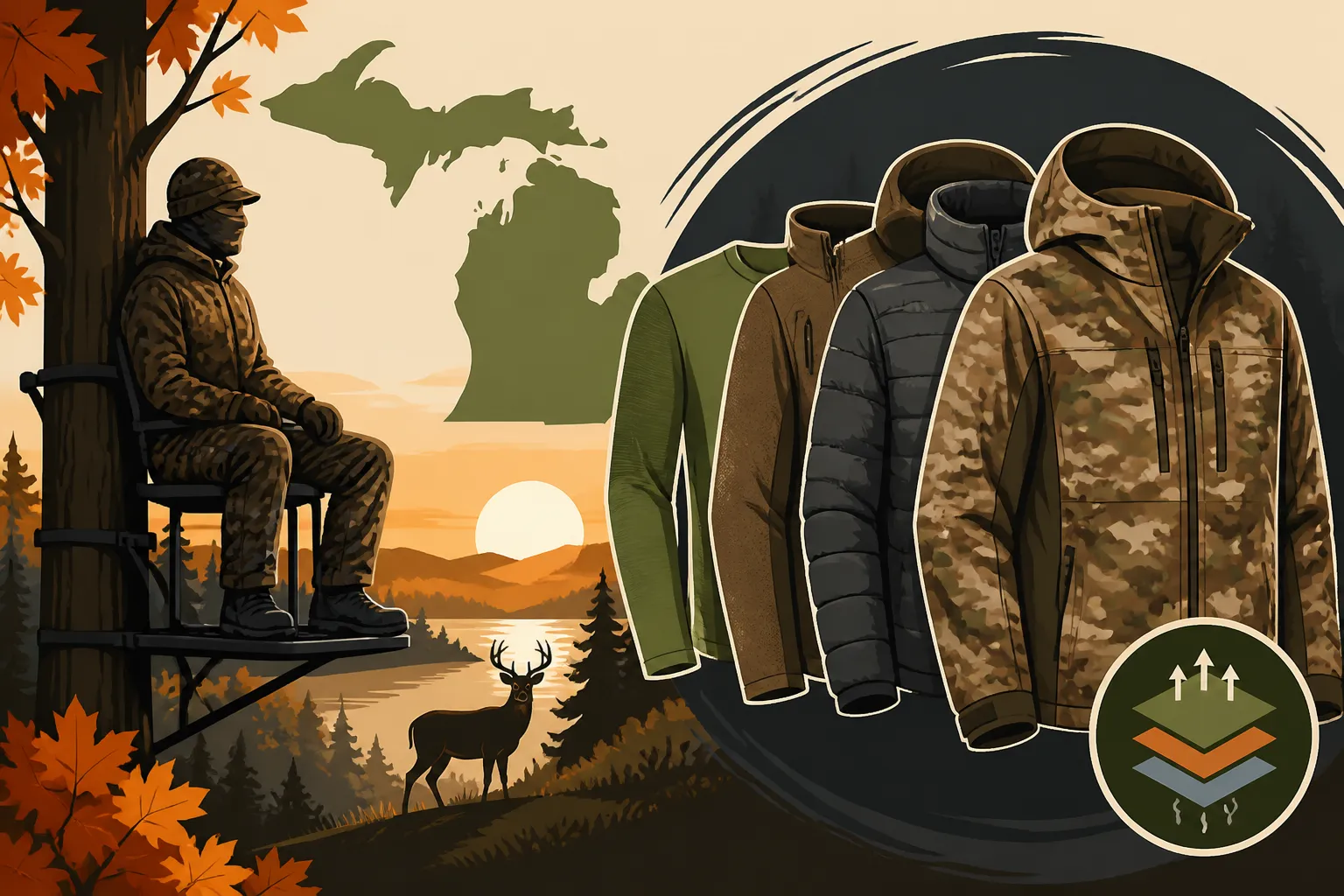
A good layering system uses different materials to wick moisture away from your skin, trap warm air, and block external elements. The air trapped between layers acts as insulation, slowing the transfer of heat away from your body. Each layer has a specific job: the base layer manages moisture, the mid-layers provide insulation, and the outer shell protects against wind and precipitation. By combining these functions, you create a dynamic system that allows you to vent heat when you're working hard and seal it in when you're sitting still.
The Foundation: Base Layers for Moisture Management
The base layer is arguably the most critical part of your entire system, even though it's the thinnest. It's the first line of defense against sweat and directly impacts your comfort and warmth throughout the hunt. Choosing the right material and weight can make or break your day on stand.
Material Choices: Synthetics Versus Merino Wool
When it comes to base layers, you're generally looking at two main contenders: synthetics and merino wool. Both have their advantages, and many hunters will have a preference based on their personal hunting style and how their body reacts to temperature changes.
Synthetic base layers, often made from polyester or polypropylene, are engineered to excel at wicking moisture away from your skin and drying quickly. They are typically very durable, affordable, and can be found in a variety of weights. The biggest downside for some hunters is that synthetics can retain body odor over time, which might be a concern for scent-conscious deer hunters. However, many modern synthetics incorporate antimicrobial treatments to combat this issue. They are excellent for high-exertion activities where quick drying is paramount.
Merino wool, on the other hand, is a natural fiber renowned for its exceptional warmth-to-weight ratio and its ability to regulate temperature. It excels at keeping you warm even when damp, making it a favorite for many cold-weather hunters. Perhaps its most celebrated feature is its natural resistance to odor, meaning you can wear it for multiple days without it smelling. The downside? Merino wool tends to be more expensive than synthetics and can be less durable, sometimes developing small holes over time with heavy use. It also dries slower than synthetics. For more on this, you might find Wool Versus Synthetics in Wet Snow to be a helpful read.
Weight Considerations for Different Temperatures
Base layers come in various weights, typically labeled as lightweight, midweight, and heavy/expedition weight. Matching the weight to the expected conditions is vital.
- Lightweight Base Layers: These are perfect for early season archery hunts or as your initial layer in a very comprehensive cold-weather system. They offer minimal insulation but maximize moisture wicking. Think crisp October mornings that warm up fast. They'll help manage sweat during your walk-in without adding too much bulk for when you sit.
- Midweight Base Layers: These are your versatile workhorses. They provide a good balance of warmth and moisture management and are suitable for most general cold-weather hunting, from late October into early November. Many hunters will use midweight tops and bottoms as their standard choice for much of the firearm season.
- Heavyweight/Expedition Base Layers: When the mercury truly plummets, or you anticipate long sits in extreme cold, these are the layers you want. They offer maximum insulation while still moving moisture away from your skin. Often used in the late archery or muzzleloader seasons when Muzzleloader Tactics in December Cold require extended periods of stillness.
It's not uncommon to mix and match; for example, a lightweight top with midweight bottoms, or vice versa, depending on your individual physiology and how different parts of your body tend to get cold.
Fit and Function: Snug but Not Restrictive
Your base layer needs to fit snugly against your skin to do its job effectively. This close contact allows the fabric to pick up moisture directly from your body and move it away. If it's too loose, there will be air gaps where moisture can condense, and it won't wick sweat as efficiently.
However, "snug" does not mean "tight" or "restrictive." You still need a full range of motion for drawing a bow, shouldering a rifle, or climbing into a treestand. Ensure the garment doesn't bind at the shoulders, elbows, or knees. Pay attention to seams; flatlock seams are designed to prevent chafing, which can become incredibly annoying over a long day. The goal is a second-skin feel that you barely notice, allowing it to perform its wicking duties without any hindrance to your movement or comfort.
Mid-Layers: Insulation for Varying Temperatures
Once you've got your base layer sorted, the next step is adding insulation. Mid-layers are designed to trap warm air close to your body, providing the bulk of your warmth. This is where you really customize your system to the day's specific temperature and your activity level.
Fleece and Down Alternatives: Trapping Warmth
Fleece, often made from polyester, is a classic mid-layer material. It's relatively lightweight, breathable, and provides good warmth even when slightly damp. Fleece comes in various thicknesses (100-weight, 200-weight, 300-weight), allowing you to tailor your insulation. A lighter fleece might be perfect for a cool early November morning, while a heavier fleece could be a critical component for a frigid December sit. It's also relatively quiet, which is a big bonus for hunting.
Synthetic down alternatives, like Primaloft or Thinsulate, offer a higher warmth-to-weight ratio than fleece. They mimic the insulating properties of natural down but perform much better when wet. This is a huge advantage in Michigan, where dampness from rain, snow, or even just high humidity is a constant possibility. These materials are often found in puffy jackets or vests that compress well, making them easy to pack. The ability to retain warmth even if they get a little wet means you’ll stay comfortable even on a miserable day during Michigan's November Firearm Deer Season.
Insulated Vests and Jackets: Strategic Warmth
The beauty of mid-layers is in their versatility. An insulated vest can be an incredibly useful piece of gear. It provides core warmth without adding bulk to your arms, which can be important for unrestricted shooting or drawing a bow. On milder days, a vest might be enough over your base layer, or it can be a crucial addition for extreme cold over a long-sleeved mid-layer.
Insulated jackets, whether fleece or synthetic fill, form the core of your warmth system. You might layer a lightweight fleece jacket over your base layer for active hunts, or a heavier synthetic-filled jacket for sedentary sits. The key is to have options you can easily add or remove. For instance, on a walk to your stand, you might wear just your base layer and a light jacket, carrying your heavier insulated jacket in your pack. Once you reach your stand and cool down, you can put on the additional insulation. This prevents overheating and sweating during the approach, which, as we discussed, can quickly lead to being chilled.
The Importance of Air Pockets
It's not just the material of your mid-layers that provides warmth, but also the air trapped within and between them. Each layer creates an air space, and still air is an excellent insulator. When you layer effectively, you're creating multiple tiny air pockets that slow the transfer of heat away from your body.
This is why too-tight layering can actually be less effective. If your mid-layers are compressed, they lose their loft, and the amount of trapped air diminishes, reducing their insulating power. You want a comfortable, relaxed fit that allows for these air pockets without being baggy or catching on branches. Think of it like a series of insulated blankets, each holding its own layer of warm air. This is especially important for extended periods of stillness, common when Hunting the Michigan Rut in November.
Outer Shells: Protection from Wind, Rain, and Snow
Your outer shell is your final defense against the elements. It needs to keep wind, rain, and snow out while ideally allowing internal moisture (sweat vapor) to escape. This is a crucial balance, especially in Michigan's often-wet and windy hunting conditions.
Waterproofing and Breathability
A truly effective outer shell needs to be both waterproof and breathable. Waterproofing keeps the rain and snow from penetrating, preventing your inner layers from getting wet and losing their insulating properties. Breathability allows the water vapor from your sweat to escape, preventing that clammy, chilled feeling that comes from trapped moisture.
Materials like Gore-Tex or similar proprietary waterproof/breathable membranes are excellent for this purpose. They have microscopic pores large enough for water vapor to pass through, but small enough to block liquid water. However, it's important to remember that "breathable" doesn't mean "air conditioned." If you're working hard, you'll still generate sweat faster than the membrane can evacuate it. The trick is to open vents (pit zips, front zippers) or remove layers during high exertion to manage moisture effectively.
Durable Water Repellent (DWR) coatings are also important on the face fabric of your shell. This causes water to bead up and roll off, preventing the fabric from "wetting out," which can impede breathability. Regular washing and re-applying DWR treatments can help maintain your shell's performance over time.
Quietness for Hunting
While protection from the elements is paramount, a hunter's outer shell has another critical requirement: quietness. A crinkly, noisy rain jacket might be fine for hiking, but it's a deer spooking machine on stand. Imagine trying to draw your bow or raise your rifle when your coat sounds like a bag of potato chips.
Many hunting-specific outer shells use soft, brushed fabrics that are bonded to a waterproof membrane. These fabrics are designed to be as silent as possible, even when cold. Test them out in the store, moving your arms and body to listen for any unwanted noise. Remember that cold temperatures can make some fabrics stiffer and therefore noisier, so try to simulate cold weather movement if you can. The silent approach is vital, whether you're stalking in the woods or making small adjustments on your stand.
Camouflage Patterns and Visibility
Michigan has specific requirements for hunter orange during firearm seasons, so your outer shell often needs to incorporate this for safety and legality. During archery season, you have more freedom with camouflage patterns, but visibility is still a critical concern, especially on public land.
For firearm seasons, Michigan requires a certain amount of hunter orange to be visible from all sides. Your outer shell might incorporate orange, or you might wear an orange vest over your camouflaged shell. Ensure whatever you choose meets the How Much Hunter Orange Michigan Requires regulation. Beyond the legal requirements, blaze orange is a safety feature that can save lives, especially when Deer Drives With Three or Four Hunters are common.
For archery season, many hunters opt for traditional camouflage patterns to blend into the natural environment. The goal is to break up your human silhouette and fade into the background. Consider patterns that match the typical Michigan hardwoods or conifer forests you'll be hunting in. Keep in mind that a good outer shell should not just protect you from the weather, but also help you remain undetected by sharp deer eyes.
Head, Hand, and Foot Protection
Your extremities are often the first parts of your body to get cold because your body prioritizes sending warm blood to your vital organs. Protecting your head, hands, and feet is absolutely essential for staying comfortable and extending your time on stand.
Hats and Hoods: Stopping Heat Loss
A significant amount of body heat can escape through your head, which is why a good hat is non-negotiable in cold weather. Look for insulated hats made of fleece, wool, or synthetic blends. A beanie is a classic choice, but many hunters also appreciate a full-coverage balaclava or a hat with ear flaps for extra protection against the wind.
Many hunting jackets also come with insulated hoods. These are incredibly effective at trapping heat and protecting your neck and ears from the elements, especially when combined with a hat. A hood can also provide extra camouflage and break up your head's silhouette. When that cold north wind whips through, having a hood up can feel like a game-changer. Just make sure it doesn't obstruct your peripheral vision, which is crucial for spotting deer.
Gloves and Mittens: Dexterity Versus Warmth
Keeping your hands warm while maintaining dexterity for shooting, drawing, or operating your equipment is a common challenge. Often, it's a balancing act.
- Thin Liner Gloves: These are great as a base layer for your hands. They provide a little warmth, help wick sweat, and can be worn alone on milder days or when you need maximum dexterity. Many hunters wear these under a heavier glove or mitten.
- Insulated Gloves: These offer more warmth but sacrifice some dexterity. Look for gloves with a good grip on the palm and fingers, especially if you're handling a rifle or bow. Consider models with a trigger finger flap or convertible designs.
- Mittens: For extreme cold, mittens are hard to beat for warmth. By keeping your fingers together, they share warmth, and less surface area is exposed to the cold. Many mittens have a flip-back design, allowing you to quickly expose your fingers for a shot or to use your phone, then cover them back up for warmth.
- Hand Muffs: Often overlooked, a hand muff can be a fantastic addition to your gear, especially for sitting on stand. Worn around your waist, it provides a warm pocket for your hands, allowing you to use lighter gloves or even no gloves, and keeping your hands ready for action when a deer appears. Many hunters rely on hand warmers tucked inside a muff to keep their hands toasty warm during those long, cold hours.
Socks and Boots: The Ultimate Foot Protection
Cold feet can ruin a hunt faster than almost anything else. Good socks and properly chosen boots are essential.
- Socks: Just like base layers, wool (especially merino) or synthetic socks are the way to go. Avoid cotton at all costs. You might opt for a thin liner sock to wick moisture, paired with a thicker, insulated outer sock for warmth. Experiment with different thicknesses to find what works best with your boots without causing them to be too tight, which can restrict circulation and actually make your feet colder. Many hunters swear by high-quality merino wool socks like those from Darn Tough or Smartwool.
- Insulated Boots: For hunting in Michigan, especially during the colder months, insulated boots are a must-have. Boots are typically rated by grams of Thinsulate or similar insulation (e.g., 400g, 800g, 1200g, up to 2000g). The amount of insulation you need depends on the temperature, your activity level, and how prone your feet are to getting cold. For most November hunting, 800-1200g is a good starting point, but for extreme late-season cold or very long, static sits, you might want 1600-2000g.
- Waterproof Boots: Michigan's swamps, melting snow, and frequent precipitation mean waterproof boots are critical. Look for boots with a waterproof membrane (like Gore-Tex) or rubber boots, which are excellent for keeping water out. Keeping your feet dry is just as important as keeping them warm. Refer to Boots for Michigan Swamps and Snow for more detailed information. Ensure your boots are comfortable for walking, as you'll often be covering significant ground on public land.
Adjusting Your Layers for Different Hunting Scenarios
Layering isn't a one-size-fits-all solution; it's a dynamic system that needs to be constantly adjusted. Your activity level, the duration of your sit, and even the type of stand you're using all influence how you should manage your layers.
Sitting Versus Still-Hunting: Managing Exertion
The amount of heat your body generates changes drastically based on whether you're sitting still or actively moving. This is perhaps the biggest factor in determining how many layers you need at any given moment.
When you're still-hunting or tracking, you're constantly moving, generating a lot of body heat and sweat. In these scenarios, you want fewer layers to start, or you want to actively shed layers as you warm up. The goal is to avoid overheating and sweating profusely. You might start with just your base layer and a light mid-layer, carrying your heavier insulation in your pack. As you move, your base layer will wick away moisture, and the lighter mid-layer provides some warmth while allowing excess heat to escape. If you stop for a longer period, you can add insulation. This adaptability is key when Still-Hunting Michigan Cedar Swamps where movement is frequent but cautious.
Conversely, when you settle into a treestand for a long sit, your body's heat production drops significantly. This is when you need to pile on the insulation. Any sweat generated during your walk-in needs to have evaporated, and you'll want to add those thicker mid-layers and ensure your outer shell is sealed up against the wind. For these situations, having a pack that allows easy access to layers is invaluable. Packs for a Day on State Land can hold your extra clothes, snacks, water, and other essentials without being cumbersome.
The Walk-In and Walk-Out: Preventing Sweat and Chill
The trek to and from your stand is often the most physically demanding part of your hunt, and it's a prime time to mismanage your layers. The common mistake is to dress for the sit before leaving your vehicle, leading to a sweaty walk-in and a cold sit.
A better strategy is to dress for the walk-in. This means wearing minimal layers – perhaps just your base layer and a very light outer shell or mid-layer. Carry your heavier mid-layers, insulated jacket, and even your outer shell in your pack. Once you reach your stand, give your body a few minutes to cool down, let any remaining sweat evaporate, and then put on your heavier insulation before you start to feel chilled. This proactive approach prevents the sweat-chill cycle. Many hunters will bring a change of a mid-layer shirt for especially long walks to have a completely dry one for the sit.
The walk-out is similar. If you've been sitting for hours in cold weather, you'll be chilled. As you start moving, your body will warm up, and you might quickly find yourself too hot. Be prepared to shed layers strategically on the way back to your vehicle. The convenience of a modular layering system cannot be overstated in these situations.
Stand Type and Cover: How Your Setup Affects Comfort
The type of stand you choose and the cover around it can also influence your layering needs. A fully enclosed ground blind, for example, offers significantly more protection from wind and precipitation than an open treestand.
- Open Treestands: When you're sitting exposed in a hang-on or climber stand, you're fully at the mercy of the wind and elements. This demands maximum windproof and waterproof protection from your outer shell, and often more insulation, particularly on your back against the tree and any exposed areas. Consider using a wind barrier or insulated seat cushion to minimize heat loss from direct contact with cold surfaces. Proper Treestand Setups in Michigan Hardwoods often include consideration for prevailing winds.
- Enclosed Ground Blinds: A pop-up ground blind provides a significant advantage by blocking the wind and offering some insulation from the outside air. You might not need as heavy an outer shell, as the primary job of wind and water protection is handled by the blind itself. This allows you to potentially wear slightly less bulky outer layers, favoring quietness, but you'll still need plenty of insulation for stationary sitting. For more on this, check out Using a Ground Blind on Michigan State Land.
- Still-Hunting or Stalking: When you're constantly on the move, your layers need to facilitate quiet, unrestricted movement. Less bulk is generally better. Your outer layer should prioritize quietness and durability against snags, with waterproofing being important but perhaps not as critical as for an all-day treestand sit in a downpour.
Regardless of your setup, always check the forecast, including wind chill and precipitation chances, using reliable tools. Many hunters consult apps or websites that provide hyper-local weather data, similar to what you might research through a platform like GoHunt, which can help you anticipate how weather patterns might shift throughout your hunt. This foresight allows you to pack exactly the right layers for the day. Having a good understanding of Michigan's weather and how it affects deer behavior, perhaps by reviewing resources like Upper Peninsula Deer Yarding and Winter Movement, can also inform your layering choices.
Choosing the Right Accessories for the Deep Cold
While we've covered the main layers, there are specific accessories that can significantly boost your comfort when Michigan gets really cold. These aren't just luxuries; they're essential for extending your hunt in frigid conditions.
Insulated Seat Cushions and Warmers
Sitting on a cold treestand seat or a frozen ground blind floor will quickly draw heat from your body. An insulated seat cushion creates a thermal barrier, preventing this conductive heat loss. Many are lightweight, easily strapped to a pack, and make a remarkable difference in comfort.
Beyond physical insulation, chemical hand and foot warmers can be a game-changer. These small, air-activated packets provide hours of consistent heat. Tuck them into your gloves, mittens, boot pockets, or a hand muff. For static sits in extreme cold, some hunters even place larger body warmers over their core or kidneys, strategically boosting warmth in areas prone to chilling. They can be invaluable when Cold Weather Sitting Strategy is your primary tactic.
Neck Gaiters and Face Masks
A gap between your hat and your jacket collar is an open invitation for cold wind to sneak in and rob your warmth. A neck gaiter or a balaclava effectively seals this gap, providing continuous insulation for your neck and face.
These accessories are crucial for protecting exposed skin from frostbite and windburn, especially on long sits. They can also help trap the warm, moist air you exhale, preventing it from chilling your face. Look for ones made of merino wool or soft fleece that are comfortable against your skin and don't restrict your breathing or vision. They are particularly vital during those blustery November days or biting December mornings.
Essential Considerations for a Complete System
Building a successful layering system isn't just about the clothes themselves; it's also about how you manage them and how they integrate with your other gear.
Scent Control and Laundering
Even with the best wicking and odor-resistant materials, scent control is still a major factor for deer hunting. Base layers and mid-layers, being closest to your skin, absorb the most body odor. Laundering these items with scent-free detergents and storing them properly is crucial.
Consider using scent-control sprays on your outer layers, and always dress away from your vehicle or camp to avoid picking up unwanted odors. The objective is to minimize any foreign smells that could alert a deer, allowing you to maximize the benefits of your carefully chosen layering system. This is especially important if you're hunting in areas with high pressure or mature deer.
Planning Your Gear with Tools like GoHunt
Before you even step foot in the woods, planning your gear is paramount. This includes checking the weather forecast, understanding the terrain, and anticipating your activity level. Resources like GoHunt, while primarily a mapping and planning tool, can be instrumental in this process. You can use it to pinpoint your exact hunting location and then cross-reference with detailed local weather forecasts. Knowing the expected temperature, wind speed, and precipitation chances for your specific spot will allow you to make informed decisions about which layers to pack.
Using such platforms to scout your route to the stand can also help. If you know you have a long, uphill walk-in, you'll plan to dress lighter for the hike and layer up once you arrive. Conversely, a short walk to a very exposed stand might mean you're bundled from the start. Tools like this empower you to prepare comprehensively, ensuring you bring the optimal layering system for the conditions you're likely to face.
Don't Forget the Pack and Dry Storage
Your hunting pack is an extension of your layering system. It's where you'll store your shed layers, extra insulation, rain gear, and any other essentials. Choose a pack that's comfortable, quiet, and offers easy access to its contents.
It's also a good idea to bring a dry bag or large Ziploc bags to keep spare gloves, hats, or critical electronics dry inside your pack. Even with waterproof outer shells, heavy rain or snow can sometimes find a way in, and having completely dry backups can be a lifesaver for comfort and safety. A good quality pack will have thoughtful compartments and perhaps even a built-in rain cover to protect its contents.
Putting it All Together: A Sample Michigan Layering System
Let's illustrate how a layering system might look for different Michigan deer hunting scenarios. Remember, this is a template; adjust it to your personal comfort and the exact conditions.
Early Archery (October, 35-55°F, mild wind)
- Base Layer: Lightweight merino wool or synthetic top and bottom.
- Mid-Layer: Light fleece vest or jacket, carried in pack for the sit.
- Outer Shell: Quiet, uninsulated softshell jacket or heavier fleece jacket. Potentially pack a lightweight rain jacket if precipitation is forecast.
- Extremities: Light beanie, thin liner gloves, midweight merino socks, uninsulated waterproof hiking boots.
Mid-Season Firearm (November, 25-40°F, moderate wind/rain/snow)
- Base Layer: Midweight merino wool or synthetic top and bottom.
- Mid-Layer: 200-weight fleece jacket over a grid-fleece pullover. Synthetic insulated vest or jacket (packable 'puffy') to add on stand.
- Outer Shell: Insulated, waterproof/windproof hunting jacket and pants (with hunter orange as required).
- Extremities: Insulated beanie or balaclava, insulated gloves with a trigger finger (or mittens with liners and a hand muff), heavy merino socks, 800-1200g insulated, waterproof boots. You'll likely be grateful for Insulated Boots for All-Day Sits during this time.
Late Season Muzzleloader (December, 0-25°F, strong winds, deep snow)
- Base Layer: Heavyweight merino wool or synthetic top and bottom.
- Mid-Layer: Heavy grid fleece jacket, followed by a heavy synthetic insulated 'puffy' jacket. Possibly a second thin fleece layer.
- Outer Shell: Heavily insulated, waterproof/windproof hunting jacket and bibs/pants (with hunter orange).
- Extremities: Heavy insulated hat, balaclava, thick insulated mittens with hand warmers, expedition-weight merino socks (possibly two pairs, carefully), 1600-2000g insulated, waterproof boots. An insulated seat cushion is a must. Don't forget to review Michigan Muzzleloader Season Tactics before heading out.
Mastering your layering system is a continuous learning process. Pay attention to how your body reacts to different conditions and adjust your system over time. With the right layers, you can face whatever Michigan's wild lands throw at you and enjoy your hunt in comfort and confidence.
Disclaimer
This article is for general informational purposes only and does not constitute professional advice. Laws, prices and regulations vary by location and change over time. Consult a qualified professional for guidance on your specific situation.