Bow Sights for Timber Shots
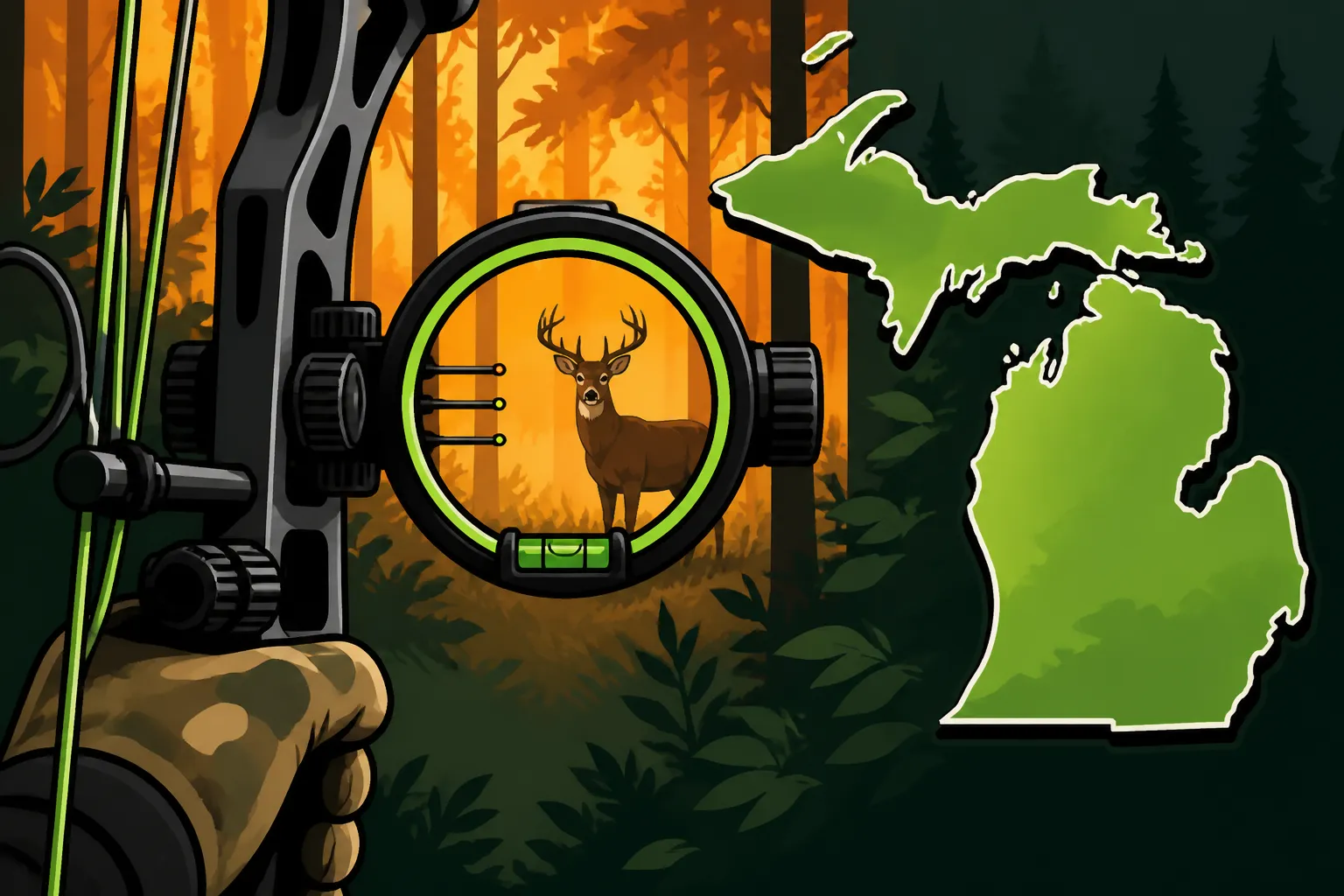
Nothing throws a wrench into your bowhunting confidence quite like that heart-pounding moment when a buck steps out at 15 yards in thick Michigan timber, and your sight feels all wrong. Many of us are used to sights designed for open country or longer shots, but the reality of dense woods, low light, and fleeting opportunities demands a different approach. This guide will help you understand what makes a bow sight truly effective for those up-close, quick-reaction timber shots you'll encounter across Michigan's diverse landscapes.
The Unique Challenges of Bowhunting Michigan's Thick Timber
Michigan is a state of incredible contrasts, from sprawling agricultural fields to vast, dense forests. When you're tucked away in those dark, thick woods – be it a cedar swamp in the Upper Peninsula or a dense oak flat in the Lower – the rules of engagement for bowhunting change dramatically. Distances shrink, light fades, and opportunities come and go in a blink.
Limited Visibility and Quick Opportunities
Picture yourself still-hunting through a thick aspen cut in Northern Michigan or waiting patiently in a ground blind tucked into a cluster of pines on state land. The visibility is often measured in yards, not dozens of yards. You might spot a deer moving through the brush at 30 yards, but by the time it steps into a shooting lane, it's 10 or 15 yards away and moving fast. These aren't the broadside, leisurely strolls you see on hunting shows. These are quick peeks, sudden stops, and fleeting chances. Your bow sight needs to be intuitive and fast. You don't have time to ponder which pin to use or make fine adjustments; you need to acquire the target and execute the shot with minimal thought. The heavy cover also means a deer can appear from nowhere, leaving you with only a second or two to react before it melts back into the shadows. Hunting Michigan Clearcuts and Aspen Cuts or Still-Hunting Michigan Cedar Swamps are perfect examples of where this limited visibility becomes the norm, not the exception.
Variable Lighting and Shorter Shot Distances
Michigan's timber, especially during the archery season, can present a wild array of lighting conditions. Early morning in a swamp, under a canopy of conifers, can be incredibly dark, even after the sun has officially risen. A thick, overcast day or approaching storm can plunge the woods into twilight long before evening. This is where many sights fail; pins that glow brightly in direct sunlight become barely visible embers in deep shade. On top of this, most shots you'll get in heavy timber will be under 30 yards, with many well within 20. If your sight is set up with pins spaced for 30, 40, and 50 yards, those pins for closer distances can feel crowded and imprecise, or you might even lack a pin for that crucial 15-yard shot. Focusing on maximizing light gathering and setting your pins for the most common distances you expect in the thick stuff is paramount for success. You want to be able to trust that first pin, knowing it covers the majority of likely encounters.
Essential Features for a Michigan Timber Bow Sight
When you're slogging through the thick stuff, your gear needs to be as tough and reliable as you are. For a bow sight, that means prioritizing features that stand up to abuse and perform flawlessly in less-than-ideal conditions.
Bright, Durable Fiber Optics and Pin Size
The absolute cornerstone of any good timber sight is its ability to gather and transmit light. Brightness isn't just a luxury; it's a necessity for those low-light moments at dawn and dusk or deep within the canopy. Look for sights with ample fiber optic length – the longer the fiber, the more light it can collect and channel to your pin. Some sights feature a protective housing for the fiber optics, which is a huge plus when you're bumping through brush or climbing into a stand. Nothing is more frustrating than a broken fiber optic that leaves you with a dim or dead pin.
Pin size is another critical consideration. While smaller pins (like .010 or .019) are fantastic for long-range precision, they can be incredibly difficult to see and acquire quickly in dim, dense timber. For timber hunting, many bowhunters prefer slightly larger pins, such as .029, especially for their primary "kill" pin. This larger size allows for faster target acquisition, which is crucial when that buck suddenly appears. While it might sacrifice a tiny bit of pinpoint accuracy at 40+ yards (distances you're unlikely to take in timber anyway), the trade-off for speed and visibility at 10-25 yards is well worth it. Some sights even offer different sized pins, so you could have a larger pin for your 20-yard shot and a smaller one for 30 if you anticipate the occasional longer lane.
Compact Housing and Robust Construction
A sight built for the timber needs to be tough and not overly bulky. When you're pushing through thick briars or squeezing past tight saplings, a large, protruding sight housing can snag, bend, or even break. A compact, streamlined design minimizes these risks. Look for sights constructed from durable materials like aircraft-grade aluminum. Forget plastic components that might crack on impact. Your sight will take a beating, whether it's from rubbing against your pack, hitting a tree branch, or getting jostled during a deer drag.
Beyond the material, consider the overall robustness. Are the pins well-protected? Is the adjustment mechanism solid and free from wobble? A slight shift in your sight could mean a missed shot or, worse, a wounded animal. You want a sight that can maintain its zero through a season of hard hunting. Features like tool-less adjustments are convenient, but they shouldn't come at the cost of durability. When assessing gear for those demanding Michigan hunts, reliability is non-negotiable.
Micro-Adjustability and Second Axis
While timber hunting often involves close shots, precision still matters. Micro-adjustability allows you to fine-tune your windage and elevation settings with tiny, repeatable clicks, ensuring your pins are precisely where they need to be. This is especially useful during initial setup and when making minor adjustments after shooting different arrow setups or broadheads. A sight without micro-adjustability can be a nightmare to dial in perfectly, leading to frustration and wasted arrows.
The second axis adjustment is often overlooked, but it's vital for accuracy, particularly on uneven ground or when shooting from a treestand. The second axis ensures that your sight pins remain vertically aligned with your bowstring, even if your bow isn't perfectly plumb. If your second axis is off, your horizontal pin will actually be canted, leading to left or right misses, especially at longer ranges. While timber shots are often close, shooting from a leaning treestand or on a steep bank can still introduce cant. A properly adjusted second axis ensures that when your bubble level (if your sight has one) shows level, your pins truly are. This detail can be the difference between a clean pass-through and a marginal hit, particularly when you're shooting from an elevated position, which is common in many Michigan hardwoods. Treestand Setups in Michigan Hardwoods emphasizes the importance of a level shooting platform, and your sight should complement that.
Single Pin vs. Multi-Pin Sights: Which Reigns in the Woods?
This is a classic debate among bowhunters, and for good reason. Both single-pin and multi-pin sights have their fervent advocates, especially when you consider the unique demands of hunting in dense timber. There's no single "right" answer, as it often comes down to personal preference, shooting style, and how you anticipate your hunting scenarios unfolding.
The Precision of a Single Pin for Fixed Ranges
Single-pin sights, often called "slider" sights, feature just one pin that can be moved up or down to dial in a specific yardage. For some timber hunters, this simplicity is a huge advantage. With only one pin to focus on, target acquisition can feel incredibly clean and uncluttered. You literally only have one dot to place on your target. When you're in a situation where you know the shot will be at a fixed, close distance – say, 20 yards from your ground blind setup – a single pin can offer immense confidence and precision. You can pre-set that pin to 20 yards and essentially forget about it.
The downside, of course, is the need to adjust the pin for different yardages. If a buck walks in at 15, then moves to 25, you might have to quickly slide your pin, which can be noisy, slow, and draw unwanted attention. However, for a hunter who practices range estimation meticulously and is confident in their ability to make quick, silent adjustments, or primarily hunts from setups where they know the exact distances of potential shooting lanes, a single-pin offers a clear, unobstructed sight picture that some find superior. For instance, if you're hunting a small food plot or a known deer trail in thick brush, where most shots will occur within a tight 10-25 yard window, you can dial your single pin to the middle of that range, say 20 yards, and hold slightly high or low for minor adjustments.
The Versatility of Multiple Pins for Unpredictable Scenarios
Multi-pin sights are arguably the most popular choice for bowhunters, and their versatility shines in unpredictable timber environments. Typically featuring three to five fixed pins (e.g., 20, 30, 40, 50, 60 yards), they allow for instant target acquisition at multiple distances without any manual adjustment. When a deer appears suddenly at an unknown range, you simply pick the closest pin without fumbling. This speed can be critical when a deer is moving quickly through openings or giving you only a fleeting window.
For Michigan's varied terrain, where a shot could be 15 yards in a swamp or 30 yards across a small clearing, having those fixed pins eliminates a layer of decision-making under pressure. The main drawback for some is the potentially cluttered sight picture, especially in low light with multiple pins glowing. However, many modern multi-pin sights have excellent fiber optics that manage this well. Some hunters even remove or black out pins they don't anticipate using in timber, effectively creating a 3-pin sight (20, 30, 40 yards) for a cleaner view. The ability to quickly react to a deer's movement and instantly know which pin to use is a huge advantage, particularly when Hunting the Michigan Rut in November and bucks can appear out of nowhere.
Hybrid Options and How They Bridge the Gap
Recognizing the strengths and weaknesses of both single-pin and multi-pin designs, some manufacturers have introduced hybrid sights that attempt to offer the best of both worlds. These often feature a few fixed pins (say, 20 and 30 yards) and then a "floater" pin that can be manually adjusted for longer distances. This setup gives you the quick, fixed references for those close timber shots, while still providing the capability to range and dial in a precise pin for a longer shot if the scenario presents itself.
For a hunter who wants a clean sight picture for 90% of their timber shots but doesn't want to be caught off guard by a deer that suddenly presents a 45-yard opportunity across a logging road, a hybrid sight can be an excellent compromise. It minimizes clutter where it matters most – in the short-range timber – while still offering the flexibility for those less common, longer shots. This allows for both speed in close quarters and precision when needed, offering a robust solution for diverse Michigan hunting situations.
| Feature | Single Pin Sight | Multi-Pin Sight | Hybrid Sight |
|---|---|---|---|
| Sight Picture | Very clean, uncluttered | Can be cluttered with many pins | Cleaner for close range, adjustable for long |
| Speed | Slower for unknown ranges (requires adjustment) | Fastest for quick shots at varying known ranges | Fast for close, adjustable for long |
| Precision | Highly precise once dialed to exact range | Precise at fixed pin ranges | Good balance of fixed precision and adjustability |
| Complexity | Simple, but requires range adjustment | More pins to keep track of, but no adjustment during shot | Combines fixed and adjustable elements |
| Best For | Known yardages, patient hunters | Unpredictable scenarios, fast reaction | Versatile hunters, varied terrain |
| Timber Fit | Good if confident in quick adjustments/fixed stands | Excellent for fast target acquisition in thick cover | Good compromise for diverse Michigan timber |
Setting Up Your Bow Sight for Optimal Performance in Michigan Timber
Having the right bow sight is only half the battle. Properly setting it up and practicing with it in conditions that mimic actual timber hunting is crucial for maximizing your chances of success. It's not just about hitting the bullseye at the range; it's about hitting your mark when it truly counts in the field.
Calibrating for Close-Range Accuracy
When you’re setting up your sight for Michigan’s timber, your priorities shift from open-field distance to close-quarters precision. Most deer in the thick stuff will be within 30 yards. If you're using a multi-pin sight, make sure your pins are set for the most common distances you expect: 20, 30, and maybe 40 yards. Some hunters even set their top pin for 15 yards if they frequently hunt extremely dense cover or use a ground blind where shots are consistently very close. Your top pin is your workhorse for timber hunting, so it needs to be spot-on.
Start by sighting in your 20-yard pin perfectly. Then, step back to 30 and adjust that pin. If you only have a 3-pin setup, your 40-yard pin might be the last you use. For single-pin sights, consider setting your "default" distance to 20 yards, as this is a highly probable shot distance. Once your pins are set, practice shooting at intermediate distances, like 18 or 25 yards, to understand where your arrow will hit relative to your 20 and 30-yard pins. This "gap shooting" understanding is vital when you don't have time to range or precisely adjust. Remember, you're looking for deadly accuracy at close range, not just hitting the target. A good way to find potential hunting spots where these close shots are likely is to use detailed mapping tools. Many hunters find resources like GoHunt invaluable for identifying bedding areas, pinch points, and dense cover where deer movement will be concentrated, necessitating quick, close-range shooting.
Practicing Real-World Timber Shots
The practice range is great for mechanics, but it doesn't replicate the chaos and conditions of a real hunt. To truly prepare for timber shots, you need to simulate them. Set up targets in your backyard or at a safe range with obstacles, brush, and varying light. Practice shooting from awkward positions – kneeling, leaning around a tree, or from a mock treestand. Practice drawing your bow quickly, acquiring the target, and making the shot under a time constraint. Don't always shoot at known distances; try to estimate the range, pick your pin, and shoot.
Practice in low light, near dawn and dusk, to see how your pins perform. This will help you understand the limitations of your sight and when you truly lose enough light to make an ethical shot. Simulate the heart-pounding moments by doing some light exercise before shooting, getting your heart rate up. All these real-world simulations will build muscle memory and confidence, making you more effective when that Michigan buck steps out. Don't forget to practice with the broadheads you plan to hunt with; they often fly differently than field points, and you want to ensure your sight is still accurate. Broadheads for Timber Shots are crucial to effective arrow flight.
Field Maintenance and Durability Checks
Your bow sight is a precision instrument, but it's also exposed to the elements and the rigors of hunting. Regular field maintenance and durability checks are non-negotiable for consistent performance in Michigan's woods. Before every hunt, give your sight a quick once-over. Check all screws to ensure they're tight – vibration from shooting or walking can loosen them. Inspect your fiber optics for any damage, nicks, or breaks that could diminish brightness. A tiny bit of dirt or moisture on the fibers can drastically reduce their light-gathering ability.
Keep your sight clean. Dust, pollen, rain, and snow can accumulate on the pins and housing, impacting visibility. Carry a soft cloth or a lens pen to gently clean the pins and any protective lens. If your sight has a level bubble, check it periodically to ensure it hasn't shifted or dried out. After a particularly wet or snowy hunt, ensure your sight dries completely to prevent corrosion. A well-maintained sight is a reliable sight, and reliability is your best friend when you're deep in the Hunting the Michigan Upper Peninsula for Deer or Southern Michigan Farm Country Deer Hunting. Taking care of your equipment ensures it's ready when you are, allowing you to focus on the hunt, not on your gear.
Disclaimer
This article is for general informational purposes only and does not constitute professional advice. Laws, prices and regulations vary by location and change over time. Consult a qualified professional for guidance on your specific situation.