Timing the Michigan Woodcock Flight
It’s a feeling every upland hunter in Michigan knows well: you’re geared up, the leaves are falling, and you just know the woodcock should be in, but you hit your favorite coverts only to find them empty. Or worse, you go a week later and realize you just missed the peak flight, and now only a few stragglers remain. Pinpointing the exact timing of the Michigan woodcock flight can feel like trying to catch smoke, but with a keen eye on the weather and a bit of scouting, you can dramatically improve your chances of being there when the timberdoodles arrive. This guide will walk you through the subtle art and science of timing the Michigan woodcock migration, helping you be in the right place at the right time.
Understanding Woodcock Migration in Michigan
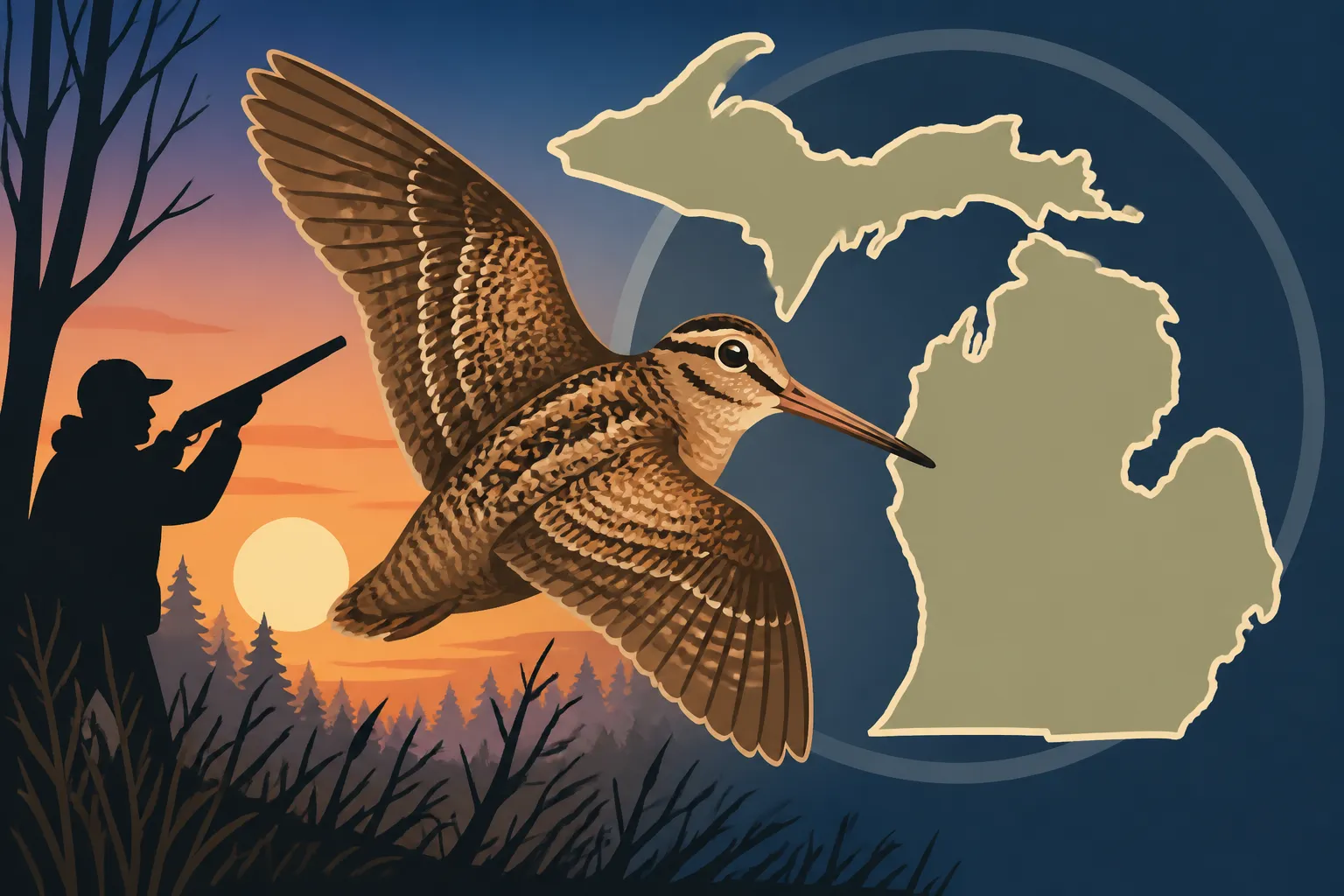
Woodcock, often affectionately called "timberdoodles," are fascinating migratory birds that breed across much of the eastern United States and Canada, including a good portion of Michigan. When the days shorten and the ground begins to harden with the approaching cold, these long-billed shorebirds, which technically aren't shorebirds at all, begin their southward journey. Understanding this fundamental aspect of their life cycle is the first step to timing their arrival in your hunting grounds.
The Life Cycle and Michigan's Role
Michigan serves as a critical breeding and staging ground for American woodcock. Many birds you encounter in the early season were hatched right here in our state, spending their summer foraging in dense, moist coverts. As fall progresses, these resident birds are joined by migrants from further north, particularly from Canada and the Upper Midwest. This means Michigan often sees a "wave" effect: local birds present early, then a surge of migrants, and finally, a slow tapering off as both groups move south. The timing of this entire process, from the first hint of cold to the final departure, is what makes them such a challenge and a joy to pursue. Their diet, consisting primarily of earthworms, dictates their need to move before the ground freezes solid, making their migration a matter of survival.
The General Timeline for Woodcock in Michigan
While Mother Nature always has the final say, Michigan's woodcock migration typically kicks into gear in late September, with the peak flight often occurring through mid-October. By late October, most birds are either gone or only small pockets remain, especially in the northern parts of the state. However, the southern Lower Peninsula can hold birds well into November if the weather remains mild. This general window provides a starting point, but the true skill lies in refining it based on real-time conditions. Knowing the typical Michigan Woodcock Season Dates is important, but overlaying that with current conditions is where success lies.
Key Factors Influencing the Woodcock Flight
The woodcock flight is a complex dance driven by several environmental cues. While no single factor guarantees a specific arrival date, a combination of these elements creates the perfect storm for a large migration push. Hunters who pay close attention to these indicators often find themselves flushing more birds.
Cold Fronts: The Primary Driver
Without a doubt, cold fronts are the most significant factor influencing woodcock migration. These birds are highly sensitive to dropping temperatures and freezing ground, which makes their primary food source, earthworms, inaccessible. A strong, sustained cold front, especially one that brings overnight temperatures consistently into the 30s or even 20s, will trigger a mass exodus from northern areas and push birds into, and through, Michigan.
Consider a scenario where a significant cold front sweeps down from Canada, bringing freezing temperatures to Ontario and the Upper Peninsula for a few nights. Within 24 to 72 hours, you can expect a noticeable influx of migratory woodcock into the Lower Peninsula. The key is to watch for multiple nights of freezing temperatures, not just a single frosty morning. A brief cold snap might move a few birds, but a prolonged deep freeze is what empties the northern coverts and sends waves of timberdoodles south. It’s also worth noting that it’s not just the temperature, but the rate of temperature drop. A rapid plunge often has a more pronounced effect. When this happens, understanding Finding Woodcock in Alder Runs becomes paramount, as these spots often concentrate birds.
Ground Conditions and Soil Moisture
Since woodcock primarily feed on earthworms, the condition of the ground is critical. Earthworms are most active in moist, unfrozen soil. A sustained drought can cause worms to burrow deeper, making them harder for woodcock to find, which might trigger an earlier migration. Conversely, a prolonged period of rain followed by freezing temperatures can rapidly freeze the topsoil, forcing birds to move quickly.
Pay attention to recent rainfall and overnight lows. If your favorite alder swamp or aspen cut had plenty of rain in the weeks leading up to the cold snap, making the ground soft and worm-rich, the birds will stick around until the freezing weather truly threatens their food supply. If the ground is already dry and hard, even mild cold might be enough to push them further south sooner. You can use mapping applications or weather apps like AccuWeather or NOAA to track soil moisture content and temperature forecasts, helping you predict when the ground might become unworkable for the birds.
Daylight Length and Moon Phases
While not as impactful as cold fronts or ground conditions, the shortening of daylight hours acts as a general trigger for migration. As the equinox passes and days become noticeably shorter, it signals to woodcock that it’s time to start preparing for their journey. Moon phases are sometimes debated among hunters, but there is some anecdotal evidence that significant migration pushes can occur around full moons, especially when coupled with clear skies and calm winds, as these conditions might facilitate nocturnal flight.
However, don't stake your entire hunt on the moon. It's more of a tertiary factor. Focus primarily on the weather patterns – the big cold fronts and ground conditions – for the most reliable indicators. The shortening days are a constant, gradual pressure, while cold fronts are the abrupt, decisive push. You'll find that Michigan Woodcock Singing Ground Surveys focus on spring breeding counts, but they indirectly speak to the healthy population that will eventually migrate south each fall.
Practical Strategies for Timing Your Hunt
So, how do you translate all this environmental understanding into actual boots-on-the-ground hunting success? It requires a combination of vigilance, scouting, and utilizing available resources. This isn't just about showing up; it's about making an educated guess and being flexible.
Vigilant Weather Monitoring
This is your most powerful tool. Become a weather hawk in late September and October. Don’t just look at the forecast for your area; look north. Specifically, pay attention to the weather in areas like Northern Michigan, Wisconsin, Minnesota, and especially southern Ontario and Quebec. A deep freeze there today means birds could be moving into Michigan tomorrow or the day after.
Use reliable weather apps and websites that provide detailed hourly forecasts and future radar. Look for those strong cold fronts, defined by a distinct drop in temperature, often accompanied by strong northwest winds immediately following the front. Plan your hunts for two to three days after a significant cold front has passed through the northern parts of the flyway. This allows the birds enough time to make their journey. Tools that allow you to track historical weather patterns can also be useful for future predictions, giving you insights into typical migration triggers.
Scouting and Boots-on-the-Ground Intelligence
Nothing beats actual scouting. Even if the weather looks perfect, get out there and walk a few known woodcock coverts. Look for classic signs: the distinctive splashes of their droppings (often called "chalk"), probe holes in soft ground, and of course, flushing birds. Pay attention to the types of cover that hold them – typically young, dense alders, dogwoods, or aspen thickets with moist soil.
When you're out there, note the density of the birds. Are you flushing one or two stragglers, or are there multiple flushes in a relatively small area? This gives you an idea of whether the main flight has arrived or if you're still early. Remember, woodcock aren't like pheasants that might hold in open fields; they prefer dense cover. Using detailed mapping apps, perhaps even a robust platform like GoHunt, can help you mark specific flushes, track your routes, and identify prime habitat features like low-lying, moist areas adjacent to heavier timber. This data becomes invaluable year after year.
Utilizing Community and Online Resources
You don't have to go it alone. The upland hunting community is often a great source of real-time intelligence. Online forums, local hunting groups on social media, or even a quick call to a hunting buddy can give you valuable insight into what's happening on the ground. Hunters across the state are often reporting their observations, and these reports can confirm a migration push.
Furthermore, websites like eBird (for bird watchers) can sometimes provide clues. While not specifically hunting-focused, birders often report migratory bird sightings, and a sudden increase in woodcock observations in Michigan could signal the arrival of the flight. The Michigan DNR also publishes various reports and surveys that can offer a broader perspective on bird populations, complementing your personal observations and weather tracking. Knowing When Woodcock Migrate Through Michigan historically can provide a baseline for these real-time observations.
| Migration Phase | Weather Cues | Bird Behavior/Density | Hunting Strategy |
|---|---|---|---|
| Early Flight | Mild to cool days, overnight lows 40s-50s F | Resident birds, scattered flushes | Focus on prime local spots, often moist bottomlands |
| Peak Flight | Strong, sustained cold fronts, overnight lows 20s-30s F | High density, multiple flushes in good cover | Hit prime travel corridors and staging areas hard |
| Late Flight | Freezing temps, widespread ground freeze, snow | Scattered birds, few flushes, concentrated in key spots | Look for isolated pockets in southern Michigan, unfrozen seeps |
Hunting the Michigan Woodcock Flight Effectively
Once you've made your educated guess and believe the flight is in, it's time to hit the woods. But simply showing up isn't enough; maximizing your chances requires understanding where woodcock concentrate and how to hunt them during the often-fleeting peak. This is where your scouting and preparation truly pay off.
Identifying Prime Coverts
Woodcock aren't found everywhere. They have specific habitat requirements, and understanding these will drastically improve your success. Look for young, dense deciduous cover, often referred to as early successional habitat. This includes:
- Alder Runs: These dense, wet thickets along creeks, rivers, or low-lying areas are woodcock magnets. The moist, soft soil is ideal for probing.
- Young Aspen Stands: Aspens, especially those that have been recently cut and are regenerating with dense saplings, provide excellent overhead cover and the moist ground woodcock prefer.
- Dogwood Thickets and Wet Swamps: Any area with thick, low-growing shrubs and moist, workable soil can hold birds.
These coverts should ideally be near denser timber or agricultural fields, providing both foraging grounds and refuge. For more detailed insights into specific habitats, check out resources on Woodcock Hunting Michigan Alder Runs. Having a good pair of boots that can handle wet terrain is non-negotiable when hunting these areas. Many hunters opt for sturdy rubber boots or waterproof hiking boots that can withstand repeated soakings in muck and dew.
Leveraging the Power of a Bird Dog
While you can certainly flush woodcock without a dog, a well-trained bird dog, especially a pointing breed, is a tremendous asset. Woodcock hold incredibly tight, often letting you walk right past them before flushing silently behind you. A good dog will scent these birds, lock up on point, and allow you to get into position for a shot.
A dog also allows you to cover more ground efficiently and find birds that you would otherwise miss. Their keen nose can detect birds that are hiding in the densest tangles. Just remember to ensure your dog is well-conditioned for the thick cover and wet conditions typical of woodcock habitat. For safety, many hunters use brightly colored vests for their dogs to increase visibility in dense woods and often attach a bell to help locate them during a point.
Shotgun and Choke Considerations
Woodcock are small, erratic flyers, and shots are almost always at close range in extremely thick cover. This makes shotguns with open chokes and smaller shot sizes ideal. A 20 gauge or 28 gauge shotgun is often favored for its lighter weight and quicker handling in tight spaces.
Many experienced woodcock hunters opt for an improved cylinder or skeet choke in their shotguns, paired with smaller shot sizes like 7.5 or 8. The goal isn't knockdown power but rather a wide, dense pattern at close range to account for their unpredictable flight path through heavy brush. A double-barreled shotgun, with one barrel choked open and the other slightly tighter, offers versatility. For more on shotgun and choke choices, consider exploring Choke Choice for Fast Flushes. Regardless of your setup, quick reflexes and the ability to swing through dense cover are more important than long-range accuracy.
The Michigan woodcock flight is a gift of autumn, a fleeting opportunity that rewards patience, observation, and a willingness to brave the thickest cover. By understanding the triggers, meticulously monitoring the weather, and putting in the legwork, you can greatly increase your odds of being there to experience the thrill of the timberdoodle.
Disclaimer
Hunting is an inherently dangerous activity. Always prioritize safety, follow all local and state regulations, and obtain proper licenses and permits before heading afield. The information provided in this guide is for informational purposes only and should not replace professional guidance or personal judgment. Ensure you are aware of and adhere to all Michigan hunting laws, including those related to firearm safety, hunter orange requirements, and legal shooting hours.