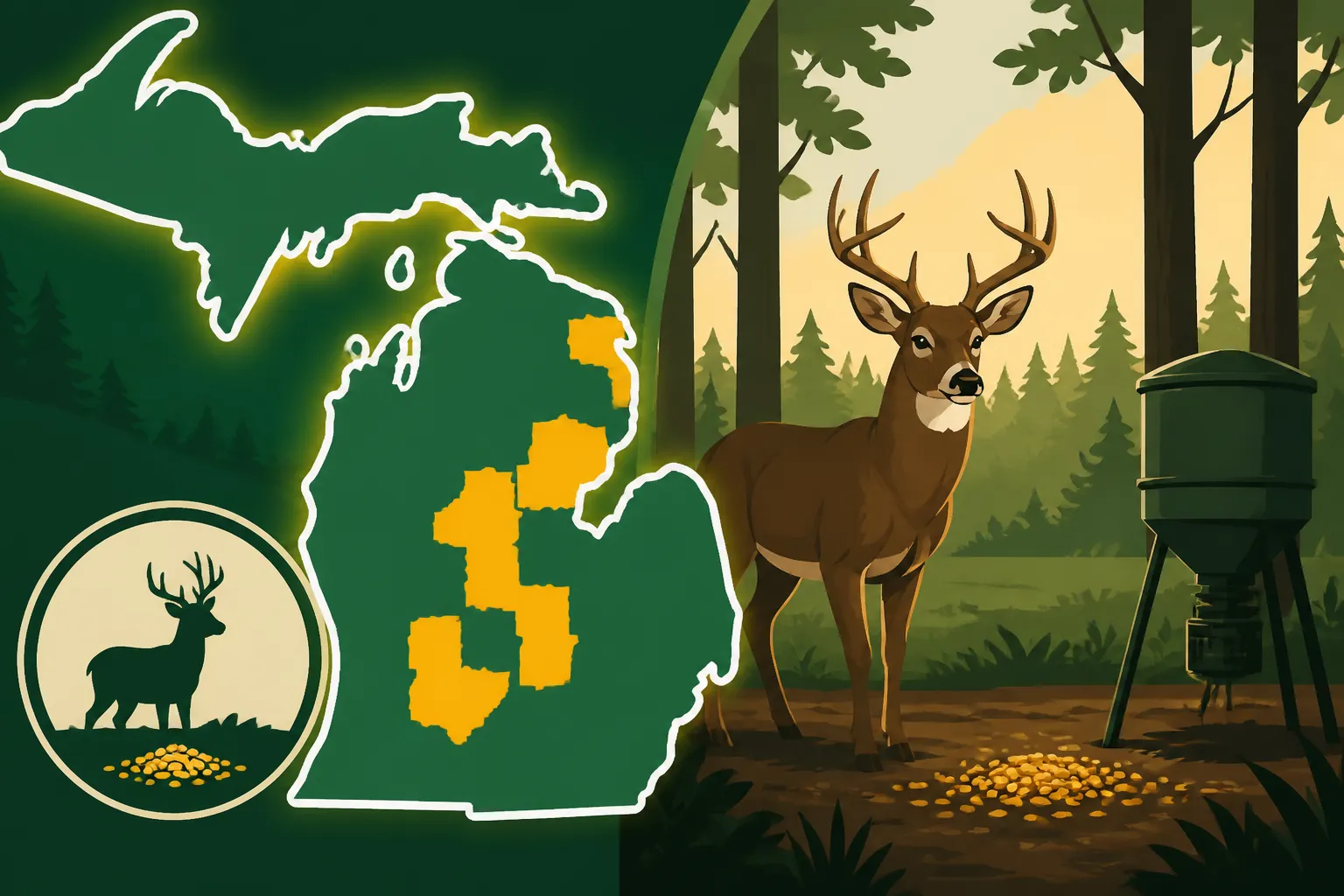
Where Baiting Is Still Legal in Michigan
Michigan's deer baiting rules can feel like a constantly shifting puzzle, leaving many hunters frustrated and unsure of what's legal and what could land them in trouble. It's a complex topic with passionate arguments on both sides, and frankly, keeping up with the regulations can be a full-time job. This guide is here to untangle that knot, providing a clear picture of where baiting is still allowed for deer in our beautiful state.
The Foundation: Understanding Michigan's Baiting Ban
Let's start with the hard truth: for most of Michigan, baiting deer and elk is illegal. This isn't a decision the DNR made lightly, and it's certainly not without controversy among hunters. The primary driver behind the statewide ban, which came into full effect in 2019, is the ongoing battle against Chronic Wasting Disease (CWD).
CWD is a serious, fatal neurological disease that affects deer, elk, and moose. It's highly contagious and can spread through direct animal-to-animal contact or indirectly through environmental contamination (like saliva, urine, or feces left on bait piles). When you concentrate deer at a bait site, you create a perfect storm for disease transmission. It's a difficult reality to accept, especially for those of us who grew up with baiting as a common practice, but the science behind the spread is pretty clear. To dive deeper into the reasons, you can read about Why Michigan Banned Baiting.
The ban broadly covers placing, depositing, or distributing any material or substance to attract or entice deer or elk. This includes things like corn, apples, sugar beets, minerals, or any other food source. It's not just about what you put out, but also how you put it out. Even minerals can be considered bait if they are designed to attract and hold deer in one spot. This is why it's crucial for hunters to understand the nuances of Michigan Baiting and Feeding Rules.
Where Baiting Is Still Permitted: The Upper Peninsula Exception
Now, for the core of the matter: where can you still bait deer legally in Michigan? The most significant and consistent exception to the statewide ban is a large portion of the Upper Peninsula (U.P.).
Why the U.P.? Simply put, as of the most recent data, CWD has not been detected in wild deer populations in the Upper Peninsula. This absence of CWD, coupled with the U.P.'s vast tracts of public land and different hunting traditions, led the Michigan Department of Natural Resources (DNR) to maintain baiting as a legal practice in certain areas. It's a recognition of the distinct ecological and cultural landscape of the U.P. compared to the Lower Peninsula.
Specifics of the U.P. Baiting Allowance
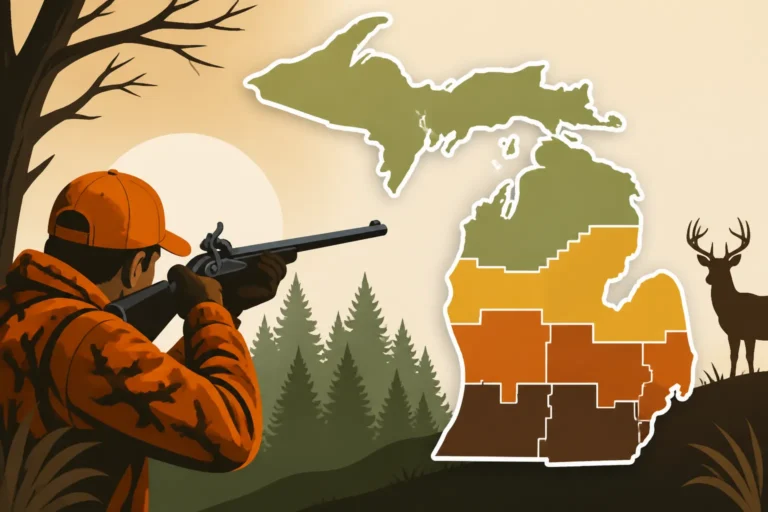
Within the U.P., the rules aren't completely uniform, so it's critical to know your specific location. However, generally speaking, deer baiting is allowed in the entire Upper Peninsula, with the exception of the Core CWD Surveillance Area if CWD were ever detected there (which, thankfully, it hasn't been yet). This means counties like Marquette, Delta, Iron, Gogebic, Ontonagon, Houghton, Keweenaw, Baraga, Menominee, Dickinson, Alger, Schoolcraft, Luce, Chippewa, and Mackinac generally permit baiting.
Key Regulations for U.P. Baiting:
- Quantity Limit: You are allowed to place up to two gallons of bait per hunt site. This isn't an unlimited buffet; it's a controlled amount.
- Method of Placement: The bait must be scattered directly on the ground. You cannot place it in a pile, feeder, or other container. The idea is to spread it out to prevent deer from congregating in a tight cluster, which theoretically reduces nose-to-nose contact and disease transmission risk, should CWD ever appear.
- Distance from Hunter: The bait must be scattered on the ground within 100 yards of your hunting stand or blind. This ensures the bait is actively part of your hunting setup, not just a general feeding station far from where you're hunting.
- Distance from Public Roads: Bait cannot be placed within 100 yards of a public road. This is a safety measure to keep deer away from high-traffic areas and to prevent road hunting.
- Year-Round Prohibition on Feeding: While baiting is allowed during hunting season, the general rule against feeding deer (i.e., putting out feed for them outside of hunting season or for non-hunting purposes) still applies in the U.P. This distinction is important: baiting is a hunting tactic, feeding is a year-round activity that can lead to habituation and other issues.
It's really important to double-check the Michigan DNR's latest hunting digest for the specific year you plan to hunt, as these rules can occasionally be updated. Using a mapping app like GoHunt can be incredibly helpful here. You can often overlay DMU boundaries and property lines, which can sometimes have additional localized rules you need to be aware of, especially if you're on the fringe of a no-baiting zone. Understanding Michigan Deer Management Units is key to staying legal.
Special Provisions for Hunters with Disabilities
There's one other very specific, limited exception to the general baiting ban in the Lower Peninsula, though it's not widely applicable. Individuals who possess a valid Mobility Impaired hunting permit issued by the DNR may be authorized to use bait in areas where it is otherwise prohibited. This is a targeted allowance designed to increase opportunities for hunters facing significant physical challenges. However, this permit comes with its own set of rules and limitations, and it's not a general allowance for anyone to bait in the Lower Peninsula. You must have the permit and adhere to all its stipulations.
The Restricted Zone: Where Baiting is Strictly Forbidden
To fully understand where baiting is legal, you absolutely need to know where it's not. The vast majority of the Lower Peninsula falls into categories where baiting is prohibited due to the presence or threat of CWD. These areas are commonly referred to as the CWD Management Zones or CWD Core and Surveillance Areas.
The CWD Core Area is typically centered around the initial detection sites of CWD in Michigan, with surrounding counties designated as surveillance areas. In these zones, baiting and feeding are strictly illegal for deer and elk, year-round. This is a crucial tool in the DNR's strategy to slow the spread of the disease. The goal is to reduce deer density at artificial feed sites, which in turn reduces the potential for disease transmission.
Key Counties in the Permanent No-Baiting Zone (Lower Peninsula):
While the exact boundaries and specific counties can sometimes be adjusted based on new CWD detections, historically, areas like Kent, Ionia, Montcalm, Jackson, Eaton, and Clinton counties, and many surrounding areas have been at the heart of the CWD Management Zone. These areas are under intense CWD surveillance, and restrictions are often most stringent here. It's imperative that hunters in these areas adhere to the no-baiting rule, and also take part in voluntary or mandatory CWD testing. More information on testing and affected areas can be found in Michigan CWD Rules and Test Sites.
Even outside of these core CWD counties, the vast majority of the Lower Peninsula remains subject to the baiting ban. Unless you are hunting in the designated Upper Peninsula areas or have a specific Mobility Impaired permit, assume baiting is illegal. There's no "gray area" to play with when it comes to disease management.
Navigating the Rules: Practical Advice for Michigan Hunters
So, you've got the lay of the land – U.P. generally allows it with limits, Lower Peninsula generally bans it. But how do you, as a hunter, make sure you're always on the right side of the law?
Always Check the Latest DNR Regulations
This is rule number one. While this guide provides a general overview, regulations can change. New CWD detections might lead to expanded no-baiting zones, or legislative changes could alter existing rules. Before every season, or even if you're planning a hunt mid-season, take the time to review the current Michigan Hunting and Trapping Digest. It's available online through the DNR website and often at licence vendors. The Michigan DNR Hunt Fish App is also an excellent resource for quick access to regulations on the go.
Know Your Deer Management Unit (DMU)
Michigan is divided into various DMUs, and some regulations, particularly antler point restrictions or antlerless quotas, are specific to these units. While baiting rules are generally broader (U.P. vs. L.P. CWD zones), understanding your DMU is always good practice. Online mapping tools, including the DNR's Mi-HUNT map or commercial apps like GoHunt, can clearly show you DMU boundaries, public land ownership, and even CWD zones. This information is critical for making informed decisions about where and how to hunt.
Embrace Alternative Hunting Strategies in No-Baiting Zones
If you're hunting in the Lower Peninsula where baiting is prohibited, don't despair! Many highly successful hunters have adapted their strategies beautifully. Instead of relying on a bait pile, focus on:
- Natural Food Sources: Scout for acorns, apples, standing corn, soybean fields, or browse in clearcuts and regenerating timber. Deer will always gravitate to food, so learn what's available and when. Learning about Late-Season Food Sources for Whitetails can be particularly useful.
- Travel Corridors and Funnels: Identify natural funnels between bedding and feeding areas, or thick cover. Deer use these routes consistently, and they can be highly productive ambush points.
- Bedding Areas: With careful scouting and attention to wind, you can often pinpoint bedding areas and set up on the fringes.
- Scouting: This becomes even more critical without bait. Dedicate time before the season to scout for rubs, scrapes, tracks, and travel patterns. Learning to decipher these signs is a skill that will pay dividends. Our guide on Scouting Michigan Public Land Before Season offers fantastic insights.
- Calling and Rattling: During the rut, various calls can be incredibly effective at bringing deer in. Read up on Rattling Volume in Thick Cover and Grunt Calls in Mature Timber.
- Food Plots: For those with private land, creating strategic food plots is a fantastic way to attract and hold deer naturally. It's a legal and effective alternative to traditional baiting. This is explored further in Food Plots Instead of Bait and What Replaced Bait Piles for Michigan Hunters.
For many, hunting without bait has become a fulfilling challenge, pushing them to become better, more observant hunters. It forces a deeper connection to the land and the animals' natural movements.
Table: Summary of Michigan Deer Baiting Regulations
Here's a quick overview of the general rules regarding deer baiting in Michigan:
| Region of Michigan | CWD Status (Approximate) | Baiting Allowed for Deer? | Max Quantity | Placement Method | Notes |
|---|---|---|---|---|---|
| Upper Peninsula | CWD NOT detected | YES | 2 Gallons | Scattered on ground | Must be within 100 yards of hunter, 100 yards from public road. No feeding outside hunting season. Always check current regulations as this could change with CWD detection. |
| Lower Peninsula | CWD detected / at risk | NO | N/A | N/A | Statewide ban. Strict prohibition in CWD Core and Surveillance Zones. Applies year-round. No baiting for hunting, no recreational feeding. Exception for Mobility Impaired permit holders (with specific rules). Focus on natural food sources and movement patterns. |
Remember, this table provides a general summary. Always consult the official Michigan DNR regulations for the most current and detailed information.
Final Thoughts on Baiting in Michigan
The debate around baiting is complex, but the regulations are in place to protect our deer herd and ensure healthy hunting opportunities for future generations. While it means a significant change for some hunters, especially those in the Lower Peninsula, it also encourages adapting new skills and exploring different aspects of deer hunting. Whether you're in the U.P. where baiting is an option or navigating the no-baiting rules downstate, understanding and respecting the regulations is paramount to responsible hunting in Michigan.
Disclaimer
The information provided in this guide is for general informational purposes only and does not constitute legal advice. Hunting regulations, including those pertaining to baiting, can change. Hunters are solely responsible for knowing and adhering to all current Michigan Department of Natural Resources (DNR) regulations and local ordinances before engaging in any hunting activities. Always consult the most recent official Michigan Hunting and Trapping Digest and relevant DNR resources for accurate and up-to-date information.