How Many Michigan Black Bears There Are
For many Michigan hunters, the black bear represents the ultimate big game challenge. But getting a tag for these elusive creatures can feel like winning the lottery, leaving many of us wondering just how many black bears actually call our beautiful state home. This comprehensive guide will pull back the curtain on Michigan's black bear population, diving deep into their numbers, where they roam, and what these figures mean for your hunting aspirations.
Understanding Michigan's Black Bear Population Estimates
Figuring out exactly how many black bears are out there isn't like counting deer in a field, especially in Michigan's dense forests and vast wildlands. The Michigan Department of Natural Resources (DNR) invests considerable effort into estimating these populations, and their work provides invaluable insights, even if it's never a perfect, one-to-one count.
How the DNR Estimates Bear Numbers
The Michigan DNR employs a variety of scientific methods to estimate the black bear population, primarily focusing on a technique called mark-recapture or mark-resight. This isn't a simple aerial survey; it's a labor-intensive process that yields crucial data. Researchers trap bears in specific study areas, tranquilize them, collect biological data (like age, sex, and weight), and then outfit them with ear tags and sometimes GPS collars before releasing them. This "marking" phase is essential.
Later, through a combination of trail camera surveys, hair snags, and observations by hunters during specific periods, the DNR looks for these marked bears and counts unmarked ones. By comparing the ratio of marked to unmarked bears in subsequent samples, biologists can use complex statistical models to estimate the total population within a given area, which is typically a Bear Management Unit (BMU). This scientific approach allows them to track trends over time and make informed management decisions, even if it doesn't give an exact, real-time census number.
Challenges in Counting Wild Bears
Let's be honest, counting something as shy and wide-ranging as a black bear in the wilds of Michigan is a monumental task. These aren't creatures that stand still for roll call. Bears are notoriously reclusive, especially mature boars, and they often inhabit incredibly thick cover, making visual observation difficult. Their large home ranges mean they can move significant distances, and their nocturnal and crepuscular habits further complicate direct observation.
Add to this the natural fluctuations in population due to cub survival rates, food availability, and even disease, and you start to appreciate the complexity. The dense cedar swamps of the Upper Peninsula or the sprawling forests of the northern Lower Peninsula offer countless hiding spots. Even with advanced technology like GPS collars, it's impossible to track every single bear. This is why the DNR relies on estimates and trends rather than precise figures, constantly refining their methods to get the most accurate picture possible. For hunters, this means trusting the science, even if the "exact" number remains elusive.
Where Michigan's Black Bears Live
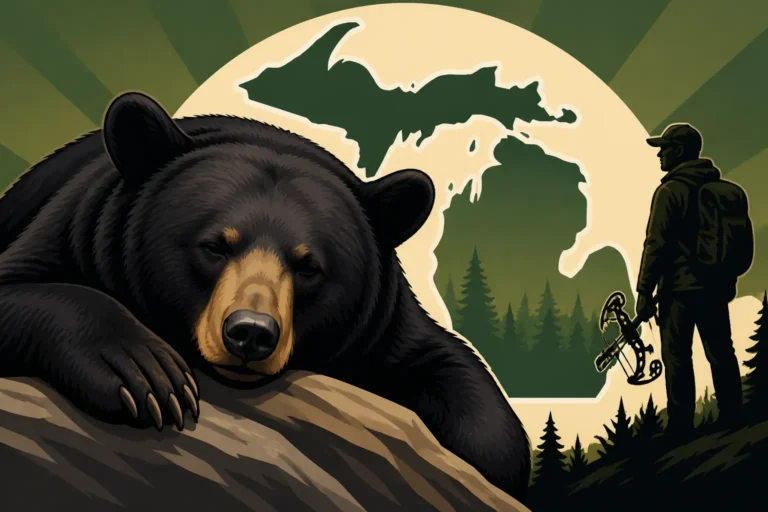
Michigan's black bear population isn't evenly distributed across the state. While bears are occasionally sighted in unexpected places, their primary strongholds are in the vast, undeveloped forestlands of the Upper Peninsula and the northern half of the Lower Peninsula. Understanding these geographical concentrations is key to comprehending the overall population.
Upper Peninsula Bear Concentrations
The Upper Peninsula is, without a doubt, the undisputed king of Michigan's black bear country. With its immense tracts of public land, vast coniferous forests, and relatively low human population density, it provides ideal habitat for bears to thrive. Counties like Baraga, Iron, Marquette, and Gogebic consistently report the highest bear densities. These areas are characterized by extensive timberlands, numerous cedar swamps, and abundant natural food sources like berries, acorns, and beechnuts.
The U.P. offers an uninterrupted wilderness that allows bears to establish large home ranges and find plenty of denning sites. This is why the draw odds for a bear tag in the U.P. are generally better than in the Lower Peninsula, simply because the sheer number of bears allows for a larger harvest quota. If you're looking for a serious bear hunting experience with the highest likelihood of success, the U.P. is where you'll want to focus your efforts. For more detailed insights into specific regions, you might want to look into "Hunting the Michigan Upper Peninsula for Deer" as it often overlaps with prime bear habitat.
Northern Lower Peninsula Bear Range
While the U.P. gets most of the bear glory, the northern Lower Peninsula also boasts a robust and healthy black bear population. The range generally extends north of a line roughly from Muskegon across to Bay City, with significant concentrations in counties such as Cheboygan, Montmorency, Oscoda, and Roscommon. These areas feature large blocks of state forest land, including parts of the Huron-Manistee National Forest, mixed hardwood-conifer forests, and plenty of swamps and wetlands.
The bear population in the northern Lower Peninsula has seen significant growth and expansion over the decades, pushing further south into areas where they were historically absent or scarce. This expansion is a testament to successful wildlife management and the adaptability of bears. While the densities might not be quite as high as in the core U.P., the northern Lower Peninsula still offers excellent bear hunting opportunities. Hunters pursuing bears in this region often find themselves in beautiful, yet challenging, terrain. You can learn more about specific distributions by reading about "Bears in the Northern Lower Peninsula".
Michigan Black Bear Population Trends Over Time
Michigan's black bear population has an interesting story, one of recovery, growth, and careful management. Understanding these historical and current trends gives us a better appreciation for the health of the species in our state and the sustainability of hunting opportunities.
Historical Growth and Management Success
Rewind a few decades, and the picture for Michigan's black bears looked quite different. Habitat loss and unregulated hunting in the early 20th century severely reduced bear numbers. By the mid-century, bears were primarily confined to the most remote parts of the Upper Peninsula. However, through dedicated conservation efforts, improved habitat management, and stricter hunting regulations, the black bear population began a remarkable resurgence.
The establishment of specific hunting seasons, limited tag quotas, and scientific population monitoring allowed bear numbers to steadily climb. The DNR's adaptive management strategies, which adjust harvest levels based on population estimates, have been instrumental in this success. Today, Michigan's black bear population is considered stable and healthy, a true conservation success story that allows for regulated hunting while ensuring the long-term viability of the species. This success story is why we have the hunting opportunities we do today, though drawing a tag remains a challenge due to demand.
Current Population Status and Stability
Currently, the Michigan DNR estimates the statewide black bear population to be around 12,000-14,000 bears, with the vast majority, approximately 10,000-12,000, residing in the Upper Peninsula. The northern Lower Peninsula accounts for the remaining 2,000-3,000 bears, a number that has been steadily increasing. These figures represent a stable and robust population. The DNR’s goal is to maintain a healthy and sustainable bear population, and current trends indicate they are achieving this balance.
The population isn't just about total numbers, but also about the age and sex structure, which are indicators of population health. Biologists monitor these aspects to ensure a balanced population, preventing over-harvest or under-harvest in any particular area. This ongoing stability is what allows the DNR to issue a limited number of bear licenses each year. While it might still be tough to draw a tag, knowing the population is thriving makes the anticipation of the draw all the more exciting.
Here’s a simplified look at the estimated bear populations by key management unit:
| Bear Management Unit (BMU) | Primary Region | Estimated Bear Population (Approximate) |
|---|---|---|
| Baraga | Western Upper Peninsula | 2,000 – 2,500 |
| Bergland | Western Upper Peninsula | 1,800 – 2,200 |
| Carney | Central Upper Peninsula | 1,500 – 1,800 |
| Gwinn | Central Upper Peninsula | 1,200 – 1,500 |
| Newberry | Eastern Upper Peninsula | 1,000 – 1,300 |
| Red Oak | Northern Lower Peninsula | 800 – 1,000 |
| Baldwin | Northern Lower Peninsula | 600 – 800 |
| Gladwin | Northern Lower Peninsula | 400 – 600 |
Note: These numbers are approximate and fluctuate slightly year to year based on DNR surveys and models. Always check the latest Michigan DNR reports for the most current data.
What Bear Population Numbers Mean for Hunters
For the dedicated Michigan hunter, bear population numbers aren't just abstract statistics; they directly impact the chances of drawing a tag, the number of successful hunts, and even where you might choose to hunt. It's a game of odds, and understanding these figures can give you a slight edge in your planning.
Drawing Odds and Tag Availability
The most immediate impact of bear population numbers on hunters is, without a doubt, the drawing odds for a Michigan bear license. With a limited number of tags issued each year, far fewer than the number of applicants, drawing a bear license can take many years of accumulating preference points. The higher the bear population in a specific Bear Management Unit (BMU), the more tags the DNR is typically able to allocate for that unit. Conversely, units with lower bear populations will have fewer tags, making the draw even tougher.
This is why hunters often spend years building preference points for specific U.P. units, knowing that those areas generally offer more tags and thus slightly better odds compared to some of the smaller, but still healthy, Lower Peninsula units. For anyone serious about bear hunting, diligently tracking the annual DNR reports on population estimates and harvest quotas for each BMU is crucial. Websites and platforms like GoHunt provide excellent tools to analyze these drawing odds, helping you strategize where to apply your hard-earned points. This is where the rubber meets the road for many aspiring bear hunters; patience and strategy are key to navigating the Michigan Bear Licence Drawing.
Impact on Hunting Strategies and Success Rates
Beyond just drawing a tag, population numbers profoundly influence your hunting strategy and ultimately, your success rate. In units with higher bear densities, hunters often have a better chance of encountering bears, whether they are still-hunting, calling, or hunting over bait (where permitted). More bears generally mean more activity, more sign to read, and a greater likelihood of crossing paths with a bruin. This higher density can sometimes translate to a higher success rate for hunters in those areas, assuming good hunting conditions and skillful execution.
Conversely, in areas with lower bear densities, hunters need to be even more strategic, focusing on prime habitat, recent sign, and perhaps employing more aggressive scouting or calling techniques. This is where understanding "Where Michigan's Black Bears Live" becomes critical, as knowing the preferred habitats within your drawn unit can guide your efforts. For example, if you're hunting in a Lower Peninsula unit with a lower overall population, you might spend more time targeting specific swamps, oak ridges, or clear-cuts where bears are known to frequent. Regardless of the density, success often hinges on detailed scouting and adapting your methods to the local terrain and bear behavior.
Factors Influencing Michigan's Bear Population
Michigan's black bear population isn't static; it's a dynamic system influenced by a myriad of environmental and human factors. Understanding these elements provides a more complete picture of how the population is managed and why it fluctuates.
Habitat Availability and Food Sources
The availability and quality of habitat are arguably the most critical factors influencing Michigan's black bear population. Bears require vast tracts of diverse forestland, offering a mix of cover for security, denning sites, and, crucially, a consistent supply of food. Michigan's extensive state and national forests in the Upper Peninsula and northern Lower Peninsula provide ideal conditions, with large areas of unbroken timber, numerous wetlands, and remote sections that limit human disturbance.
Within these habitats, food sources are paramount. Black bears are omnivores, and their diet shifts throughout the year. Spring sees them browsing on green vegetation and searching for carrion. Summer brings berries like blueberries, raspberries, and chokecherries. Fall is a critical time for hyperphagia, where bears consume massive amounts of high-calorie foods like acorns, beechnuts, and wild apples to build fat reserves for winter denning. A poor mast crop year (e.g., few acorns or beechnuts) can stress bear populations, especially cubs and sows, potentially impacting survival rates and reproduction in subsequent years. Healthy forests with diverse food sources are the backbone of a robust bear population, and management efforts often focus on maintaining this habitat diversity.
Human-Bear Conflicts and Management
As Michigan's human population expands and bears continue to expand their range, interactions between bears and people are inevitable. These human-bear conflicts, ranging from raided bird feeders and garbage cans to more serious agricultural damage or property destruction, are a significant management challenge. While bears are generally shy and avoid humans, easy access to anthropogenic food sources can lead to habituation, where bears lose their fear of people and become a nuisance or even a safety concern.
The DNR actively manages these conflicts through education, deterrence, and, in some cases, live trapping and relocation. Public awareness campaigns emphasize securing attractants and avoiding feeding bears. Hunting also plays a crucial role in managing bear populations and reducing conflicts by maintaining healthy population levels within biological carrying capacities. A well-regulated hunt helps to distribute hunting pressure and keeps bear populations in check, especially in areas where conflicts are more likely. Understanding the nuances of "Bear Encounters Around Michigan Cabins" can help both residents and visitors coexist safely with these magnificent animals.
In conclusion, Michigan's black bear population is a testament to successful conservation, thriving in the wild corners of our state. While drawing a tag remains a challenge, the robust and stable numbers give us confidence that this iconic species will continue to be a cherished part of Michigan's wilderness for generations to come.
Disclaimer
The information provided in this guide is for general informational purposes only and is not intended as legal advice or as a substitute for official regulations. Hunting regulations, seasons, and population estimates in Michigan can change. Always consult the most current Michigan Department of Natural Resources (DNR) hunting regulations and official publications before planning any hunting activities. Hunters are responsible for knowing and adhering to all applicable laws and regulations.