How the DNR Counts Michigan Deer
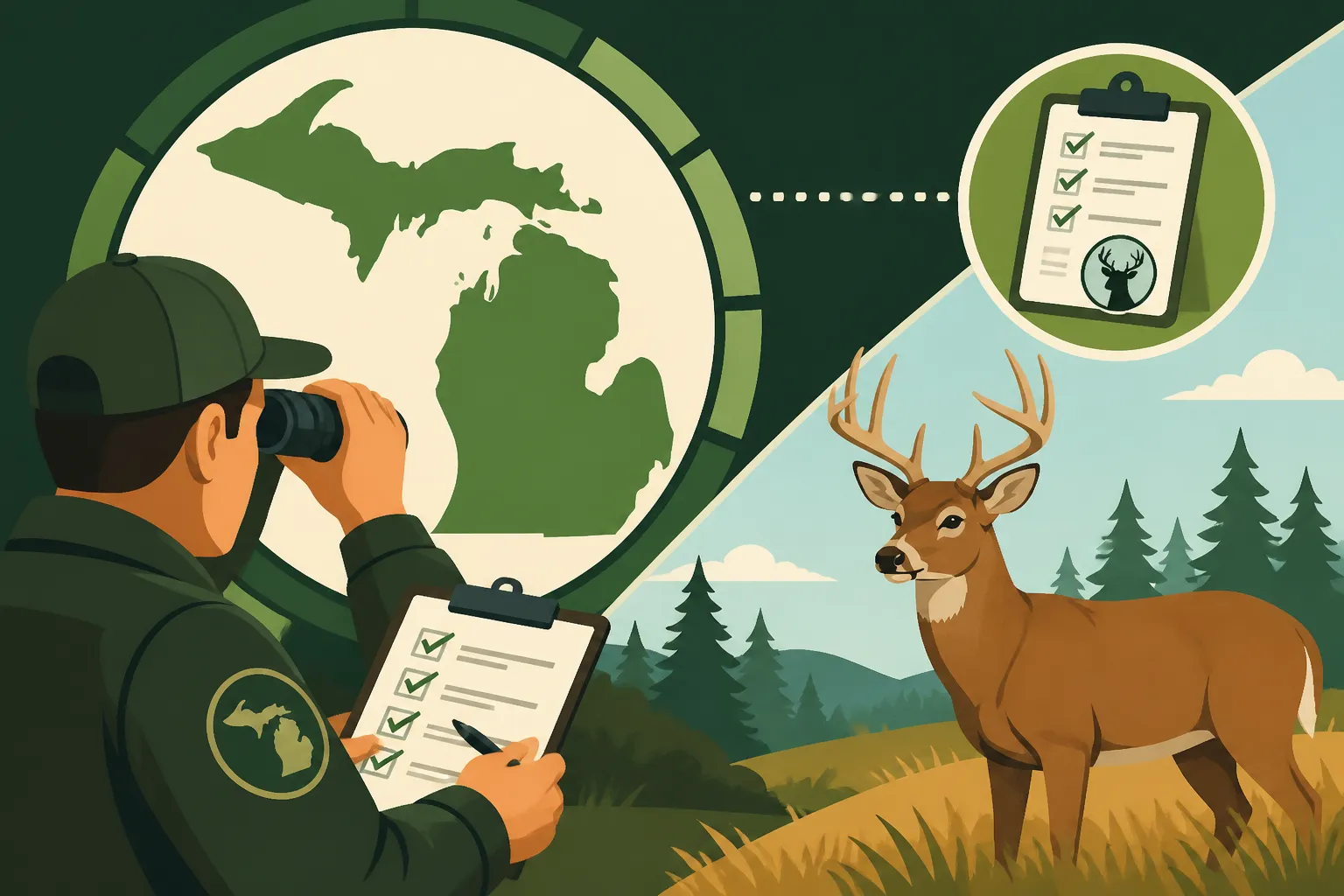
As Michigan hunters, we all spend countless hours in the woods, observing deer, and we often find ourselves scratching our heads wondering just how the Michigan Department of Natural Resources (DNR) comes up with their deer population estimates. It can feel like a guessing game, especially when you've had a tough season or seen evidence of a harsh winter. This guide is here to pull back the curtain, exploring the various methods and complex science the DNR employs to count Michigan's deer, helping you understand how these vital numbers shape our hunting opportunities and conservation efforts.
Why Deer Population Estimates Matter for Michigan Hunters
It's easy to dismiss population estimates as just bureaucratic numbers, but for those of us who cherish our time in the Michigan outdoors, these figures are absolutely crucial. They are the backbone of responsible wildlife management, directly influencing the experiences we have afield year after year. Without accurate data, the DNR would be flying blind, leading to potential over-harvest in some areas or under-harvest in others, both of which are detrimental to the long-term health of our deer herd and our hunting traditions.
Guiding Season Setting and Bag Limits
One of the most immediate impacts of deer population estimates is on the annual hunting regulations. Think about the discussions around antlerless quotas or the availability of special private land antlerless tags. These aren't just pulled out of a hat; they're direct responses to the estimated deer numbers in specific regions. If a particular Deer Management Unit (DMU) is showing a healthy, growing population that can sustain more harvest, the DNR might increase the number of available Michigan Antlerless Deer Licences. Conversely, if a herd is struggling, perhaps due to a severe winter or disease, they might reduce those opportunities to allow the population to rebound. This balancing act ensures we can continue to enjoy hunting while also protecting the future of the resource. It’s about managing the herd so that future generations of hunters can also experience the thrill of a Michigan deer hunt.
Understanding Regional Herd Health
Deer populations aren't uniform across our great state. What's happening in the heavily timbered Upper Peninsula is often vastly different from the agricultural landscapes of Southern Michigan. Population estimates allow the DNR to zoom in on these regional differences, pinpointing areas where the herd might be booming, or where it might be facing significant challenges. This detailed understanding helps them implement targeted management strategies. For instance, areas with high deer density might be more susceptible to disease transmission, so accurate population data helps the DNR monitor and manage potential outbreaks of Chronic Wasting Disease (CWD) or Bovine Tuberculosis. Knowing the health of the herd on a local level means that regulations, such as Where Antlerless Quotas Are Set, can be tailored to specific ecological conditions, rather than a one-size-fits-all approach that simply wouldn't work across such diverse landscapes.
The Core Methods Michigan DNR Uses to Count Deer
Counting wild animals, especially ones as elusive as white-tailed deer, is far from a simple task. It’s not like doing inventory at a hardware store. The Michigan DNR employs a variety of scientific methods, each with its strengths and limitations, to piece together a comprehensive picture of our deer populations. These methods often complement each other, providing cross-referenced data that strengthens the overall accuracy of the estimates.
Harvest Data: The Cornerstone of Estimates
Believe it or not, every time you successfully harvest a deer in Michigan and report it, you’re contributing to the DNR's population estimates. Mandatory harvest reporting is perhaps the most fundamental and far-reaching data source. When you report your harvest online or through The Michigan DNR Hunt Fish App, you’re providing crucial details: the sex of the deer, whether it was antlered or antlerless, the county and DMU where it was taken, and the date.
Beyond these basic facts, the DNR also collects more in-depth data from a subset of harvested deer. Hunters are often asked to submit deer heads for CWD testing or tooth samples for age analysis. By analyzing the age structure of harvested bucks and does, biologists can infer important information about fawn recruitment, survival rates, and the overall age distribution within the herd. For example, if a high percentage of harvested bucks are yearlings, it might indicate a younger herd structure, possibly due to high hunting pressure on bucks or poor fawn survival in previous years. Conversely, if more mature bucks are being harvested, it suggests a more balanced age structure. Trends in the Michigan Annual Deer Harvest over several years also provide valuable insights into whether the population is growing, stable, or declining. Remember, there's a Michigan Harvest Report Deadline to ensure this critical data is collected promptly.
Aerial Surveys and Winter Severity Index
In certain parts of Michigan, particularly the vast, often snow-covered expanses of the Upper Peninsula, aerial surveys become a vital tool. During late winter, when snow cover is good and leaves are off the trees, DNR biologists will fly specific transects in helicopters or fixed-wing aircraft. From the air, they can visually count deer, identify wintering yarding areas, and assess deer density in specific habitats. These surveys are often concentrated in regions where deer tend to congregate during harsh winters, offering a snapshot of how many deer made it through the toughest part of the year.
Closely linked to aerial surveys, especially in northern Michigan, is the Winter Severity Index (WSI). This isn't a direct deer count, but it's an incredibly important predictive tool. The WSI tracks the number of days with significant snow depth (usually 18 inches or more) and the number of days with extreme cold (zero degrees Fahrenheit or below). Each day meeting these criteria adds points to the index. A high WSI score indicates a severe winter, which means higher winter mortality for deer, especially fawns and older animals. The DNR uses this index to anticipate potential population declines, often linking it to events like The 111 Days of Deep Snow in the U.P. and understanding Winter Severity Index and What It Means. This helps them adjust future hunting regulations proactively to prevent over-harvesting a stressed herd.
Citizen Science and Hunter Cooperator Surveys
The DNR recognizes that boots on the ground (or stands in the trees) provide an immense amount of observational data. They tap into this valuable resource through various citizen science initiatives and hunter cooperator surveys. Programs often ask hunters to voluntarily record the number of deer they see while hunting, differentiating between antlered bucks, does, and fawns. Hunters might also be asked to report buck-to-doe ratios or even the number of antler points on bucks observed.
While not a direct count, aggregating data from thousands of hunters across different regions provides a broad understanding of local deer densities and reproductive success. If hunters consistently report seeing fewer fawns, it could signal issues with fawn survival or doe productivity. These programs are invaluable for their widespread geographical coverage and real-time insights, especially in areas where aerial surveys might be impractical or less effective due to thick cover. Many hunters also use third-party tools like GoHunt, which can help visualize historical harvest data alongside their own observations, creating a more holistic view of local deer activity. Your observations, even if anecdotal, contribute to a larger pool of knowledge that helps shape wildlife management.
Factors Influencing Deer Numbers and Data Collection Challenges
Counting deer, or any wildlife, is inherently challenging because nature is constantly changing. Deer populations are dynamic, influenced by a complex web of environmental factors. Understanding these influences, and the difficulties in gathering data, highlights just how sophisticated the DNR's efforts need to be.
Habitat, Weather, and Predation
The number of deer in any given area is fundamentally tied to the quality and availability of their habitat. Food, water, and cover are the triumvirate of deer survival. Areas with abundant food sources, like agricultural fields or diverse forest clearings, tend to support higher deer densities. Conversely, vast tracts of uniform, mature timber with little undergrowth won't sustain as many deer. Weather plays an enormous role, too. While a mild winter might lead to high fawn survival, a severe one, particularly in the Upper Peninsula, can decimate a portion of the herd, as seen in instances of How Many Deer the Upper Peninsula Lost. Droughts can impact forage quality, and late spring freezes can damage nascent food sources.
Predation also factors into the equation. While often debated among hunters, predators like coyotes and, in the Upper Peninsula, wolves, do exert some level of pressure on deer populations. Understanding this dynamic is crucial, and the DNR monitors these interactions, asking questions like Do Wolves Drive Michigan Deer Numbers? to assess their impact on fawn survival and overall herd health. It's a delicate balance, and all these elements intertwine to create the population trends that the DNR is constantly working to understand.
Disease Monitoring and Management
The emergence and spread of wildlife diseases represent a significant challenge to deer populations and, consequently, to accurate counting and management. Chronic Wasting Disease (CWD) is a prime example. Once it's detected in an area, the DNR intensifies surveillance, establishing CWD Management Zones and increasing testing efforts. The number of positive CWD tests provides another data point about the health and density of the herd in affected regions. Hunters are encouraged to participate in Michigan CWD Testing for Hunters to help with these efforts. Bovine Tuberculosis (bTB) in specific parts of Northeast Michigan also requires ongoing monitoring. These diseases can lead to localized population declines and alter deer behavior, making traditional counting methods more complex. Understanding Chronic Wasting Disease in Michigan and its prevalence is key to managing local herds.
Data Limitations and Evolving Techniques
Despite all the sophisticated methods, deer counting is never an exact science. There are inherent limitations. Dense cover can make aerial surveys difficult, and deer are masters of concealment. Hunter compliance with harvest reporting, while generally high, isn't always 100%. Private land access for direct observation or spotlight surveys can be restricted. These factors introduce a degree of estimation and modeling into the final population figures.
However, the DNR is always exploring and integrating new technologies. Advanced statistical modeling helps refine estimates by accounting for these variables. Thermal drones, while not widely implemented for broad population counts yet, offer potential for more accurate localized counts in the future. The data gathered from platforms like GoHunt, while not official, can also help hunters visualize and interpret the DNR's official numbers in a localized context, offering additional insights into local deer concentrations and patterns of movement. The goal is continuous improvement, striving for the most robust and accurate data possible to ensure the best management decisions.
How These Numbers Shape Your Hunting Seasons
Ultimately, all this meticulous data collection and analysis by the Michigan DNR boils down to one thing for us hunters: shaping our hunting seasons. The numbers aren't just for spreadsheets; they are the foundation for the regulations that govern when, where, and how we pursue deer in Michigan. It's a direct connection between science and your time in the woods.
Adjusting Antlerless Quotas and Regulations
Perhaps the most direct way deer population numbers influence hunting seasons is through the allocation of antlerless deer licenses. When the DNR’s data indicates a robust, growing deer herd in a particular DMU, they can confidently issue more antlerless tags to help manage the population, balance buck-to-doe ratios, and keep deer numbers within the carrying capacity of the habitat. This is especially true in agricultural areas where deer-vehicle collisions or crop damage might be concerns. Conversely, if a region shows signs of population decline – perhaps due to consecutive severe winters in the Upper Peninsula or a localized disease outbreak – the DNR will likely reduce antlerless opportunities to allow the herd to recover. This responsiveness, guided by scientific estimates, is what allows for sustainable hunting. You can always check the specific regulations for your area to see how Michigan Deer Management Units are managed regarding antlerless harvest.
Influence on Antler Point Restrictions (APRs)
While not solely based on population numbers, the decision to implement or modify Antler Point Restrictions (APRs) in certain DMUs is also informed by broader deer population data and management goals. APRs, like The Three-Point Rule in Michigan, are often put in place to shift the age structure of the buck herd, allowing more young bucks to survive to older age classes. Population estimates, especially those derived from harvest data that reveal age ratios, help the DNR determine if an area is a good candidate for APRs and if the current population can support the management objective. If a herd is struggling overall, adding APRs might not be the most effective strategy, whereas a healthy, stable population could benefit from them to improve trophy potential and overall herd genetics. Learning Counting Antler Points Under Michigan APRs is crucial for hunters in these zones.
Long-Term Conservation and Management Goals
Beyond immediate season adjustments, the DNR's continuous effort to count Michigan deer feeds into much larger, long-term conservation and management goals. The data helps them identify trends over decades, not just years. Are deer populations becoming more resilient to severe winters? Are they adapting to habitat changes? Are disease management strategies effective? These big-picture questions guide decisions about habitat improvement projects, land acquisition for public hunting, and even predator management plans. The work of counting deer is ultimately about ensuring that Michigan remains a premier destination for white-tailed deer hunting, preserving not just the animals themselves, but the rich traditions and outdoor experiences that are so vital to our state's heritage. This ensures that generations to come will have the opportunity to hunt healthy, thriving deer populations across Michigan.
Disclaimer
This article is for general informational purposes only and does not constitute professional advice. Laws, prices and regulations vary by location and change over time. Consult a qualified professional for guidance on your specific situation.