Which Counties Hold Michigan Elk
If you've ever dreamed of hearing a bull elk bugle across a crisp Michigan autumn morning, you know the deep desire to understand where these magnificent animals actually live. It can feel like a secret, a closely guarded piece of knowledge, but figuring out which counties hold Michigan elk is the crucial first step for anyone hoping to draw a tag or simply catch a glimpse. This guide will help you pinpoint the heart of Michigan's elk country and understand how their range is managed.
The Heart of Michigan's Elk Country: Core Counties
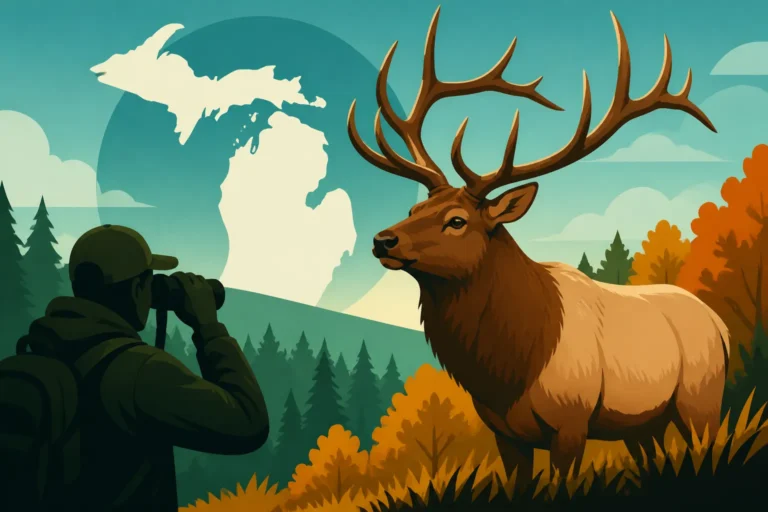
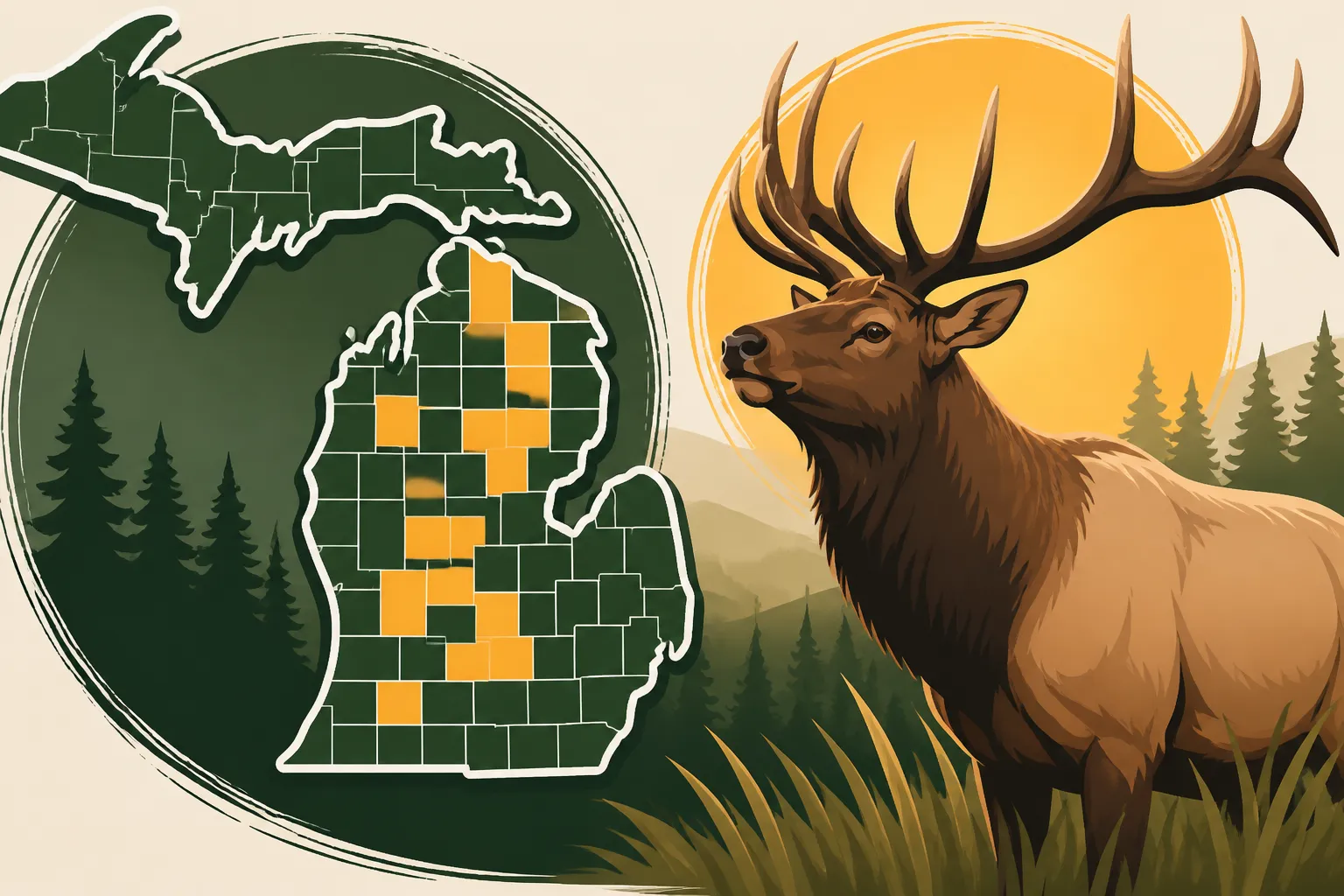
Michigan's elk herd, a remarkable conservation success story, is primarily concentrated in the northeastern Lower Peninsula. This isn't a widespread population like our deer, but rather a geographically specific one. When you hear about Michigan elk, you're almost certainly hearing about animals that call a handful of counties home. This tight geographic distribution is both a blessing and a challenge for hunters and wildlife enthusiasts alike. The habitat here provides everything they need, from food and water to excellent cover, allowing the herd to thrive.
Understanding the Primary Elk Range
The undeniable epicenter of Michigan's elk population is the Pigeon River Country State Forest, a vast wilderness that provides a sanctuary for these animals. While the forest itself spans parts of a few counties, the elk range extends beyond its official boundaries. The main counties where you'll find significant elk populations and, consequently, where the majority of hunting opportunities arise, include Cheboygan, Montmorency, Otsego, and Presque Isle. These counties are characterized by a mosaic of state forests, private timberlands, agricultural fields, and low-density residential areas, offering diverse forage and escape cover.
Within this region, the terrain varies from rolling hills to dense cedar swamps and large tracts of mature hardwoods, interspersed with aspen clearings that provide crucial browse. Elk are grazers and browsers, and this mixed landscape offers an abundant year-round food supply. During the warmer months, they might be found more openly in fields, while during deep snows, they'll often retreat into the protection of thick conifer stands, particularly cedar swamps. Understanding this habitat diversity is key to truly grasping Where Michigan Elk Live.
Historical Context and Elk Restoration
The presence of elk in Michigan today is not an accident; it's the result of dedicated conservation efforts. Elk were extirpated from Michigan by the late 1800s due to unregulated hunting and habitat loss. However, in 1918, a small reintroduction of seven elk from western states into the northern Lower Peninsula began the slow process of rebuilding the herd. These initial releases occurred near Wolverine in Cheboygan County, and later near the Pigeon River, effectively establishing the foundational population in the counties we now identify as elk country.
Over a century later, the herd has grown, faced challenges, and adapted to its Michigan home. The story of How Elk Were Restored to Michigan is a testament to what conservation can achieve. This historical reintroduction is why the modern elk range is so concentrated in these specific counties – they are direct descendants of those original transplants and have expanded naturally within the most suitable habitat available to them. This historical foundation shapes every aspect of current elk management and hunting strategy.
Michigan's Elk Management Units and County Overlap
The Michigan Department of Natural Resources (DNR) doesn't just manage elk by county lines; they use a system of Elk Management Units (EMUs) to more precisely control herd numbers and hunting pressure. These units often cross county boundaries, but they provide a more granular way to understand where elk are concentrated and where hunting tags might be allocated. For any serious elk hunter or observer, understanding the EMUs is just as important as knowing the counties themselves.
Diving Into the Elk Management Unit System
Michigan's elk range is divided into several EMUs, each with specific population goals and harvest quotas. While the exact boundaries and numbering can be found on the DNR's official maps, these units generally encompass segments of the primary elk-holding counties. For example, some units might cover large portions of Montmorency and Otsego counties, while others might focus on smaller, denser pockets in Presque Isle or Cheboygan. This system allows for targeted management, ensuring that hunting pressure is distributed appropriately and that the herd remains healthy across its various ranges. It's a complex system designed to balance opportunity with conservation.
If you're applying for an elk tag, your application will be for a specific EMU, not just a general county. This means you need to do your homework to understand which EMU covers the area you're interested in, and how that unit overlays with public and private lands. Tools like the Mi-HUNT map and advanced hunting apps like GoHunt can layer EMU boundaries over topographical maps, showing you exactly where you'll be able to hunt if you're lucky enough to draw a tag. Getting familiar with Michigan Elk Management Unit Boundaries is paramount for success.
Overlaying EMUs with County Boundaries
The practical implication of the EMU system is that while the core counties are known, elk density can vary significantly even within those counties based on the EMU you're in. For instance, a part of Cheboygan County might be in an EMU with a higher elk population and more tags, while another part of the same county might be in a unit with fewer elk and a more restrictive quota. This nuance is critical for hunters.
Imagine you've drawn a tag for Unit 08, which might primarily cover a chunk of Montmorency County. Your focus then shifts from "Montmorency County has elk" to "this specific section of Montmorency County, within Unit 08, has elk." This level of detail guides scouting efforts and greatly influences hunting strategy. For those scouting public land, understanding the overlay becomes even more vital, as public access varies within these units. You can spend hours poring over maps, using digital tools, and even physically exploring these areas to find the best spots, paying close attention to both county lines and EMU boundaries.
| Primary Elk Holding Counties | Key EMUs Overlapping | General Characteristics of Area |
|---|---|---|
| Cheboygan County | Various North EMUs | Mixed hardwoods, wetlands, some agriculture |
| Montmorency County | Central EMUs | Dense forests, rolling terrain, core elk habitat |
| Otsego County | Western EMUs | More open mixed forests, some agriculture, Pigeon River headwaters |
| Presque Isle County | Eastern EMUs | Pine forests, swamps, near Lake Huron shore |
| Charlevoix County (limited) | Western EMUs (edges) | Pockets of suitable habitat on western fringe |
Beyond the Core: Peripheral Elk Sightings and Movement
While the vast majority of Michigan's elk herd resides firmly within the core counties and their respective EMUs, these animals don't always read the boundary signs. Elk, particularly younger bulls looking to establish new territories or cows seeking new forage, are known to occasionally disperse and be sighted in counties bordering the main elk range, and sometimes even further afield.
Dispersal and Transient Elk
It's not uncommon to hear reports of elk sightings in counties like Oscoda, Alpena, Crawford, or even into Kalkaska and Antrim, which are technically outside the densest part of the core range. These are often transient animals, not necessarily indicative of an established, breeding population in those areas. A lone bull might wander many miles during the rut, or a small group of cows might explore new feeding grounds if pressure or food scarcity pushes them. These sightings, while exciting, are generally not where you'd focus your hunting efforts if you're looking for a consistent population.
Think of it like this: just because you see a deer in your backyard in a suburban area doesn't mean it's a prime deer hunting spot. The same applies to peripheral elk. They are simply passing through or exploring. While you might stumble upon one, the odds are significantly lower than in the established EMUs. This is a crucial distinction for hunters. You wouldn't apply for an elk tag expecting to hunt in Kalkaska, for example, even if an elk was spotted there last year. You'd focus on the established Where Michigan's Elk Live within the defined EMUs.
Factors Influencing Elk Movement
Several factors can influence elk to temporarily move outside their primary territories. Population pressure within the core range, especially if certain EMUs are at capacity, can push animals outwards. Food availability is another major driver; if a particular area experiences a poor mast crop or heavy snows limit access to forage, elk might travel further to find sustenance. Human activity, including logging operations, heavy recreational use, or even persistent hunting pressure, can also cause elk to shift their patterns and explore quieter areas.
During the breeding season, known as the rut, bull elk can become highly mobile, driven by the urge to find cows and challenge rivals. This is often when you hear about bulls venturing furthest from the core. When Michigan Elk Bugle can be an incredible experience, but it also means these animals are on the move. While a sighting outside the core can be thrilling for wildlife watchers, it rarely translates into reliable hunting opportunities, which remain concentrated within the designated EMUs of the primary counties.
Scouting and Planning Your Elk Encounter
Whether you're one of the incredibly fortunate few to draw a Michigan elk tag, or simply an avid wildlife enthusiast hoping to witness these majestic creatures, effective scouting and planning are paramount. Knowing "which counties hold Michigan elk" is just the starting line; the real work begins with understanding the terrain, the regulations, and the habits of the animals themselves within those specific areas.
Leveraging Technology and Maps for Elk Scouting
In today's world, technology has made scouting more efficient than ever, even for elusive game like elk. Digital mapping applications, such as those offered by GoHunt, allow you to overlay property boundaries, topographical features, habitat types, and even historic harvest data onto high-resolution aerial imagery. You can identify potential elk bedding areas in dense cover, feeding zones in old clear-cuts or agricultural fields, and travel corridors along ridges or swamp edges. These tools are invaluable for narrowing down vast expanses of public land.
The Michigan DNR's Mi-HUNT map is another incredible resource, providing detailed information on public land access, timber management plans, and even prescribed burn areas that can create prime elk browse. By combining these digital resources, you can virtually scout the elk range from your home, pinpointing areas of interest before you even set foot in the woods. This is especially helpful when looking at Where to Hunt Inside Michigan's Elk Units, as public access varies greatly.
Boots on the Ground: The Importance of Pre-Season Scouting
No amount of digital scouting can replace actual time spent in the woods. Once you've identified promising areas on your maps, it's time for "boots on the ground" scouting. This means hiking the terrain, looking for fresh elk sign such as tracks, droppings, rubs on trees, and wallows. Pay close attention to water sources, natural funnels, and areas with good thermal cover. Elk sign can be subtle, so training your eye to pick up on these clues is crucial.
Pre-season scouting also allows you to understand access points, potential hunting pressure, and safe shooting lanes. If you're fortunate enough to draw one of Michigan's coveted elk tags, this hands-on reconnaissance will be the foundation of your hunt plan. It's also an excellent way to enjoy the beauty of Michigan's Pigeon River Country and gain a deeper appreciation for the habitat that sustains these incredible animals, even if you're just observing. Remember, elk are intelligent and highly sensitive to human presence, so quiet and respectful scouting is key to not disturbing their patterns before the season even begins.
Disclaimer
This article is for general informational purposes only and does not constitute professional advice. Laws, prices and regulations vary by location and change over time. Consult a qualified professional for guidance on your specific situation.