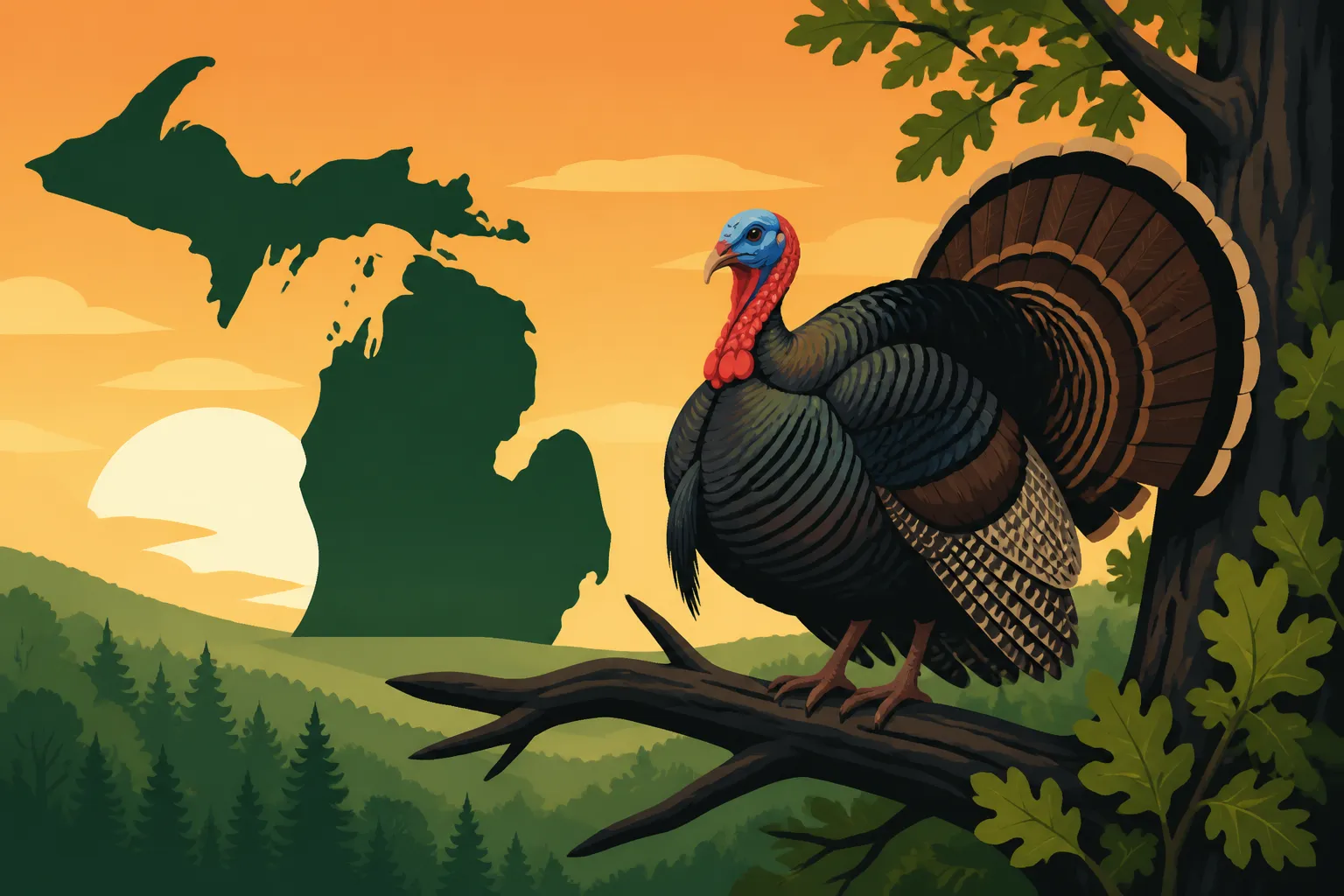
Where Michigan Gobblers Roost
There's nothing quite as frustrating as waking up before dawn, trekking into the pre-light woods, and setting up your turkey spread only to realize the gobblers you heard yesterday evening have completely vanished. A common challenge for Michigan turkey hunters is consistently finding where those wary birds are roosting and predicting their morning fly-down. This guide will take a deep dive into understanding the roosting habits of Michigan gobblers, helping you pinpoint their nighttime hideouts and boost your spring and fall hunting success.
The Anatomy of a Michigan Gobbler's Roost
Understanding why a turkey chooses a particular tree or area to roost is half the battle in locating them. It's not just a random perch; it's a strategic decision based on survival instincts and comfort.
Why Roosting is Critical for Turkeys
For a wild turkey, nighttime is prime time for predators. Coyotes, bobcats, raccoons, and even great horned owls pose a serious threat once darkness falls. Roosting high in a tree offers them a crucial advantage: safety from ground predators. By flying up into the canopy, they gain elevation, making it much harder for four-legged hunters to reach them. It also provides a vantage point, even in low light, for detecting potential danger.
Beyond safety, a good roost offers a place to spend the night protected from the elements. While they can endure a lot, especially in their dense feathers, a tree provides some thermal cover from wind, rain, and cold. They settle in, fluff up their feathers, and conserve energy, ready to fly down at first light. This ritual is ingrained, and understanding it is key to anticipating their movements.
Ideal Roost Tree Characteristics
When a gobbler picks a tree, it's not just any tree. They're looking for specific features that maximize their safety and comfort. The ideal roost tree is often one of the tallest, if not the tallest, in the immediate vicinity, giving them superior visibility. Think of those towering oaks or pines that stand head and shoulders above the surrounding canopy. They also prefer trees with strong, horizontal limbs that can comfortably support their weight. They don't want a flimsy branch; they need a stable platform for the long night.
Equally important is the understory. Turkeys generally prefer roost trees with a relatively open understory. This isn't just about ease of flight when they ascend or descend; it's also about scanning for predators. A cluttered, brushy understory near their roost makes them vulnerable, as a predator could easily hide right beneath them. They want to be able to see the ground clearly when they fly down in the morning.
Preferred Roosting Locations
Beyond individual trees, gobblers also show preferences for certain areas to roost. Often, these spots are on high ground, like ridge tops or the crests of hills, again offering that advantage of elevation and a wide view. They might choose trees along swamp edges or river bottoms, particularly if these areas feature taller timber. The proximity to water can be a draw, providing a sense of security.
You'll notice that good roosting locations often provide a clear flight path into and out of the tree. They don't want to navigate a dense thicket just to get to their nightly perch. A spot where they can fly up and fly down with minimal obstruction is preferred. This means open woods or forest edges adjacent to clearings can be prime roosting real estate. When you're scouting, look for these combinations of towering trees, open understories, and elevated or strategic locations. Reading Aerial Photos for Swamp Deer can be incredibly helpful for identifying these types of features, even if you're primarily hunting turkeys.
Roosting Patterns Across Michigan's Diverse Habitats
Michigan's landscape is incredibly varied, from dense northern forests to sprawling southern farmlands. Gobblers adapt their roosting strategies to these different environments, but their core needs for safety and shelter remain constant.
Hardwood Roosts: Oaks, Maples, and Beeches
In Michigan's vast hardwood forests, particularly in the northern Lower Peninsula and parts of the Upper Peninsula, gobblers often choose large, mature oaks, maples, and beeches. These trees can grow to impressive heights and develop wide, sturdy branches perfect for roosting. You'll frequently find them on higher ground, like the spine of a ridge or a hardwood knoll overlooking a valley. These elevated positions offer excellent visibility, allowing the birds to survey a broad area before flying down.
The presence of mast crops, like acorns, can also influence roosting patterns in hardwoods, especially outside of the spring breeding season. While not always directly roosting in the mast trees, gobblers will often roost nearby, ready to hit the ground and feed as soon as daylight breaks. Look for areas with a mix of mature hardwood species, particularly those that offer a slight elevation advantage. Hunting Turkeys in Upper Peninsula Timber often means focusing on these types of areas where big hardwoods dominate.
Pine and Conifer Roosts: Thermal Cover and Seclusion
While hardwoods are common, Michigan also has extensive tracts of pine and conifer forests, particularly in the northern regions. Turkeys will absolutely roost in these evergreen trees, especially when seeking thermal cover during colder temperatures or severe weather. Stands of red pine, white pine, or even dense cedar swamps can offer excellent protection from wind, snow, and rain. The thick needles provide a denser canopy, trapping warmth and shielding them from the elements.
These conifer roosts often offer a sense of seclusion, too. Unlike the more open hardwood forests, dense pines can make it harder for predators, human or otherwise, to spot a roosting bird. While perhaps not always the tallest trees, the density of the stand provides its own form of security. If you're hunting in cold or wet conditions, or in areas dominated by conifers, keep an eye out for these dense, protective stands, especially along the edges where they meet more open areas.
Swamp and River Bottom Roosts: Security Near Water
Michigan is crisscrossed with swamps, rivers, and low-lying bottomlands, which are often overlooked by hunters but can be prime turkey habitat. Gobblers will absolutely utilize the large, mature timber found along the edges of these water features for roosting. The trees here, often a mix of hardwoods and some conifers, can grow exceptionally tall due to the rich soil and constant moisture. Roosting along a swamp edge offers a unique blend of features: elevation from the timber, proximity to water as a natural barrier, and often very difficult human access, which translates to less pressure.
Finding these roosts requires a bit more effort. Aerial maps, like those available on platforms such as GoHunt, become invaluable for identifying these transitional zones between upland and wetland. Look for fingers of high ground extending into a swamp, or rows of tall trees bordering a river. The birds feel secure knowing that the dense, often difficult-to-navigate swamp acts as a natural buffer below them. Be prepared for some wet feet if you venture into these areas!
Farm Country Roosts: Isolated Giants and Woodlots
In southern Michigan, where agricultural fields dominate the landscape, turkey roosting habits shift to accommodate the more fragmented cover. Here, gobblers often rely on isolated stands of mature timber, small woodlots, or even large individual trees that stand out in a sea of fields. These "lone wolf" trees or small clusters of timber become critical nighttime sanctuaries, providing the height and security otherwise lacking in open farmland.
You might find them roosting in old growth timber along fencerows, in small patches of woods surrounded by corn or bean fields, or in the larger, more established woodlots. They'll often choose trees on the edge of these woodlots, allowing for an easy fly-down into a nearby field for feeding and strutting. Turkey Tactics for Southern Michigan Farms heavily rely on identifying these isolated pockets of cover and understanding how turkeys use them for roosting and morning movement. These spots, while seemingly obvious, can hold surprisingly large numbers of birds year after year.
Scouting and Pinpointing Roosts for Success
Knowing where turkeys prefer to roost is one thing; actually finding an active roost site is another. This is where dedicated scouting, both before and during the season, pays off handsomely.
Pre-Season Roost Scouting: Aerial Maps and Boot Leather
The real work often starts long before opening day. Pre-season scouting is crucial for identifying potential roosting areas without disturbing the birds. Start with aerial maps. Tools like the Michigan DNR's Mi-HUNT map or commercial apps such as GoHunt allow you to zoom in and identify key terrain features: high ridges, mature timber stands, swamp edges, and isolated woodlots. Look for the tallest trees on the map, often indicated by darker green shading or distinct canopy shapes. Use the contour lines to find elevation changes.
Once you have some promising spots marked, it's time to hit the woods. During late winter or early spring, before the leaves fully emerge, it's much easier to spot large, sturdy limbs that look like prime roosting spots. Look for turkey sign on the ground: large piles of droppings (often called "roost piles"), scattered feathers, or even bark rubbed off low branches from turkeys flying up. A good pair of binoculars can help you scan distant trees for these clues without getting too close.
Listening for the Evening Fly-Up
One of the most exciting and effective ways to pinpoint a roost is to listen for the evening fly-up. Position yourself about an hour or two before sunset in a good listening spot that allows you to hear a broad area. This might be on a ridge, at a field edge, or a clearcut. Listen for wing beats – the distinctive "thump-thump-thump" as a heavy bird launches itself skyward. Sometimes, you'll hear a soft clucking or yelping as they communicate before settling in.
Once they've flown up, if you're lucky, a gobbler might let out a final "goodnight" gobble. This is gold. Mark the location on your map immediately. The key is to be discreet; move slowly, minimize noise, and avoid shining lights into the trees. You want to confirm their general location without alerting them to your presence. Remember, getting too close can spook them, causing them to abandon that roost site, and that's the last thing you want.
Interpreting Morning Fly-Down Locations
Just as important as finding where they fly up is understanding where they'll fly down. Once a gobbler starts sounding off on the roost in the morning, you need to be in position. Listen to the direction of his calls. Turkeys will often fly down in the direction they're facing on the limb, and often towards open ground or a field edge where they can strut and feed. After they've flown down, if you don't get a shot or they move off, take the time to investigate the area directly under where they were roosted.
You'll find those tell-tale roost piles of droppings and scattered feathers. This confirms the exact tree or cluster of trees they were using. This information is critical for future hunts, especially if you plan on Calling a Michigan Gobbler Off the Roost. Note the terrain, the nearby cover, and any potential obstacles. Were they on a point overlooking a swamp? Next to a logging road? These details help you build a mental map of their habits.
Utilizing Technology to Locate Potential Roosts
In today's hunting world, technology is a game-changer for roost scouting. Beyond basic aerial photos, advanced mapping applications offer detailed topographic maps, showing elevation changes that are often preferred by roosting birds. You can toggle between satellite views, topo maps, and even public land layers to identify promising areas. Using a phone app like GoHunt, you can drop pins on potential roost trees, measure distances, and plan your approach routes for both evening listening and morning setups.
Some apps even allow you to mark potential fly-down zones based on terrain and cover. For instance, if you pinpoint a roost on a ridge, you might mark a clearcut or field edge at the bottom of the ridge as a likely fly-down spot. This forward-thinking approach, combining digital scouting with physical reconnaissance, can drastically improve your chances of being in the right place at the right time.
Seasonal and Weather Impacts on Roosting Habits
Turkeys aren't robots; their roosting habits can shift throughout the year and in response to Michigan's often unpredictable weather. Being aware of these variations is key to staying one step ahead.
Spring Roosts: Proximity to Strutting Zones
During the spring turkey season, gobblers are primarily focused on breeding. This means their roosting choices are heavily influenced by their desire to be close to hens and traditional strutting zones. You'll often find them roosting in timber adjacent to open fields, clearings, food plots, or even logging roads where they can easily fly down, hit the ground, and start displaying for hens. Their initial goal upon flying down is to gather hens.
They'll often gobble aggressively from the roost, advertising their presence. This is why getting into position well before daylight and setting up strategically is so critical during spring hunts. You want to be between the roost and the likely fly-down area. Understanding Michigan Spring Turkey Applications and Units can help you focus your efforts on areas known for strong turkey populations and suitable spring habitat.
Fall Roosts: Flock Dynamics and Food Sources
Fall turkey hunting presents a different scenario. In the autumn, turkeys are typically in larger flocks, and their behavior is less about breeding and more about survival and feeding. Gobblers will often roost with these larger mixed-gender flocks. Their roosting locations tend to be closer to abundant food sources like acorn flats, standing corn, or cut crop fields. The birds will fly up together and then fly down in the morning to immediately begin foraging.
While gobbling might still occur, it's usually less frequent and intense than in the spring. Listening for the "tree yelps" and "clucks" of a large flock settling in for the night or stretching in the morning can be a strong indicator of a fall roost. Hunting Michigan's Fall Turkey Season often involves more flock-centric strategies, and finding their communal roost is an excellent starting point.
Roosting in Inclement Weather
Michigan weather can be fickle, especially during spring and fall hunting seasons. Rain, heavy wind, or unexpected cold fronts can all influence a turkey's roosting choice. In severe weather, turkeys often seek out the densest available cover. This usually means thick stands of conifers like pines, spruces, or cedars. These trees provide excellent windbreaks and help to shed precipitation, offering more shelter than bare hardwoods.
They might also choose to roost lower in the trees during high winds, or in areas protected from the direct blast of the wind, such as a sheltered hollow or the leeward side of a ridge. If you've been monitoring a particular roost and a storm rolls in, don't be surprised if the birds shift their evening accommodations. Being able to adapt and scout for these weather-specific roosts can save a hunt from being a washout.
Avoiding Roost Disturbance
Perhaps the most critical piece of advice regarding roosts is to avoid disturbing the birds. Once you've located an active roost, whether by scouting or by listening, your approach needs to be stealthy and deliberate. Never try to sneak directly under a roosting bird at fly-up or fly-down. This will almost certainly spook them, and a spooked turkey rarely returns to the same roost for several days, if ever. The goal is to set up a significant distance away, often 100-200 yards or more, in a position that intercepts their likely morning fly-down path.
This means planning your entry and exit routes meticulously, especially in the dark. Use natural terrain features or thick cover to conceal your movement. Move quietly, check your footing, and keep light use to an absolute minimum. A disturbed roost means you've educated that bird, making him much harder to hunt. Patience and a light footprint are your best friends when dealing with roosting gobblers. Setting up against a big oak or other substantial cover will also aid in your concealment during fly-down.
Here's a quick comparison of general roosting habits across different Michigan habitats:
| Habitat Type | Common Roost Trees | Preferred Roost Locations | Seasonal/Weather Influence | Key Scouting Indicators |
|---|---|---|---|---|
| Hardwood Forests | Mature Oaks, Maples, Beeches | Ridge tops, hardwood knolls, near mast | Spring: Near strutting areas; Fall: Near mast crops | Tallest trees, roost droppings, feathers on ground |
| Pine/Conifer Stands | Red Pine, White Pine, Cedar | Dense stands, windbreaks | Colder weather, high winds, precipitation | Dense canopy, sheltered areas, needles on ground |
| Swamp/River Bottom | Tall mixed timber (hardwood/conifer) | Edges of swamps/rivers, high ground within lowlands | Consistent, offering seclusion | Isolated tall trees near water, difficult access areas |
| Farm Country | Isolated large trees, small woodlots | Fencerows, woodlot edges, shelterbelts | Spring: Near fields for strutting/feeding | Lone trees, edges of woodlots surrounded by open fields |
Disclaimer
This article is for general informational purposes only and does not constitute professional advice. Laws, prices and regulations vary by location and change over time. Consult a qualified professional for guidance on your specific situation.