Why Aspen Cuts Grow Grouse
It can be incredibly frustrating to spend hours walking through what looks like prime grouse cover in Michigan, only to hear nothing but silence, or worse, flush a bird out of range. Many of us have felt that disappointment, wondering if the "good old days" of abundant ruffed grouse are truly gone. But what if the key to finding those elusive thunder chickens lies not just in where you hunt, but in understanding why certain habitats consistently produce birds? This guide will dive deep into the fascinating relationship between Michigan's aspen forests and its ruffed grouse, revealing why these timber cuts are absolute magnets for our favorite upland bird.
The Life Cycle of Aspen and Its Impact on Grouse
Aspen, particularly trembling aspen and bigtooth aspen, isn't just another tree species in Michigan's diverse forests; it's a foundational element for ruffed grouse. Understanding the life cycle of aspen is like getting a secret map to where grouse will thrive, because the trees themselves dictate the habitat structure that these birds absolutely need to survive and reproduce.
Aspen's Role as a Pioneer Species
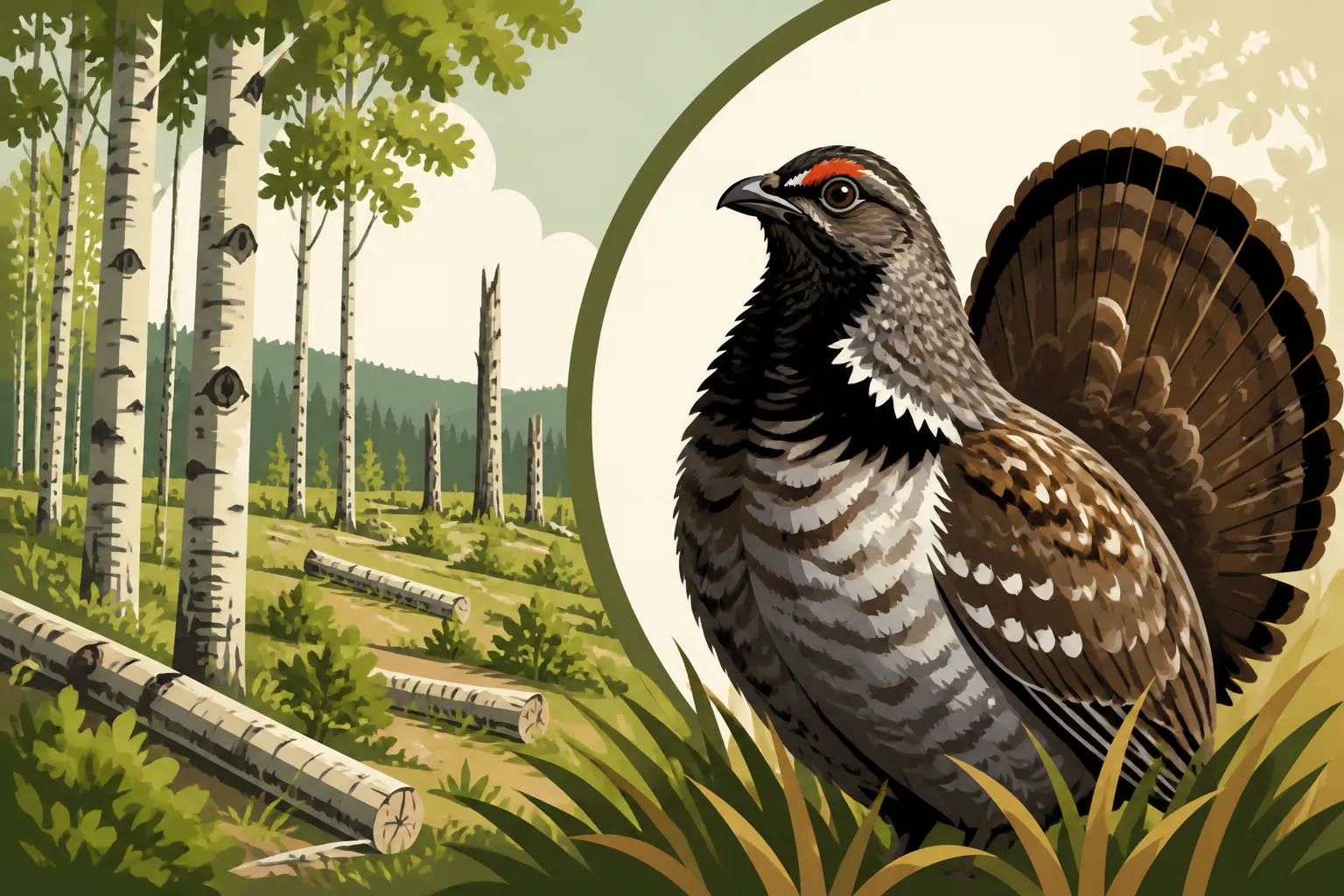
Aspen is what we call a "pioneer species." This means it's one of the first trees to colonize an area after a major disturbance like a wildfire, a clear-cut, or even a severe windstorm. It's incredibly resilient and grows incredibly fast. When an aspen stand is cut or burned, it doesn't just grow back from seeds like many other trees. Instead, its root system, which can be extensive, sends up thousands of new shoots, or "suckers," that spring up rapidly from the ground. This process creates incredibly dense, thick stands of young aspen in a very short amount of time.
This rapid regeneration is absolutely critical for grouse. Think about it: a grouse needs cover from predators, food, and safe nesting sites. A recently regenerated aspen cut, often just a few years old, turns into a wall of vertical growth. Imagine trying to fly through that as a hawk or owl, or sneak through as a fox or coyote. It’s nearly impossible. These dense sapling thickets become the ultimate sanctuary. Without these disturbances, the forest matures, and aspen eventually gets shaded out by longer-lived species like maple and pine, which don't provide the same quality of cover for grouse.
The Ideal Age Classes for Ruffed Grouse
It’s not enough to just have aspen; you need aspen in the right stages of its life cycle. Ruffed grouse are particular about their habitat, and different age classes of aspen serve different purposes throughout the year.
- 0-5 Years (Regenerating Sucker Stands): This is the absolute densest cover, often looking like a wall of pencil-thin trees. These young stands provide crucial escape cover from avian predators like hawks and owls. They're also excellent brooding habitat for hens with chicks, offering protection and a bounty of insects. You might not find a lot of drumming activity here, but it's where young birds grow up safe.
- 5-15 Years (Young Pole Stands): As the aspen grows a bit taller and starts to thin itself out naturally, it creates excellent year-round cover. The density is still high enough to deter predators, but there's enough room for grouse to move and find food. This is often where you'll start to hear drumming in the spring, as male grouse begin to establish territories. The dense understory provides more food and continues to protect from ground and air predators.
- 15-25 Years (Mature Poletimber/Sawtimber): These stands offer a mix of good cover and more developed food sources. While not as dense as younger stands, they still provide excellent escape cover, especially in winter when the leaves are down. Crucially, these older stands provide the necessary diameter for male grouse to find good drumming logs – often fallen trees or stumps – which are vital for attracting mates. The buds and catkins on older aspen become a primary food source, especially in the lean winter months.
- 25+ Years (Overmature/Declining Stands): As aspen stands age past their prime, they start to decline. Trees fall, creating more deadfall for drumming logs, but the overall stand density often decreases. These areas can still hold birds, particularly if they are adjacent to younger, denser cover. However, they are less productive overall, and without active management (logging), they eventually transition to other tree species, losing their value as prime grouse habitat. This continuous cycle of growth, maturity, and regeneration is exactly what keeps Michigan's grouse population humming. You might use an app like GoHunt to analyze forest types and age classes to pinpoint optimal areas.
What Makes an Aspen Cut a Grouse Haven?
So, we know aspen is important, but why are the cuts specifically so vital? It's all about creating a patchwork quilt of different age classes and structures that meet all the grouse's needs within a relatively small area. This isn't just about one factor; it's a synergy of elements that come together to create the perfect home.
Thick Cover for Protection from Predators
Predation is a constant threat for ruffed grouse, whether it's from a hawk circling overhead, a fox stalking through the underbrush, or a bobcat silently moving through the snow. Young aspen cuts, especially those in the 5-15 year range, are a maze of vertical stems and dense undergrowth. Imagine being a hawk trying to dive through that thicket to catch a grouse, or a coyote trying to navigate it quickly. It's incredibly difficult.
This "structural complexity" is exactly what grouse thrive on. They can dive into the thickest part of the cover at the first sign of danger, using the dense network of branches and saplings as a protective shield. This kind of cover is often lacking in older, more open hardwood forests, where predators have a much easier time spotting and pursuing prey. The best aspen cuts will also have a diverse understory of shrubs and ferns that add another layer of concealment.
Abundant Food Sources
Beyond just cover, grouse need food, and aspen cuts are grocery stores for these birds, offering a variety of sustenance throughout the year.
- Aspen Buds and Catkins: In the fall and winter, aspen buds and catkins become a critical food source. These protein-rich morsels are readily available on the branches, especially on the younger, more accessible trees. As you're walking through a cut, keep an eye out for clipped branches, a telltale sign that grouse have been feeding there.
- Insects and Berries: The vibrant understory that often accompanies young aspen growth produces a plethora of insects, spiders, and berries, particularly important for growing chicks in the spring and summer. Wild raspberries, blueberries, partridgeberry, and various other soft mast can be found in abundance within these sunny clearings. These are crucial for a chick's development, providing the energy and nutrients they need to grow quickly.
- Green Browse: In addition to berries, many herbaceous plants that thrive in the sunlight of an aspen cut provide green browse for grouse. Ferns, clovers, and other ground vegetation offer a constant supply of food. The diverse plant life that springs up after a timber harvest ensures a varied diet for grouse throughout the seasons.
Drumming Sites and Nesting Habitat
Reproduction is at the heart of any healthy wildlife population, and aspen cuts provide the essential elements for ruffed grouse to breed successfully.
- Drumming Logs: Male grouse perform their distinctive drumming display to attract hens and proclaim their territory. They do this from a "drumming log"—typically a fallen tree, stump, or even a large rock. These drumming sites need to be in areas with good visibility for the grouse, allowing them to survey their territory, but also with dense overhead and side cover to protect them while they drum. Aspen cuts, especially those a bit older (15-25 years), frequently have plenty of fallen timber, and the surrounding dense young aspen provides that perfect combination of cover and vantage. If you're out scouting for Michigan Ruffed Grouse Cycles in the spring, listen for that tell-tale drum!
- Nesting Cover: Hens typically nest on the ground, often at the base of a tree, stump, or under a brush pile. They need dense cover to conceal their nests from predators like raccoons, skunks, and coyotes. The thick regeneration in aspen cuts, with their numerous saplings, shrubs, and deadfall, offers ideal nesting habitat. The sun-drenched openings within the cut also encourage the growth of herbaceous plants that further conceal the nest. This high-quality nesting cover directly contributes to better chick survival rates, which is vital for the overall grouse population.
Identifying and Hunting Michigan Aspen Cuts
Knowing why aspen cuts are good for grouse is one thing; actually finding and hunting them effectively in Michigan is another. It takes a bit of scouting and strategic thinking, but the rewards are well worth it.
Reading the Landscape
The first step is to learn how to identify aspen cuts, both on a map and when you're boots on the ground.
- Using Mapping Tools: Modern hunting apps like GoHunt are invaluable for this. Look for layers that show forest types or recent timber harvests. Aspen stands will often be marked as such, or you might see areas that appear as distinct blocks of lighter green on aerial imagery, indicating younger, regenerating forest. Pay attention to straight lines or rectangular shapes, which are often indicative of clear-cuts or other timber management activities. Look for areas adjacent to older hardwoods or conifers that provide varied habitat. The Scouting With Michigan's Mi-HUNT Map can also be a great resource for identifying these areas on public land.
- On the Ground Identification: When you're in the woods, young aspen cuts are unmistakable. They'll be extremely dense, with many thin, straight trunks reaching for the sky. The bark is typically smooth, pale green to whitish on younger trees, turning rough and furrowed at the base on older trees. In the fall, aspen leaves turn a brilliant gold, making them easy to spot from a distance. You'll often see other species like birch and red maple mixed in, but aspen will be the dominant tree. Look for areas with a good mix of age classes – a thick, young stand next to a more mature patch – as this transition zone is often a hotspot for birds.
Timing Your Hunt
When you choose to hunt an aspen cut can significantly impact your success.
- Early Season (September/October): This is when the leaves are still mostly on the trees, providing maximum cover for the grouse. They'll be feeding heavily on insects and berries, and the thick foliage makes them hard to see. This is often a fast-paced, flushing game. Focus on the densest cover, especially near berry patches.
- Late Season (November/December): After the leaves have fallen, visibility improves dramatically, but the birds become warier. Grouse will switch to feeding on aspen buds and catkins. Look for them concentrated in the dense evergreens within or bordering aspen stands, especially on cold, windy days. They often seek shelter in pines, hemlocks, or cedars that provide thermal cover. This is a great time for working dogs, as the scenting conditions can be excellent. Consider a late-season hunt for Grouse Hunting Michigan Aspen Cover to experience a different challenge.
- Time of Day: Like many game birds, grouse are often most active during the early morning and late afternoon, when they are moving to and from feeding areas. However, because they are so reliant on cover, you can often find them in aspen cuts throughout the day, especially if the weather is mild or overcast.
Tactics for Flushing Birds
Hunting grouse in aspen cuts requires patience, a good pair of boots, and often, a steady dog.
- Walking Strategies: Don't just wander aimlessly. Walk slowly and deliberately, pausing frequently. Grouse will often hold tight, especially in dense cover, and your pause might be just enough to make them nervous and flush. Work in a grid pattern or parallel lines through the thickest parts of the cut. Pay close attention to edges where the aspen meets other forest types, old logging roads, or small clearings. These transition zones are often where grouse are found moving between feeding and loafing areas.
- Working with a Dog: A good bird dog is a tremendous asset for grouse hunting. They can cover more ground, penetrate denser cover, and most importantly, scent birds you would walk right past. A dog that works close and is steady to flush and shot is ideal for Michigan's dense cover. Let your dog work the cover, and be ready when they get birdy. Even if you don't have a dog, Flushing Grouse Without a Dog is certainly possible; you just need to be more methodical and patient.
- Safety First: Always be mindful of your hunting partners and any dogs. Wear hunter orange (required in many seasons), communicate clearly, and know where everyone is at all times. The dense cover can make it easy to lose track of others. Be prepared for thick conditions, and remember that retrieving a downed bird can be a challenge in such dense growth. Consider carrying Upland Gear for Michigan Grouse Cover that helps you navigate effectively and safely.
The Management Cycle of Aspen and Sustaining Grouse Habitat
It might seem counterintuitive, but the very act of logging, when done correctly, is one of the most beneficial things we can do for ruffed grouse populations in Michigan. It's a critical part of the long-term health of our grouse woods.
The Importance of Forest Regeneration
Aspen is a sun-loving species. It thrives on disturbance and quickly regenerates in areas where the canopy has been opened up. If a mature aspen stand is left to grow indefinitely without disturbance, it eventually starts to die out and is replaced by shade-tolerant species like maples, beech, and hemlock. While these forests have their own ecological value, they simply don't provide the dense cover and food sources that grouse need.
This is where timber harvesting comes in. By clear-cutting blocks of mature aspen, forest managers essentially hit the "reset" button, triggering that vigorous suckering response from the aspen roots. This creates those dense, young stands that are so critical for grouse. Sustainable forest management practices often involve creating a mosaic of different age classes across the landscape – some young, some middle-aged, some mature – to ensure a continuous supply of diverse habitat for grouse at all stages of their life cycle. This isn't just random logging; it's a deliberate, science-based approach to wildlife management.
Long-Term Outlook for Michigan Grouse
Michigan's ruffed grouse populations naturally cycle, experiencing boom and bust periods over roughly a 7 to 10-year span. This cycle is influenced by a variety of factors, including weather, predator populations, and disease. However, consistent habitat availability through active forest management, particularly aspen regeneration, is one of the most important factors we can control to help sustain healthy grouse numbers over the long term.
Organizations like the Ruffed Grouse Society actively work with private landowners and state agencies to promote aspen clear-cutting and other habitat improvements. Their efforts, combined with the work of the Michigan Department of Natural Resources (DNR), help ensure that future generations of hunters will continue to enjoy the thrill of a Michigan grouse flush. While we might experience lower numbers during the down cycle, knowing that the habitat is being actively managed gives hope that the birds will rebound. Understanding Michigan Ruffed Grouse Cycles helps put these fluctuations into perspective and reinforces the importance of habitat management. So, the next time you see a clear-cut, remember that it's not just about timber; it's about making sure Michigan remains a fantastic place to chase grouse for years to come.
Disclaimer
This article is for general informational purposes only and does not constitute professional advice. Laws, prices and regulations vary by location and change over time. Consult a qualified professional for guidance on your specific situation.