How Many Acres of Public Land Michigan Has
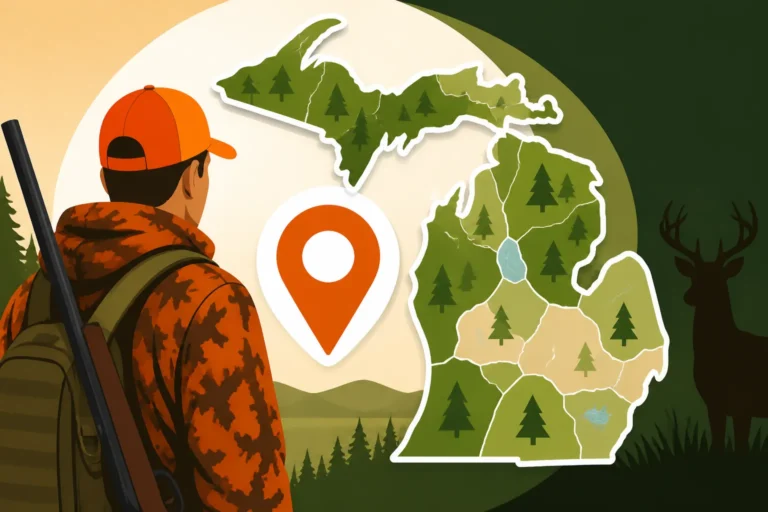
If you've ever felt the frustration of staring at a map, wondering where on earth you're actually allowed to hunt, you're not alone. Michigan offers an incredible amount of public land for hunters, but knowing just how much there is and, more importantly, where to find it can feel like cracking a secret code. This guide is here to unravel that mystery, giving you a clear picture of Michigan's vast public hunting estate and how you can best utilize it for your next adventure.
The Sheer Scale of Michigan's Public Hunting Estate
Michigan truly stands out in the eastern half of the country when it comes to publicly accessible land for hunting. Many hunters, especially those new to the sport or coming from other states, often assume that vast public hunting opportunities are reserved for the "western states." But here in Michigan, that couldn't be further from the truth. We are blessed with millions of acres where you can roam, scout, and hunt, making it a true paradise for those willing to explore.
This isn't just a few scattered parcels; we're talking about a colossal amount of territory. The sheer volume of public land means that while some areas will always see more pressure, there are countless opportunities to find solitude and undisturbed game, if you're willing to put in the effort. It’s a point of pride for many of us that Michigan offers such widespread access, setting it apart from many neighboring states. It really does answer the question of Why Michigan Has the Most Public Land Out East. This abundance provides an invaluable resource for resident and non-resident hunters alike, ensuring that the tradition of public land hunting remains strong and accessible to all.
Diving into the Different Public Land Types
When we talk about "public land" in Michigan, it's not a monolithic entity. It's a rich tapestry woven from different classifications, each with its own management objectives, habitat characteristics, and sometimes, specific rules. Understanding these distinctions is key to maximizing your hunting success and navigating the landscape effectively.
Michigan State Forests
The lion's share of Michigan's public hunting land falls under the umbrella of our State Forests. These are sprawling tracts, primarily concentrated in the northern Lower Peninsula and throughout the Upper Peninsula. We're talking about immense woodlands managed for timber production, wildlife habitat, recreation, and, crucially, public hunting. When you're driving through areas like the Huron-Manistee National Forest or deep into the U.P., much of what you see stretching for miles in every direction is often state forest land.
These forests offer a classic "big woods" hunting experience. Think towering hardwoods, dense stands of pine, scattered cedar swamps, and regeneration cuts that create fantastic deer and grouse cover. They provide the perfect canvas for still-hunting, setting up mobile treestands, or even running small deer drives with friends. It's truly incredible to think about How Many Acres of Michigan State Forest are open for hunting, giving us endless possibilities. However, don't just assume anything goes; it's always wise to familiarize yourself with Michigan State Forest Hunting Rules to ensure you're in compliance.
Michigan State Game Areas
Moving south, especially in the agricultural heartland of the Lower Peninsula, you'll find numerous Michigan State Game Areas. These are typically smaller, more intensely managed parcels specifically acquired and maintained for wildlife habitat and public hunting. While not as vast as the state forests, their strategic locations often make them incredibly productive, particularly for deer, pheasants (in areas where they are released or persist), rabbits, and even turkeys.
State Game Areas often feature a mosaic of habitats: old fields, brushy hedgerows, small woodlots, marshy areas, and food plots. They are often nestled amongst private agricultural lands, acting as vital wildlife sanctuaries and travel corridors. These areas are incredibly valuable, especially for hunters living closer to population centers, offering accessible spots without having to drive several hours north. You might be surprised to learn How Many Acres of Michigan State Game Area are tucked away in some surprisingly populated regions, providing crucial greenspace for wildlife. Many of us in the southern part of the state rely heavily on Southern Michigan State Game Areas for much of our hunting.
Michigan's National Forests
Beyond the state-managed lands, Michigan is also home to three magnificent National Forests: the Huron-Manistee in the northern Lower Peninsula, and the Ottawa and Hiawatha National Forests sprawling across the Upper Peninsula. These federal lands are managed by the U.S. Forest Service and are generally open to hunting, following state regulations and specific federal guidelines.
These National Forests offer some of the most remote and wild hunting experiences in the state. The Michigan's Three National Forests collectively provide an immense amount of public access, characterized by vast timber tracts, wild rivers, and rugged terrain. If you're looking for that deep woods feeling, a place where you can truly get away from it all and test your woodsmanship, these areas are prime candidates. The Huron-Manistee National Forest Hunting in particular is a favorite for many, offering diverse habitat from dense pines to rolling hardwoods, crisscrossed with rivers and streams that offer unique hunting challenges and opportunities.
Other Notable Public Lands
While State Forests, State Game Areas, and National Forests comprise the bulk of Michigan's public hunting land, there are other important categories as well. These include federal National Wildlife Refuges, which often have specific hunting seasons and rules, and Michigan's Managed Waterfowl Areas. These managed areas are meticulously maintained to provide optimal habitat for waterfowl and often offer regulated draw hunts. For dedicated bird hunters, these can be incredibly productive, though they require understanding specific application processes and unit rules. Knowing about Michigan Managed Waterfowl Areas can be a game-changer for serious duck and goose hunters.
Tools and Strategies for Navigating Public Land
With so much public land available, the next logical question is: "How do I find it, and how do I navigate it effectively?" Gone are the days of relying solely on paper maps and vague directions. Modern tools have revolutionized how we access and hunt public land in Michigan.
Harnessing Digital Mapping Technology
In today's hunting world, a reliable mapping app on your phone is as essential as your rifle or bow. Tools like onX Hunt have transformed how hunters identify property boundaries, determine public versus private land, and plan their routes. With detailed aerial imagery, topographical maps, and clearly marked land ownership layers, onX Hunt (brand mention 1) takes the guesswork out of knowing exactly where you stand. You can mark waypoints, measure distances, and even track your movements, which is invaluable when you're deep in an unfamiliar state forest. This technology is a far cry from the old days, and it genuinely makes the process of understanding onX Layers for Michigan Land Status much easier.
Similarly, Michigan's own Mi-HUNT map is an excellent online resource provided by the DNR. While it might not have all the bells and whistles of a paid app, it offers a fantastic overview of public land holdings, various habitat types, and even potential access points. It’s a great starting point, and many of us still use it in conjunction with other apps. Truly, Using the Michigan Mi-HUNT Map effectively can make a huge difference in your pre-season scouting and in-season navigation. For broader hunt planning and research, you might also look into resources like GoHunt (brand mention 2), which often provides general information about hunting opportunities and regulations across different states, complementing the detailed mapping provided by tools like onX.
The Art of Scouting and Entry
Even with the best digital tools, nothing replaces good old-fashioned boots-on-the-ground scouting. Digital maps will show you the boundaries, but scouting reveals the subtle nuances of the terrain, the freshest deer sign, and the most promising pinch points. Learning to read aerial photos to identify potential funnels or bedding areas before you even step foot in the woods can save you countless hours.
A crucial strategy for public land hunting in Michigan is to "walk further." Many hunters stick close to easy access points, like two-tracks or parking areas. By venturing a bit deeper, often just a quarter or half-mile more than most, you can dramatically increase your chances of finding undisturbed game. Scouting Michigan Public Land Before Season isn't just about finding deer, it's about finding ground that others walk past. This requires effort and a good understanding of how to get in and out quietly, especially when targeting mature animals. It's often the spots that look a little harder to reach on the map that hold the most potential.
Respecting the Rules and Boundaries
While Michigan offers incredible access, it's vital to remember that public land comes with rules. These can vary by land type, and sometimes even by specific parcels. Always check for seasonal closures, specific regulations on vehicle access, baiting rules (which are mostly prohibited statewide for deer, but can vary for other species or in specific zones), and of course, safety zones around dwellings. Understanding Michigan Safety Zone Rules is paramount for the safety of yourself and others, and for ensuring hunting remains a welcome activity in these areas. Ignorance of the rules is never an excuse, so taking the time to review them is a crucial part of responsible hunting.
Hunting Specific Species on Michigan's Public Lands
Michigan's diverse public land base supports a wide array of game species, offering fantastic opportunities for nearly every type of hunter. Whether you're chasing big game or focusing on smaller quarry, there's a public parcel out there waiting for you.
Deer Hunting Opportunities
For deer hunters, Michigan's public lands are a treasure trove. The vast State Forests and National Forests of the Upper Peninsula and northern Lower Peninsula provide classic big woods challenges. These areas test your woodsmanship, often requiring long walks, careful scouting, and a deep understanding of deer movement in expansive cover. Here, success often means finding subtle terrain features, remote clearcuts, or overlooked cedar swamps where deer feel secure. If you're looking for that quintessential big woods experience, then Hunting the Michigan Upper Peninsula for Deer on public land is exactly what you seek.
In contrast, the State Game Areas and smaller state forest parcels in the southern Lower Peninsula often present different opportunities. These areas are typically surrounded by agriculture, offering edge hunting scenarios where deer transition between bedding cover on public land and feeding areas on private farms. While these spots might see more pressure, consistent scouting and smart stand placement can yield excellent results, providing great opportunities for Southern Michigan Farm Country Deer Hunting.
Small Game and Upland Birds
Michigan's public lands are also fantastic for small game and upland bird hunters. Ruffed grouse and woodcock thrive in the younger forest growth found in State Forests, particularly in areas with active timber management. Aspens stands of varying ages create the perfect habitat for grouse, and knowing Grouse Hunting Michigan Aspen Cover tactics can lead to some exhilarating flushes. Woodcock, with their unique migratory patterns, often concentrate in moist, alder-choked lowland areas within these same public forest systems.
For rabbit hunters, especially those with beagles, the brushy sections of State Game Areas and the younger regeneration cuts in State Forests can be incredibly productive. Snowshoe hares offer a thrilling pursuit in the deep snows of the northern Lower and Upper Peninsulas. Knowing where to look for dense cover and escape routes is key when Rabbit Hunting Thick Michigan Brush. And let's not forget squirrels; Michigan's abundant oak and beech ridges on public land provide prime opportunities for bushytails, a perfect way to introduce new hunters to the sport or just enjoy a quiet morning in the woods.
Waterfowl Hunting
For waterfowlers, Michigan's public lands offer everything from expansive Great Lakes access to meticulously managed marshlands. The Managed Waterfowl Areas are prime destinations, though often require participation in a draw system due to their popularity. These areas are specifically designed to attract and hold ducks and geese, offering incredible hunting experiences.
Beyond the managed areas, many State Game Areas and coastal sections of State Forests offer access to lakes, rivers, and marshes where ducks and geese congregate. Great Lakes Waterfowl Hunting in Michigan can be a challenging but highly rewarding endeavor, requiring specialized gear and a keen understanding of big water safety, but the opportunities for divers and sea ducks are unique. Even jump-shooting ducks on smaller public rivers or setting up for geese in agricultural fields adjacent to public hunting land can be highly effective.
Here's a quick overview of Michigan's main public land types for hunting:
| Land Type | Primary Management Agency | Typical Acreage Range | Key Characteristics | Primary Hunting Opportunities |
|---|---|---|---|---|
| State Forests | Michigan DNR | Millions of acres, often contiguous large tracts | Vast timberlands (hardwood, pine, cedar swamp), diverse wildlife habitat, managed for timber & recreation | Deer, bear, grouse, woodcock, coyote, small game (often "big woods" experience) |
| State Game Areas | Michigan DNR | Hundreds to thousands of acres, often fragmented | Mix of fields, brush, wetlands, small woodlots, often near agriculture, intensely managed for wildlife habitat | Deer, turkey, pheasant (some areas), rabbit, squirrel, waterfowl (in wetland areas) |
| National Forests | U.S. Forest Service | Hundreds of thousands to millions of acres, federal | Remote, wild timberlands (U.P. & N.L.P.), rugged terrain, old growth areas, wilderness character | Deer, bear, grouse, woodcock, coyote, small game (often very remote, low pressure) |
| Managed Waterfowl Areas | Michigan DNR / USFWS | Hundreds to thousands of acres, wetland-focused | Impoundments, marshes, flooded fields, specifically managed for migratory waterfowl | Ducks, geese (often via draw systems or specific regulations) |
Michigan's immense public land base is a cornerstone of our hunting heritage. It provides endless opportunities, challenges, and adventures for every kind of hunter. By understanding the different types of public land, utilizing modern mapping tools, and committing to thorough scouting, you can unlock a lifetime of memorable experiences in Michigan's great outdoors.
Disclaimer
This article is for general informational purposes only and does not constitute professional advice. Laws, prices and regulations vary by location and change over time. Consult a qualified professional for guidance on your specific situation.