Upland Vests With Water Capacity
There's nothing quite like the crisp autumn air in Michigan, the vibrant colors of the hardwoods, and the hopeful anticipation of a flush as you walk through prime upland cover. But let's be honest, those long miles through thick aspen and alder, especially with a hard-working bird dog, can leave you parched and dragging. This guide is all about tackling that common problem head-on by diving deep into the world of upland vests with integrated water capacity, helping you stay hydrated and comfortable on your next Michigan adventure.
Why Water Capacity is Critical for Michigan Upland Hunters
Michigan's diverse hunting landscape, from the sprawling forests of the Upper Peninsula to the rolling hills and thickets of the Lower, demands a lot from a hunter. You’re often miles from the truck, pushing through dense cover, and constantly moving. That physical exertion, combined with the unpredictable Michigan weather, makes hydration a non-negotiable part of a successful and safe upland hunt.
Battling Michigan's Diverse Terrain and Weather
Imagine a typical October morning. You've parked your rig and started into a promising stand of young aspen, hoping to find a few ruffed grouse. The sun breaks through the canopy, and before you know it, you're shedding layers and feeling that familiar dryness in your throat. You might be focused on the sound of a drumming grouse or the sight of your setter locked on point, but your body is constantly working, burning calories, and losing fluids.
Michigan's weather can be notoriously fickle. Early season hunts can feel surprisingly warm, even hot, making dehydration a real concern. Later in the season, even on cooler days, the sheer effort of walking through thick brush, climbing over fallen logs, and pushing through swamps can lead to significant fluid loss. Unlike a treestand hunt where you might sit for hours, upland hunting is a constant, aerobic activity. Having readily available water, often hands-free, allows you to take small sips throughout the day, maintaining your energy and focus. You're covering ground, sometimes miles of it, through everything from thorny hawthorn patches to dense conifer stands, and every step counts. This isn't a stroll in the park; it's a demanding physical pursuit that requires careful attention to your body's needs. If you're tackling something like Grouse Hunting Michigan Aspen Cover or following winding trails through a typical Woodcock Hunting Michigan Alder Runs, the cumulative effort quickly adds up.
Hydration for You and Your Hunting Dog
If you're like me, a bird hunt isn't complete without a four-legged companion leading the charge. And if you think you're working hard, just watch your dog. Their excitement, their constant movement, their sniffing, and weaving through cover — they're expending even more energy than you are. A dog's body temperature can rise rapidly, especially on warmer days, and they can quickly become dehydrated. Carrying water specifically for your dog is not just a good idea; it's an essential part of responsible dog ownership and hunting partnership.
Dehydration in dogs can manifest in lethargy, sunken eyes, loss of skin elasticity, and even overheating, which can be life-threatening. Simply put, a dehydrated dog is a less effective hunting dog, and more importantly, a dog at risk. Many upland vests with water capacity include features like easily accessible water bottle pockets or even small collapsible bowls for your canine partner. It's crucial to offer your dog water frequently, even if they don't seem overly thirsty. A quick five-minute break to share some water can make all the difference in their endurance and overall well-being throughout a long day of chasing birds. Whether you're focused on Grouse and Woodcock Hunting in Michigan or just getting out for a training day, your dog's hydration needs are paramount. Overlooking this critical aspect can quickly turn a fun outing into a stressful situation.
Key Features of a Great Upland Vest with Water Capacity
When you're slogging through the back forty or deep into state land, your gear needs to work with you, not against you. A purpose-built upland vest with water capacity isn't just a fancy accessory; it's a vital piece of equipment designed to enhance your comfort, efficiency, and safety. There's a lot more to these vests than just a place to put your shells and a game bird.
Integrated Hydration Systems
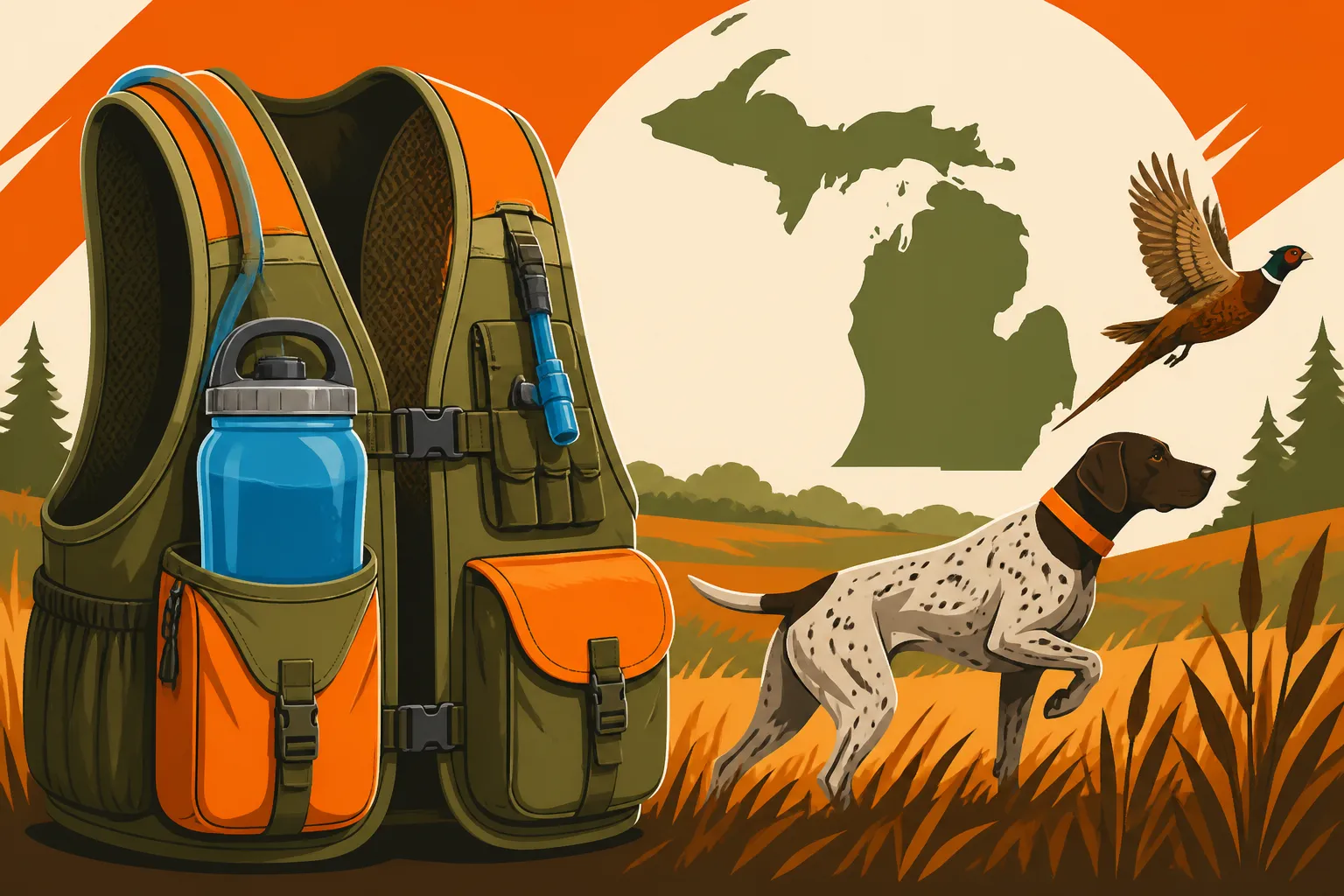
The core of these vests is, of course, the water carrying system. You'll generally find two main approaches: hydration bladders or dedicated water bottle pockets. Hydration bladders, often ranging from 1.5 to 3 liters, fit into a dedicated sleeve in the back of the vest, with a drinking tube routed over your shoulder and clipped to your sternum strap. This setup offers hands-free access to water, allowing you to sip while moving, which is incredibly efficient. Look for bladders with wide openings for easy cleaning and refilling, and robust bite valves that don't leak. Some vests even come with insulated sleeves for the bladder and tube, a nice touch on colder days to prevent freezing or on warmer days to keep water cool.
Alternatively, many vests offer multiple large pockets designed to securely hold water bottles, typically on the sides or lower back. While not hands-free, these are often quicker to access for refilling and can be preferred by those who dislike cleaning a bladder. The total capacity matters: for a full day of hunting, especially if you're carrying water for a dog, aiming for at least 2-3 liters total (either in a bladder or multiple bottles) is a smart move. Consider how GoHunt designs some of its gear with modular pouches, allowing you to customize your hydration setup based on your specific needs for that day's hunt.
Pockets, Game Bags, and Ergonomics
Beyond hydration, an upland vest needs to perform all the other functions of a traditional bird vest, only better. You need accessible shell pockets, ideally positioned high enough that they don't interfere with your stride but low enough for a quick reload. Look for divided pockets to keep different shot sizes or spent shells separate. Smaller zippered pockets for essentials like your phone, GPS, whistle, license, and First Aid Kits for Remote Upper Peninsula Ground are crucial.
The game bag is another central feature. It needs to be large enough to comfortably carry several birds without crushing them, and it should be easily accessible from the side or top for quick loading. Some vests feature expandable game bags or ones that zip open fully for easy cleaning – a feature you'll deeply appreciate after a successful day. But perhaps the most important aspect, and often overlooked, is the ergonomics and weight distribution. A well-designed vest distributes the load evenly across your shoulders, back, and hips, preventing fatigue and chafing. Adjustable shoulder straps, sternum straps, and a robust waist belt are essential for achieving a custom, snug fit. You don't want your vest bouncing or shifting as you navigate challenging cover like you'd find when Rabbit Hunting Thick Michigan Brush. The ability to adjust the vest's fit means you can accommodate different layers of clothing, from a light shirt on an early October day to a thick wool jacket during Layering for a Michigan Deer Stand in late season.
Durability and Materials for Michigan Cover
Michigan's upland cover is beautiful, but it's also tough on gear. Think briars, thorns, thick multiflora rose, and abrasive tree bark. A flimsy vest simply won't hold up. Look for vests constructed from durable, ripstop fabrics like heavy-duty nylon or Cordura. Reinforced stitching at stress points, robust zippers, and reliable buckles are non-negotiable. YKK zippers are often a good indicator of quality.
Many quality upland vests incorporate blaze orange panels for visibility, which is a Michigan requirement during certain seasons and always a smart choice for safety. Consider the material's water resistance as well; while you don't need a fully waterproof vest, something that can shed light rain or dew will keep your essentials drier. The wear and tear that comes from pushing through dense cover, whether it’s the tangled mess of an old clearcut or the thorny edges of a Running Beagles on Michigan Snowshoe Hares rabbit patch, demands materials that can withstand constant abuse. This isn't just about the vest's longevity; it's about not having your gear fail you in the middle of a remote hunt, leaving you scrambling to carry birds or losing essential items.
| Feature Category | Description | Considerations for Michigan Upland |
|---|---|---|
| Hydration System | Integrated bladder system (1.5L-3L) or external bottle pockets. | Bladder offers hands-free sipping; bottles easier to refill. Essential for long walks in varied terrain and for dog. |
| Game Bag | Rear pocket for carrying harvested birds. | Must be large, easily accessible, and preferably washable/zippable for cleaning after carrying muddy birds. |
| Pockets | Shell pockets, gear pockets, GPS/phone pocket. | Secure, easily accessible, and sufficient capacity for shells, calls, first aid, snacks, and dog essentials. |
| Fit & Comfort | Adjustable shoulder, sternum, and waist straps; padded back panel. | Essential for even weight distribution over miles of walking; prevents fatigue and chafing; accommodates layers. |
| Durability | Ripstop fabrics (Cordura, heavy nylon), reinforced stitching, quality zippers. | Withstands briars, thorns, thick brush, and general abuse of Michigan cover; longevity is key. |
| Visibility | Blaze orange panels or full blaze orange design. | Meets Michigan hunter orange requirements; critical safety feature, especially on public land. |
Choosing the Right Upland Vest for Your Michigan Hunts
Selecting the perfect upland vest with water capacity is a personal decision, as what works for one hunter might not be ideal for another. It really boils down to understanding your specific hunting style, the areas you frequent, and what you prioritize in your gear.
Matching Capacity to Your Hunt Style and Location
Your hunting grounds play a huge role in determining your vest needs. Are you primarily hunting small, private tracts in southern Michigan for pheasants, where you might only be out for a couple of hours and never far from your vehicle? Or are you venturing deep into the vast public lands of the Upper Peninsula or the northern Lower, often miles from any discernible trail, chasing grouse or woodcock all day long?
For shorter hunts or areas where quick access to a vehicle isn't an issue, a vest with a 1.5-liter bladder or capacity for two standard water bottles might suffice. However, for those ambitious full-day treks across vast swaths of Hunting Michigan State Forest Hunting, especially if you're bringing a dog, you'll want to lean towards a larger capacity, perhaps 2.5 to 3 liters. Consider the distance you plan to walk, the temperature, and whether you're also bringing water for a canine companion. A vest like some of the offerings GoHunt curates might have options for additional external pouches, allowing you to scale your water capacity up or down as needed for different types of hunts. You might also want to carry a bit more water if you plan on Scouting Michigan Public Land Before Season, as you're often covering ground just as diligently without the added excitement of birds.
Fit and Comfort: Trying Before You Buy
This cannot be overstated: try on the vest before you commit. What looks great online might feel completely different once it's on your body and weighted down with shells, birds, and water. Pay close attention to how the vest sits on your shoulders and hips. Are the shoulder straps wide enough to distribute weight without digging in? Does the waist belt comfortably cinch down to help bear some of the load?
Walk around, bend over, simulate mounting your shotgun – ensure the vest allows for a full range of motion and doesn't impede your swing. Consider how it feels with the layers you typically wear during Michigan's hunting seasons. A vest that feels fine with just a shirt might become tight and restrictive when worn over a heavy flannel or a soft-shell jacket. Adjustable straps are key, but the overall cut and design also matter. If you’re like me, constantly trying to find those pockets of less Hunting Pressure on Michigan State Land, you'll be walking a lot, so comfort is paramount. You need a vest that moves with you, not against you, ensuring your focus remains on the hunt, not on an uncomfortable piece of gear. Think about how a good pair of Boots for Walking Michigan Aspen Cuts makes a difference; the vest is just as critical for comfort over distance.
Considering Brands and Budget
Just like with any piece of hunting gear, there's a wide range of options when it comes to upland vests with water capacity, from budget-friendly choices to premium, feature-rich models. While it's tempting to opt for the cheapest option, remember that this is a tool that will endure significant abuse. Investing in a quality vest can save you money and frustration in the long run.
Reputable brands often use better materials, stronger stitching, and more thoughtful designs that improve comfort and longevity. Some companies specialize in upland gear, understanding the specific needs of bird hunters. GoHunt, for example, is known for its high-quality, durable hunting gear that often incorporates user feedback and innovative features, making their vests a strong contender for those serious about their upland pursuits. However, even on a tighter budget, you can find solid options by carefully checking reviews and construction details. Look for good warranty policies as well. Ultimately, the best vest is the one that fits you well, carries what you need, and stands up to the rigors of a Michigan upland season year after year. It's about finding that sweet spot between cost and performance that enhances your time afield, allowing you to truly enjoy every flush and every retrieve. Your Bird Dog Gear for Michigan Cover should also be considered in conjunction, ensuring all your canine's needs are also met.
Staying hydrated while chasing ruffed grouse through northern Michigan aspen, or pushing pheasants out of a swamp edge in the Lower Peninsula, is more than just a matter of comfort – it's crucial for your safety and the success of your hunt. A well-chosen upland vest with integrated water capacity is an investment that pays dividends in stamina, focus, and overall enjoyment of your time in Michigan's incredible outdoors. Choose wisely, stay hydrated, and enjoy every moment afield with your best four-legged friend.
Disclaimer
This article is for general informational purposes only and does not constitute professional advice. Laws, prices and regulations vary by location and change over time. Consult a qualified professional for guidance on your specific situation.