Fall Turkey Tactics in Michigan
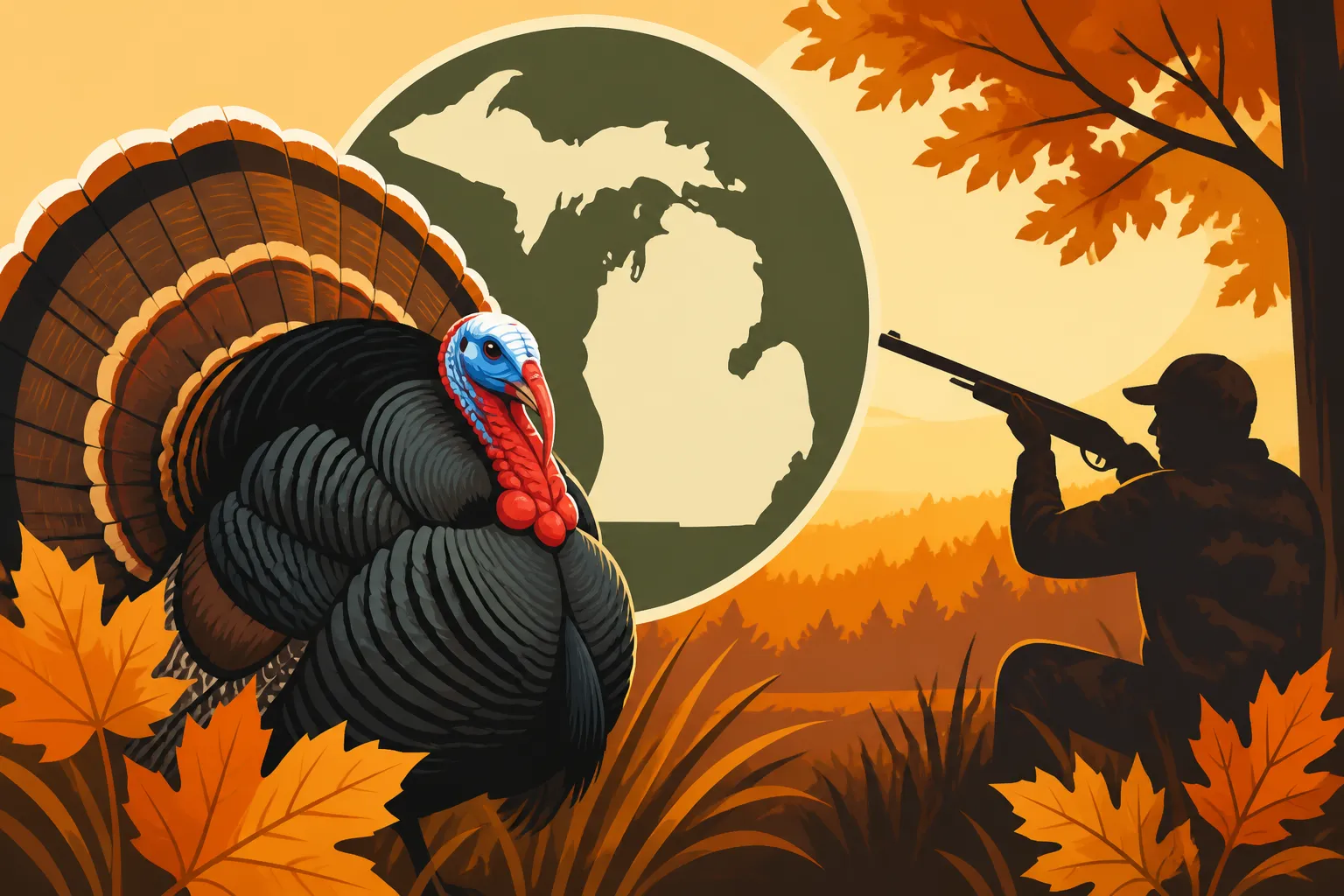
Fall turkey hunting in Michigan can feel like a completely different ballgame compared to the high-energy, vocal spring season. Gone are the days of eager gobblers strutting to every call; instead, you're often faced with larger, more cautious flocks that have their minds set on feeding and surviving, making finding and approaching them a significant challenge. This guide will walk you through proven strategies, from understanding fall turkey behavior to mastering the art of the "break-up," ensuring you're well-equipped to fill your tag during Michigan's autumn woods.
Understanding Fall Turkey Behavior and Flock Dynamics
Hunting wild turkeys in the fall requires a distinct shift in mindset from the spring. While spring is all about breeding and gobblers seeking hens, autumn is driven by survival: finding abundant food and maintaining flock security before winter truly sets in. This fundamental difference dictates everything from how turkeys move to how they respond (or don't respond) to calls.
The Dynamics of Fall Flocks
In the fall, turkeys typically gather into larger, more cohesive flocks. You'll often find mature hens with their poults from the spring, young jakes that haven't quite separated yet, and sometimes even groups of adult gobblers that stick together after the breeding season. These flocks are usually led by an experienced hen who knows where to find the best food and safe roosting spots. Her guidance makes the entire group incredibly wary and difficult to approach undetected.
Unlike the spring, where a lone gobbler might be desperate for company, fall turkeys are already surrounded by their kin. They have safety in numbers and don't feel the same urgency to investigate every sound. This means your calling efforts need to be much more subtle and strategic, often aiming to provoke curiosity or re-establish contact if a flock gets scattered, rather than luring a lovesick bird directly to you. Their priorities are food, security, and staying together.
The social structure within these flocks is quite strong. Everyone knows their place, and the older birds, especially the lead hens, are constantly on alert. They communicate with soft clucks, purrs, and yelps to maintain cohesion, and if one bird senses danger, the whole flock can vanish in an instant. Understanding these tight-knit family units is crucial for developing successful fall tactics, as it informs the "scatter and call" method so often employed.
Key Fall Food Sources
Michigan's diverse landscape offers a smorgasbord of fall food for turkeys, and identifying these prime locations is paramount to finding the birds. Acorns, especially from red and white oaks, are absolute magnets. Turkeys will spend hours scratching through leaf litter under an abundant oak stand, filling their crops with these high-energy nuts. If you find a good acorn crop, you're likely to find turkeys.
Beyond acorns, turkeys feast on a variety of other natural foods. Soft mast, like wild grapes, black cherries, dogwood berries, and sumac, can draw them in, particularly earlier in the fall season. In more agricultural regions of Michigan, they will readily move into fields to glean waste grain like corn and soybeans after harvest. Alfalfa fields can also be attractive for insects and tender greens. Knowing the Michigan Fall Turkey Season Dates will help you anticipate which food sources will be most prevalent when you are hunting.
Scouting is absolutely critical to pinpointing these feeding areas. Look for fresh turkey droppings, wing feathers, and distinctive "scratchings" where they've dug through leaves and dirt. These scratchings are typically broader and less defined than deer scrapes, often appearing as widespread disturbances under oak trees or along field edges. Finding these signs early in the season, even before you hunt, gives you a massive advantage. Utilizing mapping tools, like those found on GoHunt, can help you identify potential food sources and plan your approach long before you even step foot in the woods.
Effective Fall Calling Strategies
Forget the aggressive gobbling and excited cutting of spring; fall turkey calling is a different art form altogether. It’s less about mimicking a breeding bird and more about sounding like a lost or lonely member of a flock, or a confident hen trying to re-gather her scattered brood. The key is subtlety, realism, and understanding the context of the calls.
Locating Flocks with Calls
Unlike spring, where locator calls (like an owl hoot or crow caw) often get a gobbler to shock gobble, fall turkeys are generally much quieter. You might hear occasional clucks and yelps as they feed or purrs while they move, but loud, boisterous gobbling is rare. Therefore, your "locating" calls in the fall often need to mimic other turkeys. Soft, inquisitive hen yelps, contented clucks, or even the distinct "kee-kee run" of a lost poult can sometimes elicit a response from a nearby flock.
The kee-kee run is especially effective for younger birds. It's a series of high-pitched whistles, often followed by a short, soft yelp. This call mimics a lost juvenile turkey trying to find its way back to the flock, and it can often trigger a response from a concerned hen or other young birds. When using these calls, listen for soft answers, like subtle clucks or similar kee-kees, rather than expecting a loud, definitive response. Silence doesn't always mean no turkeys; it might just mean they're wary. Patience is your best friend when trying to pinpoint their location.
If you know where turkeys generally feed or roost, try broadcasting a series of contented clucks and purrs from a distance. Sometimes, the sound of other "happy" turkeys can draw in curious birds, or at least get them to give up their location with an answering call. Remember, fall turkeys are driven by social cohesion, so sounding like a part of a friendly flock can be more effective than trying to sound like a dominant bird.
Breaking Up and Re-Calling
The classic "scatter" or "break-up" method is arguably the most effective fall turkey tactic, and it directly capitalizes on their strong flocking instinct. The idea is to locate a flock, then rush them to make them scatter in all directions. The goal isn't to shoot them during the scatter, but to create chaos and separate the birds. Once they've scattered, their innate drive to regroup kicks in, making them much more responsive to your calls. You can learn more about this process in Breaking Up a Fall Turkey Flock.
After scattering a flock, immediately find a good setup spot, preferably with good visibility and cover, where you can call. Wait quietly for 15-30 minutes to let things settle down. Then, start calling softly, mimicking lost or lonely hen yelps, soft clucks, or the kee-kee run. The scattered birds, especially the young ones, will soon start calling to re-establish contact. When you hear a bird, try to mimic its call and direction to convince it that you are another lost turkey.
The beauty of this method is that it transforms wary, uncallable birds into birds eager to find their flock. It plays on their vulnerability. The first birds to come back are often young jakes or poults, but eventually, the dominant hens will start trying to gather their brood. Be prepared for birds to come from any direction, often very cautiously. This tactic works particularly well in the big woods of the Upper Peninsula or the extensive state forests where turkeys have plenty of room to roam, as discussed in Hunting Turkeys in Upper Peninsula Timber.
Decoy Usage in the Fall
While not as critical as in the spring, decoys can still play a role in fall turkey hunting, especially when combined with the scatter method. After breaking up a flock, placing one or two hen or jake decoys can provide a visual focal point for incoming birds. Turkeys, particularly the younger ones, are often looking for other turkeys as they try to regroup, and a realistic decoy can offer that reassurance. Check out Decoy Placement for Pressured Birds for more insights on effective decoy use.
If you're hunting without scattering a flock, decoys can still be useful, though you'll need to be more patient. If you've located a flock feeding in an open field, placing a few decoys at a distance might draw them closer out of curiosity. A lone hen decoy or even a jake decoy can sometimes convince a cautious flock that the area is safe. However, in heavily pressured areas or when hunting dense timber, decoys can sometimes alert birds if they spot something out of place.
When using decoys in the fall, realism and appropriate placement are key. Ensure they are visible but not overly exposed. A lone hen or a small group of hens and one jake can be effective. Avoid using aggressive gobbler decoys unless you are specifically targeting a group of bachelor gobblers, which is a less common fall scenario. Remember that fall turkeys are often focused on feeding and security, so a setup that looks calm and inviting can be more successful.
Hunting Diverse Michigan Habitats
Michigan's diverse landscape means turkey hunting opportunities vary greatly from the dense northern forests to the agricultural fields of the south. Adapting your tactics to the specific habitat you're hunting is crucial for success.
Hardwood Forests and Oak Ridges
In Michigan's extensive hardwood forests, particularly those with abundant oak stands, turkeys will concentrate their efforts on finding acorns. These areas often feature rolling hills, ridges, and valleys. Your primary strategy here should be scouting for fresh scratchings and droppings under mast-producing trees. Focus on south-facing slopes and ridge tops, which tend to warm up faster in the morning and offer turkeys good visibility.
Still-hunting can be incredibly effective in these environments, especially on crunchy, dry leaves. Moving slowly, stopping frequently to listen and scan, and imitating soft turkey sounds can help you locate feeding birds. When you do find them, try to get ahead of their travel path and set up an ambush. Alternatively, if you can sneak in close enough, a well-executed scatter can turn a quiet morning into a calling opportunity. These areas are often where you'll find larger, more widespread public hunting lands, so understanding Scouting Michigan Public Land Before Season is vital.
Remember that visibility in mature hardwoods can be quite open, so good camouflage and careful movement are essential. Use the terrain to your advantage, moving along draws or behind ridges to stay out of sight. A good pair of binoculars is invaluable for picking out feeding birds from a distance before they spot you.
Farmland Edges and Agricultural Fields
Southern Michigan's farm country offers a completely different fall turkey hunting experience. Here, turkeys often feed in open fields after harvest, gleaning waste grain, and then retreat to wooded edges or small woodlots for roosting and security. These birds can be highly visible but also incredibly wary due to frequent human activity. Turkey Tactics for Southern Michigan Farms dives deeper into these specific strategies.
Your approach to farm country turkeys might involve early morning glassing from a distance to pinpoint where flocks are leaving their roosts or entering fields. Once located, you can try to get ahead of them using cover (like hedgerows or standing crops) and set up an ambush along their travel corridor. Ground blinds are particularly effective in these open settings, allowing you to set up well in advance and remain concealed. Brushing in your blind to match the surrounding environment is key to not alarming the birds.
Calling in farm country can be tough if the birds are unscattered and feeding contentedly. However, if you manage to break up a flock near a woodlot, the re-calling process can be very productive. Be aware of property lines and always secure permission before hunting private land. The use of mapping apps can really help you navigate the patchwork of private and public land that often characterizes southern Michigan.
Public Land Challenges and Opportunities
Michigan boasts millions of acres of public land, offering fantastic fall turkey hunting opportunities, but it often comes with the challenge of hunting pressure. More hunters mean more wary birds, and turkeys on public land are often quick to shut down or move off if they feel disturbed. This means you need to work harder to find areas that see less pressure.
Look for less accessible spots: deep timber far from two-tracks, swamp edges, or parcels surrounded by private land where access might be difficult. Use GoHunt's mapping features or the Michigan DNR Mi-HUNT map to identify remote corners of state forests or less-visited state game areas. The reward for putting in the extra miles can be unpressured birds that are more responsive to calls.
When hunting public land, be patient and willing to cover ground. Still-hunting and scouting are your best friends. Don't be afraid to walk a few miles off the beaten path. If you do encounter other hunters, be courteous and consider moving to a different area to avoid interfering with their hunt or further pressuring the birds. Sometimes, finding smaller, isolated tracts of public land, often overlooked, can be more productive than large, well-known areas.
Essential Gear and Setup Considerations
Having the right gear and knowing how to set up effectively can make all the difference in fall turkey hunting, especially when dealing with cautious, flock-oriented birds.
Shotgun and Ammunition Choices
For fall turkeys, a 12-gauge or 20-gauge shotgun is the standard. The choice between gauges often comes down to personal preference for recoil and weight. What's far more important than the gauge is how your gun patterns with your chosen ammunition and choke. You want a dense, even pattern that puts enough pellets in a turkey's head and neck vital zone out to your effective range. More details can be found in Turkey Shotgun Gauge Choice.
Patterning your shotgun before the season is non-negotiable. Shoot various loads (e.g., #4, #5, #6 lead or equivalent tungsten super shot) through different chokes at realistic hunting distances (20, 30, 40 yards). You might be surprised at how much patterns can vary. Tungsten Super Shot (TSS) loads, while more expensive, offer superior density and performance, allowing for smaller gauges (like a 20-gauge) to achieve patterns previously only possible with a 12-gauge. Consider a tight choke, such as an extra-full or even a specialized turkey choke, to maximize pellet count at longer ranges. Learning about Turkey Chokes and Patterning is a game changer for ethical turkey hunting.
Blinds and Camouflage
Effective concealment is paramount when fall turkey hunting. Whether you're working a scattered flock or ambushing birds moving to a field, you need to be hidden from their keen eyesight. Full camouflage, from head to toe, is essential. Break-up patterns that mimic the natural environment are best. A face mask or face paint and gloves are non-negotiable to hide your skin.
Ground blinds are excellent tools for fall turkey hunting, especially in open country or when you need to sit for extended periods. They offer complete concealment and allow for some movement without spooking birds. Set them up well in advance if possible, and brush them in thoroughly with natural vegetation to help them blend into the surroundings. If you're hunting without a blind, ensure you're sitting with your back against a large tree, stump, or thick brush that breaks up your outline. Eliminate all possible reflective surfaces, and remain as still as a statue when birds are in sight.
Scouting Tools and Mapping
Modern technology has revolutionized how hunters scout and plan their trips. Mapping applications like GoHunt are invaluable for fall turkey hunting. These apps allow you to view aerial imagery, topographic maps, and public/private land boundaries right on your phone or computer. You can mark potential food sources, roosting areas, travel corridors, and even specific setup spots before you ever step foot in the woods. This is especially helpful when planning routes on large tracts of public land.
Using these tools, you can identify oak ridges, potential clear-cuts, or field edges that hold turkeys. You can also use them to navigate silently and efficiently to your chosen spots, minimizing disturbance. Beyond apps, traditional scouting with your boots on the ground is still vital. Look for fresh sign, listen for distant calls (especially in the evenings as birds fly up to roost), and observe turkey movements whenever possible. Understanding When Michigan Gobblers Go Quiet can help you adjust your calling and scouting methods to match their seasonal behavior.
Remember that turkeys can be incredibly mobile, especially in the fall, so consistent scouting and adaptability are key. A combination of digital mapping and on-the-ground reconnaissance will give you the best chance of consistently finding birds.
Fall Turkey Calling Overview
To help you remember the different calls and their primary uses in the fall, here's a quick reference table:
| Call Type | Sound Description | Primary Fall Use |
|---|---|---|
| Hen Yelp (soft) | Series of 3-5 high-pitched, plaintive "yelps" | Re-gathering scattered birds, sounding like a lost hen, general communication. |
| Cluck & Purr | Soft, contented "clucks" followed by rolling "purrs" | Sounding like feeding, relaxed birds; enticing curiosity from distant flocks. |
| Kee-Kee Run | Series of 3-7 high-pitched whistles, often ending in a soft yelp | Mimicking a lost young turkey; highly effective for calling in poults and jakes after a scatter. |
| Assembly Yelp | Louder, more insistent hen yelps, 5-10 in a series | Attempting to bring an entire scattered flock back together; used by dominant hens. |
| Tree Yelp (soft) | Very soft, sleepy yelps from roost | Confirming roosted birds at dawn; signaling wake-up calls (rarely aggressive). |
| Gobble | Loud, resonant "gobble" (rare in fall) | Primarily a locator call in spring; almost never used in fall except by a few jakes. |
For calling, whether it's Box Calls Versus Mouth Calls or slate and glass, practice makes perfect. The more realistic you sound, the better your chances of fooling a wary fall bird.
Disclaimer
Hunting is an inherently dangerous activity. Always prioritize safety, understand and follow all Michigan hunting regulations, and consider taking a certified hunter safety course. This guide is for informational purposes only and does not supersede official DNR regulations or professional instruction.