Hunting Small Private Tracts in Michigan
Many Michigan hunters face the tough reality of limited access, often relying on small parcels of private land rather than sprawling public forests. It can feel like an uphill battle to consistently find and harvest deer on just a few acres, especially when neighbors are also hunting and deer quickly learn human patterns. This guide will walk you through proven strategies for effectively hunting those small private tracts, turning acreage limitations into genuine opportunities.
The Unique Challenges of Small Private Tracts
Hunting a small piece of private land in Michigan comes with its own set of frustrations and unique hurdles. It’s not like having thousands of acres of public land to roam; every decision, every move, feels magnified. You're constantly aware of boundaries, neighbor activity, and the precise movements of the deer herd that may only use your property as a brief stopover.
Navigating Limited Space and Neighboring Pressure
One of the biggest headaches is simply the sheer lack of space. When you're dealing with 10, 20, or even 40 acres, you don't have the luxury of making a mistake without impacting the entire property. Deer often use these small parcels as bedding areas, travel corridors, or quick feeding spots before retreating to larger, safer havens. The challenge is trying to understand their movement patterns when they might spend so little time actually on your specific hunting grounds. It requires a meticulous approach to scouting and strategy.
Then there's the unavoidable factor of neighbor pressure. What your neighbors do on their land directly affects the deer on yours. If they're constantly running deer, baiting heavily (where legal), or hunting specific wind directions that push deer onto your property, you need to be aware of it. This isn't about complaining; it's about adapting. You might find that deer use your property as a sanctuary during high-pressure periods, especially if your piece offers dense cover or is less disturbed. This makes understanding how deer react to Hunting Pressure on Michigan State Land incredibly important, even on private ground. Sometimes, a small, overlooked parcel can be a gem precisely because it's a quiet refuge from surrounding activity. It’s a good idea to chat with neighbors if you can, understand their hunting habits, and potentially coordinate if it benefits everyone.
Understanding Deer Movement on Confined Parcels
Deer on small tracts are often pressured, highly wary animals. They quickly learn the boundaries and safe zones. Their movement patterns are typically much more defined and predictable than deer on vast, unpressured landscapes. They might only pass through your land at specific times, usually at dawn or dusk, using thick cover to get from bedding to feeding or vice versa. These movements are often dictated by security and efficiency.
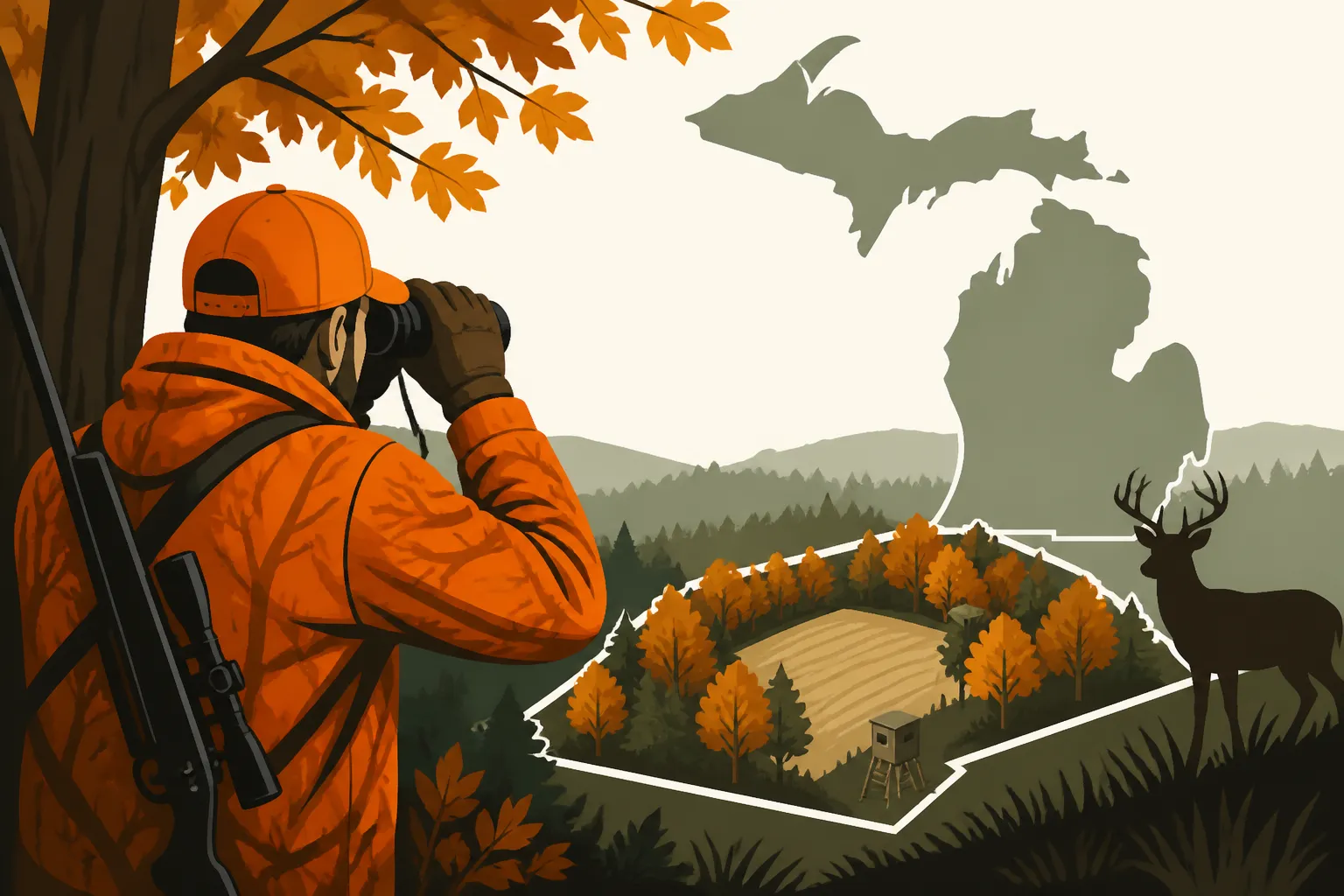
The key here is observation. You need to become an expert at reading sign. Look for pinch points, natural funnels created by terrain or cover, and subtle travel corridors. Deer aren’t going to just wander aimlessly on a small piece of ground. They'll follow the path of least resistance or the path of most security. This could be a ditch line, a hedgerow, the edge of a small woodlot, or even a subtle rise in topography. Pay close attention to trails leading on and off the property. These entry and exit points are critical. Often, a small patch of timber surrounded by open fields, even if it's only 5 acres, can be a major bedding hub because it offers dense thermal cover and security that the bigger, open fields lack. Sometimes, the most valuable part of your property isn't a food plot, but a hidden, gnarly thicket that provides deer with a secure daytime hideout.
Maximizing Your Chances on Limited Acreage
Just because you don't own a thousand acres doesn't mean you can't be a successful hunter. It just means you need to be smarter, more strategic, and pay even closer attention to detail. Every decision from scouting to stand placement needs to be deliberate and well-executed.
Intensive Scouting and Precision Stand Placement
On small parcels, scouting isn't just a suggestion; it's your absolute superpower. Every square foot matters. You need to walk every inch of that property, looking for rubs, scrapes, fresh tracks, and bedding areas. Don't just focus on the obvious spots. Often, the hidden gem is a small pocket of thick brush that looks uninviting to you but is a perfect deer bed. Use tools like the DNR's Scouting With Michigan's Mi-HUNT Map or commercial mapping software like GoHunt to analyze topography, cover, and potential travel routes before you even step foot on the property. These digital tools allow you to identify potential funnels or bedding areas that might not be obvious from the ground, saving you time and minimizing disturbance. They are invaluable for Reading Aerial Photos for Swamp Deer or understanding how deer might use subtle terrain features.
Once you’ve identified potential deer movement, your stand placement needs to be surgical. You can't afford to have multiple "okay" setups. You need one or two perfect setups that capitalize on specific wind directions, entry/exit routes, and known deer patterns. Think about prevailing winds and thermals. Deer are masters of using these to their advantage, especially in flat, agricultural areas. Consider how the wind will carry your scent, not just to the stand location, but along the deer's likely travel path. A poorly placed stand, even by just a few yards, can blow an entire hunt on a small tract because you have nowhere else to go. Often, the best stand locations are on the edges of your property, intercepting deer as they move on or off. You might want to consider Treestand Setups in Michigan Hardwoods if your property has some timber, or utilize a ground blind if you're hunting an open field edge, which is often the case on smaller agricultural tracts. For such a setting, Using a Ground Blind on Michigan State Land offers practical advice that easily transfers to private land.
Strategic Entry, Exit, and Low-Impact Hunting
This is perhaps the most critical aspect of hunting small private tracts. Every time you walk in or out of your stand, you risk alerting deer and pushing them off your property. If deer feel pressured, they'll simply move to the neighbor's land or become entirely nocturnal. Your goal should be to be as undetectable as possible, treating every entry and exit as if you're stalking a wary buck.
Plan your entry and exit routes meticulously. Can you use a ditch, a hedgerow, or a field edge out of sight of common deer travel paths? Always approach with the wind in your favor, or at least crosswind, to avoid blowing your scent into bedding areas or travel corridors. Understanding Entry Routes on Flat Michigan Ground is especially important here. If you have to hunt an evening sit, consider how you'll get out without bumping deer in the dark. Sometimes, waiting a bit longer after dark for deer to clear out is worth it to maintain the integrity of your hunting spot.
Furthermore, adopt a low-impact hunting style. Don't overhunt your property. If you hunt the same stand day after day, deer will quickly pattern you and avoid the area. Let the land "rest" between hunts. Think about the specific conditions that make a stand productive (e.g., a specific wind direction for a particular feeding area) and only hunt that stand when those conditions are ideal. This approach, similar to tactics used when Hunting Deer Without Bait in Michigan on public land, focuses on natural deer movement and minimizing human disturbance, which is paramount on small tracts.
Essential Gear and Strategies for Success
Having the right tools and mindset makes all the difference when you're hunting smaller, more intimate pieces of land. It's not just about what you carry, but how you use it strategically to outsmart wary Michigan whitetails.
Utilizing Technology and Minimalist Gear
Technology can be a huge asset on a small property. As mentioned, mapping apps like GoHunt are indispensable for analyzing terrain, identifying property lines, and marking sign. They allow you to understand the lay of the land without over-pressuring it by walking every inch. The detailed satellite imagery and property line overlays can literally show you where deer are most likely to enter or exit your land, and where natural funnels exist. Trail cameras, used sparingly and strategically, can provide invaluable intelligence on deer movement patterns, helping you pinpoint exactly when and where deer are entering or exiting your property. Just be mindful of local regulations regarding trail camera use and be ethical about camera placement so as not to disturb deer.
When it comes to gear, think minimalist. On small tracts, you often don't need a huge pack full of gadgets. Focus on essentials: your weapon, calls (if you use them), binoculars (even a compact pair can make a difference in identifying deer in dense cover), and comfortable clothing suited for sitting quietly. If you plan to use a ground blind, ensure it's well-brushed in and set up weeks in advance to allow deer to get used to it. On small parcels, you're often closer to deer, so every bit of scent reduction and camouflage helps.
Adapting to Seasonal Changes and Food Sources
Deer behavior, even on small tracts, changes dramatically throughout the seasons. In early archery, deer are often still in their summer patterns, hitting specific food sources. As the rut approaches in late October and November, bucks will start cruising for does, making them more susceptible to movement across property lines. Later in the season, after the firearm opener, deer on small properties often become nocturnal or seek the densest thermal cover they can find. Understanding Late-Season Food Sources for Whitetails can be crucial for connecting with a deer when snow is on the ground.
Your strategy needs to evolve with these changes. In early season, focus on food sources like acorns, apples, or small plots if you have them. During the rut, concentrate on travel corridors and pinch points that connect bedding and feeding, or that deer use to check for does. Applying strategies from Hunting the Pre-Rut in Late October can be highly effective here. After heavy pressure, a small, thick swamp edge or cedar thicket on your property might become the most valuable real estate, offering sanctuary to pressured deer. This is where Wind and Thermals on Michigan Ridges and other terrain features become even more critical for predicting deer movement. If you're fortunate enough to have a good water source on your property, that can also be a magnet for deer, especially in dry periods.
Dealing with the Harvest and Post-Shot Logistics
Successfully taking a deer on a small private tract brings its own set of considerations. The first, and most important, is ethical shot placement. You want to ensure a quick, clean kill to minimize tracking distance. On a small property, a deer running onto a neighbor's land without permission can create an uncomfortable situation. While Michigan law generally allows you to retrieve game from another's property if it's visibly dead and you're unarmed, it's always best to have prior permission to avoid any misunderstanding. This is why cultivating good neighborly relations, akin to Knocking on Doors in Michigan Farm Country to gain access, is so important.
Once the deer is down, the logistics of getting it out become paramount. If you're hunting an agricultural area, you might have relatively easy access for a deer cart or ATV. However, if your small tract is thick and swampy, it can be a real workout. Having a plan for Field Dressing a Deer in Cold Weather or even warmer weather and how to transport it is crucial. A good set of game bags and a cooler, especially in early season, can be invaluable to ensure proper meat care. Don't forget to report your harvest according to Michigan DNR regulations!
| Aspect | Challenge on Small Tracts | Solution for Success |
|---|---|---|
| Space | Limited area, quick deer movement on/off property. | Focus on pinch points, funnels, property edges. |
| Pressure | High neighbor activity can push deer, make them nocturnal. | Offer sanctuary (thick cover, low intrusion), scout neighbor habits. |
| Visibility | Less room for error in stand placement. | Intensive, precise scouting; micro-locate stand sites. Use GoHunt for analysis. |
| Entry/Exit | Easy to spook deer on the way in/out. | Plan stealthy routes, use natural cover, hunt specific winds. |
| Adaptability | Deer patterns change with pressure and seasons. | Vary tactics seasonally, rest stands, understand food sources. |
| Retrieval | Risk of deer running onto unpermitted land. | Aim for ethical shots, establish neighbor relations, have a retrieval plan. |
Disclaimer
This article is for informational purposes only and does not constitute professional hunting or legal advice. Always consult the latest Michigan Department of Natural Resources (DNR) regulations and local laws before hunting. Ensure you have all necessary licenses and permissions for any property you hunt.