Michigan Legal Shooting Hours
One of the most common anxieties hunters face, especially when hitting the woods in unfamiliar areas or for new seasons, revolves around those critical legal shooting hours. It's so easy to get mixed up with daylight saving, different seasons having slightly nuanced rules, or just the sheer pressure of wanting to do everything by the book. This guide is here to clear up all that confusion, breaking down Michigan's legal shooting hours so you can hunt confidently and legally, from the first legal light to the very last.
Understanding the Basics of Michigan's Legal Shooting Hours
Michigan's Department of Natural Resources (DNR) sets specific legal shooting hours to ensure fair chase, promote ethical hunting, and, most importantly, provide a clear framework for safety. You wouldn't want to mistakenly take a shot in low light, only to realize you were outside the legal window. This isn't just about avoiding a ticket; it's about making sure you can properly identify your target and have a safe backdrop, especially during those magical, yet often dim, periods of dawn and dusk.
Why Shooting Hours Matter
The legal shooting hours aren't arbitrary. They're scientifically determined based on ambient light conditions, ensuring that hunters have enough visibility to make ethical and responsible shots. Imagine the frustration of having a perfect setup only to realize you've missed your window by minutes, or worse, the sinking feeling of taking a shot just outside the legal time. It's a fundamental part of hunter safety, ensuring we can clearly distinguish between game animals and non-game animals, or even other hunters, which is paramount in any hunting situation. Adhering to these rules shows respect for the game, for other hunters, and for the regulations that govern our cherished traditions here in Michigan.
General Rules: A Half-Hour Before/After Concept
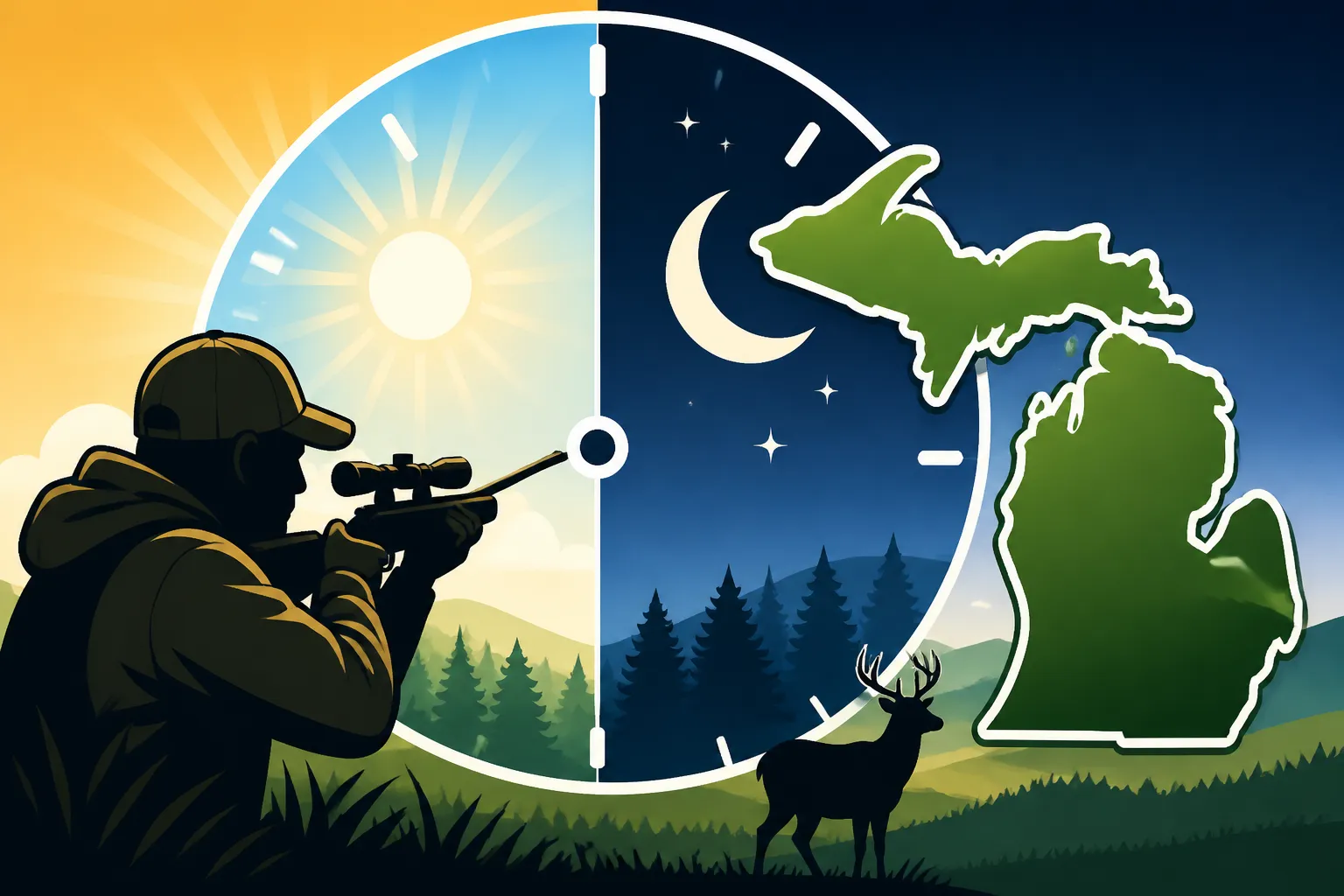
For most game species in Michigan, the general rule of thumb for legal shooting hours is a straightforward concept: one half-hour before sunrise to one half-hour after sunset. This applies to a vast majority of hunting seasons, including many deer seasons, small game, and some furbearers. However, it's crucial to understand that "sunrise" and "sunset" aren't just guesses based on the sky. These are official times, calculated for specific locations and dates.
This half-hour buffer is designed to give hunters adequate light while also recognizing that game animals are most active during these twilight periods. It's often when a big buck slips out of the thick cover or a turkey struts into a field. If you've spent any time Hunting the Michigan Rut in November, you know those first and last minutes of legal light are absolutely prime time. Missing out because of uncertainty about the exact minute would be a real shame.
Daylight Saving Time and Its Impact
Ah, Daylight Saving Time (DST). It's the bane of many a hunter's existence when it comes to keeping track of the clock. Michigan observes DST, meaning clocks "spring forward" in March and "fall back" in November, often right in the middle of our most popular hunting seasons. This shift directly impacts how you calculate your legal shooting hours.
When clocks "fall back" in early November, suddenly that "half-hour before sunrise" feels a whole hour earlier by the clock. And that "half-hour after sunset" comes an hour sooner. This can throw off your internal clock and your hunting schedule significantly. Conversely, when clocks "spring forward" in March, your morning hunts might start an hour later by the clock, and your evening hunts will extend an hour longer. It's absolutely vital to be aware of these changes and adjust your calculations accordingly. Always base your legal shooting hours on the current local time, not some generalized assumption.
Practical Application: Calculating Your Daily Shooting Window
Knowing the general rule is one thing, but actually putting it into practice with confidence requires a bit more. You can't just eyeball it; you need concrete, official times. Relying on the official sunrise and sunset times provided by the DNR or reputable weather services is the only way to ensure you're always within the legal window.
Using the Official Sunrise/Sunset Tables
The Michigan DNR provides official sunrise and sunset tables. These tables are usually broken down by month and geographical region within the state, as sunrise and sunset times can vary by a few minutes from, say, Detroit to Marquette. You can often find these printed in the annual hunting digests or readily available on the DNR's website. They'll typically list the official sunrise and sunset for each day of the month.
To calculate your legal shooting hours:
- Morning: Take the official sunrise time and subtract 30 minutes. That's when you can legally start shooting.
- Evening: Take the official sunset time and add 30 minutes. That's when you must cease shooting.
For example, if the official sunrise is 7:00 AM, your legal shooting begins at 6:30 AM. If sunset is 5:30 PM, you must stop shooting by 6:00 PM. It seems simple, but having those official times in hand, either physically or digitally, is your bedrock.
Leveraging Technology for Accuracy
In today's world, we're fortunate to have technology that makes this process incredibly easy. Most modern smartphone weather apps will display sunrise and sunset times for your exact location. However, for hunters, specialized apps are often more reliable and provide critical context. Apps like GoHunt are fantastic for this, as they often integrate sunrise/sunset data directly into their mapping and planning tools, even accounting for your specific GPS coordinates. This means you get hyper-accurate times for your exact spot in the woods, not just a general city.
Many hunting-specific apps will also automatically calculate the legal shooting window for you, displaying the precise start and end times right on the screen. This is a game-changer, especially when you're deep in the woods or trying to plan your Cold Weather Sitting Strategy around available light. Just remember to ensure your phone's clock is correctly updated for Daylight Saving Time if applicable. The Michigan DNR also has its own Michigan DNR Hunt Fish App which often provides this information, making it even easier for Michigan hunters to stay compliant.
Personalizing Your Hunting Schedule
Even with official times, how you apply them to your hunt is personal. For instance, if you're Hunting Michigan Cedar Swamps, the light penetration might be so low that "legal shooting light" feels much darker than in an open field. You might choose to be in your stand or blind well before legal shooting light to allow the woods to settle, and then not even consider a shot until it's clearly bright enough for your personal comfort and ethical standards, even if it's past the legal start time.
Conversely, knowing the precise end time allows you to maximize those last precious minutes. Many big bucks are taken in the last 15 minutes of legal light. Having a quality optic with Low-Light Performance in a Scope can make all the difference, but the critical factor remains the legal time. Always err on the side of caution. If you're unsure if you have enough light, it’s always best to wait for a clearer opportunity.
Specific Scenarios and Exceptions to General Rules
While the "half-hour before/after" rule is a solid foundation, Michigan hunting regulations do include some critical exceptions and specific rules for certain game species or hunting methods. It's these nuances that can trip up even experienced hunters, making it essential to consult the current Michigan Hunting Digest for details.
Deer Hunting: Archery, Firearm, and Muzzleloader Differences
For the most part, Michigan's deer seasons adhere to the standard half-hour before sunrise to half-hour after sunset rule. This holds true for Michigan's November Firearm Deer Season, as well as the initial and reopened phases of Michigan Archery Deer Season Dates.
However, it's always worth a double-check, especially if you're participating in special hunts or specific zones. For example, during the Michigan Muzzleloader Season Dates, the general rule typically applies, but confirming in the digest is part of good preparation. There are also specific "Youth Hunter" or "Liberty Hunt" weekends where additional considerations might apply, so always refer to the latest regulations.
Small Game and Furbearer Considerations
Many small game species, like rabbits and squirrels, generally follow the same half-hour before/after rule. However, some furbearer hunting, particularly for species active at night, might have different regulations. For instance, certain furbearers like coyotes might be hunted at night, but usually with very specific restrictions on weapon types, lighting, and permits. You can find these details within the Michigan Small Game Seasons and Bag Limits and furbearer sections of the digest.
For hunters Coyote Calling in Michigan Winter, the ability to hunt at night is often a key tactic, but it comes with strict legal parameters regarding artificial light and firearm types. This is a perfect example of how the general rule has significant exceptions that absolutely must be understood.
Waterfowl and Special Hunts
Waterfowl hunting is one of the most significant departures from the general shooting hours. For ducks, geese, and other migratory birds, legal shooting hours typically begin at "one half-hour before sunrise" but end at sunset. This means there is no half-hour after sunset for waterfowl. This distinction is critically important for duck and goose hunters, as being caught shooting past sunset can result in serious penalties.
This regulation exists partly because waterfowl often congregate in large numbers at feeding and roosting sites, and extending shooting hours into deep twilight could create an unfair advantage or lead to unsafe shooting conditions. If you're planning on Great Lakes Waterfowl Hunting in Michigan or pursuing geese in a field, this is a rule you simply cannot afford to misunderstand. Always verify the specific rules for your zone and species in the current Michigan Waterfowl Seasons and Zones digest.
Night Hunting for Predators
Michigan does allow night hunting for certain predators, primarily coyotes, with specific regulations. This is a specialized type of hunting that requires thorough knowledge of the rules. Generally, for night hunting coyotes, artificial lights are allowed under certain conditions, and the season is open year-round. However, there are restrictions on using artificial light from a vehicle or on public lands unless otherwise specified.
It's not as simple as just heading out after dark; you need to understand the legal firearms for night hunting, the rules for using spotlights or thermal/night vision devices (where legal), and any specific county or zone restrictions. Always, always check the current hunting digest for the most up-to-date and specific regulations regarding night hunting, as these can be updated frequently.
Tools and Tips for Staying Legal and Safe
Even with all the information, it's easy to get complacent or make a mistake. Having reliable tools and adopting good habits can make all the difference in ensuring you're always within Michigan's legal shooting hours.
Checking DNR Resources
Your primary resource should always be the official Michigan DNR website and the current year's Michigan Hunting and Trapping Digest. These are updated annually and contain the most accurate and legally binding information. Don't rely solely on information from forums, social media, or even well-meaning friends. Laws can change, and what was legal last year might not be this year.
Many hunters grab a physical copy of the digest from a local sporting goods store or DNR office. It's a handy reference to have in your pack. The DNR's website also provides downloadable PDF versions, which you can save to your phone or tablet for offline access in the field. Double-checking specific rules for Upper Peninsula Deer Yarding and Winter Movement or during the Muzzleloader Deer Hunting in Michigan is a smart habit to cultivate.
Importance of Your Watch and Phone Settings
This might sound incredibly basic, but ensure your watch and phone are consistently showing the correct time, especially around the Daylight Saving Time changes. Modern smartphones usually update automatically, but if you're using an older device or a non-connected watch, manually adjusting it is vital. An old digital watch that hasn't been reset for DST can easily put you an hour off, which means unknowingly violating shooting hour rules.
Consider setting alarms on your phone or watch for 30 minutes before the legal end of shooting light. This serves as a gentle reminder to start wrapping things up, allowing you to prepare for your exit and avoid any last-minute rushes or temptations to push past legal limits. Some hunters even set an alarm for when they can legally start shooting in the morning, giving them a clear cue.
Setting Up for Low-Light Opportunities
Since legal shooting hours often coincide with the dimmest parts of the day, having the right gear and strategy for low light is critical. This includes scouting your hunting area thoroughly to understand shot angles and potential backdrops in varying light conditions.
- Optics: As mentioned earlier, quality binoculars and rifle scopes with good light-gathering capabilities can extend your effective ethical hunting time within the legal window. You need to be able to clearly identify your target, ensure it's a legal animal (especially with Michigan Antler Point Restrictions by DMU), and confirm your shot placement.
- Stand Placement: When you're Treestand Setups in Michigan Hardwoods, think about how the light will hit your shooting lanes at dawn and dusk. Are there dense shadows that will obscure your view? Can you shift your setup slightly to catch more ambient light?
- Exit Strategy: Plan your entry and exit routes carefully, especially for those evening hunts. Having a reliable headlamp is essential, not just for walking in the dark but also for field dressing if you're successful. You don't want to fumble around in the dark after the legal shooting hours have passed. Always carry a Headlamps for Walking Out After Dark to ensure a safe exit.
| Hunting Category | General Rule (Sunrise/Sunset) | Specific Hours | Notes |
|---|---|---|---|
| Deer (Archery, Firearm, Muzzleloader) | 1/2 hour before sunrise to 1/2 hour after sunset | Varies daily based on official sunrise/sunset | Consult DNR tables or hunting apps like GoHunt. |
| Small Game (Rabbit, Squirrel, Pheasant, Grouse) | 1/2 hour before sunrise to 1/2 hour after sunset | Varies daily based on official sunrise/sunset | Generally follows the standard rule. |
| Furbearers (Coyote – day hunting) | 1/2 hour before sunrise to 1/2 hour after sunset | Varies daily based on official sunrise/sunset | Night hunting for coyotes has separate, specific rules. |
| Waterfowl (Ducks, Geese, etc.) | 1/2 hour before sunrise to sunset | Varies daily based on official sunrise/sunset | Important: Ends at sunset, not 1/2 hour after. |
| Turkey | 1/2 hour before sunrise to 1/2 hour after sunset | Varies daily based on official sunrise/sunset | Applies to both spring and Hunting Michigan's Fall Turkey Season. |
| Predators (Coyote – night hunting) | No specific general rule, varies | Can be open 24 hours under specific conditions and weapons | Consult digest for artificial light, weapon, and area rules. |
Staying within the legal shooting hours is a cornerstone of responsible hunting in Michigan. By understanding the rules, utilizing available technology like GoHunt and the DNR's resources, and planning your hunts with light conditions in mind, you can ensure every minute you spend afield is both productive and compliant. Always double-check the current digest, and when in doubt, always default to safety and legality.
Disclaimer
The information provided in this guide is for general informational purposes only and is not intended as legal advice. Hunting regulations in Michigan can change annually and may have specific nuances based on location, species, and season. Always consult the official Michigan Department of Natural Resources (DNR) website and the most current Michigan Hunting and Trapping Digest for the definitive and legally binding regulations before engaging in any hunting activities. Adherence to all local, state, and federal laws is the responsibility of the hunter.