Cougar Confirmations in Michigan
For years, the whispers have spread through Michigan’s hunting camps and along the two-tracks: "I saw a cougar." For just as long, these claims have often been met with a mix of awe and deep skepticism, leaving many outdoor enthusiasts wondering if they're seeing things or truly encountering one of North America's most elusive predators. This guide aims to cut through the folklore and delve into the confirmed cougar sightings in Michigan, exploring what the science tells us about their presence and what it means for those of us who cherish our time in the woods.
The Mystery of Michigan Cougars: A Persistent Question
There’s something about the idea of a cougar roaming the Michigan woods that captures the imagination, isn't there? For decades, it felt like one of those campfire tales – exciting, a little bit scary, but probably just a trick of the light or a misidentified bobcat. Yet, the stories persist, fueled by blurry photos, fleeting glimpses, and an undeniable wildness in certain remote corners of our state. The sheer elusiveness of these animals, coupled with their incredible ability to travel vast distances unnoticed, makes the "cougar question" a truly captivating one for anyone who spends serious time in the Michigan outdoors. It’s a debate that pits passionate eyewitness accounts against the cautious, scientific approach, and understanding both sides is key to appreciating this unique wildlife mystery.
Historical Context of Cougars in Michigan
To truly grasp the current situation, we need to look back a bit. Historically, cougars, also known as mountain lions or pumas, were indeed native to Michigan. They roamed freely across the entire continent, including our own forests and wilderness areas, until European settlement brought significant habitat loss and intense hunting pressure. By the early 1900s, cougars were largely considered extirpated from Michigan, meaning they were no longer a breeding, self-sustaining population within the state. For nearly a century, any sightings were generally dismissed as mistaken identity or escaped pets. This long absence created a deep-seated belief among many that cougars simply aren't here, making current confirmations all the more surprising and, for some, harder to accept. It's a testament to the resilience of nature, and perhaps a warning about how easily we can lose a species from our landscape.
The Public's Fascination and Skepticism
It's a tough spot for anyone who believes they've seen a cougar. You're often met with polite nods, maybe a "are you sure it wasn't a bobcat?" or even outright disbelief. This skepticism isn't unwarranted; after all, for generations, the official stance was that they weren't here. But imagine the thrill, the undeniable rush of seeing such a magnificent creature, only to have your experience questioned. This dynamic creates a real divide, where the public's fascination with these apex predators clashes with the scientific community's need for irrefutable evidence. Every grainy photo or distant video clip becomes a source of intense debate, highlighting both our desire for Michigan's wildness to return and our need for clear, verifiable facts. This is why official confirmations are so important – they bridge that gap and start to change the narrative from "if" to "how many."
Confirmed Cougar Sightings: What the Data Shows
Despite the historical skepticism, the reality is that cougars are present in Michigan. The Michigan Department of Natural Resources (DNR) has, over the past couple of decades, confirmed numerous sightings. These aren't just anecdotes anymore; they're backed by solid evidence like trail camera photos, tracks, scat, and even DNA analysis from hair or kill sites. It’s a slow process, moving from a widespread belief of "none at all" to an acceptance of "some are definitely passing through." The increasing number of these confirmations has begun to reshape our understanding of Michigan's wildlife landscape, prompting new discussions about conservation and coexisting with these powerful animals. It also speaks to improvements in technology like trail cameras, which allow for more reliable documentation from remote locations.
The DNR's Verification Process
The DNR doesn't take cougar confirmations lightly. When a sighting is reported, especially if there's physical evidence, a team of wildlife biologists steps in. They'll meticulously analyze photos, casts of tracks, or genetic material. It's not enough for something to look like a cougar; it has to meet stringent criteria to be officially confirmed. This might involve comparing track dimensions to known cougar prints, or sending hair samples to a lab for DNA analysis. This rigorous process is crucial for maintaining scientific credibility and ensuring that confirmed sightings are indeed accurate. While it can be frustrating for someone who is absolutely convinced they saw one, this methodical approach helps ensure that the data we rely on is solid, helping us understand the true Michigan deer population estimate and other prey animals in relation to potential predators.
Where Confirmed Sightings Have Occurred
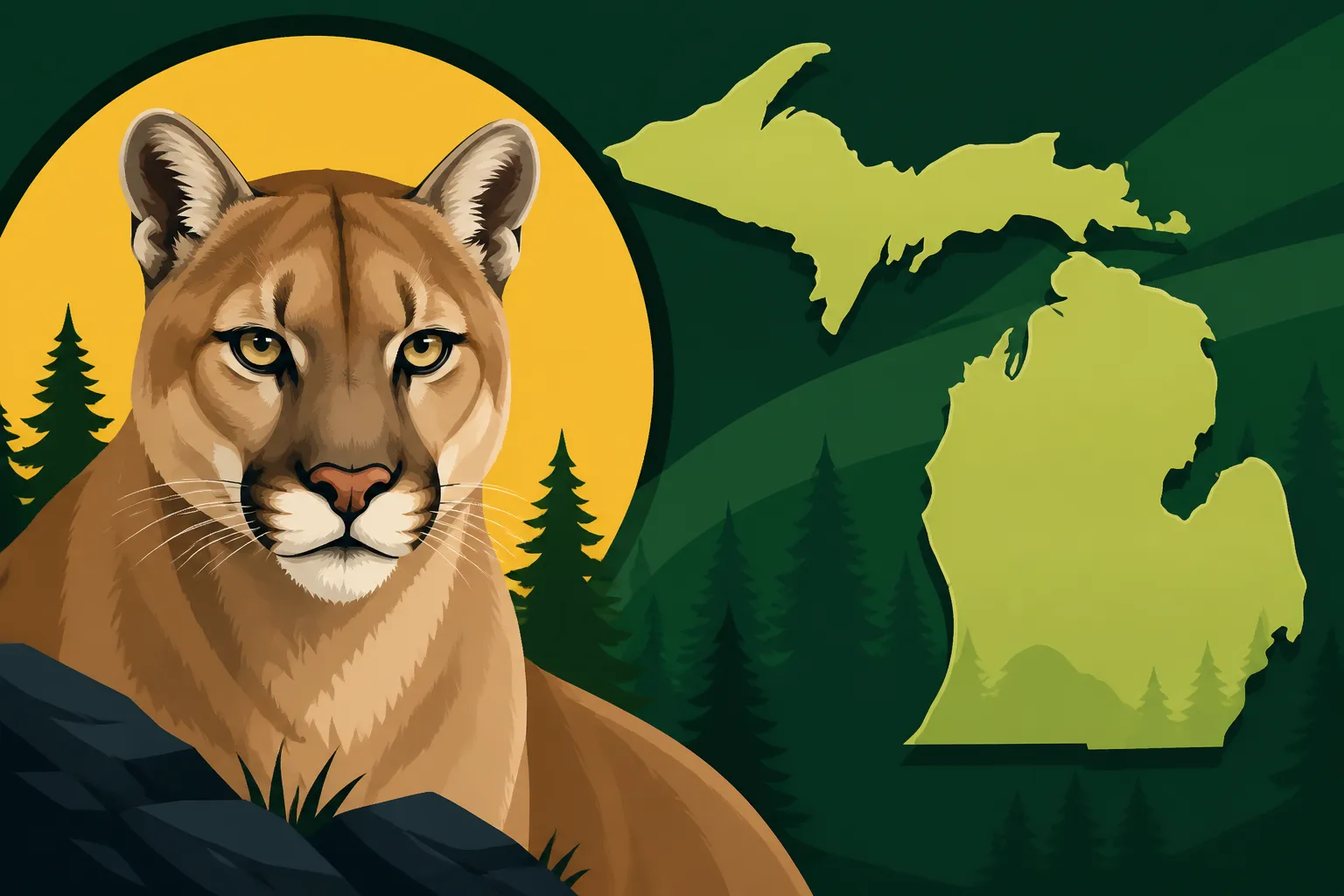
While individual sightings can pop up almost anywhere, the vast majority of confirmed cougar activity in Michigan has been concentrated in the Upper Peninsula. The U.P., with its expansive forests, remote wilderness, and lower human population density, provides the kind of habitat where a cougar can truly thrive undetected. We're talking about places far from the typical suburban sprawl, deep in areas where you might also find a healthy Michigan black bear population or healthy herds of deer and even Michigan's elk herd size and history. While there have been a handful of credible (though very rare) sightings in the northern Lower Peninsula, the Upper Peninsula is where these majestic cats seem to be making a more consistent, albeit still sparse, presence. This geographical distribution strongly suggests a pattern of transient animals dispersing from established populations to the west, rather than a hidden, long-standing Michigan population suddenly revealing itself. For those keen on scouting, using resources like a good mapping tool or an app like GoHunt can help you analyze terrain and identify remote areas that might offer the kind of cover these animals prefer.
Here's a general overview of where cougar confirmations have been most frequent:
| Region | Confirmed Sightings (General Trend) | Typical Evidence |
|---|---|---|
| Upper Peninsula | Most numerous and consistent | Trail camera photos, tracks, scat, DNA |
| Northern Lower Peninsula | Very rare, isolated incidents | Trail camera photos, sometimes tracks |
| Southern Lower Peninsula | Extremely rare, often escaped pets | Rarely verified as wild, typically human-associated |
Understanding the "Confirmation"
It's important to understand what a "confirmed" cougar sighting actually means in Michigan. It doesn't necessarily mean a breeding pair has set up shop, or that there's a burgeoning population. Often, a confirmation signifies that an individual cougar has been documented passing through an area. These are frequently young males, striking out from established territories in states like Wisconsin, Minnesota, or even further west in South Dakota, searching for new hunting grounds and potential mates. Their journey can cover hundreds, even thousands, of miles. So, while a confirmed sighting is exciting and undeniable proof of their presence, it's more about documenting these transient individuals than indicating a permanent resurgence of a breeding population within our state borders. It’s like a tourist visiting; they’re definitely here, but they might not stay.
Are They Breeding Populations or Transient Animals?
This is the million-dollar question that wildlife biologists are constantly trying to answer. The distinction between a solitary, wandering animal and a self-sustaining, breeding population is monumental. For Michigan, all the current evidence points overwhelmingly to the former. While it's thrilling to imagine a secret den of kittens tucked away in the deepest recesses of the U.P., the scientific data collected so far just doesn't support that idea. Understanding this nuance is critical for setting realistic expectations and informing sound wildlife management strategies.
The Difference Between a Sighting and a Resident Population
A single cougar confirmation, or even several over time, is very different from proving a resident, breeding population. A resident population implies that males and females are successfully reproducing, raising young, and contributing to a growing or stable local population. This would require multiple sightings of females with cubs, repeated documentation of the same individuals in a specific area over years, and genetic evidence of multiple generations. So far, Michigan’s confirmed cougar sightings primarily consist of individual animals, almost exclusively males, moving through. While each confirmation is exciting, it still leaves us waiting for that irrefutable evidence of a mom and cubs, which is the gold standard for proving a self-sustaining population. This is why organizations involved in wildlife tracking, like GoHunt, emphasize the importance of robust data collection.
Evidence of Movement from Western States
The genetic evidence collected from confirmed cougar sightings in Michigan often tells a fascinating story of long-distance travel. DNA analysis has linked some of Michigan's cougars directly to established populations in states far to our west, particularly in the Dakotas. Imagine a young male cougar, pushed out of his birth territory by older, dominant males, embarking on an epic journey across vast landscapes, rivers, and even human-dominated areas, all in search of his own space. These animals are incredible travelers, capable of covering immense distances in their quest for new territory. This pattern of genetic lineage strongly supports the idea that Michigan is primarily a dispersal sink, a place where these adventurous individuals end up, rather than a source of its own burgeoning population. Their journey through states like Wisconsin and Minnesota is a testament to their adaptability and the wild corridors that still exist across the Midwest.
Challenges in Proving Breeding Activity
Proving breeding activity in a species as secretive as the cougar is incredibly challenging, even in areas where they are known to be abundant. In Michigan, where their presence is sparse and transient, it becomes exponentially harder. Biologists would need consistent, long-term monitoring through extensive camera trapping, scat collection for genetic analysis of family groups, or direct observations of females with kittens. The sheer scale of Michigan’s wild lands, particularly in the Upper Peninsula, makes this an enormous undertaking. Without sustained evidence of multiple females establishing territories and successfully raising young, the picture remains one of individual adventurers passing through. It's a bit like trying to find a needle in a very, very large haystack, especially when the needles are constantly moving!
Implications for Hunters and Outdoor Enthusiasts
While the confirmed presence of cougars is still relatively rare in Michigan, it’s certainly something to be aware of for anyone who spends time in the woods. For hunters, hikers, campers, and anyone exploring our public lands, it adds another layer to the wilderness experience. It's not about fear, but about respectful awareness and understanding that the landscape is dynamic and ever-changing. The potential for encounters, however remote, means a heightened sense of vigilance and appreciation for the wildness of our state. Whether you're hunting grouse and woodcock in Michigan or scouting for deer, an awareness of all potential wildlife around you is always a good thing.
Safety Precautions in Cougar Country
Encountering a cougar in the wild is extremely rare, but knowing how to react is important. The general advice for cougars is similar to that for bears:
- Never approach a cougar. Give it space.
- Don't run. Running can trigger a chase instinct.
- Stand your ground and make yourself look large. Raise your arms, open your jacket.
- Make noise. Shout loudly and assertively.
- If you have children or pets, pick them up.
- Fight back if attacked. Cougars usually go for the head and neck, so protect these areas. Use any available weapon (sticks, rocks, backpack, hunting knife).
While attacks are incredibly uncommon, especially in areas with transient cougar populations like Michigan, being prepared is always part of being a responsible outdoors person. You already know to follow Michigan hunter safety requirements for your chosen game, and this is just an extension of that awareness.
How a Confirmed Presence Affects Wildlife Management
The confirmed presence of cougars, even transient ones, has an impact on how Michigan's wildlife is managed. The DNR constantly monitors these confirmations, looking for any shift in patterns that might indicate a change from transient animals to a resident population. This involves data collection through reported sightings, trail camera projects, and genetic analysis. While there's no hunting season for cougars in Michigan – they are a protected species – their presence becomes part of the larger ecological picture. Wildlife managers consider how cougars might interact with other species, such as deer or elk, and how their movements might be influenced by habitat changes or human activity. It’s all part of the complex puzzle of managing a healthy and diverse ecosystem across the state, from the vast stretches of Michigan State Forest Hunting areas to smaller private parcels.
Reporting a Sighting Responsibly
If you believe you’ve seen a cougar, the most helpful thing you can do is report it to the Michigan DNR. But don't just call and say "I saw a cougar!" Provide as much detail as possible:
- Exact location: GPS coordinates are best, but crossroads or distinct landmarks work.
- Time and date of sighting.
- Description of the animal: Size, color, tail length (a key identifier for cougars versus bobcats).
- Behavior: What was it doing?
- Evidence: Did you get a photo or video? See tracks? Find scat? This is the most crucial part for confirmation.
When you report a sighting, be prepared for questions and understand the DNR's process. They need solid evidence to confirm it. Your detailed report helps build a more accurate picture of cougar activity in Michigan, contributing to important long-term data for Michigan wildlife disease monitoring and other ecological studies. It’s vital to be as objective as possible; even if you’re 100% sure, a clear photo of tracks or the animal itself helps immensely. You can utilize tools like the Michigan DNR Hunt Fish App to easily record and submit information directly from the field.
Cougars and the Michigan Ecosystem
The potential return of an apex predator like the cougar, even in small, transient numbers, has fascinating implications for Michigan’s ecosystems. Apex predators play a crucial role in maintaining ecological balance, and their presence, or absence, can have ripple effects throughout the food web. While we’re not seeing a full-blown reintroduction, the occasional appearance of these big cats sparks important conversations about habitat connectivity, biodiversity, and the long-term health of our wild places, especially in areas like the Upper Peninsula versus Lower Peninsula deer populations.
Potential Prey and Habitat in Michigan
Michigan offers plenty of suitable habitat and prey for cougars, particularly in the vast, wild expanses of the Upper Peninsula and the more remote sections of the Hunting the Northern Lower Peninsula. Our healthy deer populations are a primary food source for cougars wherever they exist. Beyond deer, they are opportunistic hunters and would also prey on smaller mammals like rabbits, raccoons, and even some birds. The dense forests, swamps, and remote terrain found in places you might find yourself Hunting the Michigan Upper Peninsula for Deer offer excellent cover for these ambush predators. Even without a resident population, the fact that transient cougars find enough to eat and enough cover to remain undetected for periods of time speaks to the quality of our wilderness.
The Role of Apex Predators
Apex predators sit at the top of the food chain, and their presence is often seen as an indicator of a healthy, balanced ecosystem. They help regulate prey populations, keeping them healthy by culling sick or weaker individuals. This natural selection can lead to stronger, more resilient prey herds. While Michigan currently has other predators like coyotes and black bears, the cougar fills a very specific niche as a large, solitary ambush hunter. Their potential re-establishment could, over time, have subtle but significant effects on Michigan’s wildlife dynamics, shaping how deer and other animals move and behave. It's a slow, natural process that could bring new vitality to our forests.
Living Alongside Rare Wildlife
The prospect of cougars in Michigan truly challenges us to think about what it means to coexist with large, wild animals. For generations, many of us have grown up with Michigan’s wilderness feeling relatively "safe" from large predators, outside of bears. The confirmed presence of cougars reminds us that true wildness is never fully tame. It encourages a greater respect for the natural world and the need to practice careful outdoor ethics. For hunters, it means being aware of your surroundings in a new way, and for all outdoor enthusiasts, it highlights the importance of preserving large, unbroken tracts of wilderness. When you're using tools like Scouting With Michigan's Mi-HUNT Map to plan your next adventure, consider the entire ecosystem, not just the game you're pursuing, and appreciate the raw beauty and complexity of our Michigan wilderness. If you ever have a concern about an animal acting strangely, remember you can always consult resources for reporting a sick animal in Michigan.
Disclaimer
This article is for general informational purposes only and does not constitute professional advice. Laws, prices and regulations vary by location and change over time. Consult a qualified professional for guidance on your specific situation.