Upper Peninsula Deer Density
It’s a common frustration for Michigan hunters to hear about the "good old days" in the Upper Peninsula, or to read reports about deer numbers that just don't seem to match what they're seeing in the woods. The reality is, deer density in the U.P. is a unique challenge influenced by a host of environmental factors, and understanding these dynamics is key to realistic expectations and successful hunting. This guide will dive deep into why deer numbers fluctuate in Michigan's northern reaches and what it means for those of us who love chasing whitetails above the bridge.
The Harsh Realities of Upper Peninsula Deer Habitat
Hunting in the Upper Peninsula is a truly distinct experience, far removed from the agricultural landscapes of the Lower Peninsula. This vast, wild expanse presents a different set of challenges and opportunities, largely dictated by its rugged terrain and extreme climate. Understanding these fundamental environmental factors is crucial to grasping why deer densities are what they are.
Winter's Icy Grip: Deep Snow and Cold
Let's be brutally honest: U.P. winters are no joke. We're talking about deep, persistent snow that can blanket the landscape for months on end, often exceeding three feet in depth, sometimes much more. This isn't just a minor inconvenience for deer; it's a matter of survival. When the snow piles up, deer expend an incredible amount of energy just to move, let alone find food. Every step becomes a struggle, sinking them deeper into the cold, energy-sapping white.
The sustained cold temperatures also demand more caloric intake to simply maintain body heat, pushing deer's energy reserves to their absolute limit. Fawns, especially, are vulnerable to these harsh conditions. A severe winter can decimate the fawn crop, and even significantly impact adult deer, leading to reduced overall numbers. This is why tools like the Winter Severity Index and What It Means are so important for biologists and hunters to understand how deer populations might fare after a brutal season. It's a cyclical battle, and every few years, a particularly tough winter reminds everyone just how fragile the deer population can be.
Food Limitations in a Big Woods Environment
Unlike the southern parts of Michigan where deer often feast on abundant farm crops like corn and soybeans, the U.P. is largely a big woods environment. This means deer are primarily reliant on natural browse – the tender shoots, twigs, and leaves of trees and shrubs. While areas of active logging and clear-cuts can provide temporary boosts of new growth, these are often isolated and don't offer the consistent, high-calorie nutrition found in agricultural areas.
Mature forests, while beautiful, typically offer less accessible forage at deer height, especially once snow covers the forest floor. When deer are forced to yard up in dense conifer stands during the deepest snow, their options become even more limited, often leading to overbrowsing in these critical wintering areas. This scarcity of high-quality, year-round forage naturally limits the number of deer the land can sustain compared to regions with extensive agricultural fields. It means deer are often more spread out and constantly searching for available food sources, which impacts their overall health and antler development.
Predator Pressure: Wolves, Coyotes, and Bears
The Upper Peninsula is home to a robust population of predators, particularly wolves, coyotes, and black bears. While predators are a natural and necessary part of a healthy ecosystem, their presence undeniably influences deer density, especially in areas where deer numbers are already stressed by habitat and harsh winters. Wolves, in particular, are highly efficient hunters of deer, and their pack dynamics can exert significant pressure on local populations.
Coyotes, while often targeting fawns and weaker deer, also play a role. Bears, especially in spring, can prey on newborn fawns. This isn't to say predators are solely responsible for low deer numbers – far from it. Habitat, food, and weather are often the primary drivers. However, when deer are already struggling from a severe winter, or when their numbers are naturally lower due to habitat limitations, sustained predator pressure can slow recovery or keep populations suppressed. It's a complex interaction, and understanding What Biologists Say Limits U.P. Deer often involves looking at all these factors together, rather than singling out just one. This dynamic relationship between predator and prey is a hallmark of truly wild places like the U.P.
Understanding Michigan DNR's Deer Density Estimates
For hunters and wildlife enthusiasts, understanding how deer populations are monitored and what those numbers actually mean is essential. The Michigan Department of Natural Resources (DNR) utilizes a variety of methods to estimate deer density, providing valuable insights into herd health and distribution across the Upper Peninsula. These aren't just arbitrary figures; they're the result of rigorous data collection and analysis, even if they sometimes feel abstract when you're sitting in a treestand.
How the DNR Monitors U.P. Deer Numbers
The DNR doesn't just guess when it comes to deer numbers; they employ a multi-faceted approach to gather data. One of the most critical pieces of information comes directly from hunters: the mandatory Reporting a Michigan Deer Harvest. Each reported deer provides a data point on harvest rates, age structure, and success rates, giving the DNR a baseline for localized populations. Beyond harvest data, the DNR conducts various surveys. Aerial surveys, often flown after fresh snow, help estimate deer numbers in specific wintering areas, offering a visual snapshot of deer concentrations.
Pellet group surveys, where biologists count deer droppings in designated plots, offer another way to estimate deer presence and density without ever seeing the deer themselves. Furthermore, the DNR closely monitors the Winter Severity Index (WSI), which factors in both snow depth and cold temperatures to predict overwinter deer survival. All this data is synthesized to provide estimates, and for hunters looking to do their own research, the Using the Michigan Mi-HUNT Map is an invaluable tool for exploring habitat, harvest data, and public land access. Many hunters, myself included, will also cross-reference this information with scouting tools like GoHunt, which can layer various data points to help identify potential hotspots and understand land characteristics.
Interpreting Deer Density Maps and Data
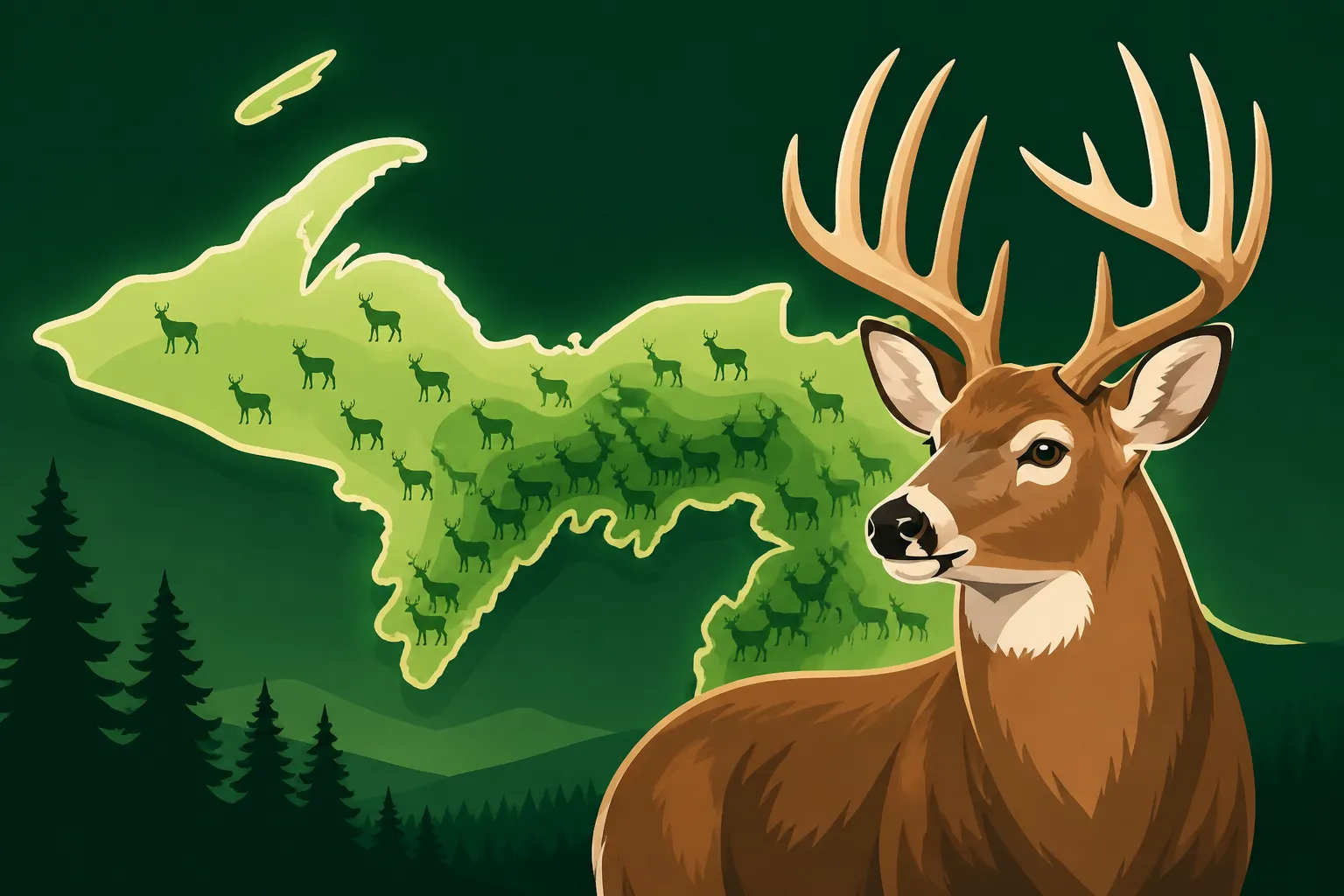
When the DNR talks about deer density, they're typically referring to the estimated number of deer per square mile within a given area, usually a Deer Management Unit (DMU) or a larger region. It's a statistical representation, not an exact count of every single deer. A density map might show, for example, 5-10 deer per square mile in one U.P. county, while another might show less than 5. This doesn't mean you'll see 5-10 deer every time you walk a square mile; it's an average spread across the entire landscape, including areas that deer rarely use.
Understanding these maps requires a bit of nuance. Higher density areas might indicate better wintering habitat, more accessible food sources, or less predator pressure, allowing deer populations to grow. Conversely, lower density areas often reflect challenging habitat, severe winter conditions, or higher predation. It's also important to remember that these are broad averages. Within a DMU, there will always be localized pockets of higher or lower density based on very specific habitat features like a cedar swamp, a fresh clear-cut, or a unique terrain feature. This is where personal scouting and experience complement the broader data.
Factors Causing Fluctuations in Density
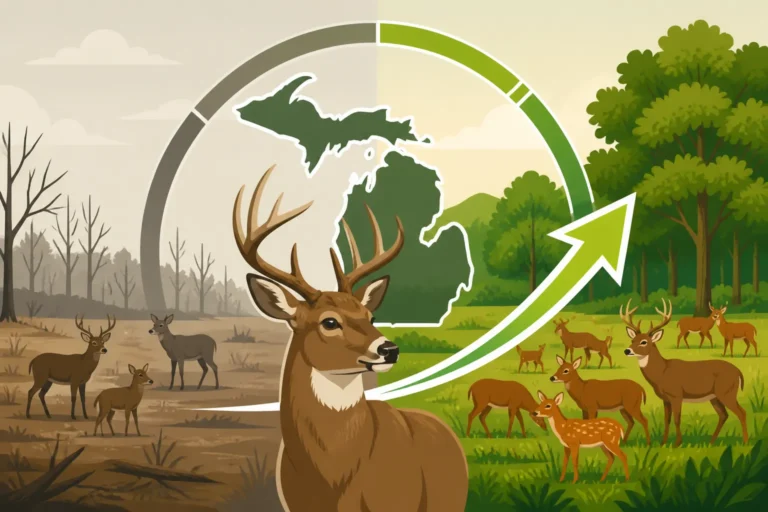
Deer density isn't a static number; it's constantly ebbing and flowing, sometimes dramatically. The most impactful factor in the U.P. is, without a doubt, the severity of the previous winter. A mild winter allows more fawns and weaker deer to survive, potentially boosting the population. A harsh winter, as discussed earlier, can lead to significant overwinter mortality, causing a noticeable dip in numbers, and it can take several years for the herd to fully rebound. We've seen this play out many times, where How Many Deer the Upper Peninsula Lost after a particularly brutal stretch takes a long time to recover.
Habitat changes also play a role. Large-scale logging operations, for instance, can temporarily create excellent browse for deer, leading to localized increases in density, but as the forest matures, that food source diminishes. Disease outbreaks, while less common for deer in the U.P. than in some other parts of the state, can also cause localized declines. Hunting pressure, too, can influence local densities, especially if particular areas are heavily targeted. It's this complex interplay of environmental factors that makes managing and predicting deer density such an ongoing challenge for the DNR and fascinating for us hunters.
What Upper Peninsula Deer Density Means for Hunters
Okay, so we've talked about the science and the struggles. Now, what does all this mean for you, the hunter, lacing up your boots for a U.P. adventure? It means adjusting your mindset, refining your tactics, and embracing a different kind of hunting experience. The U.P. isn't about seeing dozens of deer; it's about the challenge, the wildness, and the immense satisfaction of earning a success in truly rugged country.
Adjusting Expectations for U.P. Hunting
If you're used to hunting in southern Michigan farm country, where seeing multiple deer in a sit is common, the Upper Peninsula will likely be a stark contrast. Here, a successful hunt might involve seeing only one or two deer, or perhaps just fresh sign. It's critical to temper your expectations regarding sheer numbers. The U.P. is not a numbers game; it's a quality game, not necessarily in antler size, but in the quality of the hunt itself.
You're hunting a resilient, intelligent animal in its wild, rugged home. That often means longer sits, more walking, and more time where the woods feel utterly devoid of deer. This isn't a sign of failure; it's just the nature of hunting in lower-density areas. Embrace the solitude, the vastness of the forest, and the sheer joy of being immersed in true wilderness. The reward here isn't just venison, it's the experience itself. Many hunters find that the challenge of Hunting the Michigan Upper Peninsula for Deer is what keeps them coming back year after year, far more than the promise of a filled tag.
Scouting and Strategy in Lower-Density Areas
In the U.P., scouting isn't just helpful; it's absolutely non-negotiable. With lower deer densities, you can't rely on simply sitting in a "good looking" spot and hoping deer will wander by. You need to pinpoint exactly where deer are living, feeding, and traveling. This means meticulous reconnaissance, often covering vast tracts of public land. Look for active browse lines, fresh tracks in mud or snow, rub lines, and historical patterns of movement. GoHunt's mapping tools can be invaluable here, helping you identify potential pinch points, terrain features, and differing timber types that might funnel deer.
Focus on finding critical habitat components. Are there cedar swamps providing winter cover? Are there recent clear-cuts offering new browse? Are there hard-to-reach ridges where mature bucks might seek sanctuary? Understanding Upper Peninsula Deer Yarding and Winter Movement is vital, as deer will concentrate in these areas when snow gets deep. When you find sign, don't just sit down; try to understand why the deer are there and where they're coming from and going. Still-hunting, moving slowly and deliberately through the woods, can be incredibly effective, allowing you to cover ground and adapt to what you're seeing in real-time. Patience and persistence are your greatest assets.
The Reward of Hunting the Big Woods
Despite the challenges of lower deer density, hunting in the Upper Peninsula offers a profound and deeply satisfying experience that's hard to replicate anywhere else. There's a certain wild magic to the U.P. – the towering pines, the endless cedar swamps, the feeling of truly being alone in nature. When you finally connect with a deer in this environment, whether it's a wise old buck or a solid doe, the accomplishment feels monumental. You've outsmarted an animal that has survived harsh winters, evaded predators, and navigated thousands of acres of wilderness.
It's about the adventure, the quiet moments, and the profound connection to the land. For many, it's about Michigan deer camp traditions, the camaraderie around a fire after a long, cold day. The deer you harvest from the U.P. often carry a special significance, a trophy not just of antler, but of grit, determination, and respect for the wilderness. This kind of hunting builds character and deepens your appreciation for Michigan's wild places.
Regional Differences in U.P. Deer Densities
The Upper Peninsula is not a monolithic deer habitat; it's a vast region with significant variations in terrain, climate, and habitat types. These differences translate directly into varying deer densities, meaning what you find in one county might be vastly different from another just a hundred miles away. Understanding these regional nuances can help tailor your hunting approach and manage your expectations even further.
Western U.P.: Rugged Terrain and Low Densities
The far Western Upper Peninsula, encompassing counties like Gogebic, Iron, Ontonagon, and Baraga, is often characterized by its rugged, hilly terrain and some of the deepest snowfalls in the state. This is true "big woods" country, dominated by vast tracts of public land and dense conifer forests. Here, deer densities tend to be at their lowest. The combination of intense winters, limited agricultural food sources, and robust predator populations creates a challenging environment for deer to thrive in high numbers.
Hunting here demands a high level of physical fitness, resilience, and an acceptance of long stretches without seeing deer. Success often comes from covering a lot of ground, finding small pockets of favorable habitat, and being prepared to track for miles, especially when Hunting Deer in Deep Upper Peninsula Snow. This region is renowned for its wilderness experience and the possibility of encountering a truly mature, wild buck that has earned its antlers through sheer survival. If you're looking for a true wilderness challenge, this is it.
Central and Eastern U.P.: Pockets of Higher Density
As you move eastward and sometimes slightly southward in the U.P., you'll start to encounter areas that can hold slightly higher deer densities. Counties like Menominee, Delta, and parts of Marquette and Schoolcraft often benefit from slightly milder winter conditions, or more importantly, a greater mix of habitat types. In some of these areas, you might find more scattered agricultural fields, larger areas of actively managed timber, or more diverse forest types that provide better year-round food sources.
Menominee and Delta counties, for instance, often have more farmland compared to the deep woods further west, offering a bit of a buffer against winter and a higher carrying capacity. Even within these areas, the deer densities are still typically lower than in the Lower Peninsula, but hunters might encounter deer more frequently than in the rugged western reaches. These regions still require dedicated scouting and smart hunting, but the odds might feel a bit more in your favor. Knowing how to Reading Aerial Photos for Swamp Deer can be particularly helpful in these mixed landscapes.
Specific Hotspots and Wintering Yards
Regardless of the overall regional density, certain habitat features consistently act as magnets for deer in the U.P.: wintering yards. These are typically dense conifer stands, especially cedar swamps, that provide critical thermal cover during the coldest, snowiest months. Deer will travel significant distances to reach these yards, seeking refuge from deep snow and biting winds. These areas become vital concentrations of deer during winter, often exhibiting significantly higher local densities than the surrounding forest.
For hunters, identifying these traditional deer yards and understanding their access points can be key to late-season success or even early-season scouting for sign. During the hunting season, deer may use the edges of these yards, or travel through them, moving between bedding cover and available food sources. GoHunt can highlight coniferous forest types and low-lying areas that might indicate potential yarding activity. These are the places where deer are most likely to concentrate and leave abundant sign, making them prime targets for focused hunting efforts or for a well-placed Treestand Setups in Michigan Hardwoods nearby.
| U.P. Region | Typical Deer Density | Key Influencing Factors | Hunting Style & Expectations |
|---|---|---|---|
| Western U.P. | Very Low (1-5 deer/sq mi) | Deepest snow, rugged terrain, extensive wilderness, higher predator numbers, limited agriculture | Wilderness experience, high effort, low deer sightings, focus on big woods tactics, tracking, rare trophy potential |
| Central U.P. | Low to Moderate (3-8 deer/sq mi) | Moderate snow, mixed forests, some scattered agriculture, good wintering cover | Persistent scouting, focused on edges of clear-cuts, swamps, and varied habitat. Higher chance of multiple sightings |
| Eastern U.P. | Low to Moderate (3-8 deer/sq mi) | Moderate snow, more agricultural influence in parts, good mixture of forest types | Similar to Central U.P., but potentially more private land considerations. Focus on funnels, food sources. |
| Wintering Yards | High (localized) | Dense conifer thermal cover, critical for survival in deep snow | Extremely high concentrations of deer in specific areas during winter. Prime scouting locations, careful hunting on edges. |
This article is for general informational purposes only and does not constitute professional advice. Laws, prices and regulations vary by location and change over time. Consult a qualified professional for guidance on your specific situation.