Where Michigan Sits in the Grouse Cycle
It's a common frustration among Michigan grouse hunters to find numbers booming one year and seemingly vanish the next. You might hit a cover you've always relied on, only to flush a fraction of the birds you remember. This roller coaster isn't random; it's often a tell-tale sign of the natural ruffed grouse population cycle at play. This guide will dive deep into what these cycles are, how they manifest in Michigan, and most importantly, how you, as a hunter, can understand and adapt your strategies to make the most of every season, no matter where the cycle currently sits.
Understanding the Ruffed Grouse Population Cycle
The ruffed grouse, that magnificent drumming bird of Michigan's forests, is famous for its distinct, often dramatic, population fluctuations. Unlike some other game species that maintain relatively stable numbers year after year, grouse populations in many parts of their range, including Michigan, go through predictable booms and busts. This phenomenon is what we call the "grouse cycle," and it's a fundamental aspect of their ecology.
The Rhythmic Rise and Fall of Grouse Numbers
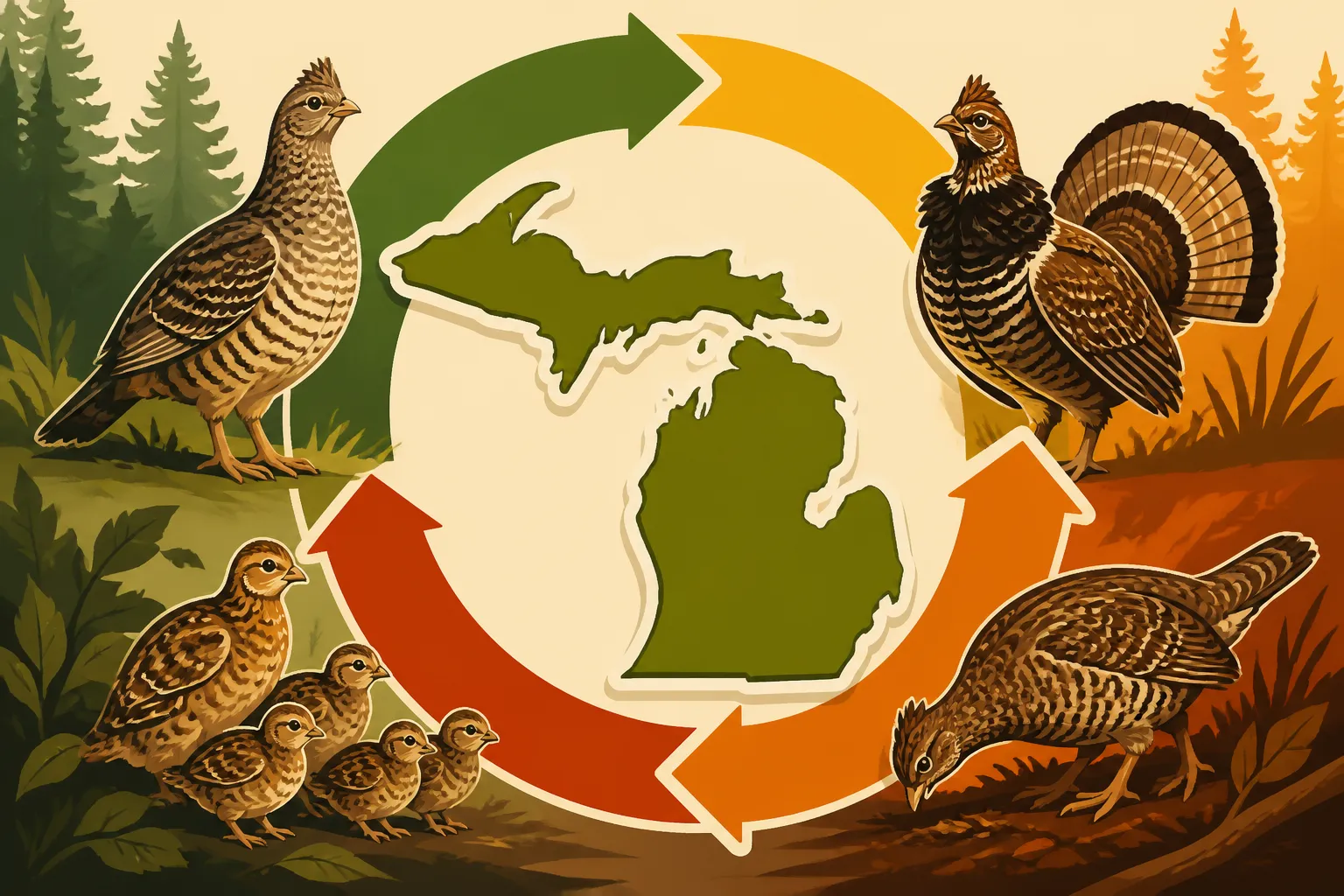
Imagine a roller coaster slowly climbing to its peak, offering thrilling views, and then descending rapidly before starting its ascent again. That's a good analogy for the ruffed grouse cycle. Over roughly an 8 to 11-year period, their numbers will increase, often peaking significantly, before undergoing a sharp decline, hitting a low point, and then slowly beginning to rebound. This isn't just a slight dip; at the bottom of a cycle, you might encounter only 10-20% of the birds you found at the peak in the same cover. It can be disheartening, but it's entirely natural.
Hunters who have spent decades walking Michigan's aspen cuts and alder swamps can tell you stories from both ends of this spectrum – years where every patch of cover held multiple flushes, and years where dogs worked tirelessly for a single bird. Understanding that this is part of a larger pattern can help manage expectations and inform scouting efforts. It’s not necessarily that you're a bad hunter, or that the cover is gone; it’s often just where the population is in its natural oscillation. For a deeper dive into the specifics, you can read more about Michigan Ruffed Grouse Cycles.
What Drives These Cycles? The Role of Predators, Habitat, and Weather
While the exact mechanisms are complex and debated among wildlife biologists, a combination of factors is believed to drive these cycles. Predation pressure is a huge one. When grouse numbers are high, predator populations like goshawks, owls, foxes, coyotes, and bobcats often increase in response, finding an abundant food source. As grouse numbers inevitably start to fall, these predators, with their now-inflated populations, put even more pressure on the remaining birds, accelerating the decline. Once grouse numbers are very low, predator populations eventually crash due to lack of food, allowing the grouse to slowly begin their recovery.
Habitat quality also plays a critical, though perhaps less cyclical, role. Healthy, regenerating aspen stands provide the dense cover grouse need to escape predators and the food resources for survival. Poor habitat can exacerbate a low cycle, making recovery slower, while excellent habitat can buffer the lows and potentially extend the highs. Severe weather, especially during nesting season, can also impact annual hatches, adding another layer of variability to the cycle. Cold, wet springs, for example, can devastate young broods, leading to a poorer hunting season even in an otherwise "up" cycle year. The 111 Days of Deep Snow in the U.P. isn't just tough on deer; it impacts all forest game.
Where Michigan Typically Stands in the Cycle
Pinpointing Michigan's exact position in the grouse cycle at any given moment without real-time data is challenging, but general patterns and indicators can give experienced hunters a strong sense. Michigan's grouse cycles, while often mirroring broader regional trends in the Great Lakes states, also have localized variations depending on habitat conditions and regional predator dynamics.
Deciphering the Signs: Drumming Counts and Hunter Reports
The Michigan Department of Natural Resources (DNR) conducts annual drumming surveys, where observers listen for the distinctive drumming of male grouse in the spring. These surveys are invaluable for tracking population trends. An increase in drumming activity year-over-year is a strong indicator of an upward swing or peak in the cycle, while a noticeable decrease suggests a decline. Hunters often correlate their own observations with these official reports. If you're out scouting in April or May and hear drumming birds everywhere, it’s a good sign for the upcoming fall. Conversely, quiet woods can signal a leaner season.
Beyond official counts, the collective experience of hunters on the ground is a powerful, anecdotal indicator. Conversations with fellow hunters at the local diner, online forums, and reports from bird dog trainers can provide a mosaic of information. "Flushing three times fewer birds than last year" or "my dog worked all day for one flush" are common refrains during a down cycle. Conversely, stories of "birds everywhere" after a few good seasons hint at a peak or near-peak. These informal reports, combined with a general understanding of the historical cycle length, help to paint a picture. You can learn more about how these surveys work by looking up Michigan Grouse Drumming Surveys.
General Patterns and Regional Variations in Michigan
Historically, Michigan's grouse populations have followed the broader 8-11 year cycle, often peaking or bottoming out roughly in sync with neighboring states like Wisconsin and Minnesota, though with its own unique timing. The Northern Lower Peninsula and the Upper Peninsula, being prime grouse country, tend to experience these cycles more distinctly than areas with less optimal habitat. However, it's crucial to remember that "Michigan" isn't a monolith. A great year in a concentrated area of aspen regeneration in the northern Lower Peninsula might not perfectly align with numbers in a more mature timber region of the eastern Upper Peninsula.
Regional variations can be significant. Areas with robust, ongoing aspen management programs might see their grouse populations recover faster or maintain higher densities even during a general downturn, simply because the critical habitat is consistently being renewed. Conversely, regions with aging forests and little active habitat management might experience more severe lows and slower recoveries. When planning your hunts, especially for a multi-day trip, it's wise to consider not just the broader statewide cycle, but also the specific habitat conditions in your target areas. Resources like GoHunt, while primarily known for big game, offer robust mapping tools that can help identify areas with suitable habitat features like aspen cuts, which is crucial information no matter where the grouse cycle sits.
Adapting Your Hunting Strategy to the Cycle's Phase
Understanding where Michigan's grouse population sits in its natural cycle can dramatically influence your hunting approach. What works during a booming year might lead to frustration when numbers are at their lowest. Adjusting your tactics and expectations is key to consistent success and enjoyment.
High Cycle Years: Spreading Out and Finding Hotspots
When Michigan is experiencing a high point in the grouse cycle, it feels like there are birds everywhere. Flushes are frequent, and you might encounter multiple coveys in a single cover. This is the time to explore new areas, expand your horizons, and perhaps even try some different types of cover that might not hold birds in leaner years.
During these peak years:
- Expand your search: Don't just stick to your tried-and-true spots. Birds will be more abundant and might colonize marginal habitats or areas you previously overlooked. Use online mapping tools, perhaps even exploring GoHunt's mapping features for new public land parcels or habitat types.
- Cover more ground: You can afford to walk longer lines, covering more territory, as the odds of encountering birds are higher. This is a great time to introduce new hunters or young dogs, as success rates are generally higher, building confidence.
- Focus on secondary covers: While prime aspen regeneration is always good, during high cycle years, you might find birds in older growth, thick creek bottoms, or even areas with a higher percentage of conifers mixed in. These might serve as overflow areas for a robust population. Hunting Michigan Clearcuts and Aspen Cuts will always be productive, but you can broaden your scope during a boom.
- Enjoy the abundance: These years are what grouse hunters dream of. Embrace the frequent flushes, the exhilarating dog work, and the sheer number of opportunities. It’s a time to truly appreciate the health of the resource.
Low Cycle Years: Focusing on Prime Habitat and Persistence
Hunting during a low point in the grouse cycle can be incredibly challenging, testing the patience of even the most seasoned hunter. It's easy to get discouraged when flushes are few and far between. However, these years demand a more focused, strategic, and persistent approach.
During these leaner years:
- Concentrate on prime habitat: Birds will be concentrated in the very best, densest cover available. Focus exclusively on areas with ideal young aspen regeneration (4-15 years old), thick willow tangles, and dense conifer pockets adjacent to food sources. Don't waste time in marginal covers. Think about How Old a Cut Should Be for Grouse and stick to those sweet spots.
- Hunt smaller, smarter: Instead of covering vast amounts of ground, meticulously work smaller, high-percentage coverts. Take your time, really dissecting the cover, and allow your dog to thoroughly investigate every scent.
- Persistence is paramount: You might have to walk many miles for a single bird. Don't give up after an hour of no flushes. The rewards in a low cycle year, even a single bird, feel incredibly earned.
- Scout more intensely: Use your off-season time to identify areas with the most promising habitat. Look for fresh logging activity from the past few years, as these will eventually become prime grouse spots. Digital mapping platforms can be invaluable here for identifying these new cuts.
- Consider diverse locations: If one area of the state seems particularly slow, research other regions. While the cycle impacts everyone, local habitat conditions can create pockets of better bird numbers.
- Appreciate the dog work: In low cycle years, the true value of a good bird dog shines. They'll have to work harder, smarter, and often for longer periods to locate birds. Celebrate their efforts, even if the bird count is low.
Beyond the Cycle: The Critical Role of Habitat
While the grouse cycle is a powerful natural force, it doesn't operate in a vacuum. The underlying quality and quantity of suitable habitat play an enormous role in how well grouse populations fare, influencing both the severity of the lows and the height of the peaks. For Michigan, proactive habitat management is perhaps the most crucial long-term factor for grouse abundance.
Aspen Regeneration: The Lifeblood of Michigan Grouse
If you hunt ruffed grouse in Michigan, you quickly learn the importance of aspen. Young, regenerating aspen stands, typically 4 to 15 years old, provide the absolute best cover and food sources for grouse. The dense suckers that shoot up after an aspen clearcut create a nearly impenetrable thicket, offering refuge from aerial and ground predators. The buds of mature aspen are also a critical winter food source. This isn't just a preference; it's a biological necessity. Without a continuous supply of young aspen, grouse populations simply cannot thrive, regardless of where they are in the natural cycle.
This understanding is why active forest management, specifically clearcutting mature aspen stands, is so vital for grouse. It might look harsh to an untrained eye, but it’s a deliberate act of creating future grouse habitat. Areas with consistent, staggered aspen harvesting – where different age classes of aspen are available – tend to hold more stable and robust grouse populations over the long term. This provides a constant rotation of optimal cover. You can find many of these managed areas by scouting Michigan Grouse Enhanced Management Site List.
Other Key Cover Types and Their Importance
While aspen is king, other cover types are also important for Michigan grouse, providing variety in food and security.
- Alder Swamps: These wet, tangled areas often found along creek bottoms or in low-lying depressions, provide dense escape cover and a source of catkins and buds. They can be incredibly difficult to hunt, but often hold birds, especially later in the season or during a down cycle when birds seek out the thickest protection.
- Mixed Conifer Stands: Pockets of young conifers, like spruce and fir, especially when mixed with deciduous trees, offer thermal cover in winter and visual obstruction from predators. Grouse will often use these dense evergreen patches as roosting sites or escape cover, particularly if they are adjacent to feeding areas.
- Forest Edges and Openings: While grouse are largely birds of the deep woods, they utilize forest edges, old logging roads, and small clearings for dusting, bugging, and accessing certain food sources. However, these areas are typically used in conjunction with dense cover nearby, not as primary habitat themselves.
- Food-Producing Shrubs: Dogwood, hazelnut, and various berry-producing shrubs provide important soft mast and browse for grouse throughout the year. Identifying these in proximity to good cover is another piece of the puzzle.
When you're out scouting, either physically or using mapping tools, it's not just about finding "woods," it's about identifying the right kind of woods that offer this mosaic of critical habitat elements. GoHunt's mapping tools, for instance, can help delineate different forest types and even identify timber cut locations, which is invaluable for pre-season planning. The healthier and more diverse the habitat, the better grouse populations can weather the natural fluctuations of the cycle.
| Cycle Phase | Grouse Numbers | Hunter Experience | Recommended Strategy |
|---|---|---|---|
| Peak/High | Abundant, widespread | Frequent flushes, high success | Explore new areas, cover more ground, enjoy diverse coverts |
| Declining | Noticeable reduction, still fair in prime spots | Fewer flushes, declining success | Focus on best habitat, work harder, be prepared for longer walks |
| Low | Scarce, very localized | Very few flushes, challenging, low success | Hunt only prime, dense habitat; extreme persistence; dog work critical |
| Rebounding | Slowly increasing, noticeable by keen observers | Gradually improving, still inconsistent | Continue focus on prime habitat, but start to explore slightly more |
Disclaimer
This article is for general informational purposes only and does not constitute professional advice. Laws, prices and regulations vary by location and change over time. Consult a qualified professional for guidance on your specific situation.