Game You Cannot Hunt in Michigan
It’s a truly frustrating experience to be out in the Michigan woods, spot an animal, and then have that nagging doubt creep in: "Can I even hunt this?" With constantly evolving regulations and a diverse array of wildlife, it’s easy to get confused about what's fair game and what's strictly off-limits. This guide is here to clear up that confusion, offering a comprehensive look at the animals you absolutely cannot hunt in Michigan, why these rules exist, and how you can stay on the right side of the law.
Federally and State Protected Species in Michigan
Michigan is home to an incredible variety of wildlife, and part of preserving that diversity means protecting certain species that are endangered, threatened, or simply deemed too important to be hunted. These protections come from both federal and state laws, and understanding them is crucial for any ethical hunter.
Endangered Species Act Protections
The federal Endangered Species Act (ESA) is a powerful piece of legislation designed to protect imperiled species and their habitats. In Michigan, several animals fall under the umbrella of the ESA, making it illegal to harass, harm, pursue, hunt, shoot, wound, kill, trap, capture, or collect them. This isn't just about hunting; it's about any action that could negatively impact these populations.
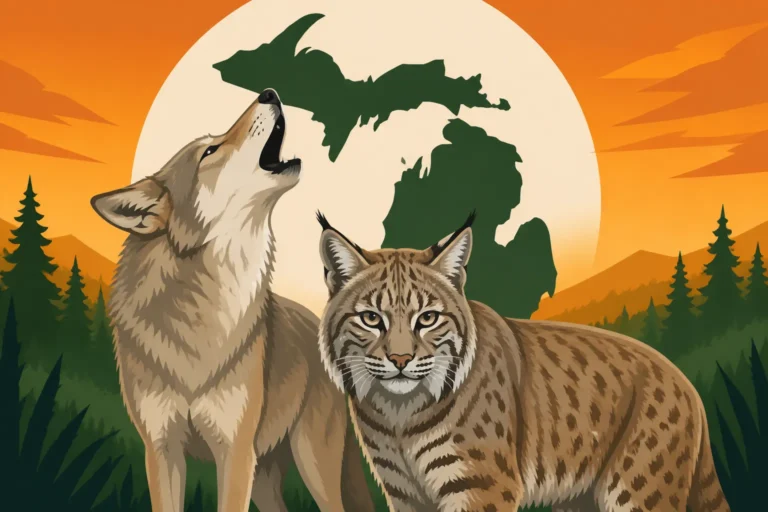
A prime example that often comes to mind, especially in our northern forests, are gray wolves. While their status has fluctuated over the years, and there's often public debate, at various times they have been federally protected, meaning they cannot be hunted. It's a complex issue, but for a hunter in Michigan, the critical takeaway is that you must know their current legal status before ever considering them. You can learn more about Michigan Wolf Hunting Status and Wolves and Predators in Michigan to understand the nuances. Another fascinating, albeit rare, animal protected under the ESA in Michigan is the Canada lynx, though sightings are incredibly uncommon. Similarly, while there's no breeding population in Michigan, any confirmed cougar sighting falls under protection; these are not animals you can legally harvest. You can explore more about Cougar Confirmations in Michigan.
Michigan's Own Protected Species
Beyond federal law, Michigan has its own list of protected species that do not have an open hunting season. This typically includes a vast array of non-game animals, many of which are vital to our ecosystems. Think of all our songbirds, raptors like eagles, hawks, and owls, most amphibians (frogs, salamanders), and nearly all reptiles (snakes, turtles). These creatures play critical roles, from pest control to nutrient cycling, and are protected year-round. It's a reminder that wildlife conservation extends far beyond just deer and ducks.
One specific bird that comes up in conservation discussions is the Kirtland's warbler. This small, vibrant songbird, once critically endangered, has seen a remarkable recovery thanks to dedicated conservation efforts focused on its unique jack pine habitat. It's a success story, but it remains a protected species you absolutely cannot hunt. Similarly, the Great Lakes piping plover, a tiny shorebird that nests on our sandy beaches, is also federally protected and a true treasure of our coastline.
Species with No Open Hunting Season (Effectively Unhuntable)
Even if a species isn't strictly "endangered" or "threatened," Michigan still has many animals for which there is simply no legal hunting season. For the average hunter, these are just as off-limits as any federally protected creature.
The Case of Michigan Elk
Ah, Michigan elk. This is perhaps the most famous example of a species that technically can be hunted, but for the vast majority of hunters, it’s practically unhuntable. Michigan boasts a healthy elk herd, centered primarily in the Pigeon River Country State Forest in the northern Lower Peninsula. However, hunting opportunities are extremely limited. Permits are awarded through a highly competitive lottery system, requiring years, often decades, of applying to even have a chance.
For most of us, seeing an elk in Michigan is a once-in-a-lifetime experience, and the idea of hunting one remains a distant dream. So, while technically not "illegal" to hunt if you possess one of the coveted tags, for all intents and purposes, it’s a species you cannot simply decide to pursue during a regular hunting season. It’s an exceptional draw for a tiny fraction of hunters. You can dive deeper into Michigan's Limited Elk Hunt and discover more about Elk in Michigan's Pigeon River Country.
Sandhill Cranes: A Persistent Debate
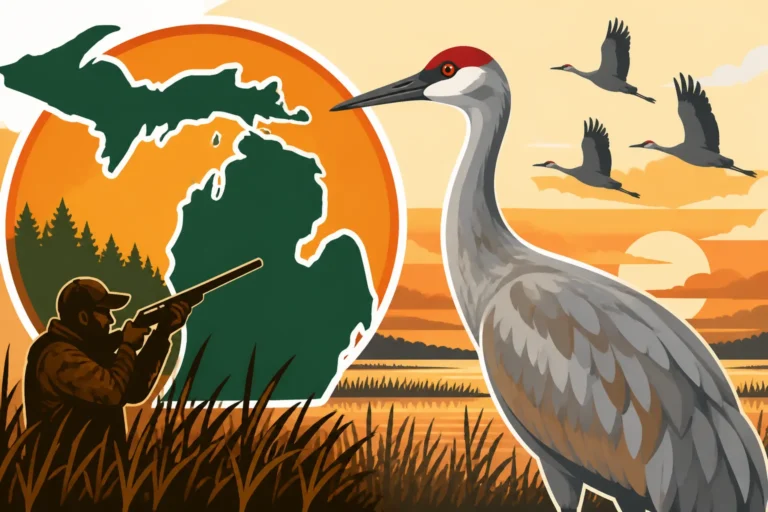
Sandhill cranes are magnificent, prehistoric-looking birds with a distinct bugling call that echoes across Michigan's wetlands. While they are hunted in many other states across their range, and proposals have occasionally surfaced to open a season here, Michigan currently has no open season for sandhill cranes. They are protected by state law.
This means that despite their impressive size and the fact that they are game birds elsewhere, you cannot hunt sandhill cranes in Michigan. Hunters must be diligent in identifying their targets, especially when hunting other large waterfowl species, to ensure no protected cranes are accidentally taken. Their presence is a beautiful part of Michigan's wild landscape, and for now, we enjoy them through observation rather than pursuit. Learn more about Sandhill Cranes Across Michigan Wetlands.
Moose, Lynx, and More
Michigan occasionally sees moose, especially in the Upper Peninsula. These majestic animals are completely protected, with no hunting season whatsoever. The same goes for Canada lynx and wolverines, although verified sightings of wolverines in Michigan are exceedingly rare and they are fully protected.
When it comes to smaller animals, most non-game birds, including all songbirds, hummingbirds, and woodpeckers, are protected. This list also extends to common backyard animals like chipmunks and red squirrels (gray and fox squirrels have seasons, but red squirrels do not). Even though you might see them everywhere, they are not on Michigan's huntable species list.
Common Misconceptions and Identifying Your Target
It's easy to make a mistake when identifying wildlife, especially in low light or dense cover. Misidentification can lead to serious legal consequences and, more importantly, unintended harm to protected populations. This is why target identification is perhaps the most critical skill for any hunter.
Distinguishing Look-Alikes
Sometimes, a protected species might look similar to a huntable one. For example, some protected owl species could be mistaken for hawks, or certain non-game birds could be confused with small game birds like quail (which are very rare here anyway). When hunting waterfowl, you need to be absolutely sure of your target. Certain duck species might have closed seasons or very limited bag limits, but others, like swans, are completely protected.
It's your responsibility as a hunter to know what you're shooting at. If there's any doubt, the best policy is always to hold your shot. Investing in good optics and taking the time to study field guides for all potential species in your hunting area is invaluable. Resources like the Michigan DNR's website or specialized apps like GoHunt can be incredibly helpful for visually identifying species and double-checking current regulations before you head out.
Feral Swine: A Nuanced Situation
This is a tricky one. While feral swine are not a game species in Michigan, they are also not "protected" in the traditional sense. In fact, due to the severe environmental and agricultural damage they can cause, they can be taken year-round by hunters with a valid hunting license. However, they are not regulated with seasons or bag limits like traditional game.
The key here is that they are considered an invasive species, and controlling their population is a priority. So, while you technically can hunt them, they are distinct from regulated game animals like deer or Michigan Small Game and Hares. It's crucial to understand this distinction because the rules for pursuing them are different, often focusing on eradication rather than sustainable harvest. This topic is further explored in Feral Swine in Michigan.
What to Do if You See a Protected Animal or Witness a Violation
Education is your best defense against making a mistake. Regularly review the Michigan Hunting and Trapping Digest. Use mapping tools like those offered by GoHunt to understand land boundaries and potential habitat for protected species. If you're unsure about an animal's status, resist the urge to pull the trigger.
If you ever accidentally take a protected animal, or if you witness someone else illegally hunting a protected species, it is crucial to report it immediately. The Michigan DNR operates a Report All Poaching (RAP) hotline. Early reporting can sometimes make a difference in rescue efforts for injured animals or in apprehending violators. Knowing how to report is part of responsible hunting, as detailed in Reporting a Poacher in Michigan. Ignoring a violation only hurts conservation efforts and gives ethical hunters a bad name.
The Foundation of Conservation: Why These Rules Exist
Understanding why certain animals cannot be hunted in Michigan can foster a deeper appreciation for conservation and the role hunters play in it. These regulations aren't arbitrary; they are the result of scientific study, population dynamics, and a commitment to maintaining healthy ecosystems.
Population Management and Ecological Balance
At the core of most hunting regulations is population management. When a species' population is low, or its habitat is threatened, closing a hunting season is a primary tool to allow that population to recover. This is often the case with species listed under state or federal endangered species acts. For example, the protection of wolves is often tied to their perceived population health and their role as apex predators in the ecosystem. Their presence can influence deer populations and other prey species, which in turn affects vegetation and overall forest health.
Similarly, even non-game animals have critical roles. Protecting insect-eating birds, for instance, helps control pest populations that could devastate forests or crops. Every creature, from the smallest salamander to the largest moose, contributes to the intricate web of life in Michigan. Disrupting one part of that web through overharvesting or neglect can have cascading negative effects on the entire ecosystem.
Ethical Hunting and Public Trust
A significant reason for strict regulations on what can and cannot be hunted is to maintain public trust in hunting as a conservation tool. The vast majority of Michigan citizens, including many who don't hunt, want to know that wildlife is being managed responsibly and ethically. Allowing the indiscriminate hunting of all species would quickly erode that trust and undermine the very principles of wildlife conservation.
Hunter education and awareness around protected species demonstrate a commitment to these ethics. It shows that hunters are not just interested in taking game, but in being stewards of the land and its wildlife. When violations occur, and especially when protected species are harmed, it reflects poorly on the entire hunting community, potentially leading to greater restrictions for everyone. Understanding Michigan Wildlife Violation Penalties highlights the seriousness with which these rules are enforced.
Evolving Wildlife Management
Wildlife populations are not static. They respond to habitat changes, climate shifts, disease, and human activity. As a result, regulations on what can and cannot be hunted are not set in stone. The status of species like wolves or sandhill cranes might change in the future based on scientific assessments and public policy debates.
This dynamic nature means that hunters must remain informed. Relying on outdated information is a recipe for trouble. Organizations like the Michigan DNR constantly monitor wildlife populations and adjust regulations accordingly. Tools like GoHunt can help you stay current, offering real-time updates and accessible regulation summaries. By staying educated and adhering to the rules, we ensure that Michigan's rich hunting heritage can continue for generations to come, built on a foundation of respect for all wildlife, huntable or not.
Summary of Michigan's Untouchables and Highly Regulated Game
To help clarify, here's a quick reference table outlining the general status of various species you might encounter in Michigan's wild, categorized by their huntability for the average hunter.
| Category | Example Species | General Status for Hunters (Most Cases) | Key Considerations |
|---|---|---|---|
| Strictly Prohibited | Wolves, Canada Lynx, Moose | Absolutely cannot be hunted. Federally or state protected due to endangered status, rarity, or full protection. | Severe legal penalties for taking these animals. |
| Most Songbirds, Raptors, Owls | Cannot be hunted. Protected under various state and federal acts (e.g., Migratory Bird Treaty Act) due to ecological value. | Essential for ecosystem health; strictly illegal to harvest. | |
| Most Amphibians/Reptiles | Cannot be hunted. Protected as non-game species. | Important indicators of environmental health; best observed. | |
| Kirtland's Warbler, Piping Plover | Cannot be hunted. Specific endangered bird species with critical conservation status. | Highly sensitive populations; focus of dedicated recovery efforts. | |
| Sandhill Cranes | Cannot be hunted (currently). Despite being game birds elsewhere, no open season in Michigan. | Require careful identification to avoid accidental take when hunting other large waterfowl. | |
| Effectively Unhuntable | Elk | Technically huntable, but only for a tiny number of lottery winners; highly regulated and extremely rare opportunity for most. | Exceptionally difficult to draw a tag; plan on many years of application. |
| Special Rules/Not Game | Feral Swine | Can be hunted year-round without a license by licensed hunters, but NOT considered "game." Managed as an invasive species. | Focus is on eradication, not game management. Specific rules apply for disposal/transport. |
| Red Squirrels | No open season. Often confused with gray/fox squirrels which do have seasons. | Ensure positive ID to avoid taking a non-game species. |
This table provides a quick overview, but remember, the Michigan Hunting and Trapping Digest is your ultimate resource for current regulations. Always check the official DNR rules before heading afield.
Disclaimer
This article is for general informational purposes only and does not constitute professional advice. Laws, prices and regulations vary by location and change over time. Consult a qualified professional for guidance on your specific situation.