Late Antlerless Hunting in Michigan
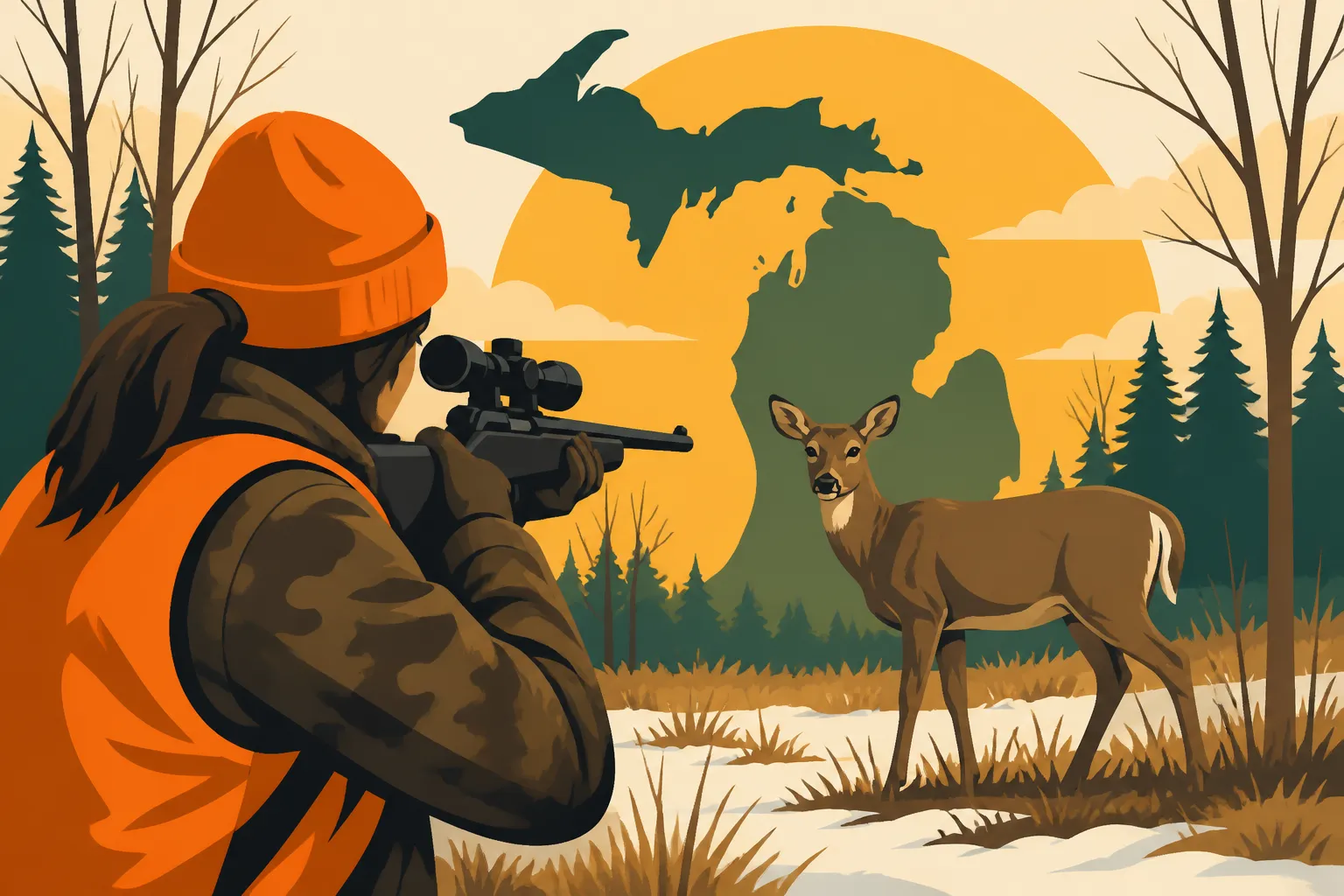
As the Michigan deer seasons wind down, many hunters find themselves with unfilled antlerless tags, staring down the barrel of late December and the often brutal January weather. It’s a frustrating situation; the easy deer seem to have vanished, and the woods feel empty and cold. This comprehensive guide is designed to cut through that late-season struggle, offering practical advice and tactics to help you fill your freezer during Michigan’s challenging late antlerless hunting opportunities.
Understanding Michigan's Late Antlerless Season
Michigan's late antlerless season often feels like a bonus round, a final chance to put venison in the freezer after the main firearm and archery seasons have closed. However, it's a season with its own unique set of rules, challenges, and, if you play your cards right, rewards. It’s not just about enduring the cold; it’s about understanding the specific regulations and the vastly different deer behavior that defines this time of year.
When and Where This Season Happens
The Michigan late antlerless firearm season typically kicks off in mid-December and runs through January 1st, although the exact dates can shift slightly year to year, so always confirm with the latest DNR regulations. This season is specifically designed to manage deer populations, particularly in agricultural areas and regions with higher deer densities or chronic wasting disease (CWD) concerns. Critically, it's usually open only in specific Deer Management Units (DMUs), and often limited to private land. You can't just head out anywhere; you need to know your specific DMU and its associated rules. For many, this means a trek to the southern Lower Peninsula or specific CWD management areas, rather than the vast northern forests. It's a stark contrast to the widespread opportunities found during, say, Michigan's November Firearm Deer Season.
Permits, Licences, and DMU Specifics
To participate in the late antlerless season, you'll need a valid antlerless deer license. These licenses are typically purchased earlier in the year, and their availability can vary by DMU. Some DMUs might have leftover antlerless licenses available for purchase, even late into the season, especially if harvest goals haven't been met. It's crucial to consult the Michigan DNR's interactive map or their website to identify which specific DMUs are open for late antlerless hunting and if licenses are still available for that unit. Remember, some licenses are designated for private land only, while others might allow public land hunting in specific areas. Understanding these distinctions is vital to avoid a violation. Many hunters utilize mapping apps like GoHunt or the DNR's Mi-HUNT tool to cross-reference DMU boundaries with property ownership, making sure they're hunting legally and ethically. This careful planning directly impacts your chances of Filling a Michigan Antlerless Tag.
Why This Season Exists
The primary purpose of the late antlerless season is population control. After the general firearm season, there are often still significant numbers of does and fawns, particularly in areas with abundant food sources or limited hunter access during earlier seasons. Reducing the female deer population helps mitigate agricultural damage, slows the spread of diseases like CWD and Bovine Tuberculosis, and generally keeps the herd in balance with its habitat. For hunters, it's a critical opportunity to contribute to wildlife management goals while also securing more venison. It also provides an ethical outlet for those who prioritize harvesting venison over trophy hunting, especially after a challenging general season.
Finding Deer in Late Season Conditions
As the landscape turns stark and the temperatures plummet, deer behavior undergoes a significant transformation. Forget the rut-crazed bucks or the scattered feeding patterns of early fall. Late-season deer, especially does, become incredibly focused on survival, which simplifies their movements and makes them more predictable if you know what to look for. The cold weather is relentless, and deer are constantly trying to conserve energy and find sustenance.
Focusing on Food Sources
In late December and January, natural food sources become scarce. Acorns are long gone, and most browse is either frozen or depleted. This forces deer to concentrate heavily on any remaining high-energy food sources. Think about standing crops like corn or soybeans that haven't been harvested, or even agricultural fields that have recently been cut but still offer waste grain. Food plots, if legal in your hunting area and planted with late-season forage like brassicas, standing corn, or winter wheat, become absolute magnets. Identifying these critical Late-Season Food Sources for Whitetails is paramount. Deer will travel significant distances from bedding areas to access these calorie-rich meals, often moving during daylight hours, especially on overcast or snowy days when the light levels are lower. Look for tracks leading directly into these fields, and scout for areas where deer are consistently feeding, usually indicated by fresh droppings and disturbed snow or dirt.
Locating Thermal Cover and Bedding Areas
Along with food, thermal cover is a non-negotiable for late-season deer. When temperatures dip into the single digits or below, deer need protection from the wind and cold. This means thick cedar swamps, dense conifer stands (pine, spruce, balsam fir), brushy creek bottoms, and south-facing slopes that catch more sunlight. These areas act as natural windbreaks and insulators. Deer will yard up in these locations, minimizing movement to conserve energy. Scouting for these bedding areas is key. Look for dense thickets that offer protection and are often surprisingly close to major food sources. These travel corridors between food and bedding become prime ambush points. In areas with significant snow, deer will often create "beds" within the snow itself, digging down to create a small, insulated depression. Finding these travel routes, especially those shielded from prevailing winds, can be invaluable.
Understanding Winter Deer Movement
Winter deer movement is driven by two main factors: food and thermal cover. Their daily routine often involves moving from a secure bedding area to a food source, then back again. This movement tends to be more concentrated and predictable than earlier in the year. Unlike the chaotic rut, does and fawns will stick together in smaller family groups, and they are extremely sensitive to hunting pressure. A single negative encounter can send them into an almost nocturnal pattern. When scouting, pay close attention to historical deer sign, but prioritize fresh sign. Snow is a fantastic tracker; fresh tracks will show you exactly where deer are moving and when. A good mapping tool like GoHunt can help you visualize thick cover and potential travel routes, allowing you to plan your approach to intercept deer without bumping them. Understanding Upper Peninsula Deer Yarding and Winter Movement can provide valuable insights, even if you're hunting in the Lower Peninsula, as the principles of thermal cover and food concentration remain similar.
Effective Late Season Hunting Tactics
Success in Michigan's late antlerless season requires a shift in tactics from earlier seasons. Deer are pressured, the weather is often brutal, and their movements are primarily dictated by survival. This isn't the time for aggressive rattling or broad-ranging drives (unless specific conditions align). Instead, patience, precision, and minimizing disturbance become your most potent weapons.
Still-Hunting and Slow Movement
Still-hunting is perhaps one of the most underutilized and effective tactics for late-season deer, especially in heavy cover. This involves moving incredibly slowly, taking a few steps, then pausing for several minutes to scan the woods. Every pause is an opportunity to pick apart the cover with your binoculars, looking for horizontal lines in a vertical world—the back of a deer, an ear flick, the subtle glint of an eye. The key is to move into the wind or with a slight crosswind, being as quiet as possible. Snow, paradoxically, can be both a blessing and a curse. Fresh, soft snow deadens sound, allowing for silent movement, while crusty, frozen snow makes every step a loud crunch. If you're facing crusty conditions, consider waiting for a fresh snowfall or focusing on areas where the terrain offers natural sound dampening. Learning to adapt your movement to the snow conditions is a hallmark of success for Still-Hunting After a Michigan Snow. Remember, a late-season deer often sees or hears you first, so the slower you move, the better your chances of spotting them before they spot you.
Leveraging Ground Blinds and Stands
Static hunting from a treestand or ground blind can be highly effective during the late season, especially if you've done your scouting and have a good understanding of deer movement between bedding and feeding areas. A well-placed treestand overlooking a food plot, a major travel corridor, or the edge of a thick bedding area can yield results. However, the biting cold makes long sits in an open treestand brutal. This is where ground blinds truly shine. A fully enclosed, insulated ground blind provides much-needed protection from the wind and elements, allowing you to stay on stand for longer periods. Brushing in your blind effectively is key to making it disappear into the landscape, especially if it's been set up recently. Just remember to check Michigan's rules for placing stands and blinds on public land if that's where you're hunting; some areas have specific regulations regarding temporary structures. A proper Cold Weather Sitting Strategy is essential, whether you're in a stand or a blind.
Considering Deer Drives Where Applicable
In certain situations, particularly on private land or specific public land parcels where group hunting is feasible, organized deer drives can be a highly effective tactic for the late antlerless season. After weeks of hunting pressure, deer often become extremely reluctant to move, hunkering down in the thickest cover. A well-executed drive can push these bedded deer past strategically placed standers. The key to a successful late-season drive is to use minimal drivers, often just two or three, who move slowly and methodically through the thickest cover, making noise. Standers need to be positioned precisely along known escape routes or pinch points, anticipating where the deer will try to slip away. Communication is paramount to ensure safety and effectiveness. This tactic is especially potent in areas with contiguous blocks of heavy cover, like cedar swamps or overgrown clearcuts. However, understand that this is far different from the large, noisy drives of the firearm opener; late-season drives require finesse and a deep understanding of the local terrain and deer behavior. Consider researching strategies for Deer Drives With Three or Four Hunters for more specific guidance.
Essential Gear for Cold Weather Success
The Michigan late antlerless season often coincides with some of the coldest, most unforgiving weather the state has to offer. Success isn't just about deer; it's about survival and comfort. Being inadequately dressed or unprepared can quickly turn a hopeful hunt into a miserable, even dangerous, experience. This is not the time to skimp on quality gear.
Layering for Extreme Cold
Effective layering is the absolute cornerstone of cold-weather hunting. Forget bulky, single-piece snowsuits; they restrict movement and don't manage moisture well. Start with a moisture-wicking base layer against your skin – merino wool or synthetic materials are far superior to cotton, which retains moisture and robs you of heat. Next, add a mid-layer for insulation, such as fleece or another wool layer. For your outer layer, you need something windproof, water-resistant, and heavily insulated. A good quality parka and bibs or insulated pants are critical. Brands like Sitka, First Lite, or Cabela's often offer excellent cold-weather systems. Don't forget extremities: a warm hat that covers your ears, a neck gaiter or balaclava, and multiple layers of gloves or mittens are non-negotiable. Chemical hand warmers and foot warmers can also be a lifesaver, providing continuous warmth during long sits.
Footwear for Snow and Frozen Ground
Your feet are often the first part of your body to get cold, and once they're cold, your entire body quickly follows. Invest in high-quality, insulated, waterproof boots specifically designed for extreme cold. Look for boots with 800 to 1600 grams of Thinsulate or equivalent insulation, and make sure they are waterproof to keep out melting snow and slush. Ensure there's enough room in your boots for thick wool socks (again, avoid cotton!) without being so tight that they restrict circulation. Brands like Schnee's, Kenetrek, or even heavy-duty hunting boots from Irish Setter or Lacrosse are often good choices. If you plan on doing a lot of still-hunting in deep snow, snowshoes can be a game-changer, allowing you to move silently and efficiently over terrain that would otherwise be impossible.
Packs and Recovery Tools
A well-packed hunting backpack is crucial. Beyond your clothing layers, include extra socks, a thermos of hot coffee or soup, high-energy snacks, a reliable headlamp with extra batteries (it gets dark early, and tracking at dusk is common), a first-aid kit, and communication devices. For recovery, especially if you anticipate hunting in remote or challenging areas, consider tools to help get your deer out. A sturdy deer sled can be invaluable for Dragging a Deer Through Michigan Snow, particularly if you're alone or if the snow is deep. A strong rope or drag harness is also essential. A sharp, reliable field dressing knife and a bone saw (or knowledge of the gutless method) are a must for processing your animal in the field. Don't forget your deer tag, a pen or pencil, and your phone with a mapping app like GoHunt to mark the location of your deer and navigate back to your vehicle.
Navigating Public and Private Land Challenges
Michigan offers a wealth of hunting opportunities, but late-season antlerless hunting presents specific challenges when it comes to land access and hunter pressure. Knowing how to find available ground and minimize encounters with other hunters can make or break your hunt.
Scouting for Unpressured Areas on Public Land
Public land in Michigan can be excellent for late-season hunting, but it often sees heavy pressure earlier in the year. By late December, many hunters have packed it in, but the deer are still wary. To find success on public land, you need to think differently. Use online mapping tools like the DNR's Mi-HUNT, or commercial options like GoHunt or onX Hunt, to identify parcels of state forest, state game areas, or national forest land. Look for areas that are difficult to access – ones that require a longer walk, cross-country travel, or have natural barriers like swamps or thick brush. These often act as sanctuaries where deer retreat from pressure. Focus on transitional zones, like the edges of dense cedar swamps abutting a clearcut or a standing cornfield. Deer that have been hammered all season will seek the thickest, nastiest cover they can find. If you're willing to put in the miles and penetrate deeper than most hunters, you'll significantly increase your odds of finding unpressured deer. Also, learn how to Using a Ground Blind on Michigan State Land to maximize comfort and concealment.
Gaining Private Land Access
Private land often offers the best opportunities for late antlerless hunting, especially in the southern Lower Peninsula where agricultural fields and consistent food sources draw deer. Many farmers are actively looking for hunters to help with population control and reduce crop damage. The key here is politely asking for permission. Don't just show up on opening day; approach landowners well in advance of the season, ideally in early fall or even late summer. Be respectful, dress neatly, and be prepared to offer references. Offer to help them with small chores, clean up after yourself, and perhaps even share some of the venison. Emphasize that you're specifically targeting antlerless deer to help them manage their herd. Programs like the Michigan Hunting Access Program (HAP) also connect hunters with private landowners who open their properties for public hunting, often for specific species or seasons, including late antlerless. It's an excellent resource to explore if you're struggling to find private land.
Respecting Rules and Local Ordinances
Whether on public or private land, it is absolutely essential to respect all hunting regulations and local ordinances. This includes knowing the boundaries of the DMU you're hunting, understanding public versus private land antlerless tag distinctions, and abiding by any specific rules for the property you're on. For private land, clarify the exact areas you have permission to hunt, where you can park, and if there are any restrictions on weapon type or shooting directions. On public land, be aware of safety zones around dwellings and buildings, and understand rules regarding vehicle access on two-tracks or gated roads. Failing to respect these rules not only jeopardizes your hunt but can also damage the reputation of all hunters, making it harder for others to gain access in the future. A responsible hunter ensures they know their Michigan Deer Management Units thoroughly.
Post-Harvest Considerations
Congratulations, you've successfully tagged an antlerless deer during the late season! But the hunt isn't truly over until the animal is properly cared for, reported, and safely processed. The cold weather, while challenging during the hunt, can actually be a huge advantage for meat care, but there are still critical steps to follow.
Field Dressing in Cold Temperatures
The good news about field dressing in cold weather is that it immediately begins to cool the carcass, which is excellent for meat preservation. However, it can be an uncomfortable task. Dress in layers that you can easily shed or add back, and bring a good pair of waterproof gloves, ideally with an insulating layer underneath, to keep your hands warm and clean. Work quickly and efficiently to remove the entrails, ensuring proper ventilation. If it's truly frigid, you might even consider leaving the hide on for transport to help protect the meat from freezing solid too quickly or from dirt and debris, but always ensure sufficient airflow for cooling. Make sure you know how to Field Dressing a Deer in Cold Weather to maintain meat quality.
Reporting Your Harvest
In Michigan, all deer harvests, including late antlerless deer, must be reported to the DNR. This is a crucial step for wildlife management, providing valuable data on deer populations and harvest rates. You typically have 72 hours from the time of kill to report your harvest. This can usually be done online through the DNR's website or via their mobile Hunt Fish app. You'll need information such as your license number, the date of harvest, the county and DMU where the deer was taken, and whether it was antlered or antlerless. Make sure to have your deer tag validated correctly according to Michigan regulations before transport. Missing the Reporting a Michigan Harvest in 72 Hours deadline can result in a fine, so it's best to do it as soon as possible after the hunt.
Meat Care and Processing
Once your deer is field-dressed, the goal is to get it to a processor or begin home processing as quickly and cleanly as possible. If temperatures are consistently below 40°F (4°C), the carcass can hang for several days to "age" the meat, which can improve tenderness. However, monitor temperatures closely to prevent freezing solid if you plan to hang it for a long period, or thawing if a warm spell unexpectedly hits. Keep the carcass clean and protected from scavengers. If you're taking it to a commercial processor, call ahead to confirm their operating hours and any specific requirements they might have. If you're butchering it yourself, ensure you have a clean, sanitary workspace and sharp tools. Properly bagging and freezing your venison quickly will ensure that you and your family can enjoy the fruits of your late-season efforts for months to come.
Michigan Late Antlerless Season Overview
| Aspect | Details | Key Considerations |
|---|---|---|
| Season Dates | Typically mid-December to January 1st (varies annually). Specific dates outlined in the Michigan Late Antlerless Firearm Dates. | Always check current year's DNR regulations for precise dates, which can shift. |
| DMU Availability | Open in specific Deer Management Units (DMUs), usually those with high deer density, agricultural concerns, or CWD management. | Consult DNR interactive maps for open DMUs. Michigan Antlerless Deer Licences are DMU-specific. |
| Licence Requirements | Valid Michigan antlerless deer license for the specific DMU. May be public or private land only. | Leftover licenses might be available. Verify licence type (public/private). |
| Primary Goal | Population control, disease management, agricultural damage mitigation, and providing additional hunting opportunities. | Hunters contribute to healthy herd management. |
| Deer Behavior | Highly focused on food and thermal cover. Wary and often grouped. Movement typically between bedding and feeding areas. | Adapt tactics to cold-weather patterns and increased wariness. |
| Key Tactics | Still-hunting, static stands/blinds near food/cover, small deer drives (private land). Patience and minimal disturbance are crucial. | Consider using tools like GoHunt for scouting food sources and bedding. |
| Essential Gear | Layered, insulated, windproof clothing; insulated, waterproof boots; hand/foot warmers; proper recovery tools (sleds, drag ropes). | Prioritize comfort and safety in extreme cold. |
| Land Access | Public land requires scouting for unpressured areas. Private land requires permission; HAP is a good resource. | Respect landowner wishes and all regulations. |
| Post-Harvest | Prompt field dressing, 72-hour harvest reporting to DNR, proper meat care/processing. | Cold weather aids meat preservation but requires careful monitoring. |
Disclaimer
The information provided in this guide is for general informational purposes only and is not a substitute for official Michigan Department of Natural Resources (DNR) regulations. Hunting regulations, season dates, and specific DMU rules can change annually. It is the responsibility of every hunter to consult the most current Michigan Hunting and Trapping Digest and any special regulations issued by the DNR before heading afield. Always prioritize safety, ethical hunting practices, and compliance with all applicable laws.