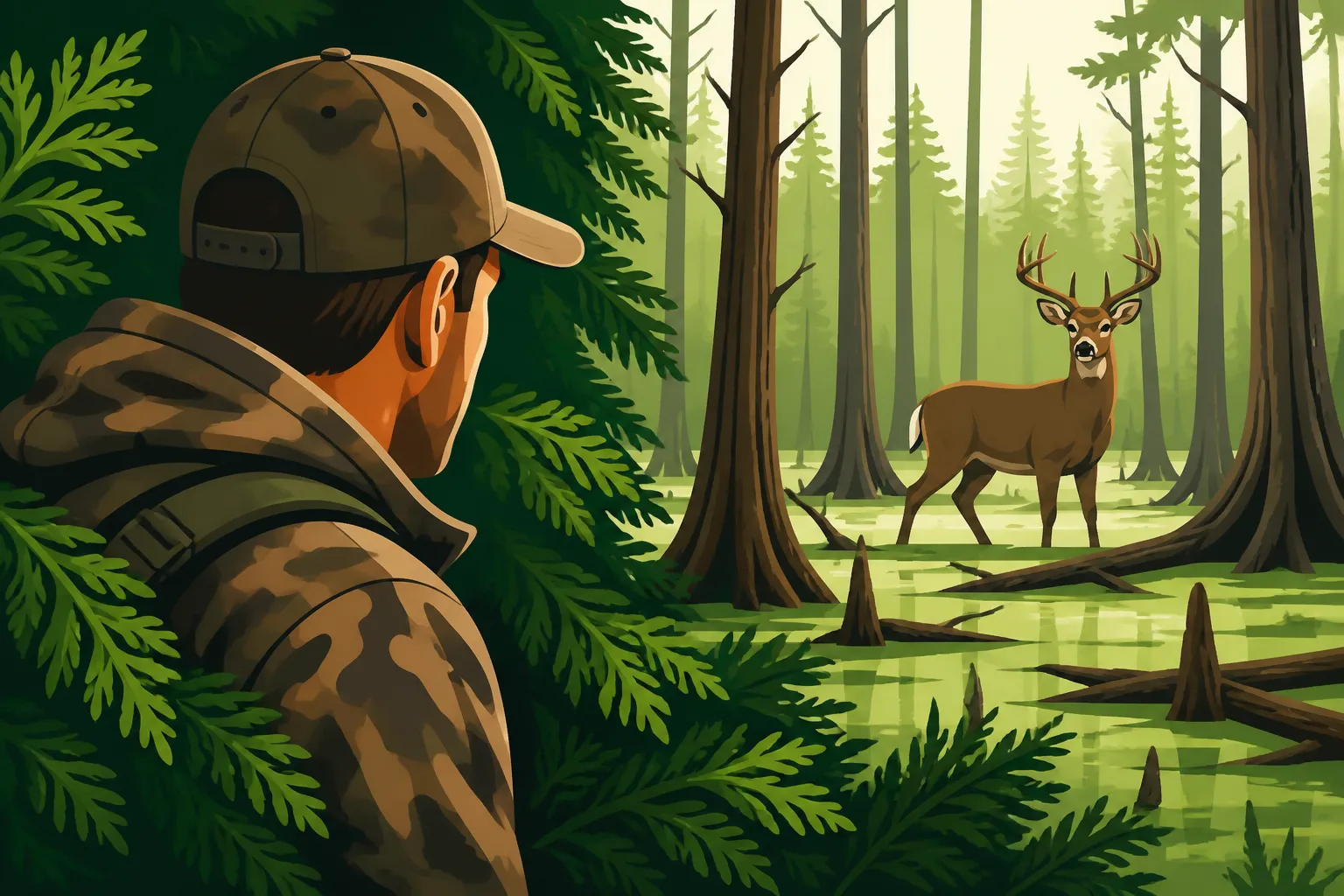
Reading a Michigan Cedar Swamp for Deer
Cedar swamps in Michigan are notorious for being some of the toughest places to hunt, but for a seasoned whitetail, they offer impenetrable sanctuary and crucial thermal cover, especially when the snow starts flying. This makes them absolute magnets for big bucks looking to escape pressure. If you've ever felt swallowed whole by a Michigan cedar swamp, wondering where the deer could possibly be hiding, this guide is for you. We're going to break down how to interpret the subtle clues these unique habitats offer, helping you unlock their secrets and increase your chances of finding that elusive swamp buck.
Why Michigan Cedar Swamps Are Whitetail Havens
Cedar swamps aren't just patches of thick woods; they're intricate ecosystems that provide everything a deer needs to thrive, especially when conditions get tough. Many hunters avoid them due to the difficulty of travel and visibility, which only makes them more attractive to deer seeking refuge from human activity. These areas often hold deer that have learned to evade pressure, making them prime spots for those willing to put in the effort.
Thermal Cover and Food Source
The dense canopy of cedar trees (eastern white cedar, Thuja occidentalis) creates an incredible microclimate. In the brutal Michigan winters, this canopy acts like a giant blanket, trapping heat and reducing windchill, making the swamp significantly warmer than the open hardwoods. This thermal cover is absolutely essential for deer to conserve energy during the coldest months, protecting them from harsh winds and heavy snow. But it's not just shelter; cedar browse itself is a critical food source, especially in late season when other forage is scarce or buried under deep snow. Deer will "yard up" in these areas, forming well-worn trails as they move between bedding and feeding within the protective confines of the swamp. You’ll often find these yards, identifiable by numerous tracks and clipped cedar branches, deep within the swamp where the cover is thickest, showing concentrated activity.
Escape Cover and Sanctuary
Beyond thermal benefits, cedar swamps offer unparalleled security. Their thick, often tangled undergrowth, combined with standing water or boggy ground, makes them incredibly difficult for humans to traverse quietly or quickly. This creates a natural fortress where deer feel safe from predators, including hunters. During any hunting season, especially when pressure on easily accessible public land ramps up – think about Michigan's November Firearm Deer Season or even later during Muzzleloader Deer Hunting in Michigan – smart deer will retreat deep into these seemingly impenetrable sanctuaries. Bucks that have learned to survive multiple hunting seasons almost instinctively head for the deepest, nastiest cedar swamps when they sense danger. Understanding this intrinsic value of a cedar swamp to a deer is the first step in learning how to hunt it effectively. They use this cover to escape, making them a challenge but also a high-reward environment.
Key Signposts for Decoding a Cedar Swamp
Stepping into a cedar swamp can feel like entering a green labyrinth, but even in the thickest cover, deer leave clues. Learning to read these signposts is crucial to unraveling the mystery of where they move, feed, and bed within this unique habitat. It's about looking for patterns and subtle indicators that reveal deer activity, helping you piece together the puzzle of deer movement.
Finding Dry Ground and Islands
One of the most important things to understand about deer movement in a cedar swamp is their preference for the path of least resistance. While they can navigate boggy areas and shallow water, they'll almost always seek out drier ground when possible. Look for subtle rises in elevation, small ridges, or "islands" of higher ground within the swamp. These often feature slightly different tree species, like larger pines or hardwoods mixed in with the cedar, indicating a change in the soil and water conditions. These islands and dry ridges are prime bedding areas or travel corridors because they offer solid footing, better visibility in some directions, and often slightly less dense cover, making escape easier. Use satellite imagery on a robust mapping app to identify these slight elevation changes and dry islands before you ever set foot in the swamp. Marking these potential high spots for a closer look is a critical scouting step when Scouting Michigan Public Land Before Season.
Decoding Rubs and Scrapes in the Thicket
Unlike open hardwoods where rubs and scrapes can be found almost anywhere, those found deep within a cedar swamp are often highly significant. A rub in thick cedar often indicates a buck's travel route or a core area, especially if it's on a larger sapling or tree that stands out from the dense undergrowth. Scrapes, though rarer in the wettest parts, will often be found on the edges of drier ground within the swamp, serving as communication hubs. Don't expect to find wide-open, perfectly formed scrapes; they might be smaller, muddier, or simply a disturbed patch of ground under a low-hanging branch. Pay attention to how fresh the sign is. A string of fresh rubs, particularly those running deeper into the swamp, can lead you directly to a buck's sanctuary. These aren't random; they're part of a buck's routine, showing exactly where he feels comfortable enough to leave his mark and communicate with other deer. Identifying these signs is key to understanding Finding Sign in Big Timber.
Understanding Entry and Exit Points
Deer don't just magically appear in the middle of a swamp. They have specific routes they use to enter and exit. These routes are often dictated by features like slight elevation changes, narrow strips of high ground, or less dense sections of timber that act as funnels. Look for heavily used game trails along the transition lines where the swamp meets higher, drier ground, like hardwoods or pine ridges. These edges are key ambush points. Also, within the swamp itself, look for defined trails that weave through the densest cover. These are highways that deer use consistently. Sometimes these trails will lead to water sources, small openings, or areas of specific browse. Learning to identify these faint but consistent paths is vital, as they are often the only clear routes deer will use when Still-Hunting Michigan Cedar Swamps. These routes are often overlooked by less persistent hunters, making them prime locations for a patient hunter.
Tactical Approaches to Hunting Michigan Cedar Swamps
Hunting cedar swamps successfully requires a different mindset and strategy than hunting open woods. It’s about precision, patience, and adapting to the unique challenges this dense environment presents. Your usual tactics might need significant adjustment to be effective in this challenging terrain.
Still-Hunting the Edges and Pushing In
One of the most effective ways to hunt a cedar swamp is to still-hunt its edges, especially during the early morning or late afternoon when deer might be moving to or from the denser core. Walk slowly, pausing frequently to scan ahead and listen intently. The visibility is often so poor that you'll hear a deer long before you see it, or vice versa. Focus on the transition zones where the swamp meets other habitat types, such as a field edge, a pine plantation, or hardwoods. These are often high-traffic areas where deer stage before entering or leaving the swamp. If you're confident there's a buck holed up deep inside, a slow, methodical push through a section of the swamp can sometimes bump them out to waiting hunters positioned on the opposite edge. This can be particularly effective during the late archery season or during the firearm season with a small group of hunters for a well-planned Deer Drives With Three or Four Hunters.
Setting Up Over Travel Corridors and Funnels
Once you’ve identified key dry ground, islands, or entry/exit points within or along the edges of the swamp, consider setting up a stand or ground blind. The tight confines of a cedar swamp often funnel deer into very specific travel corridors. A well-placed stand on the edge of the swamp, similar to principles used in Treestand Setups in Michigan Hardwoods, overlooking a pinch point or a distinct trail, can be deadly. However, given the dense cover, a ground blind is often an excellent choice within the swamp itself. Just be sure to brush it in thoroughly to break up your outline and blend into the environment. Remember, shots will likely be close and fast, so be prepared for tight shooting lanes. Knowing your effective range in these conditions is paramount, as you won't have the wide-open views common in other terrains. For tips on effective concealment, refer to Using a Ground Blind on Michigan State Land.
Using the Wind and Thermals to Your Advantage
Wind direction is always critical when deer hunting, but it takes on an even greater importance in a cedar swamp. The dense canopy and varied terrain within the swamp can create unpredictable swirling winds and localized thermals. Always approach a setup or still-hunt with the wind in your face or quartering to you. Pay close attention to how thermals might be carrying your scent – warm air rises in the morning and cool air falls in the evening, often pulling scent down into the swamp or up out of it. On calm, cold mornings, scent might hang low in the swamp, making a stealthy approach even more challenging. Using a milkweed pod or a portable wind checker regularly is crucial to stay ahead of fickle swamp winds. For more general advice on air currents, consider reading about Wind and Thermals on Michigan Ridges, which can offer transferable knowledge to swamp environments where similar dynamics play out due to elevation changes, however subtle.
Essential Gear for Navigating and Hunting Cedar Swamps
Hunting a Michigan cedar swamp isn't for the faint of heart, and it certainly isn't for the unprepared. The right gear can make the difference between a miserable, unproductive hunt and a successful, albeit challenging, outing. Investing in quality, swamp-appropriate gear will enhance your comfort, safety, and ultimately, your chances of success.
Footwear and Clothing for Wet and Cold
Your choice of footwear is perhaps the most critical gear decision for swamp hunting. Forget your uninsulated leather boots; you need serious waterproof protection. Knee-high rubber boots, preferably insulated, are almost a necessity. Brands like LaCrosse or Muck Boots offer excellent options that will keep your feet dry when crossing shallow water, negotiating boggy ground, or slogging through melting snow. For clothing, layering is key. Cedar swamps are often colder and damp, so warm, moisture-wicking base layers are crucial, followed by insulating mid-layers and a waterproof, breathable outer shell. Wool is an excellent choice for its ability to insulate even when wet and its quiet movement qualities. Don’t forget a good pair of waterproof gloves and a warm hat to retain body heat. Being comfortable and dry allows you to stay on stand longer and focus on the hunt, not the cold seeping into your bones. For more on cold weather gear, specifically Boots for Michigan Swamps and Snow, you'll find detailed advice.
Navigation Tools and Safety Equipment
It's incredibly easy to get disoriented in a dense cedar swamp, where visibility is limited and landmarks are scarce. A reliable GPS unit or a smartphone with a robust mapping app (like onX Hunt or Gaia GPS) is non-negotiable. Download offline maps before you go, as cell service is often nonexistent deep in the swamp. Mark your entry point and any trails you find, as well as potential bedding or feeding areas. A compass and paper map serve as a vital backup for when electronics fail. Beyond navigation, always carry a small first-aid kit, a headlamp with extra batteries, a fire starter, and extra water. Tell someone where you're going and when you expect to return, especially if you're venturing deep into remote areas. A fully charged power bank for your phone is also a smart addition. For remote Upper Peninsula hunting, these items are even more critical, as discussed in First Aid Kits for Remote Upper Peninsula Ground.
Packing for the Deep Woods
When heading into a cedar swamp, you'll want a pack that can handle the abuse and keep your gear dry. A waterproof or highly water-resistant pack is ideal. Pack only the essentials: your weapon, ammunition, navigation tools, safety gear, a rangefinder (shots can be close but estimating distance in thick cover is tough), and maybe a small snack and water. Minimize bulk, as you'll be squeezing through tight spots and potentially climbing over downed timber. A small, foldable saw can be useful for clearing shooting lanes or marking trails, but avoid leaving permanent marks on public land. Remember that if you're lucky enough to harvest a deer, getting it out of a swamp can be an arduous task. Consider a deer sled if snow conditions allow, or be prepared for the gutless method and repeated trips with a frame pack, especially if you're alone and deep in the swamp. Knowing how to efficiently perform Getting a Deer Out of a Michigan Cedar Swamp is as important as knowing how to hunt it.
Here's a quick comparison of key gear for cedar swamp hunting:
| Gear Type | Essential Item | Why it's crucial for Cedar Swamps |
|---|---|---|
| Footwear | Insulated Rubber Boots | Keeps feet dry in water/mud, provides warmth in cold, reduces scent. |
| Navigation | GPS/Mapping App (offline) | Prevents getting lost in dense, disorienting cover; marks sign. |
| Clothing | Layered, Waterproof Outer | Stays warm and dry in damp conditions; allows for temperature control. |
| Scent Control | Scent-free everything | Deer are often close; minimizes detection in tight quarters. |
| Safety | First-Aid Kit, Headlamp | Essential for unforeseen circumstances in remote, rugged terrain. |
| Weapon | Short-barreled/Fast handling | Easier to maneuver in thick brush; often close-range shots. |
Cedar swamps might seem intimidating, but with the right preparation, knowledge, and respect for their challenging nature, they can be some of the most rewarding places to hunt in Michigan. Embrace the challenge, learn to read the subtle language of the swamp, and you just might find that elusive buck you've been dreaming of.
Disclaimer
Always consult the latest Michigan Department of Natural Resources (DNR) hunting regulations before heading into the field, as rules and seasons can change. Stay safe, be ethical, and respect the land and its wildlife.