What Replaced Bait Piles for Michigan Hunters
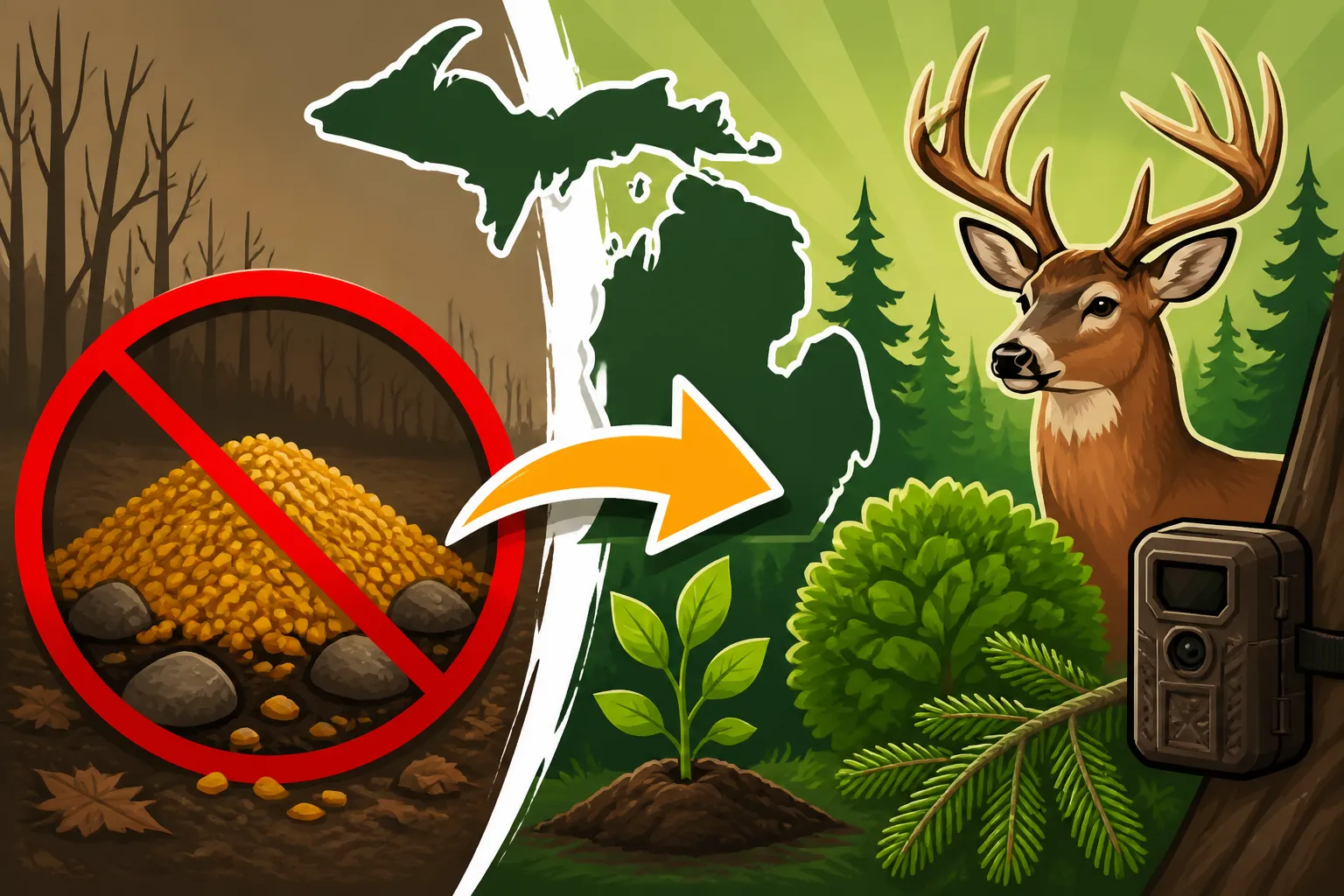
Remember those days when throwing out a pile of apples or a bag of corn was just part of your deer season ritual? For many Michigan hunters, especially those in the Lower Peninsula, that routine was abruptly changed with the statewide baiting ban. It felt like a fundamental shift, forcing us to re-evaluate how we approached deer hunting and sending many of us scrambling for new strategies. This guide is all about navigating that new reality, exploring the successful alternatives that have replaced traditional bait piles for Michigan hunters.
The Shift Away from Baiting and Its Implications
The decision to implement a statewide baiting and feeding ban across most of Michigan, especially the Lower Peninsula, wasn't made lightly. It was a direct response to the spread of Chronic Wasting Disease (CWD) among the state's deer herd. CWD is a devastating neurological disease that is always fatal to deer, elk, and moose. Scientific evidence strongly suggests that concentrating deer at bait piles facilitates the transmission of diseases like CWD because animals are in closer contact, sharing saliva and urine at a single spot. Removing bait piles was a difficult but necessary step to help slow the spread of CWD and protect our deer populations for future generations.
For hunters, this meant a significant change in tactics. Many had relied on bait for years, using it to draw deer into specific shooting lanes or to hold them in an area long enough for a shot. The ban forced a return to more traditional, observational hunting methods, emphasizing deep understanding of deer behavior, natural food sources, and topography. It wasn't just about finding a deer anymore; it was about understanding why a deer would be in a particular spot without artificial attractants. This pivot required a renewed focus on scouting, habitat interpretation, and adapting to the deer’s natural movements.
Embracing Nature's Pantry: Understanding Key Food Sources
With bait piles out of the picture, the focus for successful Michigan deer hunting has squarely returned to natural food sources. Deer are creatures of habit, and those habits are largely dictated by what they need to survive, primarily food and cover. Understanding the seasonal availability and preference for various natural foods is now paramount for setting up stands and predicting deer movement.
Acorns and Other Hard Mast Production
In Michigan, especially in hardwood forests, acorns are king. When oak trees have a good mast year, deer will abandon almost everything else to feed on them. There are several types of oak in Michigan, including red, white, and black oaks, and each species drops its acorns at slightly different times. White oak acorns are typically preferred due to their lower tannin content, making them less bitter. Deer will hit these first. However, during years when white oak production is low, or once they’ve been picked over, deer readily switch to red and black oak acorns.
Scouting for mast production is crucial. You're not just looking for oak trees, but for trees that are actually dropping acorns. Take the time to walk through oak ridges, looking for fresh cuttings on the ground – the tell-tale sign that deer (or squirrels) are actively feeding. You might even find where deer have pawed through leaf litter to get to buried acorns. If you can locate a ridge or flat with abundant dropping acorns, you've found a primary food source that deer will frequent, especially in the early archery season and through the peak of the rut. This kind of dedicated scouting is what truly replaces the easy draw of a bait pile.
Soft Mast and Agricultural Fields
Beyond acorns, Michigan's landscape offers a variety of other natural food sources that deer utilize throughout the hunting seasons. Soft mast, such as wild apples, pears, and various berry bushes, can be incredibly attractive, particularly in late summer and early fall. Old homesteads or forgotten orchards on public land can be goldmines for wild apple trees. These spots might not hold deer all day, but they can be crucial transition areas where deer stop for a snack between bedding and other food sources.
For hunters in agricultural areas, especially in southern Michigan farm country, crop fields are immense natural food magnets. Standing corn, soybeans, alfalfa, and winter wheat fields provide both abundant food and, in the case of corn, excellent cover. Deer will bed down in standing corn and emerge to feed, often just at the edge of the field or moving through it. Understanding the specific crop rotation in a given area can tell you a lot about when and where deer will be feeding. As the harvest progresses, deer will move to unharvested fields or pick through the stubble for dropped kernels and beans. This reliance on agricultural bounty is a primary reason why Southern Michigan Farm Country Deer Hunting often involves setting up on field edges or travel corridors leading to them.
Mastering the Art of Observation: Scouting and Stand Placement
Without bait to bring deer to you, your success hinges on going to them – or, more accurately, intercepting them along their natural travel routes. This requires a deep understanding of deer behavior, extensive scouting, and thoughtful stand placement. It's about becoming a detective, piecing together clues from the landscape.
Reading the Landscape for Deer Sign
Effective scouting starts long before opening day. You need to be out in the woods, even in the off-season, looking for rubs, scrapes, tracks, and droppings. Rubs indicate where bucks are marking territory and can show travel routes. Scrape lines, especially active ones along a two-track or edge, are major communication hubs during the rut. Fresh tracks, particularly those of larger deer, can tell you about recent activity and direction of travel. Look for subtle terrain features like benches, saddles, and creek bottoms – these often funnel deer movement. Dense cover, such as cedar swamps, thick clearcuts, or thermal bedding areas, will hold deer, and identifying the trails leading in and out of these sanctuaries is key. For example, knowing how to interpret Reading a Michigan Cedar Swamp for Deer can reveal hidden trails often missed by less diligent hunters.
Modern mapping applications are absolutely essential for this kind of scouting. Tools like GoHunt allow you to overlay aerial imagery with topographic maps, property boundaries, and even historical satellite views. This lets you identify potential bedding areas, transition zones, and water sources from home, saving you countless miles of walking. You can mark potential stand locations, observe changes in vegetation over time, and even map out quieter entry and exit routes that minimize your impact on the hunting grounds. For a deep dive into using these tools, checking out Scouting Michigan Public Land Before Season is highly recommended.
Strategic Stand Placement for Interception
Once you’ve identified promising areas through scouting, the next critical step is placing your stand or blind strategically. This is where many hunters make or break their season. Instead of thinking about where a deer will eat your bait, you're thinking about where they have to walk to get to natural food, water, or bedding, or where they might pause along a natural funnel.
Consider pinch points: narrow strips of timber between open fields, necks of land between two swamps, or even subtle changes in elevation that force deer into a specific corridor. These are prime locations for an ambush. Wind direction is paramount; always approach and set up with the wind in your favor, positioning yourself downwind of where you expect deer to approach. Early morning hunts often mean deer are moving from feeding areas back to bedding, while evening hunts see them moving the opposite direction. Your entry and exit routes must be quiet and avoid disturbing the area you plan to hunt. A well-placed treestand in Michigan hardwoods, as explored in Treestand Setups in Michigan Hardwoods, along a known travel corridor can be far more effective than a bait pile ever was. Using a ground blind can also be an excellent option for areas where tree cover is sparse, offering concealment and flexibility, especially when thinking about Using a Ground Blind on Michigan State Land.
Active Management and Modern Technology
While scouting natural food sources and strategic stand placement are critical, some hunters, particularly those with access to private land, have taken a more proactive approach by actively managing their land to create attractive deer habitat. Moreover, advancements in technology have leveled the playing field for all hunters, providing new ways to gather information and make informed decisions without bait.
Habitat Improvements and Food Plots
For landowners, the baiting ban has spurred an increased interest in habitat enhancement. This involves creating, improving, or maintaining natural food sources and cover to hold deer on their property. This might include planting native species like oak or fruit trees, encouraging the growth of preferred browse, or creating small sanctuaries of thick cover.
Food plots have become a primary alternative to bait piles on private land. These are areas planted with crops specifically designed to attract and nourish deer. Common choices in Michigan include clover, alfalfa, brassicas (like rape, kale, or turnips), and various grain blends. Clover plots, for instance, offer high-protein forage from spring through fall and can be relatively low maintenance. Brassicas are fantastic for late-season hunting, as their sugar content increases after a hard frost, making them incredibly palatable to deer when other food sources dwindle. For those interested in this approach, learning more about Food Plots Instead of Bait can provide excellent guidance. These plots not only draw deer but also provide crucial nutrition, especially through the harsh Michigan winters.
Here's a quick comparison of common natural and cultivated food sources that attract Michigan deer:
| Food Source Type | Examples | Peak Attractiveness | Hunter Considerations |
|---|---|---|---|
| Hard Mast | White Oak Acorns | Early Fall (Sept-Oct) | Deer preference high; scout for fresh drops. |
| Red/Black Oak Acorns | Mid-Late Fall (Oct-Nov) | Utilized heavily after white oak acorns are gone. | |
| Soft Mast | Wild Apples, Berries | Late Summer-Early Fall | Often found in old clearings or homesteads; can be highly localized. |
| Agricultural | Standing Corn | Fall-Early Winter | Provides food & cover; deer will bed in it. Hunt edges and transition zones. |
| Soybeans, Alfalfa | Late Summer-Fall | High protein; deer will browse through fields. Hunt travel routes to and from. | |
| Browse | Maple, Aspen, Dogwood, Cedar | Year-round, crucial in winter | Key food source; look for heavily browsed areas near thick cover. Critical in areas without ag. |
| Food Plots | Clover, Brassicas | Spring-Fall (Clover); Late Fall-Winter (Brassicas) | Private land option; provides consistent, high-quality forage. Requires planning and maintenance. |
Leveraging Technology and Data for Smarter Hunting
In the absence of bait, technology has become an even more powerful ally. Mapping applications, like those offered by GoHunt, are revolutionary. They allow hunters to study terrain, identify potential funnels, pinpoint bedding areas, and plan optimal routes in and out of stand locations without disturbing game. You can mark everything from fresh rubs to historical deer sightings, building a comprehensive picture of deer activity over time. Using detailed aerial imagery, you can locate specific oak stands, analyze clearcuts, or identify swamp edges that often hold deer. For a deeper understanding of digital scouting, you might want to explore Reading Aerial Photos for Swamp Deer.
Trail cameras are another indispensable tool. Placed on natural travel corridors, rub lines, or near promising food sources (not bait), they provide invaluable intelligence about deer presence, movement patterns, and specific bucks in an area. They help confirm what your initial scouting suggests and allow you to monitor activity without being physically present. Weather apps that provide hyper-local wind direction and thermals are also critical. Understanding Wind and Thermals on Michigan Ridges or in river bottoms can make the difference between a successful hunt and alerting every deer in the area to your presence. These digital tools, combined with boots-on-the-ground scouting and knowledge of deer behavior, have completely replaced the need for bait as a primary information-gathering and deer-attracting method. The Michigan DNR also offers its own tools, like The Michigan DNR Hunt Fish App, which provides regulations, harvest reporting, and mapping capabilities directly on your smartphone.
Ultimately, the baiting ban in Michigan has, in many ways, pushed hunters to become more skilled, more knowledgeable, and more connected to the natural rhythms of the deer woods. It's about outsmarting the deer through observation and understanding, rather than simply luring them in. It's a challenging, but ultimately more rewarding, way to hunt in the Great Lakes State. For those seeking specific signs in challenging terrain, the article on Finding Sign in Big Timber offers valuable insights. Even when nature presents challenges, such as Hunting After an Acorn Failure, these advanced scouting and adaptation skills become even more crucial.
Disclaimer
The information provided in this guide is for general educational purposes only and is not a substitute for official Michigan Department of Natural Resources (DNR) regulations. Hunting laws and regulations can change, so always consult the current Michigan DNR Hunting and Trapping Digest or their official website before participating in any hunting activities.