Flushing Grouse Without a Dog
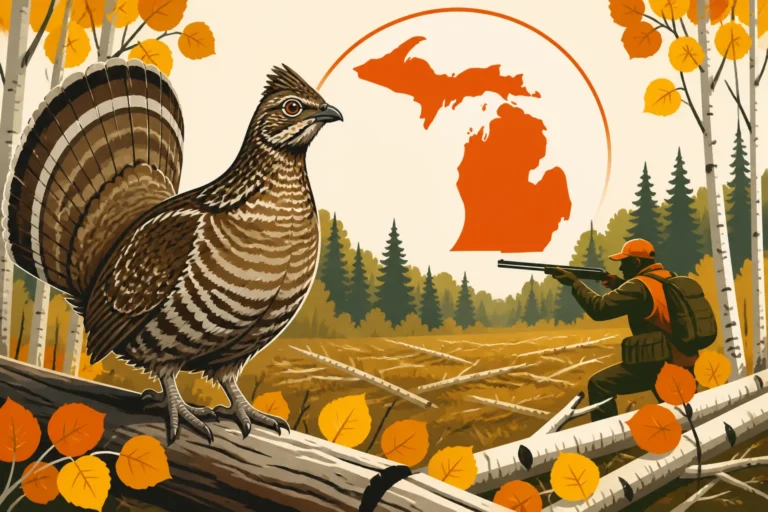
Hunting ruffed grouse in Michigan without a faithful canine companion can feel like a daunting, even frustrating, endeavor. Many hunters rely on the keen nose and boundless energy of a bird dog to pinpoint those elusive thunder chickens, and without that advantage, it’s easy to feel like you’re just wandering aimlessly through the thick cover. But don't despair! While it demands a different set of skills and a whole lot of grit, it's absolutely possible to successfully flush and even harvest Michigan grouse on your own two feet. This guide is all about equipping you with the knowledge and tactics to become a more effective dog-less grouse hunter, turning those seemingly empty woods into productive hunting grounds.
Understanding Michigan Grouse Behavior Without a Canine Partner
Before you even step foot in the woods, understanding the habits and preferred haunts of Michigan ruffed grouse is paramount, especially when you don't have a dog leading the way. You have to become your own bird dog, in a sense, by knowing where to look and how to approach those areas.
The Grouse Cycle and Its Impact on Flushing
One of the biggest factors influencing how you hunt grouse, and indeed, how many you even find, is the cyclical nature of their population. Ruffed grouse populations in Michigan, like many places, tend to ebb and flow over a roughly 8-10 year cycle. During peak years, birds seem to be everywhere; you'll hear drums constantly in the spring, and flushes will be frequent in the fall. During these high-density years, simply walking through good cover can yield multiple flushing opportunities. The birds are more numerous, often less wary due to sheer numbers, and sometimes less prone to running on the ground before flushing.
However, when the population is in a trough, or low cycle, the hunting becomes significantly tougher. Birds are sparser, often more spread out, and can be incredibly "tight" – meaning they won't flush until you are almost on top of them – or incredibly "runners," opting to sneak away on the ground long before you get close. In these lean years, your ability to identify prime habitat, move deliberately, and patiently work cover becomes even more critical. You can't rely on sheer numbers to stumble into birds; you have to actively seek them out. Keeping an eye on reports about the Michigan Ruffed Grouse Numbers Today can give you a heads-up on what kind of season to expect.
Where Grouse Hide: Reading the Cover
Without a dog to tell you, "Hey, a bird was just here," you need to be a master at reading the cover. Ruffed grouse are masters of camouflage and prefer dense, tangled habitat that offers both food and protection from predators. In Michigan, this usually means young aspen stands, thick alder runs, mixed conifer thickets, and the edges where these cover types meet more open hardwoods.
Young aspen stands, especially those in the 5-20 year age class, are prime grouse country. The dense saplings provide excellent overhead cover, and the catkins are a vital food source, especially in winter. You'll often find birds tucked into the thickest parts, particularly where there's a mix of other brush or downed timber. Think about Grouse Hunting Michigan Aspen Cover and how birds utilize those dense pockets. Alder swamps and creek bottoms are also magnets for grouse, and often woodcock as well. The wet, dense nature of these areas provides phenomenal hiding spots. For more on this mixed bag, check out Woodcock Hunting Michigan Alder Runs.
Also, pay close attention to transition zones – where two distinct cover types meet. This could be the edge of a mature hardwood forest bordering a young aspen clearcut, or a conifer stand bordering an alder bottom. These edges offer a variety of food sources and escape routes. Similarly, old logging roads or two-tracks that cut through these areas can be productive, especially if they have grown in with dense saplings or brush along the edges. Understanding How Old a Cut Should Be for Grouse can also guide you to the most productive timber. When you're scouting, even virtually using tools like the Mi-HUNT map, look for these specific habitat types.
Strategic Walking and Movement: Your Primary Flushing Tool
Since you don't have a dog to charge in and kick up birds, your own movement pattern becomes your most important flushing strategy. It's less about speed and more about calculated, deliberate action.
The Art of the Stop-and-Go
This technique is arguably the most effective method for flushing grouse without a dog. Grouse are notoriously "nervy" birds. They'll often hear or sense you long before you see them, and rather than flushing immediately, they'll often crouch down, hoping you'll pass by. A steady, predictable pace allows them to anticipate your movement and sit tight. The stop-and-go disrupts this.
Here’s how it works: you walk for 10-20 yards at a moderate pace, then suddenly stop dead still for 5-10 seconds. Then you start walking again. Repeat. What happens is that the grouse hears you coming, hunkers down, and then, just as it thinks you might be passing, you stop. This sudden silence and perceived "loss" of your exact location often makes them nervous enough to flush. Sometimes, they'll flush on the stop, other times, they'll flush a moment after you resume walking, realizing their cover has been compromised. Pay close attention during these pauses; listen for wing beats, or watch for movement in the dense cover. This technique requires patience, but it dramatically increases your chances of surprising a bird.
Covering Ground Effectively
Just randomly wandering through the woods, while enjoyable, isn't the most efficient way to find grouse without a dog. You need a systematic approach to ensure you're working the most promising cover.
- Grid Patterns or Zigzagging: When you're in a known patch of prime cover, like a large aspen clearcut, consider walking in a zigzag pattern or even a loose grid. This ensures you cover the area thoroughly. Instead of just walking in a straight line, which might only flush birds directly in front of you, a zigzag allows you to approach cover from different angles, potentially surprising birds that were hunkered down off to your side.
- Targeting Key Habitat Features: Focus your efforts on the thickest parts of the cover. Walk along the edges of clearcuts, paying extra attention to where brush piles, blowdowns, or dense clumps of conifers offer extra sanctuary. Follow game trails or faint deer runs through thickets, as grouse often use these "highways" to move through dense cover. River or creek bottoms lined with alders are another prime target. When you identify promising cover, be prepared to slow down, implement the stop-and-go, and scrutinize every detail. Think about areas discussed in Hunting Michigan Clearcuts and Aspen Cuts or Hunting Michigan Swamp Edges for Deer – while focused on deer, these locations also hold grouse.
- Move into the Wind: If possible, try to move into the wind. While you don't have a dog's nose, moving into the wind can still give you a slight advantage. It carries your scent behind you, making it harder for birds to detect you as early. It also means that when a bird does flush, it will typically flush into the wind, which means it will rise more steeply and slower, potentially giving you a slightly better shot opportunity.
Utilizing Terrain and Natural Funnels
Michigan's terrain might not be mountainous, but even subtle changes can be exploited. Use small ridges, ditches, and variations in elevation to your advantage. If you're walking along a gentle slope, try to walk parallel to it, staying about halfway down. Birds might flush uphill or downhill, giving you a slightly clearer view as they break cover.
Natural funnels, such as narrow strips of cover between more open areas or along the bend of a creek, can concentrate birds. These are excellent places to slow down and be extra vigilant. Birds moving between feeding and roosting areas might utilize these funnels, making them good ambush points. Consider how you might approach these areas to push birds toward a more open spot or to anticipate their flight path.
| Flushing Strategy | Description | Best Use Case | Pros | Cons |
|---|---|---|---|---|
| Stop-and-Go | Walk 10-20 yds, stop 5-10 secs, repeat. Disorients birds. | Dense cover, high grouse pressure areas. | Highly effective for tight-sitting birds; covers ground thoroughly. | Requires patience; can be slow. |
| Steady Push | Consistent, moderately slow pace through cover. | Large, uniform cover patches; can cover more ground. | Good for covering broad areas; keeps you moving. | Less effective on tight-sitting birds; predictable for wary grouse. |
| Zigzag/Grid Pattern | Systematic coverage of an area by walking in diagonals or crossing patterns. | Known productive areas, clearcuts, aspen stands. | Ensures thorough coverage; approaches birds from multiple angles. | Can be disorienting without a GPS; might miss birds on the edge. |
| Partner Flush | Two or more hunters walk parallel or in a line, pushing birds ahead. | Large cover blocks, known bedding areas. | Highly effective for flushing; covers wide fronts. | Requires coordination; less common for dog-less hunters. |
| Edge Working | Focusing on the transition zones between different cover types. | Any area where two distinct habitats meet (e.g., aspen/hardwood, alder/pine). | Birds often use edges for movement; offers varied food sources. | Birds might flush away from the edge into thickest cover. |
Mastering the Shot Opportunity When Birds Flush
Hearing the explosive flush of a ruffed grouse is exhilarating, but converting that into a successful shot, especially in Michigan's often dense timber, is a whole other challenge. Without a dog pointing or flushing reliably, you have to be constantly prepared.
Ready Position and Quick Mount
The most crucial element of shooting grouse is being ready. You're walking through thick cover, often with branches, thorns, and uneven ground. You can't have your gun slung over your shoulder or cradled with two hands like you're on a dove field. Your shotgun should be carried in a "ready" position – typically with the buttstock tucked into your armpit or held across your body, muzzle slightly elevated, and your dominant hand on the grip. This allows for a swift mount to the shoulder.
Practice mounting your gun at home. Do it quickly, smoothly, and ensure your cheek finds the stock consistently. When a grouse explodes from cover, you'll have mere seconds, often less, to react, shoulder the gun, find the bird, and swing. Every fraction of a second counts. You'll want a shotgun that feels lively in your hands, not too heavy or cumbersome for navigating thick cover. For insights on appropriate firearms, consider Upland Guns for Aspen and Alder.
Anticipating the Flush and Shot Placement
Part of being ready is anticipating the flush. When you're in ideal grouse habitat, you should be expecting a flush at any moment. Your eyes should be scanning ahead, looking for any subtle movement, any slight ruffle of leaves, any dark shape that might be a bird. When walking, visualize potential escape routes for a bird that flushes from that specific patch of cover. Will it go straight away? Swing left or right? Try to anticipate the most likely flight path.
When the flush happens, it's often startlingly loud and fast. Your natural inclination might be to snap shoot, but resist the urge to just throw the gun up. Take a split second to locate the bird, mount the gun smoothly, and then swing through the bird. Grouse in thick timber are often going away, or crossing quickly between trees. Focus on a clear, steady swing, and don't stop your follow-through once you pull the trigger. Shot placement for grouse is usually less about precision aiming and more about a good, fluid swing that puts your pattern in the bird's path. Typically, a modified or improved cylinder choke is ideal for the close-range shots common in Michigan grouse cover. For more on this, check out Choke Choice for Fast Flushes.
Following Through and Marking the Fall
Once you've squeezed the trigger, your job isn't over. This is where not having a dog really hurts, and why you need to be meticulous. You must watch the bird until it hits the ground. Don't take your eyes off it, even for a split second, to admire your shot or reload. If you lose sight of it, finding it in the dense Michigan undergrowth becomes incredibly difficult, sometimes impossible.
As the bird falls, try to pick out a distinct landmark – a downed log, a specific tree, a large rock – exactly where you saw it hit. Then, walk directly to that spot. Don't deviate. Once there, expand your search in ever-widening circles. Grouse can sometimes "sail" a fair distance even after being hit, or they might bounce upon impact and roll under cover. Be patient, methodical, and thorough in your search. If you can't find it immediately, try dropping a hat or piece of orange clothing at your last known spot, then expand your search again. Some hunters even mentally draw a grid over the area and search each square. This can be the most frustrating part of dog-less grouse hunting, but persistence pays off.
Gear and Tactics for the Dog-Less Grouse Hunter
Success in the dog-less grouse woods isn't just about how you walk or shoot; it's also heavily influenced by the gear you carry and the planning you do before you even leave home.
Essential Gear for Flushing Success
Since you're doing all the work, every piece of gear should either help you move more efficiently, stay more comfortable, or enhance your chances of success and recovery.
- Shotgun: A lightweight, fast-handling shotgun is key. Over/unders, side-by-sides, or semi-automatics in 12 or 20 gauge are popular choices. A 20 gauge is often preferred for its lighter weight and softer recoil, which can be a blessing after a few hours of walking. As mentioned, an Improved Cylinder or Modified choke is usually perfect for the close-range flushing shots you'll encounter. Barrel length is also important; something in the 24-26 inch range is often ideal for navigating tight cover. Longer barrels can get snagged easily. Explore options in Best Shotgun Gauge for Michigan Grouse and Barrel Length for Walking Thick Cover.
- Ammunition: #7.5 or #8 shot is standard for grouse. You want a dense pattern at close range.
- Protective Clothing: This is non-negotiable. Michigan grouse cover is often thorny, briar-filled, and dense. Tough brush pants are essential to protect your legs. A good upland vest with plenty of game bag space and shell loops will keep you organized and comfortable. Layers are always wise, as you'll be exerting yourself but also standing still for periods. For leg protection, don't skimp, look into Brush Pants for Michigan Alder.
- Boots: Comfortable, waterproof, and supportive boots are a must. You'll be covering miles on uneven, often wet terrain. Good ankle support can prevent a twisted ankle. Consider boots built for long walks in varied terrain, like those recommended in Boots for Walking Michigan Aspen Cuts.
- Navigation Tools: A GPS unit or a reliable mapping app on your phone (like GoHunt, OnX Hunt, or the Mi-HUNT app) is critical. Getting turned around in dense Michigan woods is easier than you might think, especially when you're focused on birds. These tools help you track your progress, mark promising areas, and, most importantly, find your way back to your vehicle.
Scouting and Planning Your Hunt
Your success starts long before opening day. Effective scouting is paramount for the dog-less hunter.
- Pre-season Scouting: Before the leaves drop, get out into the woods and walk. Look for sign: grouse droppings, dusting areas, and areas with abundant food sources like aspen catkins, clover, or various berries. Note the density of cover. Use aerial photos to identify clearcuts, alder bottoms, and conifer thickets. Knowing the lay of the land will make you much more efficient during the season. For guidance, refer to Scouting Michigan Public Land Before Season.
- Mapping Applications: Leverage technology. Apps like GoHunt allow you to pore over satellite imagery, identify promising clearcuts, timber harvest areas, and dense cover blocks from your couch. You can mark potential hunting spots, plan routes, and even monitor property lines if you're hunting near private land. The Michigan DNR’s Mi-HUNT map is also a fantastic free resource for public land identification and habitat analysis. Check out Using Michigan's Mi-HUNT Map for details on this valuable tool.
- Talk to Others: Local DNR biologists, foresters, or even other hunters can sometimes provide general information about grouse numbers or recent timber cuts in an area. While they won't give you exact spots, they might point you in the right direction.
Hunting Alone vs. With a Partner
Hunting grouse without a dog is a solitary pursuit for many, but hunting with a partner (or two) can offer significant advantages, even if no one has a canine.
- Hunting Alone: The biggest pro is that you only have yourself to worry about. You can go at your own pace, stop whenever you want, and change direction on a whim. The downside, as noted, is the difficulty of finding downed birds and the sheer effort required to cover ground and flush birds effectively. Safety is also a bigger concern when alone; always carry a way to communicate and let someone know your plans.
- Hunting With a Partner (or Two): This is where human "drives" can really shine. Two hunters can walk parallel, 20-40 yards apart, effectively covering a wider swath of habitat. When a bird flushes, both hunters have a chance to shoot, and two sets of eyes dramatically increase the odds of marking a fall and recovering the bird. A third hunter can act as a "blocker" at the end of a cover strip, intercepting birds that flush out the back. Communication is key here – use whistles or two-way radios to stay in touch, especially in thick cover. This dynamic can mimic some aspects of a deer drive, which you can read about in Deer Drives With Three or Four Hunters, adapted for upland birds.
Ultimately, flushing grouse without a dog is a rewarding challenge that forces you to become a more observant, patient, and skilled hunter. It requires more effort, yes, but the satisfaction of finding and harvesting a Michigan thunder chicken purely through your own woodsmanship is immense.
Disclaimer
Hunting is an inherently dangerous activity. Always prioritize safety, wear appropriate blaze orange clothing as required by Michigan law, and follow all hunting regulations. Be aware of your surroundings and other hunters. The information provided here is for educational and informational purposes only and should not replace professional guidance or proper hunter safety training.