Big Water Safety in a Layout Boat
Heading out in a layout boat on Michigan's vast, unpredictable Great Lakes can offer some of the most exhilarating waterfowl hunting experiences, but it also presents significant safety challenges that are often underestimated. The unforgiving nature of big water demands meticulous preparation and a deep understanding of safety protocols to prevent serious accidents. This guide will walk you through the essential safety measures, equipment, and best practices to ensure your layout boat hunts are as safe as they are successful.
The Unique Challenges of Big Water Layout Hunting
Hunting from a layout boat on the open waters of the Great Lakes is a world apart from tucked-away marsh blinds or river hunting. You’re exposed to elements that can change in an instant, and recovery from a mishap can be incredibly difficult, if not impossible, without proper planning and gear. The sheer scale of Lakes Huron, Michigan, or Erie means that help is often far away.
Understanding Michigan's Great Lakes Conditions
The Great Lakes are essentially inland seas, capable of producing ocean-like waves and weather events with little warning. A calm morning can quickly give way to whitecaps and gale-force winds that can swamp even larger vessels. Water temperatures, especially from late fall through winter, are lethally cold, making any immersion a dire emergency. Hypothermia is a constant threat that can incapacitate a hunter in minutes. Even relatively "minor" weather systems can create treacherous conditions, so constantly monitoring forecasts and understanding how local geography influences wind and wave action is paramount. It’s not just about the forecast for the day, but also understanding how previous days' winds have stacked up water, creating rollers that linger long after the wind has died down. This kind of nuanced understanding of the water is vital.
Beyond the immediate weather, consider the currents and depths. While not as strong as tidal oceans, currents can be present, especially around points, islands, and river mouths, and can make recovering decoys or a disabled boat more challenging. The depth of the water also impacts wave characteristics; shallower areas can create steeper, more breaking waves, which are particularly dangerous for low-profile layout boats. Always consult detailed marine forecasts and local reports before even considering a trip. Many seasoned waterfowl hunters use advanced weather apps that offer granular, real-time data to help them make critical go/no-go decisions, even when utilizing tools like GoHunt for their scouting.
The Layout Boat's Vulnerabilities
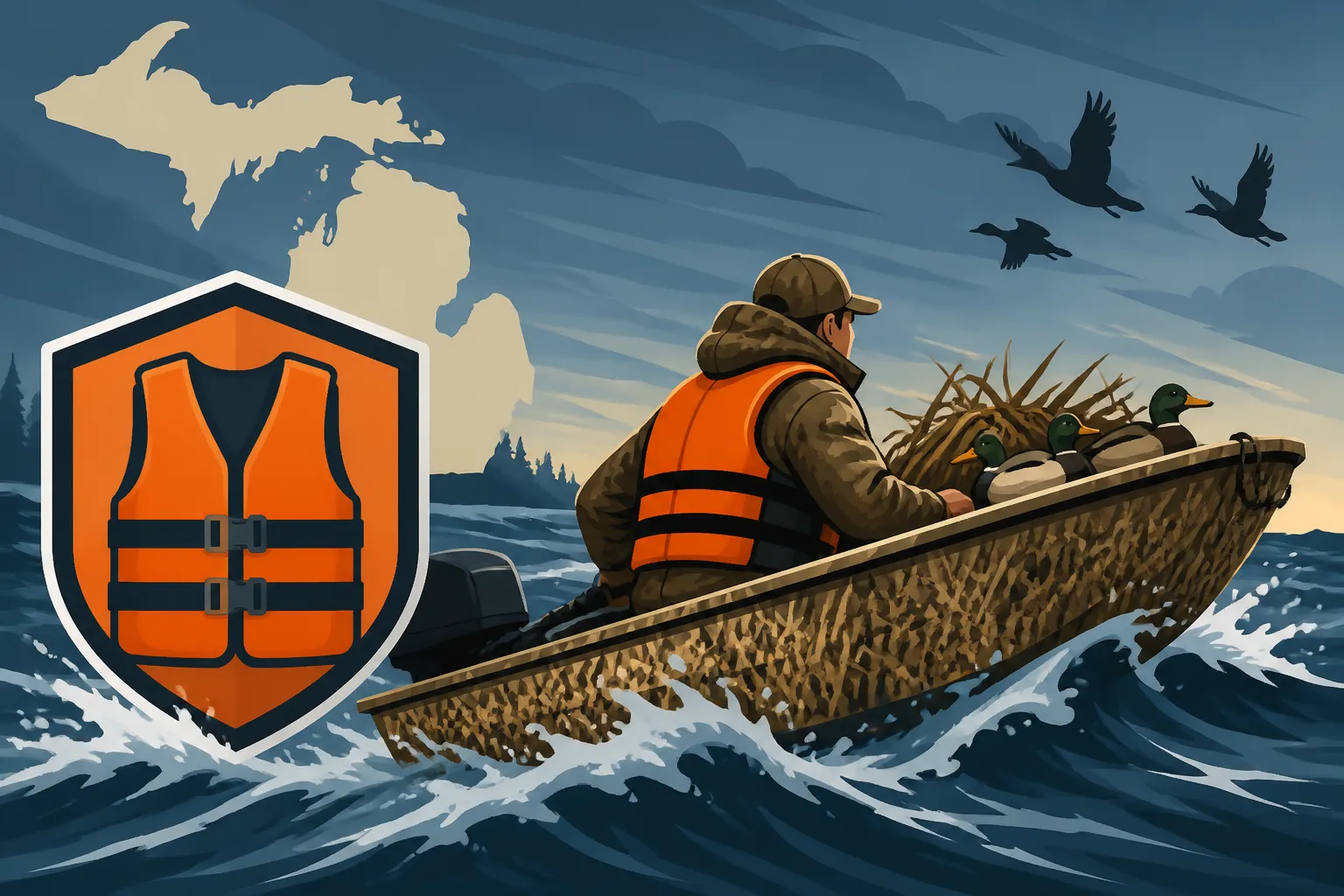
Layout boats, by design, sit incredibly low to the water, mimicking a floating log or clump of weeds to avoid detection by waterfowl. While brilliant for concealment, this low profile is also their greatest vulnerability. They offer minimal freeboard, meaning very little boat structure sits above the waterline to keep waves out. A single rogue wave, or even the wake from a distant freighter, can easily wash over the bow or sides, rapidly filling the boat with water. Once a layout boat begins to take on water, its stability decreases dramatically, making capsize a real and immediate danger.
Furthermore, these boats are often lightweight and designed for stability while floating level and loaded correctly. Any shift in weight, a sudden list, or the impact of a wave can destabilize them quickly. Unlike larger boats, they offer virtually no shelter from the elements. You are entirely exposed to wind, spray, and cold. Their limited size also means they carry very little in the way of emergency gear directly within them, relying heavily on a larger "tender" boat for transport and support. This dependency on another vessel highlights the critical importance of operating as a coordinated team, as the layout boat hunter is entirely reliant on the tender boat and its crew for rescue and recovery.
Essential Safety Gear and Equipment
When you're out on the big water in a layout boat, your life literally depends on your gear. There's no room for "good enough" or forgotten items. Every piece of equipment needs to be in top working order and readily accessible.
Personal Flotation Devices PFDs and Survival Suits
This isn't just a suggestion; it's non-negotiable. Every person in a layout boat, and indeed in the tender boat, must wear a properly fitted U.S. Coast Guard-approved Personal Flotation Device (PFD). For layout boat hunting on Michigan's cold waters, a standard Type III vest is often inadequate. The water temperatures are simply too cold, too quickly. The gold standard for layout boat hunters is a full immersion suit or a survival suit, sometimes referred to as a "dry suit." These suits are designed to protect you from hypothermia in frigid water for extended periods, providing crucial time for rescue. If a full survival suit isn't feasible, at minimum, a Type V inflatable PFD designed for cold-weather activities, worn over layers of wool or synthetic clothing, is essential.
Remember, even the best PFD won't help if it's stored under a seat. It must be worn at all times. Test your PFDs before the season to ensure they fit correctly and are in good condition. For inflatable PFDs, check the CO2 cartridge and ensure it's not expired. The urgency of getting a person out of the water quickly cannot be overstated when the water temperature is below 50 degrees Fahrenheit. Understanding how to properly wear and activate your PFD, as detailed in guides like Life Jackets for Layout Hunting, is a fundamental aspect of big water safety.
Communication and Navigation Tools
In the vastness of the Great Lakes, reliable communication is your lifeline. A marine VHF radio is absolutely critical. Cellular phones are unreliable due to spotty coverage far from shore and quickly lose power in cold or wet conditions. Your VHF radio should be mounted in the tender boat, and ideally, each layout boat hunter should carry a handheld, waterproof VHF radio on their person, secured to their PFD. This allows direct communication with the tender boat and other vessels, and, most importantly, allows you to call the Coast Guard in an emergency. Know the emergency channels (Channel 16) and how to issue a Mayday call.
Beyond communication, navigation is key. A GPS unit (either a dedicated marine unit or a robust app on a waterproof device) in the tender boat is essential for finding your spot, especially in fog or low light, and for navigating back safely. Ensure you have backup navigation, like a compass and paper charts, in case electronics fail. Knowing your exact location is vital for relaying to rescuers. Many hunters use GPS apps on their phones, but these should always be used in conjunction with a dedicated marine GPS or at least a fully charged, waterproof spare phone. Having your hunting spot pre-marked is crucial, and utilizing scouting tools, including those offered by GoHunt, can help you precisely mark your locations and potential escape routes.
Auxiliary and Tender Boat Requirements
A layout boat never operates alone. It always needs a larger, stable tender boat to transport hunters and gear, deploy and retrieve layout boats, set decoys, and act as a mobile command center and rescue vessel. This tender boat is arguably the most important piece of safety equipment. It needs to be appropriately sized for the body of water you're hunting, capable of handling rough conditions, and equipped with a reliable motor (and a backup motor!).
The tender boat should carry all the primary safety gear: extra PFDs, first-aid kit, fire extinguisher, anchor with sufficient line, extra fuel, tools, spare parts, and plenty of rope. It should also have sufficient deck space and freeboard to safely retrieve a person from the water or pull a swamped layout boat aboard. The crew of the tender boat must be experienced, proficient in boat handling, and fully aware of their responsibilities. They are the eyes, ears, and emergency response for the layout boat hunters. Understanding the nuances of Tender Boats and Safety on Big Water is critical for any successful big water hunt.
Operational Safety and Best Practices
Even with the best gear, unsafe practices can quickly turn a hunt into a disaster. Safety on big water is about constant vigilance, sound judgment, and adhering to proven protocols.
Pre-Hunt Planning and Weather Monitoring
Before you even think about putting a boat in the water, a comprehensive pre-hunt plan is essential. This includes studying marine forecasts, paying close attention to wind direction and speed, wave height, and potential for sudden shifts. Understand how specific wind directions affect your chosen hunting area – what might be a sheltered bay in a north wind could become a treacherous washing machine in a south wind. It’s not just about what the weather is but what it will be and how quickly it can change.
Inform someone on shore of your hunting location, your planned departure and return times, and who is with you. This "float plan" is crucial for search and rescue efforts if you fail to check in. Check marine weather continuously throughout the day using multiple sources, like NOAA weather radio and smartphone apps. If conditions deteriorate, don't hesitate to pull out early. No duck is worth risking a life. This detailed planning is a core component of Great Lakes Waterfowl Hunting in Michigan.
Proper Loading and Weight Distribution
Layout boats have strict weight limits, and exceeding them is a recipe for disaster. Never overload your layout boat with too many decoys, extra gear, or too many hunters. Distribute weight evenly to maintain stability. A layout boat that is listing to one side is far more susceptible to swamping or capsizing. Similarly, the tender boat needs to be loaded thoughtfully. Heavy items should be stowed low and centered to maintain stability, and all gear should be secured to prevent shifting in rough water or during sudden maneuvers.
When deploying the layout boat, ensure the hunter gets in carefully, centering their weight. Avoid sudden movements once inside. The tender boat operator needs to pay close attention to the layout boat's trim as it's being loaded and deployed. Practice these procedures in calm water to build muscle memory and identify potential issues before facing challenging conditions.
Tender Boat Operation and Layout Boat Deployment
The tender boat's role is critical throughout the hunt. It should always remain within sight of the layout boat, ideally positioned upwind to retrieve hunters more easily if something goes wrong. Communication between the layout boat hunter and the tender boat operator should be constant, especially when deploying decoys, retrieving birds, or if conditions begin to change.
When deploying or retrieving layout boats, choose the calmest water possible. The tender boat should approach the layout boat carefully, maintaining a safe distance to avoid swamping it with a wake. Hunters should never stand up in a layout boat. Transfers between boats should be conducted with extreme caution, ensuring the layout boat is stabilized before the hunter attempts to move. This coordinated effort is paramount for Layout Hunting Michigan Big Water safely.
Here's a quick checklist for critical safety items:
| Item | Layout Boat Hunter (On Person) | Tender Boat (Accessible) | Notes |
|---|---|---|---|
| PFD/Survival Suit | YES (Worn) | YES (Spares) | Essential for all, specialized for layout boat. |
| Waterproof Handheld VHF | YES (Secured) | YES (Primary) | Primary communication device. |
| Whistle | YES | YES | Attract attention, especially in fog. |
| Signal Mirror/Flare Gun | YES | YES | Visual distress signals. |
| First-Aid Kit | Limited (on person) | YES (Comprehensive) | Treat injuries, trauma kit for severe cases. |
| Knife | YES | YES | Cut lines, netting, etc. |
| Bilge Pump (Manual/Auto) | Hand pump | YES (Electric & Manual) | Remove water from boat. |
| Anchor & Line | No | YES | Hold position, especially in emergencies. |
| Paddle/Oars | Small Paddle | YES (Oars) | Manual propulsion if motor fails. |
| GPS/Charts | Waterproof phone/GPS | YES | Navigation and location identification. |
| Headlamp/Lights | YES | YES (Multiple) | For low light and signaling. |
| Blanket/Warmth | Survival Blanket | YES (Dry clothes, blankets) | Crucial for hypothermia prevention/treatment. |
Emergency Preparedness and What to Do When Things Go Wrong
Even with the best planning, accidents can happen. Knowing how to react calmly and effectively in an emergency can be the difference between a close call and a tragedy.
Man Overboard Procedures
If someone falls out of the layout boat or tender boat, immediate action is paramount, especially in cold water. The tender boat operator must initiate "man overboard" procedures immediately.
- Shout "Man Overboard!" – Alert everyone in both boats.
- Point at the Person – Designate someone to keep a constant visual on the person in the water, never taking their eyes off them.
- Throw Flotation – Toss anything that floats (extra PFDs, boat cushions) to the person to provide additional buoyancy and make them more visible.
- Approach Carefully – The tender boat should circle back to the person, approaching from downwind/down-current if possible to avoid drifting over them. Be mindful of propellors.
- Retrieve – Get the person out of the water as quickly and safely as possible. This is where a proper tender boat with a low transom or ladder is invaluable. Use ropes, a throwing bag, or a boat hook.
- Treat for Hypothermia – Once aboard, immediately remove wet clothing, wrap the person in dry blankets or a survival bag, and get them to shelter. Monitor for signs of hypothermia and seek medical attention if severe. This rapid response is why understanding Cold Weather Sitting Strategy is important, as the impact of cold can be deadly.
Dealing with Equipment Failure and Capsize
Layout boats can swamp and tender boats can have mechanical failures. If your layout boat starts taking on water, remain calm. If equipped, activate your bilge pump immediately. Try to bail water with a bucket or scoop. If the boat is swamping rapidly or capsizes, stay with the boat. It provides a larger, more visible target for rescuers and something to cling to for buoyancy. Your survival suit and PFD are your primary protection. Signal the tender boat immediately using your handheld VHF, whistle, or by waving.
If the tender boat experiences mechanical failure, drop anchor to prevent drifting. Use your VHF radio to call for assistance. If you have a backup motor, attempt to get it running. Ensure everyone stays calm and conserve warmth. Having a basic toolkit and knowledge of minor engine repairs can sometimes save the day. Always carry extra fuel, checking your Michigan Hunting Licences and What They Cost often reminds you to check other basics as well.
Search and Rescue Communication
In a true emergency where lives are at risk, contacting the U.S. Coast Guard is your priority. Use your VHF radio on Channel 16 and issue a "Mayday" call. Clearly state:
- MAYDAY, MAYDAY, MAYDAY
- Your vessel's name and call sign (tender boat)
- Your exact location (from GPS)
- Nature of the emergency (e.g., "Layout boat capsized, one person in water," "Engine failure, drifting towards shore")
- Number of people on board
- Any additional relevant information (e.g., person wearing survival suit, medical conditions).
Repeat this information slowly and clearly. The Coast Guard will respond and guide you. Having pre-programmed emergency numbers for local law enforcement or rescue services in your waterproof phone is also a good backup. The more specific and calm you can be, the faster and more effective the rescue effort will be. Hunters should know their Michigan Duck Zone Boundaries to aid in pinpointing their location.
Navigating Michigan's big water for waterfowl, especially for Diver Decoy Spreads and Long Lines, is an incredible experience, but it demands respect and thorough preparation. By adhering to these safety guidelines, investing in the right gear, and practicing good judgment, you can ensure your big water adventures are memorable for all the right reasons. For those who hunt areas like Hunting a Marsh After the Morning Draw, the safety concerns are different but no less important. Always prioritize safety over the harvest.
Disclaimer
This guide is for informational purposes only and does not replace professional marine safety training or official regulations. Always consult current Michigan Department of Natural Resources (DNR) and U.S. Coast Guard regulations before engaging in any hunting or boating activities. Personal responsibility for safety rests with each individual hunter.