Michigan Ruffed Grouse Cycles
Oh, the Michigan ruffed grouse! There's arguably no sound more iconic in our northern woods than that drumming, and no challenge quite like finding those elusive birds. But if you've spent any time chasing them, you've probably noticed that some years seem absolutely bursting with birds, while others feel like you're walking through an empty forest. This isn't just bad luck; it's the signature of the fascinating and sometimes frustrating ruffed grouse population cycle, and understanding it is key to managing your expectations and making the most of every season.
Understanding the Ruffed Grouse Population Cycle
For those of us who live and breathe Michigan hunting, the ruffed grouse is more than just a game bird; it's a symbol of the wild, untamed north. But anyone who’s hunted grouse for a few years has experienced the highs and lows. Some seasons, it feels like every aspen thicket holds a bird, and you’re tripping over them. Other years, you might walk for hours, straining to hear a flush, and wonder if they’ve all vanished. This isn't your imagination, nor is it merely local fluctuations. This ebb and flow is a well-documented phenomenon known as the ruffed grouse population cycle.
The Rhythmic Rise and Fall
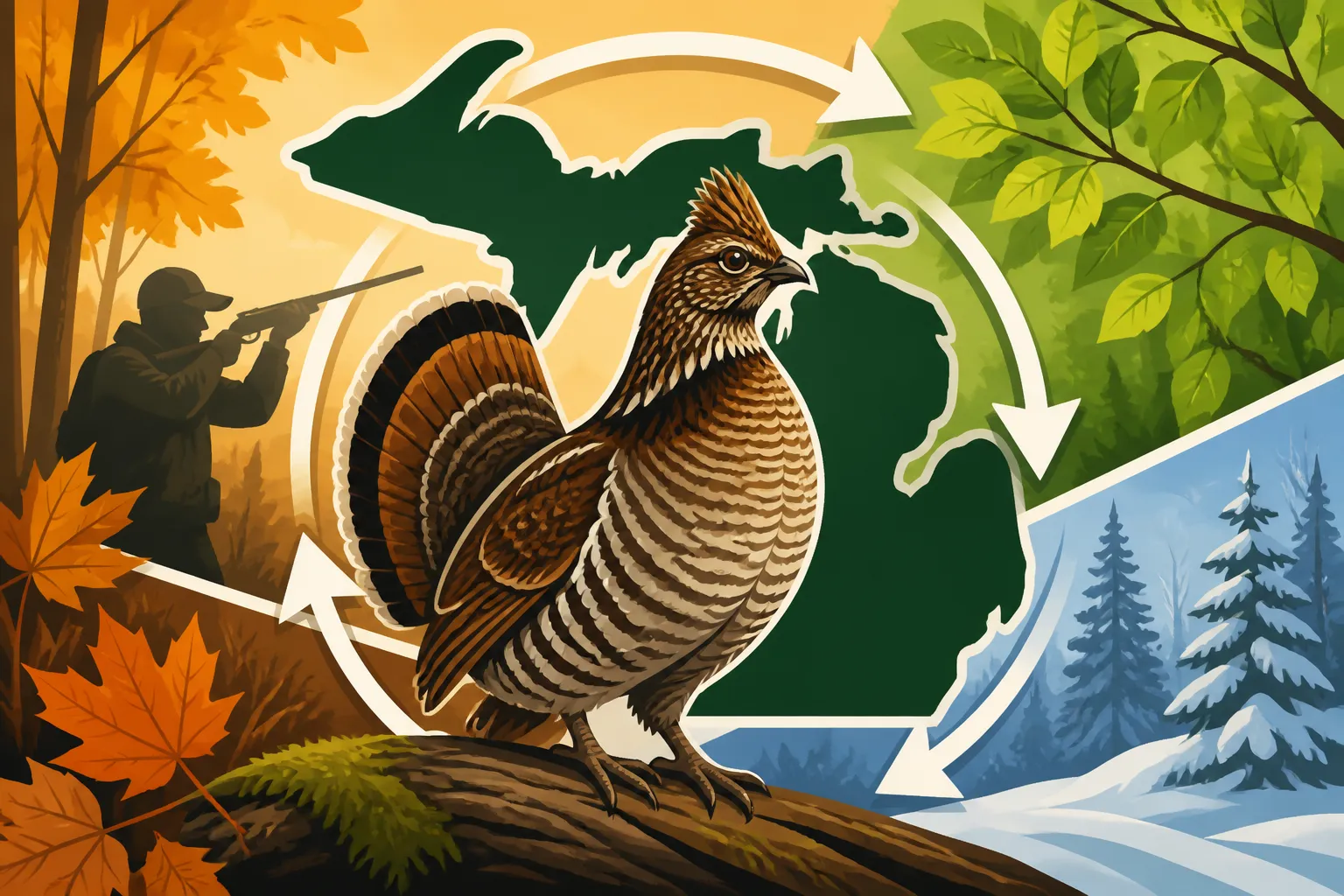
The ruffed grouse population cycle is one of the most intriguing and studied patterns in wildlife biology. Generally, these cycles manifest as an approximate 8 to 11-year pattern of population increases and decreases. Think of it like a wave: a few years of slowly building numbers, then a peak where birds seem to be everywhere, followed by a sharp decline, and then a few more years at a low point before the cycle starts all over again. These fluctuations can be quite dramatic, with populations at their peak being many times higher than at their trough. For us hunters, this means adapting our expectations and tactics from one season to the next. A peak year can offer incredible hunting opportunities, with high flush rates and good chances for consistent shooting, while a low year demands more effort, more scouting, and a greater appreciation for every bird flushed. It’s a humbling reminder that nature truly dictates the terms.
Historical Context of Michigan's Grouse Cycles
Michigan's ruffed grouse populations have historically followed these cyclical patterns, much like their counterparts across the Great Lakes region and into Canada. For decades, hunters and wildlife biologists in our state have observed these boom-and-bust periods. Early logging records and anecdotal hunter reports from the early to mid-20th century already hinted at these fluctuations, even before formal studies began to quantify them. While the exact timing and amplitude can vary slightly from one region of Michigan to another, the overarching cycle remains a consistent feature. For instance, many veteran hunters can recall particularly memorable "high" grouse years in the 1980s or early 2000s, where limits were common, and young dogs got plenty of bird work. Conversely, they also remember the "low" years, often just a few seasons later, where finding a single bird felt like a major accomplishment. Understanding this historical rhythm helps us contextualize current conditions and avoid blaming ourselves or local factors entirely when the numbers are down. It's simply the nature of the beast.
The "Why" Behind the Cycles (Complex Factors)
The precise mechanisms driving the ruffed grouse cycle are incredibly complex and have been a subject of intense scientific inquiry for a long time. There isn't one single, neat answer, but rather a confluence of interconnected factors that collectively create this periodic oscillation. Initially, many thought it was purely a predator-prey relationship, where abundant grouse led to more predators, which then crashed the grouse, followed by a crash in predators, allowing grouse to recover. While predation certainly plays a role, modern research suggests it's much more nuanced. Things like habitat quality and availability, particularly the prevalence of young aspen forests, are hugely influential. Weather patterns, especially during nesting and brood-rearing, can also significantly impact annual recruitment. Even disease and parasitic loads can come into play, potentially weakening birds and making them more susceptible to other pressures. It’s a dynamic interplay, a biological dance where different factors gain prominence at various stages of the cycle, making the whole system incredibly robust yet predictably unpredictable.
Key Factors Influencing Michigan's Grouse Cycles
Understanding the broader cycle is one thing, but truly grasping why it happens requires delving into the specific environmental and biological levers at play. It's a complex puzzle, but each piece contributes to the overall picture of Michigan's ruffed grouse fluctuations.
Predator-Prey Dynamics
One of the most commonly cited drivers of population cycles, not just for grouse but for many small game species, is the classic predator-prey relationship. When grouse numbers are high, there's an abundance of food for predators. This can lead to an increase in predator populations over time, or at least better survival and reproductive success for existing predators. Common predators of ruffed grouse in Michigan include everything from red foxes and coyotes to a variety of avian predators like goshawks, great horned owls, and various hawks. As predator numbers or their efficiency increase due to abundant prey, they can exert more pressure on the grouse population, contributing to its decline.
However, it's not a simple one-to-one interaction. Predator populations often lag behind grouse populations; they don't instantly crash when grouse numbers drop. This lag effect means that even after grouse numbers start to decline, there might still be a relatively high number of predators, which can prolong or deepen the low point of the grouse cycle. Then, as grouse become scarcer, predator populations eventually decline due to food shortages, allowing the grouse a window to begin their recovery. It's a delicate balance, and Michigan's diverse predator base ensures that predation pressure is a constant, albeit fluctuating, force on our grouse.
Habitat Quality and Availability
Perhaps no factor is as critical to the long-term health of Michigan's ruffed grouse populations as habitat quality and availability. Ruffed grouse are famously tied to early successional forests, particularly young aspen stands. These dense, regenerating areas provide the overhead cover from avian predators and the thick understory that protects them from ground predators. They also offer a rich food source through buds, catkins, and various insects. The age of the timber is incredibly important; grouse thrive in aspen stands that are typically 8-25 years old, following a clear-cut. Too young, and there isn't enough cover or food. Too old, and the understory thins out, making them vulnerable.
This reliance on specific habitat types means that forest management practices, or the lack thereof, directly influence grouse numbers. Areas with active, rotational clear-cutting for timber production often create ideal grouse habitat in a mosaic of different age classes. Conversely, vast tracts of mature, unbroken forest, while beautiful, don't provide the necessary cover. This is why you'll often hear discussions about Aspen Management and Michigan Grouse as a cornerstone of grouse conservation efforts. Changes in logging practices, land use, and even the prevalence of alder runs along waterways can dictate how many birds a particular area can support, irrespective of other cyclical factors. A consistent decline in suitable habitat can suppress cycle peaks or extend low periods, making overall grouse numbers dwindle.
Weather Patterns and Their Impact
Mother Nature always has a say, and weather patterns, especially during critical periods, can significantly influence the annual productivity of grouse, thereby impacting the cycle's trajectory. Harsh winters, with prolonged deep snow and extreme cold, can increase energy demands on grouse, making them more susceptible to predation and disease, and sometimes leading to direct mortality. However, deep, soft snow can also provide insulated snow roosts, protecting birds from the cold and predators. It's the extremes or sudden shifts that often cause problems.
The spring and early summer are arguably the most crucial periods for weather impact. Cold, wet springs can be devastating for nesting hens and, more critically, for newly hatched chicks. Young grouse are particularly vulnerable to hypothermia and a lack of insect food during prolonged periods of cold, rainy weather. A poor hatch due to adverse spring conditions can lead to a significant dip in the population for that year, potentially accelerating the decline phase of the cycle or preventing a strong recovery. Conversely, mild winters and warm, dry springs often translate to higher brood survival and a boost in overall numbers, pushing the cycle upwards. This is one reason why local conditions can sometimes appear to diverge from broader regional trends; a favorable microclimate can buck a general downturn.
Disease and Parasites
While less dramatic than a visible clear-cut or a torrential downpour, disease and parasites can also play a subtle yet significant role in shaping grouse population cycles. Like any wildlife species, ruffed grouse are susceptible to various pathogens and parasites, from avian pox to internal worms. In healthy, low-density populations, these might have minimal impact. However, when grouse populations are at their peak, and birds are living in closer proximity, the transmission rates of diseases and parasites can skyrocket. This can lead to a general weakening of the population, making birds more vulnerable to predation, stress, and adverse weather conditions.
One disease that has received considerable attention in recent years is West Nile Virus (WNV). While WNV is known to impact other bird species, its specific role in ruffed grouse population cycles is still being studied. There's some evidence to suggest that WNV, or other similar pathogens, could contribute to mortality events, especially during warm, wet summers that favor mosquito populations (the vector for WNV). While West Nile Virus in Michigan Grouse is not currently considered the sole driver of population crashes, it's one more layer in the complex web of factors that influence grouse health and survival. When combined with habitat changes, weather stress, and predator pressure, disease can be the tipping point for a population already struggling during a downturn.
Identifying Where Michigan Sits in the Grouse Cycle
For Michigan grouse hunters, knowing where we are in the cycle isn't just academic; it influences everything from scouting efforts to travel plans. While there's no crystal ball, several indicators can help us gauge the current state of the ruffed grouse population.
Drumming Surveys and Hunter Harvest Data
The Michigan Department of Natural Resources (DNR) doesn't just guess about grouse numbers; they conduct systematic surveys to monitor populations. One of the most important tools is the annual ruffed grouse drumming survey. Male grouse "drum" by beating their wings rapidly against the air, creating a low-frequency thumping sound to attract mates and mark their territory. Biologists drive established routes, stopping at specific points to listen for these drumming males during the spring. The number of drums heard per stop provides an index of the breeding population. A strong increase in drumming activity over several years often signals a rising population.
Beyond drumming counts, hunter harvest data provides another crucial piece of the puzzle. Each year, the DNR collects information on hunter success rates, the number of birds harvested, and the number of hours hunters spend afield to bag a bird. When flush rates are high, and hunters are reporting good success, it's a clear sign of a robust population. Conversely, prolonged periods of low harvest and increased effort per bird suggest a population in decline. Resources like the Michigan DNR's own reports, and even platforms like GoHunt which sometimes aggregate and present state-specific harvest trends, can offer valuable insights into these broader patterns. By looking at these long-term trends, we can start to see if we're on the upswing, at the peak, or experiencing a dip in the cycle.
Local Observations and Personal Experience
While statewide data is invaluable, your own observations on the ground in your favorite hunting spots are equally important. What you're seeing in your specific corner of Michigan might not perfectly align with the broader DNR reports, as local conditions can vary. Are you hearing fewer drums in the spring? Are your dogs getting fewer points? Are you flushing fewer birds per hour than in previous seasons? These personal experiences accumulate over time and give you a boots-on-the-ground understanding of the local population dynamics.
Many seasoned grouse hunters keep their own informal records, noting flush rates, the number of young birds seen, and even observations of predators in their chosen areas. This localized knowledge can be incredibly powerful. For instance, a particular block of state land might have had a recent clear-cut that created fantastic new habitat, leading to a localized boom even if the broader regional trend is down. Or perhaps a severe hailstorm during nesting season could have devastated broods in one small area. Trust your own eyes and ears; they are often the most immediate and reliable indicators of what's happening where you hunt.
Interpreting the Signs of a Peak or Low
So, how do you really feel the difference between a peak and a low year? It's often more than just numbers; it's the whole experience.
During a peak year, you'll likely notice:
- High Flush Rates: You'll be flushing birds consistently, sometimes multiple birds from the same small cover patch. Walking through good habitat feels like you're constantly on the edge of a flush.
- Abundant Young Birds: You'll see more juvenile birds in the fall, identifiable by their smaller size and often less vibrant plumage. This indicates a successful breeding season.
- Widespread Distribution: Birds won't just be concentrated in the absolute best cover; they'll often be found in more marginal areas, indicating a saturated population.
- More Drumming: In the spring, the woods will seem alive with the sound of drumming grouse.
In contrast, a low year will often present with:
- Sparse Flushes: You might walk for long periods without hearing a flush. Every bird you do find feels like a hard-earned victory.
- Fewer Young Birds: Brood success will be noticeably lower, meaning fewer young birds joining the population.
- Concentrated Birds: The grouse you do find will be in the very best, thickest cover, almost as if they're hunkering down in prime refuge.
- Quiet Woods: Spring drumming will be much less frequent, if audible at all, in many traditional spots.
These observations, coupled with the DNR data and tools from platforms like GoHunt, help paint a clearer picture of where Michigan's grouse population sits in its cyclical journey.
Hunting Strategies for Different Cycle Phases
Adapting your hunting strategy to the current phase of the ruffed grouse cycle is crucial for success and enjoyment. What works brilliantly during a peak year might lead to frustration during a lean one.
High Population Years: Maximizing Opportunity
When Michigan's ruffed grouse populations are surging, and you're in a peak year, it's a fantastic time to be in the woods! The key here is often to maximize your opportunities and broaden your horizons. You'll likely find birds in a wider variety of cover types than usual, as prime habitat becomes saturated and birds spill over into secondary areas.
During these abundant years, focus on covering more ground. Don't be afraid to explore new areas or venture into cover that might seem a little marginal in other years. Often, less dense aspen stands, slightly older clear-cuts, or even mixed hardwoods with a good understory will hold birds that have spread out from the densest cover. This is a great time to work on developing a young bird dog, as they'll get plenty of exposure to live birds. You can be a bit less selective in your cover choices, allowing yourself to enjoy the higher flush rates and the thrill of consistent bird work. Many hunters use peak years to scout out new regions or find those hidden pockets of cover that might become hotspots in future cycles. It's a prime period for volume, learning, and sharing the experience with others, knowing that the birds are plentiful enough to support it.
Low Population Years: Adapting and Persisting
The low point of the ruffed grouse cycle can be incredibly challenging, and it's where many hunters either get discouraged or truly learn the art of grouse hunting. During these lean years, you can't rely on sheer numbers; you have to be smarter, more targeted, and incredibly persistent. Forget covering vast amounts of ground hoping to bump into a bird. Instead, focus on quality over quantity.
Your strategy in a low year should be all about finding the absolute best, most secure habitat. This means seeking out those prime Grouse Hunting Michigan Aspen Cover areas – dense, young aspen stands (typically 8-20 years old) with a thick understory, often near water sources or mixed with conifer cover for winter refuge. Look for the "sweet spots" – edges where different cover types meet, small clearings within thick woods, or alder runs along small creeks. Birds will be concentrated in these areas of maximum protection and food availability. You'll likely have to walk slower, be more observant, and often re-work promising cover. Utilizing a well-trained dog that can pinpoint scent and hold a solid point becomes even more critical. Don't be disheartened by low flush rates; celebrate every single bird you manage to find and flush. These are the years that teach patience, hone your woodsmanship, and make you truly appreciate the resilience of these birds. It's about the quality of the experience and the dedication to the pursuit, rather than the quantity of birds in the vest.
Mid-Cycle: Balanced Approaches
When Michigan's grouse population is in the mid-cycle phase – either on the upswing towards a peak or on the gentle slope down from one – your hunting strategy needs to be a balanced approach. These years offer a blend of opportunities and challenges. You won't have the constant flushes of a peak year, but it won't be as sparse as a true low, either.
During the building phase, you can start to expand your range from the prime habitat you focused on during the low years. Birds will be spreading out, and you might find good numbers in slightly less dense cover. It's an excellent time for scouting new areas that are coming into their prime for grouse habitat. On the declining side of the peak, you'll notice flush rates starting to drop, and birds might be more concentrated again in the best cover, although not to the extreme of a true low. The key is to remain flexible. Pay close attention to your daily flush rates and the quality of cover you're working. If you're finding good numbers in a particular type of cover, stick with it. If things are slow, be prepared to shift your focus back to the densest, most protective habitat. It's about being observant, adapting to the conditions you're encountering, and perhaps adjusting your expectations daily. These mid-cycle years are fantastic for refining your skills, learning to read the woods, and understanding how subtle changes in habitat translate to bird presence.
The Role of Habitat Management in Stabilizing Grouse Populations
While ruffed grouse populations will always cycle due to complex natural factors, human intervention through thoughtful habitat management can play a crucial role. We can't stop the cycle, but we can help moderate its severity and ensure a robust baseline population.
The Importance of Young Aspen
To truly understand grouse habitat, you need to understand aspen. Young aspen stands are the absolute cornerstone of prime ruffed grouse habitat in Michigan. Why? Because they provide a multi-layered defense against predators and a consistent food source. The dense stems of young aspen (often 8-20 years post-harvest) create an impenetrable thicket at ground level, offering crucial escape cover from raptors and other aerial predators. This dense vertical structure also limits the efficiency of ground predators like coyotes and foxes.
As aspen stands mature, they lose this critical understory density, making birds more vulnerable. Additionally, aspen buds and catkins are a vital food source for grouse, especially during the lean winter months. A healthy mix of different age classes of aspen ensures that grouse have access to both prime cover and food throughout their life cycle and across seasons. Without a continuous supply of regenerating aspen, even in years when all other factors are favorable, grouse populations will struggle to reach their potential peaks or even maintain healthy numbers. This is why you'll often hear about the critical importance of How Old a Cut Should Be for Grouse when discussing habitat.
Forest Management Practices in Michigan
Recognizing the vital link between aspen and grouse, the Michigan Department of Natural Resources (DNR) and many private landowners actively engage in forest management practices designed to benefit ruffed grouse and other early successional species. The primary tool is clear-cutting, which, while sometimes looking drastic, mimics natural disturbances like wildfires or windstorms that historically created these young forest stages.
These clear-cuts are often done in a patchwork fashion, creating a mosaic of different age classes across the landscape. For example, a 40-acre clear-cut might be flanked by a 15-year-old stand and a mature forest, providing varied cover and food within a grouse's home range. The DNR employs foresters who plan these cuts on state land, often on a rotation of 40-60 years for aspen, ensuring a continuous supply of regenerating habitat. Furthermore, practices like prescribed burns can also stimulate new growth and create diverse understory vegetation beneficial to grouse. Many of these efforts are highlighted in resources like the Michigan Grouse Enhanced Management Site List, which points to specific locations where hunters can find actively managed habitat. These strategic management efforts don't eliminate the cycle, but they provide the best possible foundation for grouse populations to thrive, buffering against the harsher downturns.
What Hunters Can Do to Help
As hunters, we can play an active role in supporting ruffed grouse populations, both directly and indirectly. One of the most impactful ways is to support organizations dedicated to wildlife habitat conservation in Michigan. Groups like the Ruffed Grouse Society actively advocate for and fund habitat improvement projects, often focusing on aspen regeneration and other early successional forest management. Becoming a member or contributing to these organizations helps ensure that valuable habitat work continues.
On a more local level, if you own land in grouse country, consider implementing habitat improvements yourself. Consult with a private land biologist or forester from the DNR or a conservation group to develop a management plan. This might involve small-scale clear-cuts, hinge-cutting certain trees to create dense cover, or planting specific food sources. Even on public land, simply being aware of and appreciating the forest management efforts being undertaken by the DNR helps foster a supportive environment for these practices. By understanding that our hunting opportunities are intrinsically linked to healthy, actively managed forests, we can become better stewards of the land and advocates for the future of grouse hunting in Michigan.
The Future of Michigan's Grouse Hunting
Looking ahead, the future of ruffed grouse hunting in Michigan depends on a combination of natural cycles, ongoing habitat work, and the dedication of hunters and conservationists alike.
Current Population Trends and Outlook
To give you the most current picture, recent data from the Michigan DNR's drumming surveys shows that ruffed grouse populations in Michigan have been experiencing a general upward trend since a low point around 2017-2018. While there can be year-to-year fluctuations, the overall trajectory has been positive, suggesting that we are likely in the building or peak phase of the cycle in many parts of the state. The Michigan Ruffed Grouse Numbers Today are certainly better than they were a few seasons ago, leading to more optimistic reports from hunters in many traditional grouse strongholds, especially in the northern Lower Peninsula and portions of the Upper Peninsula.
However, it's not a uniform story across the entire state. Some areas may still be recovering more slowly, or have experienced localized issues like particularly harsh weather during nesting season. DNR biologists continue to monitor these trends closely, using data from the Michigan Grouse Drumming Surveys and hunter harvest reports to refine their population estimates. The current outlook suggests that grouse hunting opportunities should remain relatively good in the coming seasons, but as always, a keen understanding of local conditions and the overarching cycle will be beneficial for any hunter heading into the woods.
Challenges and Conservation Efforts
Despite the current positive trend, Michigan's ruffed grouse face ongoing challenges that require continued conservation efforts. Habitat loss and fragmentation remain significant threats. As mature forests aren't always harvested, and development encroaches on wildlands, the amount of critical young aspen habitat can diminish. Climate change also introduces uncertainty, with potential impacts on weather patterns during nesting season or changes in insect populations that grouse rely on. Diseases, as discussed earlier, are always a factor, and continued monitoring for conditions like West Nile Virus is important.
However, Michigan is fortunate to have a dedicated community of wildlife managers and conservation organizations working hard to address these issues. The DNR's strategic forest management plans prioritize creating and maintaining diverse age classes of timber, specifically with grouse and other early successional wildlife in mind. Organizations like the Ruffed Grouse Society continue to fund critical habitat projects and advocate for policies that benefit upland birds. These proactive efforts are vital to ensuring that even during the inevitable low points of the cycle, Michigan's grouse populations have the strong habitat foundation they need to rebound. It's a continuous partnership between nature and human stewardship.
Tips for the Next Generation of Grouse Hunters
Passing on the tradition of grouse hunting is incredibly important for the future of this sport. If you're looking to introduce someone to the challenge and reward of chasing ruffed grouse, especially during different points in the cycle, here are a few tips. First, emphasize the experience over the harvest. Grouse hunting is about walking through beautiful woods, listening to the flushes, and enjoying the companionship of a good dog or good friends. The birds in the vest are a bonus.
Second, teach them to read the cover. Explain why certain areas hold birds and why others don't. Help them understand Where to Hunt Inside Michigan's Elk Units or Hunting the Manistee River Corridor and how to analyze maps to find promising habitat features like aspen cuts, alder runs, and conifer swamps. If you're hunting during a low cycle year, manage their expectations from the start, but teach them the persistence required to find birds when they are scarce. During a high year, show them the joy of consistent bird work. Also, consider the Michigan Mentored Youth Licence Rules as a fantastic way to get new, young hunters into the woods with experienced mentors. By fostering a love for the chase, an understanding of the ecology, and an appreciation for conservation, we can ensure that future generations will continue to thrill at the sound of a Michigan ruffed grouse drumming.
Michigan Ruffed Grouse Cycle Characteristics
To summarize the key differences you might observe during various stages of the ruffed grouse cycle, here's a helpful table:
| Characteristic | Peak Cycle Year | Low Cycle Year | Mid-Cycle Year (General) |
|---|---|---|---|
| Flush Rate | High (many birds per hour) | Low (few birds, long walks between flushes) | Moderate (consistent but not constant) |
| Bird Distribution | Widespread, even in marginal cover | Concentrated in prime, dense cover | Spreading out or consolidating depending on trend |
| Young Birds Seen | Abundant | Scarce | Varies; good during upswing, less during downswing |
| Drumming Activity | Strong and frequent in spring | Minimal to rare in spring | Moderate, increasing on upswing, decreasing on down |
| Hunting Strategy | Cover more ground, explore new areas | Focus on prime habitat, slow and meticulous | Adaptable; mix of broad and targeted efforts |
| Hunter Morale | High, very rewarding | Challenging, requires patience and persistence | Balanced; rewarding with effort |
| Dog Work | Many opportunities, great for training | Critical for finding birds, fewer points overall | Good opportunities for a seasoned dog |
Disclaimer
The information provided in this guide is for general informational purposes only and is not intended as professional advice. Hunting regulations, seasons, and wildlife populations are subject to change by the Michigan Department of Natural Resources. Always consult the most current Michigan Hunting and Trapping Digest or the official Michigan DNR website before planning any hunting activity. Safe hunting practices and adherence to all laws are the responsibility of the individual hunter.