How Long the Grouse Cycle Runs
It's a frustrating reality for many Michigan grouse hunters: some seasons you're tripping over birds, flushing coveys seemingly every hundred yards, and other years you walk for hours, dogs working hard, and only hear the faint thunder of a single distant flush, or perhaps nothing at all. This dramatic fluctuation in ruffed grouse numbers isn't just bad luck; it's part of a well-documented biological phenomenon known as the grouse cycle. This guide will dive deep into understanding how long these grouse cycles typically run, what drives these peaks and valleys, and how you, as a hunter, can adapt your strategies to find success regardless of where Michigan sits in this fascinating, often maddening, population rhythm.
Understanding the Ruffed Grouse Population Cycle
For generations, hunters and naturalists across Michigan and North America have observed a distinct ebb and flow in the populations of ruffed grouse. It's not just a random scattering of good and bad years; it's a predictable, albeit complex, pattern that dictates how many birds are drumming in the spring and how many take flight from under your boots in the fall.
The Rhythmic Rise and Fall of Grouse Numbers
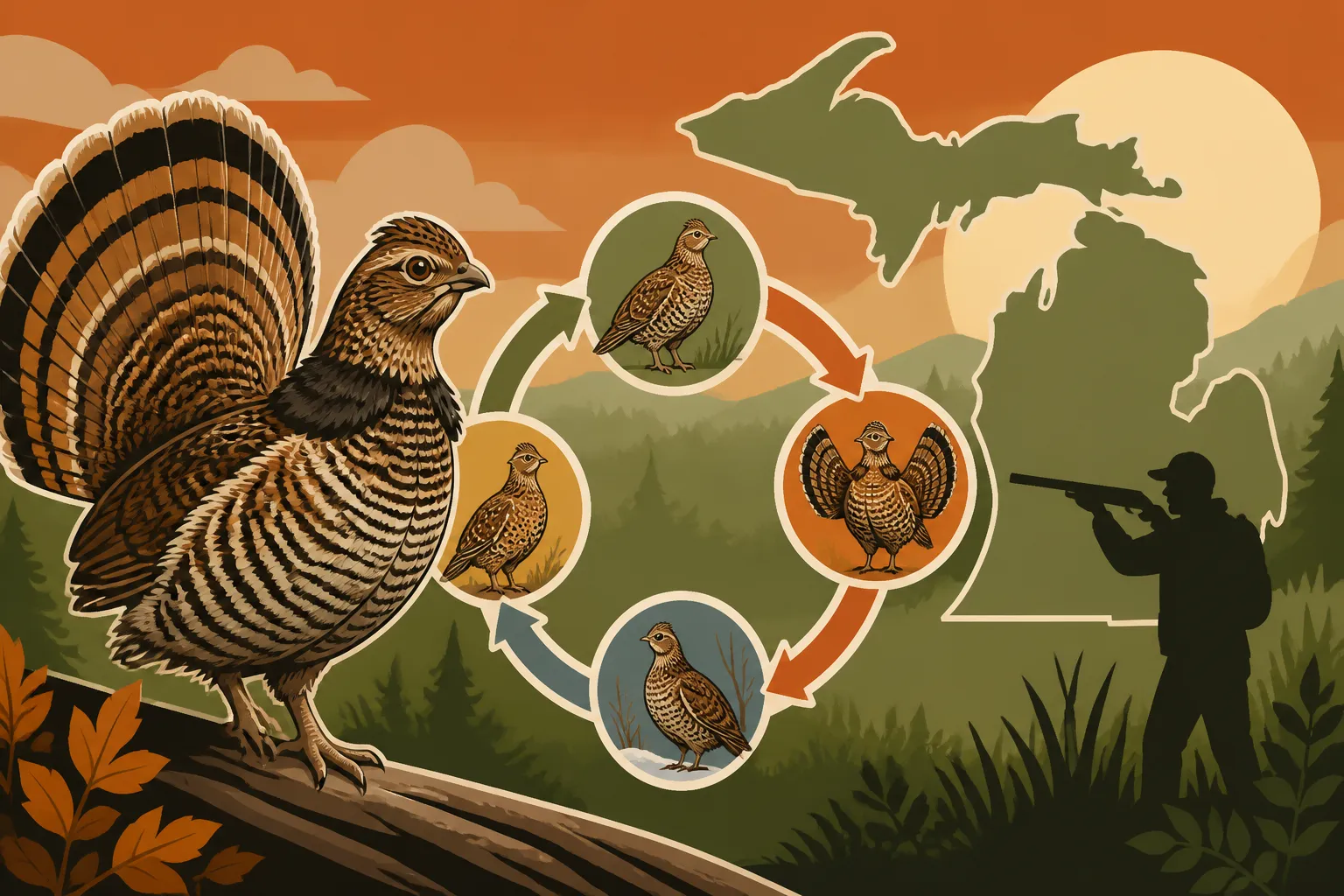
At its core, the ruffed grouse cycle describes a multi-year pattern where grouse populations build from a low point, climb to a peak of abundance, and then experience a sharp, sometimes sudden, decline before starting the slow climb all over again. While "predictable" might imply a precise timer, it's more of a rhythmic oscillation. These cycles most commonly run over a span of about 7 to 10 years, though you might encounter variations where a cycle stretches a bit longer or shortens up. This period covers the full journey from the bottom of a population trough, through recovery, up to a peak, and then back down into the next trough.
What does this mean for us on the ground? During the upward swing and peak years, finding grouse can feel almost effortless. You might find birds in less-than-ideal cover, and a good dog can rack up dozens of points in a morning. Your daily bag limits might be filled with relative ease. Conversely, during the low points, or "troughs," you could hunt the very same prime coverts that produced birds just a few seasons prior and walk for miles without a single flush. This makes understanding the cycle absolutely crucial for managing expectations and refining your hunting efforts.
Historical Observations in Michigan
Michigan has always been a prime ruffed grouse state, and its hunters have a long history of experiencing these population shifts firsthand. Early logging practices, which created vast amounts of young forest, likely intensified these cycles, as grouse habitat was abundant but fragmented. Biologists and hunters alike have been tracking these patterns for decades, noticing how the Upper Peninsula and the northern Lower Peninsula often exhibit stronger, more pronounced cycles compared to other regions, though the phenomenon is observable statewide where suitable habitat exists.
These historical observations aren't just anecdotes around a deer camp fire; they provide valuable insights. They've helped us understand the intricate dance between habitat changes, predator populations, and the variable weather patterns that all contribute to the cyclical nature of these birds. For a glimpse into what current trends look like, you can explore information on Michigan Ruffed Grouse Numbers Today, which often reflects where we might be in the larger cycle. This long-term perspective helps us realize that while a low year can be discouraging, it's part of a natural process that has been repeating itself for as long as we've been chasing these feathered rockets.
Deciphering the Drivers Behind the Cycles
So, what exactly causes these dramatic swings? It's not one single factor, but rather a complex interplay of environmental conditions, biological interactions, and habitat availability. Understanding these drivers is key to appreciating the resilience of the ruffed grouse and how we, as hunters and conservationists, can contribute to their long-term health.
Predator-Prey Dynamics and the Snowshoe Hare Connection
One of the most widely accepted theories behind the ruffed grouse cycle revolves around the classic predator-prey relationship. As grouse numbers increase during the upswing of a cycle, so too do the populations of their primary predators: foxes, coyotes, various raptors like goshawks, and owls. When prey is abundant, predators have more food, which allows more of their young to survive, leading to an increase in predator density. Eventually, this surge in predator numbers puts immense pressure on the grouse population.
Adding another layer to this dynamic is the snowshoe hare. Interestingly, snowshoe hare populations often cycle in sync with, or slightly ahead of, ruffed grouse. When hares are abundant, they serve as a primary food source for many predators, effectively taking some of the pressure off grouse. However, when the hare population inevitably crashes (they have their own cycles), predators then turn their focus more intensely on grouse, accelerating the decline in bird numbers. It's a biological roller coaster where the fates of multiple species are intertwined, creating a cascade effect that ultimately leads to the sharp downturn in the grouse cycle. It's not a simple one-to-one relationship, but a complex web where a strong predator presence during a grouse low can really prolong the struggle for the birds.
The Critical Role of Habitat and Aspen Management
While predators are a huge piece of the puzzle, habitat is arguably the most fundamental component of any grouse population. Ruffed grouse thrive in young, regenerating forest environments, particularly those dominated by aspen. These dense stands, often created by clearcutting or natural disturbances, provide the crucial overhead and lateral cover that protects grouse from aerial and ground predators. This thick cover is especially vital for brooding hens and vulnerable chicks.
As a forest stand matures, it naturally becomes more open and less suitable for grouse. The dense understory thins out, making birds more exposed. This natural progression of forest succession means that without active management or natural disturbances (like wildfires, though less common in Michigan today), prime grouse habitat will eventually disappear. This is where Aspen Management and Michigan Grouse comes into play. Well-managed timber harvests, particularly clearcuts designed for regeneration, effectively reset the clock, creating new pockets of ideal, young forest habitat that grouse absolutely depend on. The age of a cut is paramount; knowing How Old a Cut Should Be for Grouse can mean the difference between finding birds and walking through empty woods. When there's a good mosaic of different-aged aspen and mixed hardwoods, grouse can better weather the lean years because they always have some suitable cover to retreat to.
Weather and Disease: Unpredictable Influencers
Beyond predators and habitat, environmental factors like weather and disease can also significantly influence grouse populations, often compounding the effects of the underlying cycle. While they might not drive the cyclical nature themselves, they can certainly amplify the peaks or deepen the troughs.
Consider the weather: a severe winter with deep, soft snow can actually be beneficial for grouse, as they can "snow-roost," burrowing into the snow for insulation and protection from predators. However, a winter with repeated thaws and freezes, leading to hard crusts on the snow, can be devastating. These crusts prevent snow-roosting and leave birds exposed, making them easy targets for coyotes and raptors. More critically, wet, cold springs can decimate poult (chick) survival. Young grouse are incredibly vulnerable to hypothermia and a lack of insect food during prolonged periods of cold, damp weather immediately after hatching. Droughts, too, can indirectly impact poult survival by reducing insect availability, which is a critical protein source for growing chicks.
Disease, while less understood as a cyclical driver for grouse, can also play a role. Localized outbreaks of certain pathogens, or even broader environmental stressors like West Nile Virus, can weaken birds or cause mortality. West Nile Virus in Michigan Grouse has been a concern, and while its impact on the larger population cycle is still debated, it's another factor that can influence local bird numbers and the severity of a population dip. These weather and disease events are often unpredictable, acting as wild cards that can make a given year much tougher, or occasionally, a little easier, for grouse to thrive.
Adapting Your Hunting Strategy to the Cycle
The grouse cycle means that your hunting experience won't be the same year after year. A good hunter isn't just someone who walks a lot; it's someone who understands the environment and adapts their tactics. Being flexible in your approach, depending on whether the grouse population is booming or busting, can make a huge difference in your success and enjoyment.
High Cycle: Maximizing Opportunities
When Michigan is experiencing a high point in the grouse cycle, it’s a time to truly savor the abundance. During these peak years, grouse numbers are robust, and birds can seem to be everywhere. You'll often find them in areas that might be considered "marginal" habitat during a low cycle, simply because there are so many birds that they're spilling over into less optimal cover.
This is the time to cover ground, especially if you're hunting without a dog, or to give your dog plenty of opportunity to range. You can often focus on larger patches of cover, knowing that even if one section isn't prime, the sheer volume of birds means you'll likely bump into a few. Grouse Hunting Michigan Aspen Cover and Hunting Michigan Clearcuts and Aspen Cuts will be productive, and you might find birds in areas with slightly more mature timber than you'd expect. While there might be more competition from other hunters, especially on popular public land (a factor discussed in Hunting Pressure on Michigan State Land), the abundance of birds often allows for good success even with some pressure. It's a great opportunity to explore new areas, get young hunters involved, or just enjoy the thrill of frequent flushes.
Low Cycle: Focused and Finesse Tactics
Ah, the low cycle – this is where the true grit and skill of a grouse hunter are tested. When numbers are down, you can't rely on sheer volume. Instead, you need to work smarter, slower, and with surgical precision. During these lean years, grouse will concentrate in the absolute best, densest habitat available. They need maximum cover to escape predators and shelter from the elements.
Your focus should be on the thickest, nastiest, most impenetrable cover you can find: dense young aspen regeneration, overgrown alder runs along creek bottoms, and thick conifer pockets adjacent to deciduous woods. These are the places where birds feel safest and are most likely to hold tight. Slow your pace dramatically. Birds will often sit tighter, forcing you to almost step on them before they flush. Hunting with a reliable bird dog becomes even more invaluable during these times, as their scenting ability can pinpoint birds you would undoubtedly walk past. Also, consider seeking out areas that receive less pressure; sometimes, simply walking an extra half-mile from a two-track can put you in front of more birds, as discussed in Finding Ground Others Walk Past. While it requires more effort and patience, success in a low cycle is incredibly rewarding, proving you can still find birds when the odds are stacked against you.
Scouting and Staying Informed, Regardless of the Cycle
No matter where Michigan's grouse population sits in its cycle, consistent scouting and staying informed are non-negotiable for consistent success. You can't just show up on opening day and expect birds to be exactly where they were last year. The woods are always changing, and so are the birds' habits.
Before the season, make it a point to walk potential coverts. Look for sign: drumming logs (in the spring), droppings, and areas where grouse have been feeding on berries or buds. Utilize modern mapping tools like the Mi-HUNT map from the Michigan DNR, or even commercial apps like GoHunt, which can help you identify different timber types, age classes of forest, and public land boundaries. Overlaying timber harvest data (often available through DNR websites) onto these maps can pinpoint those crucial young aspen cuts.
It's also vital to pay attention to local and regional reports. The Michigan DNR conducts Michigan Grouse Drumming Surveys each spring, which provide an excellent indicator of breeding bird populations and can give you a heads-up on whether numbers are trending up or down. Chat with local loggers, foresters, and other seasoned hunters; they often have a pulse on what's happening in their specific areas. Ultimately, nothing beats "time in the woods" – your own boots on the ground, observing changes, and learning the nuances of your hunting spots will always be your best advantage, regardless of the cycle.
Michigan's Grouse Cycle: Where We Stand and What to Expect
The rhythm of the ruffed grouse cycle is a fundamental aspect of hunting them in Michigan. It shapes our expectations, influences our strategies, and underscores the dynamic nature of wildlife populations. Understanding where we currently stand in this cycle and what resources are available to track it can significantly enhance your hunting experience.
Michigan's Current Position in the Cycle
While the ruffed grouse cycle is a broad phenomenon across North America, local conditions in Michigan can always cause variations. Historically, the Upper Peninsula and the northern Lower Peninsula have been strongholds for grouse and often exhibit the most pronounced cyclical swings. These regions typically have more contiguous blocks of the early successional forest habitat that grouse prefer.
As of recent observations, Michigan's grouse population tends to follow the wider regional trends, meaning that if other Great Lakes states are seeing an uptick or a downturn, Michigan is often in a similar phase. Without giving specific year-stamped data, it's generally understood that these populations go through a period of rebuilding and then a period of decline. Keeping tabs on state wildlife reports and local drumming counts, as noted in Where Michigan Sits in the Grouse Cycle, is the best way to get a real-time sense of the current conditions. It’s important to remember that even within a statewide trend, individual hunting areas can have localized anomalies due to specific habitat conditions or predator pressures.
Resources for Tracking Local Populations
As a dedicated grouse hunter, you don't have to simply guess where the population is headed. There are several excellent resources available to help you track local populations and stay informed:
- DNR Reports and Surveys: The Michigan Department of Natural Resources (DNR) conducts annual drumming surveys in the spring, which are crucial indicators of breeding grouse populations. These results are usually published and provide a scientific basis for understanding population trends. Look for these reports on the DNR's website.
- Hunter Surveys: The DNR also often collects voluntary hunter harvest surveys, which can provide insights into hunter effort and success rates—another proxy for population health.
- Mapping Tools: Beyond official reports, leverage modern mapping applications. Tools like the Mi-HUNT map, GoHunt, or other GPS-enabled apps allow you to view public land boundaries, forest cover types, and even recent timber harvest data. By identifying areas that have been recently logged for aspen or mixed hardwoods, you can scout for prime habitat regardless of the overall cycle. These apps are invaluable for identifying suitable grouse cover.
- Local Knowledge: Perhaps the most undervalued resource is talking to other hunters, local foresters, loggers, or even residents who spend a lot of time in the woods. Their on-the-ground observations can often provide specific, hyper-local insights into bird numbers that broader surveys might miss.
- Your Own Boots-on-the-Ground Scouting: Ultimately, nothing beats personal observation. Spend time in the woods during the off-season. Listen for drumming in the spring. Look for fresh cuttings, droppings, and dusting bowls. The more you immerse yourself in the habitat, the better you'll become at reading the landscape and understanding where the birds are, regardless of the cycle.
The Future of Grouse Hunting and Habitat Management
The future of ruffed grouse hunting in Michigan is inextricably linked to habitat. As forests mature, the cyclical nature of grouse populations will continue, but the overall carrying capacity of the land for grouse depends on active forest management. Programs that encourage and facilitate the harvesting of timber, particularly aspen, are vital for creating the early successional habitat that grouse require. For more on this, check out Aspen Management and Michigan Grouse.
Hunters play a crucial role in advocating for these management practices. By supporting the DNR's habitat initiatives and understanding the ecological needs of grouse, we can help ensure that there will always be young, vibrant forests for these birds to call home. While we can't stop the grouse cycle from running its course, we can work to ensure that even during the low years, there's still enough quality habitat to provide refuge and allow for a swift recovery. Even in a low cycle, areas known for historically good grouse numbers, like those covered in Best Michigan Counties for Grouse, will still hold birds, albeit fewer. With diligent effort and smart tactics, the pursuit of Michigan's ruffed grouse will remain a cherished tradition for generations to come.
Here's a quick summary of how the grouse cycle impacts hunting strategies:
| Cycle Phase | Population Density | Hunter Success (General) | Recommended Hunting Tactics | Potential Challenges |
|---|---|---|---|---|
| Peak | High | High | Cover more ground, explore various covers, enjoy frequent flushes. | More hunting pressure, birds might be spread out. |
| Decline | Moderate-Decreasing | Moderate | Focus on high-quality, dense habitat; slow down, hunt methodically. | Birds becoming scarcer, harder to locate. |
| Trough | Low | Low | Target only the densest, most preferred cover; extremely slow pace, use a dog. | Very few birds, requires immense patience and precise scouting. |
| Recovery | Increasing | Low-Moderate | Concentrate on young, regenerating cuts, watch for new hotspots. | Birds are still rebuilding, less widespread distribution. |
Disclaimer
This article is for general informational purposes only and does not constitute professional advice. Laws, prices and regulations vary by location and change over time. Consult a qualified professional for guidance on your specific situation.