Mange in Michigan Coyotes and Foxes
It's always a jarring sight when you're out in the Michigan woods, scouting a promising ridge or still-hunting a cedar swamp, and you come across a coyote or a fox that just doesn't look right. Maybe it's missing huge patches of fur, or it seems to be scratching relentlessly, looking thin and unwell. This is often mange, a common but devastating parasitic skin disease that can seriously impact these incredible canids. This guide will walk you through what mange is, how it affects Michigan's coyote and fox populations, and what you, as a responsible hunter and outdoors person, need to know and do when you encounter it.
What Exactly is Mange and How Does it Affect Michigan Coyotes and Foxes?
Mange isn't just a general term for a skin condition; it’s a specific parasitic infestation that can turn a healthy, robust predator into a skeletal shadow of itself. Understanding the specific type of mange and its progression can help you identify it in the field and grasp its severity.
The Culprit: Sarcoptic Mange Mites
When we talk about mange in coyotes and foxes, we're almost always referring to sarcoptic mange, also known as canine scabies. The cause is a microscopic, eight-legged mite called Sarcoptes scabiei. These tiny arachnids are truly insidious; once they find a host, they don't just live on the surface of the skin. Oh no, these little guys burrow right into the outer layer of the skin, creating tunnels where they feed on tissue fluids and lay their eggs.
This burrowing activity is what causes the intense, agonizing itch that defines sarcoptic mange. Imagine having thousands of nearly invisible creatures digging under your skin, and you can start to understand the torment these animals endure. The constant irritation leads to a vicious cycle of scratching, biting, and rubbing, which further damages the skin and provides entry points for secondary infections. It's a constant, debilitating battle for the infected animal.
Symptoms You'll See in the Field
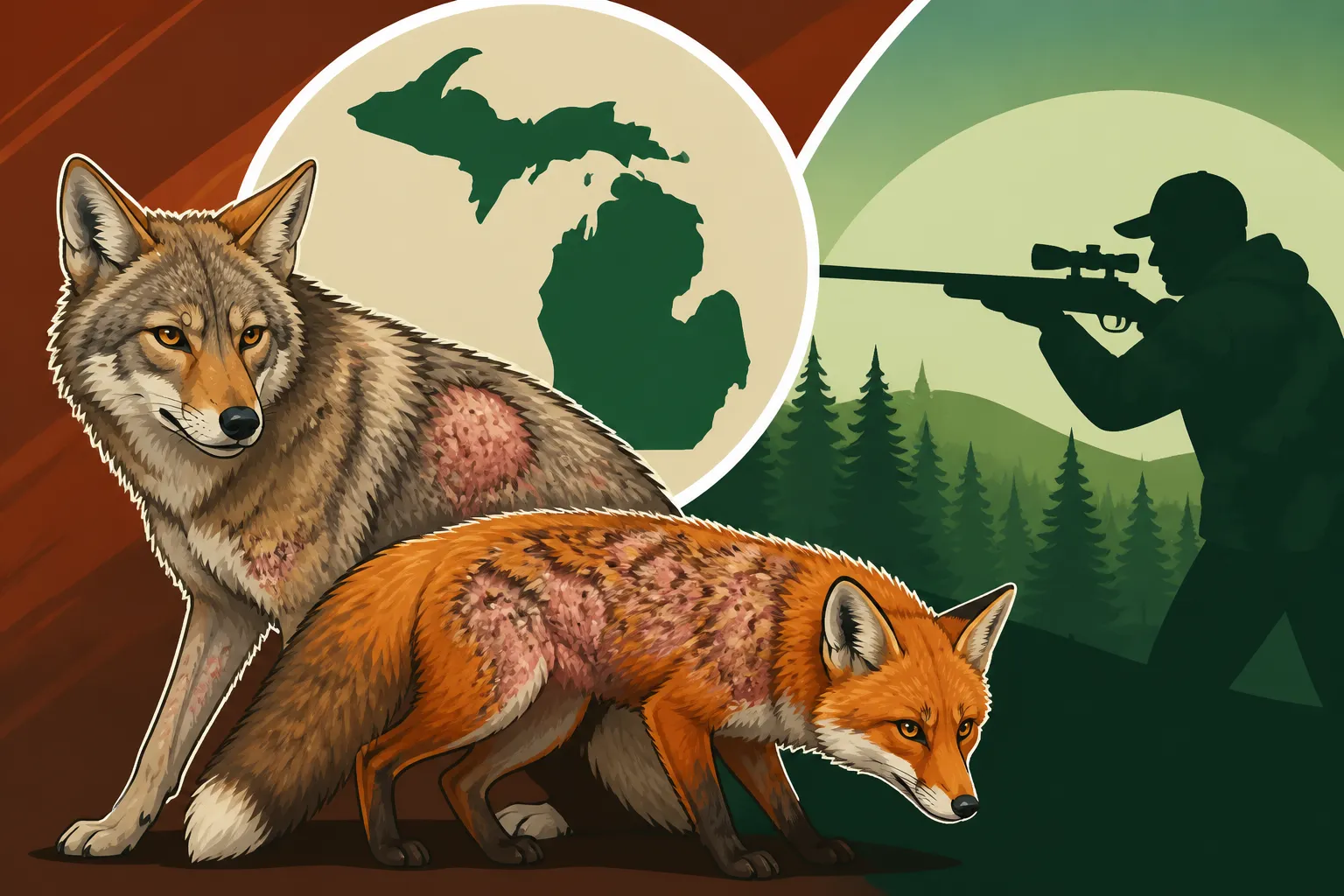
The visible signs of mange are unmistakable once you know what to look for, and they tend to follow a heartbreaking progression. Initially, you might just notice some thinning hair around the animal's tail or hindquarters. But as the mites multiply and the infestation worsens, the hair loss becomes severe and widespread. You’ll often see large, ragged patches of fur missing, especially on the animal's flanks, legs, and face. The skin in these affected areas will likely appear thickened, crusty, and scabby, often with open sores from the relentless scratching. It can look almost like dried mud or scales.
Beyond the obvious skin and fur issues, mangy animals often exhibit a host of other concerning symptoms. They become emaciated, their ribs and hip bones starkly visible, because the energy expended on fighting the mites, dealing with secondary infections, and trying to stay warm consumes most of their caloric intake. They might appear lethargic, slow, and disoriented, often lacking the natural wariness towards humans that healthy coyotes and foxes possess. This unusual behavior can be particularly unsettling; a healthy coyote typically gives you a wide berth, but a mangy one might seem indifferent or even curious, often a sign of its weakened state and desperation. Coyote Calling in Michigan Winter tactics might not even work on an animal so compromised.
How Mange Spreads Among Canids
Sarcoptic mange is incredibly contagious, and that's a big part of why it's such a persistent problem for Michigan's canid populations. The primary method of transmission is through direct, prolonged contact between infected and uninfected animals. This means close physical interactions like den sharing, breeding, fighting, or even just social grooming can pass the mites from one animal to another. When a population of coyotes or foxes becomes particularly dense, the opportunities for such contact increase exponentially, leading to higher rates of transmission.
But direct contact isn't the only way. The mites can also survive for a limited time off a host in the environment, meaning indirect contact plays a significant role. Shared dens, bedding areas, brush piles where animals rest, scent posts, or even carcasses that multiple animals investigate can all become vectors for transmission. A healthy fox investigating a den where a mangy fox recently slept could pick up mites. While the mites don't live long without a host, just enough time is all it takes to find a new victim. This high transmissibility makes containment difficult and means mange can quickly sweep through localized populations, causing significant suffering.
The Real-World Impact of Mange on Michigan's Predator Populations
While it might be tempting to view mange as just a skin condition, its effects cascade through the individual animal's life and, in some cases, can have broader implications for local populations. It's a brutal reality of nature that often leaves hunters feeling a pang of empathy for these animals.
Individual Suffering and Survival Challenges
For an individual coyote or fox, sarcoptic mange is a death sentence in many severe cases, especially without intervention. The loss of fur, which can be nearly complete, strips them of their natural insulation. In Michigan's harsh winters, this means a mangy animal is constantly battling hypothermia, expending precious energy just to stay warm. This is compounded by the fact that the constant itching and skin irritation make it difficult to rest, feed, and hunt effectively. An animal that can barely move without scratching, covered in painful sores, is not going to be an efficient predator.
This inability to hunt and forage efficiently leads to severe emaciation and, eventually, starvation. The immune system, already taxed by the parasitic load, becomes even more compromised, making the animal susceptible to secondary bacterial infections from open wounds. These infections can become systemic, leading to sepsis and further organ damage. For females, the stress of mange can impact their ability to reproduce or care for their young, further reducing the chances of survival for the next generation. It’s a truly debilitating spiral from which few severely infected animals recover on their own.
Population-Level Effects and Cycles
While mange is devastating for the individual, it's important to understand that it rarely, if ever, causes the complete extinction of an entire species in a broad geographic area. What it can do, however, is cause significant localized declines within a specific area. If a fox population in a particular woodlot or state game area experiences a major outbreak, you might see a noticeable drop in their numbers. This is where hunters can contribute to monitoring wildlife health; if you frequently see mangy animals in an area you scout, perhaps with the help of a detailed mapping tool like GoHunt, you're observing a local population under stress.
Wildlife populations often go through natural cycles of boom and bust, and disease can be a contributing factor to these cycles. As a population becomes denser, the likelihood of disease transmission increases, leading to an outbreak. This outbreak can then reduce the population, allowing the surviving, more resistant individuals to rebuild their numbers in an environment with fewer parasites. It's a harsh form of natural selection. Unlike diseases such as Chronic Wasting Disease in Michigan or Bovine Tuberculosis in Michigan Deer, which have very different and often more widespread and insidious impacts, mange tends to be more localized and cyclical in its population-level effects on canids.
Cross-Species Concerns: Can My Dog Get Mange?
This is a very real and valid concern for hunters, trappers, and anyone who spends time in the woods with their domestic dogs. The answer is a resounding yes: sarcoptic mange is highly contagious to dogs. When it affects domestic dogs, it's often referred to as canine scabies. If your hunting dog comes into contact with an infected coyote or fox, or even the bedding area of such an animal, it can pick up the mites.
Symptoms in dogs are similar to those in wild canids: intense itching, redness, hair loss, and scabs. The good news is that sarcoptic mange in dogs is treatable with proper veterinary care, though it can be quite miserable for the animal until treatment begins. It's crucial to seek vet attention promptly if you suspect your dog has contracted mange. Furthermore, other wild canids, like wolves (though rare in Michigan's Lower Peninsula, they are present in the UP), and even other species like raccoons or black bears can occasionally contract sarcoptic mites, though the primary concern is usually between foxes, coyotes, and domestic dogs. Always exercise caution: wear gloves when handling any wild animal, and wash your hands and disinfect your gear thoroughly after a day in the field, especially if you’ve encountered a suspect animal.
What Michigan Hunters Should Do When Encountering Mange
As hunters, we're often the first line of defense and observation for wildlife health. Our presence in the field makes us uniquely positioned to contribute to wildlife management efforts, even when it comes to disease. Knowing how to react to a mangy animal is important for your safety, the health of your pets, and for overall wildlife monitoring.
Reporting Sightings and Disease Monitoring
One of the most valuable things a Michigan hunter can do when encountering a mangy coyote or fox is to report it. The Michigan Department of Natural Resources (DNR) relies on public sightings to monitor the prevalence and spread of diseases like mange. While mange is common, spikes in localized areas or unusual occurrences in specific populations can be important data points for biologists. When you see a mangy animal, especially one that appears severely affected or dead, make a note of the exact location.
This is where your modern scouting tools can really come into play. Many hunters use sophisticated mapping applications, like GoHunt, to pinpoint hunting locations, analyze terrain, and understand animal movement patterns. If you're using such a tool to Scouting Michigan Public Land Before Season or tracking your routes, marking the precise location of a mangy animal sighting is incredibly helpful. You can then use this information to accurately report the sighting to the DNR, perhaps through their online reporting system or by contacting your local wildlife biologist. Providing a detailed description of the animal's condition and the exact location helps the DNR understand the scope of the problem. This data feeds into their broader Michigan Wildlife Disease Monitoring efforts.
Harvesting Affected Animals: Ethical and Practical Considerations
The decision to harvest an animal suffering from mange is often a complex one, touching on both ethical and practical concerns. Many hunters feel a sense of compassion for a severely mangy animal, seeing its suffering and considering a mercy kill. A severely afflicted animal is almost certainly facing a slow, painful death from starvation, hypothermia, or secondary infections. Removing it from the population could be seen as an act of mercy, and it also eliminates a source of mites that could infect other healthy animals.
From a practical standpoint, there's little to no reason to consume the meat from a severely mangy animal. While sarcoptic mange itself doesn't make the meat unsafe for human consumption, these animals are usually extremely emaciated. They lack fat, their muscles are wasted, and their overall condition means the meat quality would be very poor. More importantly, severely mangy animals often have secondary bacterial infections in their skin and possibly throughout their system, which could pose health risks. For these reasons, most hunters would pass on harvesting a mangy animal for consumption. However, if you are legally hunting coyotes or foxes during the open season, and you decide to harvest a mangy one, you must still follow all proper Michigan Coyote Hunting Season Rules and Reporting a Michigan Harvest in 72 Hours requirements.
Preventing Spread and Handling Carcasses
Whether you harvest a mangy animal or simply encounter one, preventing the further spread of mites is paramount. Always, and I mean always, wear gloves when handling any wild animal, but especially one that appears sick or has visible skin issues. The mites can temporarily transfer to human skin, causing a transient, itchy rash (though they cannot complete their life cycle on humans). After handling, thoroughly wash your hands with soap and water, and disinfect any tools, clothing, or vehicle surfaces that may have come into contact with the animal.
Proper carcass disposal is another critical step. If you harvest a mangy animal, or find a dead one, it's best to bury it deeply (at least 2-3 feet) to prevent scavengers from digging it up and potentially spreading the mites further. If burial isn't feasible, double-bagging the carcass and disposing of it in a landfill where it will be quickly covered is another option. Never leave a mangy carcass exposed in the woods. Additionally, avoid allowing your domestic dogs to sniff or investigate dead wild animals, as this is a common way for mange to jump to pets. This practice is part of responsible wildlife interaction, much like understanding Michigan Carcass Transport Restrictions for deer to prevent CWD spread.
Mange in the Broader Context of Michigan Wildlife Health
Mange, like many wildlife diseases, is a natural component of ecosystem dynamics. Understanding its role and how it fits into the larger picture of Michigan's wildlife health can help us appreciate the intricate balance of nature and our part in it.
Natural Population Management and Disease
In the grand scheme of things, disease is a powerful, albeit harsh, mechanism of natural selection and population regulation in wildlife. When coyote or fox populations reach certain densities, conditions become ripe for diseases like mange to spread more easily. This can lead to a reduction in the population, particularly among the weakest or most susceptible individuals. This thinning of the herd, as it were, can sometimes be beneficial for the overall health of the remaining population, ensuring that only the fittest survive and reproduce.
It's a stark reminder that nature often has its own brutal ways of managing populations. While we, as humans, may feel sympathy for the individual animal, these disease cycles have been occurring for millennia. It's a different dynamic than what we see with emerging diseases like CWD, which can have long-term, chronic impacts on cervid populations. For most native wildlife, diseases like sarcoptic mange operate within a more cyclical framework, where populations decline and then rebound over time. You might even observe these patterns in areas you frequently hunt, noting a year where fox sightings are down compared to previous seasons as you track your observations through platforms like GoHunt.
What Hunters Can Do to Help Overall Wildlife Health
Hunters are often the most dedicated conservationists, and our actions play a vital role in maintaining healthy wildlife populations. When it comes to diseases like mange, there are several things we can do beyond just reporting sightings. One crucial aspect is adhering to rules designed to prevent disease transmission, such as Michigan Baiting and Feeding Rules. While these rules are primarily aimed at deer and CWD, congregating any wildlife species through baiting can facilitate disease spread. Thus, following the rules for Hunting Without Bait in the Lower Peninsula or the Upper Peninsula is always a good practice for general wildlife health.
Beyond that, simply being the "eyes and ears" of the woods is invaluable. If you see something unusual—not just mange, but any sick-looking animal, unusual die-offs, or strange behavior—report it to the DNR. Whether it's a Michigan Black Bear Hunting in a new area or a cluster of dead birds, Reporting a Sick Animal in Michigan is vital. Hunters are often the first to notice these things because we spend so much time immersed in wild places. Our observations contribute significantly to the DNR's ability to monitor wildlife populations, identify potential outbreaks, and take appropriate management actions. By being observant, responsible, and engaged, we help ensure Michigan's wildlife remains healthy and thriving for future generations.
| Feature | Healthy Coyote/Fox | Mangy Coyote/Fox |
|---|---|---|
| Coat | Thick, lustrous, full fur, appropriate for season. | Patchy hair loss, thinning, especially on tail, hindquarters, face. Dull, matted appearance. |
| Skin | Smooth, supple, often unseen beneath thick fur. | Thickened, crusty, scabby, red, inflamed, possibly with open sores from scratching. |
| Body Condition | Well-muscled, alert, healthy weight. | Emaciated, ribs and hip bones prominent, gaunt appearance. |
| Behavior | Wary of humans, active, agile, hunts effectively. | Lethargic, slow, disoriented, may show unusual lack of fear of humans, intense scratching. |
| Activity | Primarily nocturnal or crepuscular, actively hunting. | May be seen during daylight hours, less effective hunting, seeks warmth. |
Disclaimer
This article is for general informational purposes only and does not constitute professional advice. Laws, prices and regulations vary by location and change over time. Consult a qualified professional for guidance on your specific situation.