Upper Peninsula Versus Lower Peninsula Deer
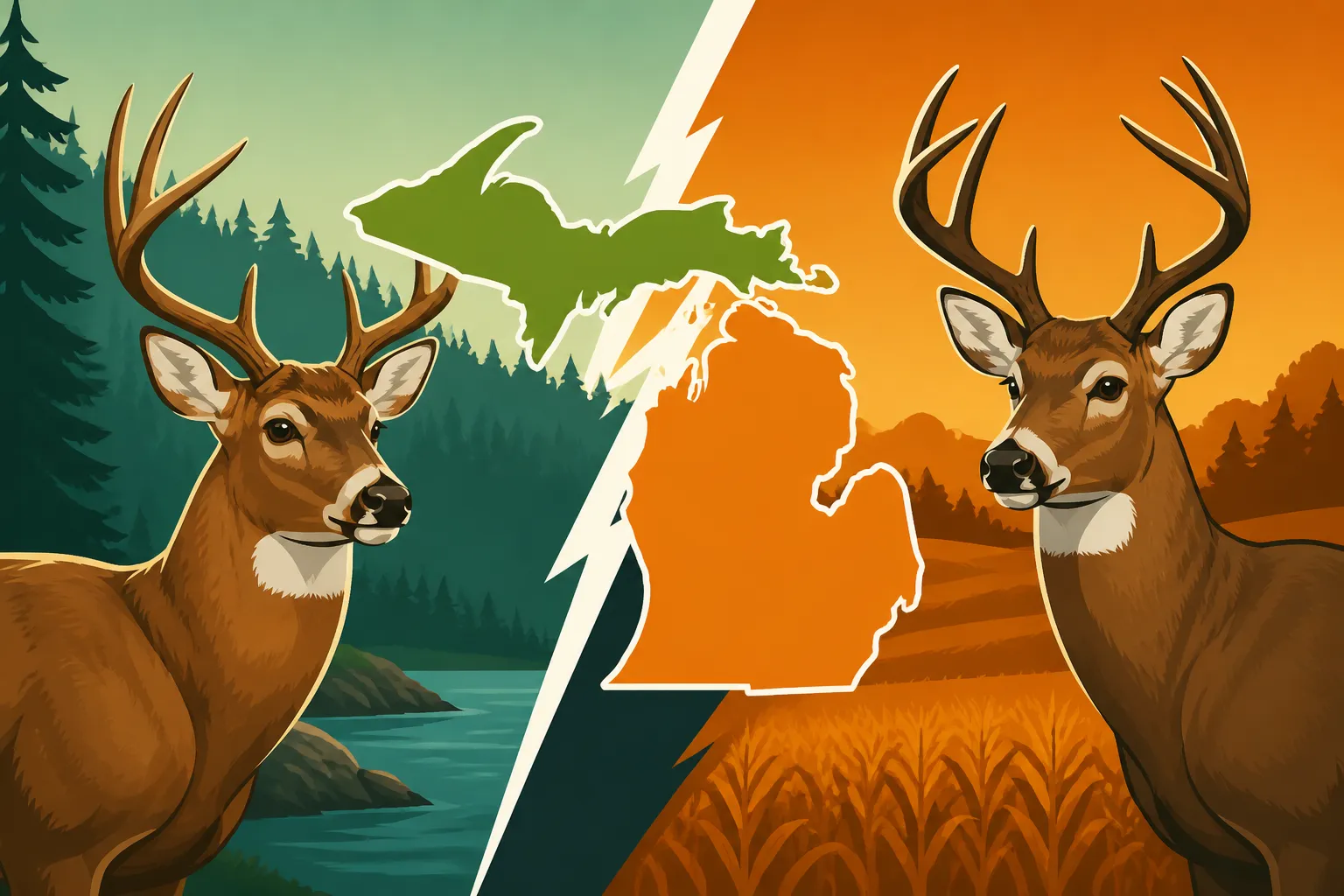
It’s a question as old as Michigan deer hunting itself: where should you go, the Upper Peninsula or the Lower Peninsula? For many hunters, this isn't just a matter of geography, but a deeply personal decision shaped by tradition, hunting style, and what they hope to experience. Both regions offer incredible opportunities, but they are vastly different worlds, each with its own unique challenges, rewards, and deer behaviors. This guide will break down those distinctions, helping you understand the unique characteristics of deer hunting in Michigan's Upper and Lower Peninsulas, so you can make an informed choice for your next season.
The Lay of the Land: Habitat Differences
Michigan's geological and ecological diversity is nowhere more evident than in the stark contrast between its two peninsulas. This natural landscape dictates everything from deer density to available food sources, fundamentally shaping the hunting experience in each region. Understanding these habitat differences is the first step to truly appreciating the nuances of U.P. versus L.P. deer hunting.
Upper Peninsula's Big Woods and Harsh Winters
Step into the Upper Peninsula, and you're immediately struck by its wild, untamed nature. This is Michigan's "Big Woods" country, characterized by vast tracts of state and national forest land. Think endless stands of mixed hardwoods, sprawling conifer swamps, and dense cedar thickets. The terrain can be rugged, with rocky ridges, steep bluffs overlooking Lake Superior, and low-lying, often impassable marshes. It’s a place where you can walk for miles without seeing another human track, feeling truly immersed in wilderness.
The habitat here provides ample cover, but food sources can be more scattered and less abundant than in the agricultural south. Deer in the U.P. rely heavily on browse, acorns in good years, and the protective cover of cedar swamps during the brutal winters. These winters are the defining feature, often bringing feet of snow and prolonged periods of bitter cold. This severe weather directly impacts deer survival and movement, leading to what hunters call "yarding" – where deer congregate in dense conifer cover, particularly cedar swamps, to escape deep snow and access what little food is available. Understanding this pattern, as discussed in detail in our guide on Upper Peninsula Deer Yarding and Winter Movement, is crucial for success. These yards become critical survival zones, and their location often dictates deer distribution for miles around.
Lower Peninsula's Diverse Landscapes
The Lower Peninsula, particularly its southern half, presents a completely different picture. Here, the landscape is a patchwork of agricultural fields, woodlots, sprawling suburban developments, and smaller state game areas. While there are still large tracts of state forest in the northern Lower Peninsula, the overall feel is much more managed and populated. You'll find oak-hickory forests, small swamps, river bottomlands, and, most prominently, vast fields of corn, soybeans, and alfalfa.
This diversity of habitat offers an abundance of food for deer year-round. The agricultural bounty means deer often have a consistent, high-energy diet, contributing to larger body sizes and, frequently, larger antlers. The mix of cover, from dense briar thickets to mature timber and thick fencerows, provides ample bedding and security. However, this also means deer patterns can be more localized and tied directly to specific food sources or pockets of cover that offer refuge from human activity. Hunting in areas like those described in Southern Michigan Farm Country Deer Hunting requires a keen understanding of these micro-habitats and how deer use them in relation to agricultural cycles and human pressure. The biggest challenge in the Lower Peninsula often isn't finding deer, but finding deer that haven't been pressured and figuring out their specific routines within a smaller, often fragmented landscape.
Deer Populations and Dynamics
The differing habitats and winter conditions between the peninsulas lead to significant disparities in deer populations, health, and behavior. These dynamics have a direct impact on hunter success rates, trophy potential, and the overall hunting experience. It’s vital to appreciate these differences when planning your hunt.
U.P. Deer Numbers and Winter Severity
The Upper Peninsula's deer herd experiences dramatic fluctuations, primarily dictated by the severity of its winters. While deer populations can rebound in a series of mild winters, a harsh winter with deep, prolonged snow and extreme cold can decimate the herd. This phenomenon, which we explore in depth in What Severe Winters Do to Michigan Deer, is a constant reality for U.P. hunters. Fawns and older deer are particularly vulnerable, and survival rates can plummet. Consequently, the deer density in much of the U.P. is significantly lower than in the Lower Peninsula.
Hunting in the U.P. often means covering a lot more ground to find deer. Encounters might be fewer, but the deer you do find are true survivors, often bigger-bodied and exceptionally wary. The challenge here is the hunt itself – tracking, still-hunting through vast tracts of timber, and deciphering subtle sign in remote areas. While trophy potential exists, it's often more about the satisfaction of a hard-earned hunt in a wild setting. The management philosophy in the U.P. often prioritizes herd health and survival through these tough winters, recognizing that habitat, rather than hunter pressure, is the primary limiting factor for population growth.
L.P. Deer Density and Health
In contrast, the Lower Peninsula boasts much higher deer densities, particularly in agricultural areas. The abundance of food and milder winters mean deer thrive, leading to robust populations. It's not uncommon to see multiple deer during a single sit, and encounters with bucks are generally more frequent. This higher density translates to a higher overall deer harvest annually in the Lower Peninsula.
The health of L.P. deer is generally excellent, benefiting from nutrient-rich forage. This often results in healthier body weights and greater antler development, especially in areas with balanced age structures. While the southern Lower Peninsula does present some unique disease challenges like Chronic Wasting Disease (CWD) and Bovine Tuberculosis (bTB) in certain areas, the overall herd remains strong and productive. The challenge for hunters here often shifts from finding deer to finding mature deer, as young bucks are abundant. Understanding how deer utilize fragmented landscapes, woodlots, and field edges is key. Programs like the Michigan DNR's efforts to monitor and manage herd health are ongoing, and hunters play a critical role in reporting harvests and participating in testing when required.
Hunting Pressure and Experience
Beyond the deer themselves, the experience of hunting in the Upper versus Lower Peninsula is dramatically different, largely due to variations in hunting pressure and the types of land available. These factors shape everything from scouting strategies to your mindset in the stand or on the move.
Solitude in the Upper Peninsula
One of the most appealing aspects of hunting the Upper Peninsula for many is the sheer solitude. With vast expanses of public land, including state forests and national forests like the Hiawatha and Ottawa, it's entirely possible to spend days afield without encountering another hunter. This is the place for those who truly want to immerse themselves in nature, where the sounds you hear are wind in the pines, ravens calling, and the crunch of snow underfoot. It’s a challenging environment, but the reward is a sense of wilderness and self-reliance that's hard to find elsewhere.
This lack of pressure means deer behavior is often more natural. They are less wary of human scent and movement than their L.P. counterparts, though they are still wild animals. Scouting, as detailed in our guide on Scouting Michigan Public Land Before Season, can involve covering vast areas, looking for subtle sign, old logging roads, and natural funnels. The hunt itself might be more about still-hunting or tracking, particularly after a fresh snow, rather than sitting over a specific food plot. While you might not see as many deer, the ones you do encounter are often less educated, making for a thrilling and authentic chase. Using tools like GoHunt's mapping features can be incredibly beneficial for identifying remote access points and potential bedding areas away from any perceived pressure.
Crowds and Competition in the Lower Peninsula
The Lower Peninsula, with its higher population density and more accessible public lands, generally sees much greater hunting pressure. During popular seasons like the November firearm opener, state game areas and even smaller parcels of state forest can feel crowded. This isn't to say you can't find solitude, but it often requires working harder, walking further, or utilizing less obvious access points. The constant pressure can make deer incredibly wary, shifting their movements to nocturnal patterns or pushing them into dense, overlooked cover during daylight hours. This is a common frustration, especially when experiencing Opening Day Crowds on Michigan State Land.
Hunting in the L.P. often demands more strategic thinking about hunter avoidance and deer movement in relation to pressure. Deer drives, while effective, need to be carefully coordinated, as discussed in Deer Drives on Michigan State Land. Stand placement becomes critical, focusing on escape routes, bedding areas, and overlooked pockets of cover that pressured deer use as refuges. It’s a game of chess, anticipating both deer movement and other hunters. While it can be frustrating, the reward is often a greater chance at seeing deer, and the opportunity to hone your skills in outsmarting truly educated whitetails.
Strategies and Tactics Tailored to Region
Given the vast differences in habitat, deer density, and hunting pressure, it stands to reason that the most effective hunting strategies vary significantly between the Upper and Lower Peninsulas. What works like a charm in one region might be a total bust in the other. Adapting your approach to the specific conditions of your hunting ground is paramount for success.
U.P. Tactics: Persistence and Tracking
Hunting the Upper Peninsula is often a game of patience, persistence, and covering ground. In the vast timber, deer might be anywhere, and luck plays a bigger role in chance encounters. However, skilled U.P. hunters often employ specific tactics to increase their odds. Still-hunting, moving slowly and deliberately through the woods, pausing to scan and listen, is a highly effective method. This allows you to cover territory while maintaining a stealthy presence, hoping to intercept a deer on the move or jump one from its bed. For deeper insights into this method, consider our guide on Still-Hunting Michigan Cedar Swamps.
Tracking is another quintessential U.P. tactic, especially after a fresh snowfall. The ability to read tracks, interpret gait, and follow a deer through challenging terrain is an art form. It requires keen observation, knowledge of deer behavior, and the physical endurance to pursue a buck for hours, sometimes even days. Because deer densities are lower, every sign, every track, becomes more important. Hunters often focus on natural funnels, pinch points, and the edges of cedar swamps or thickets where deer might travel between feeding and bedding areas. It's a physically demanding hunt, but the satisfaction of putting a successful track on a U.P. buck is truly unique.
L.P. Tactics: Adapting to Agriculture and Suburbia
Hunting the Lower Peninsula, particularly the southern half, often revolves around understanding how deer utilize fragmented habitats and abundant food sources. This means a heavy emphasis on stand placement, often overlooking agricultural fields, pinch points between woodlots, or fencerows that deer use for travel. Scouting for specific food preferences, like acorns in hardwoods or standing corn, is crucial. The goal is to intercept deer moving between bedding cover and feeding areas, often at dawn and dusk.
With higher hunting pressure, deer in the L.P. are masters of using small, overlooked pockets of cover for bedding during daylight hours. Setting up on these transition routes, or finding dense thickets that other hunters ignore, can be highly effective. The use of ground blinds, especially brushed-in ones on field edges, is also common, providing concealment in open country. For hunters specifically targeting a buck in these environments, knowing how to identify and hunt funnels, as well as understanding how to effectively use grunt calls and rattling antlers (as explored in Rattling and Grunting in Michigan), can make a significant difference. The goal is often to pinpoint precise travel corridors or ambush points where a mature buck feels secure enough to move during legal shooting hours.
Antler Point Restrictions and Management Philosophy
Michigan's deer management strategies, particularly regarding antler point restrictions (APRs), have seen significant evolution, and their application often differs between the Upper and Lower Peninsulas. These regulations directly influence buck age structure, hunter choices, and the overall management philosophy for each region's unique challenges.
APRs and Deer Management in the Lower Peninsula
Antler Point Restrictions have been implemented in various Deer Management Units (DMUs) across the Lower Peninsula for years, often as a way to allow younger bucks to mature and increase the overall age structure of the buck herd. These rules typically require a buck to have a minimum number of points on one antler (e.g., 3 points or 4 points) to be legally harvested by some hunters, depending on the license and DMU. Our article on Michigan Antler Point Restrictions by DMU provides a comprehensive breakdown of these specific regulations.
The philosophy behind APRs in the L.P. is often geared towards improving hunting quality by increasing the number of older, larger-antlered bucks available. This is often in response to hunter feedback and a desire to manage for a more balanced age structure in areas with high deer populations. While not universally popular, many hunters appreciate the opportunity to see and potentially harvest more mature animals. The challenge can be identifying antler points quickly in low light or thick cover, requiring careful judgment. For those who find themselves needing to quickly count points from a stand, the advice in Counting Antler Points From a Stand can be incredibly valuable. These regulations fundamentally alter how hunters approach their buck tags, encouraging selectivity and a deeper understanding of deer anatomy.
U.P. Management Focus: Winter Survival
In contrast to parts of the Lower Peninsula, APRs are less widespread and often absent in many U.P. DMUs for general deer licenses. The primary management concern in the Upper Peninsula is often simply sustaining the deer herd through its brutal winters. When deer populations are frequently challenged by severe weather, the emphasis shifts from managing for antler size to managing for overall survival and reproductive success. For example, some U.P. DMUs may have APRs for certain licenses (like the regular deer license for the first buck), but these are not applied as broadly as in the Lower Peninsula's APR zones. The critical factor in the U.P. is that the DNR is generally more conservative with antlerless harvest recommendations, particularly after a tough winter, to allow the herd to rebuild.
The focus in U.P. deer management is often on habitat improvement within wintering areas and monitoring the Winter Severity Index to predict how deer populations might fare. Hunters in the U.P. are generally encouraged to harvest antlerless deer when quotas are available, but the overall goal is often to provide opportunity while safeguarding the herd against the natural challenges of its environment. This creates a hunting culture where taking any legal deer is a significant accomplishment, and the focus is less on antler size and more on the pure challenge of the hunt.
Here's a quick comparison of the two regions:
| Feature | Upper Peninsula (U.P.) | Lower Peninsula (L.P.) |
|---|---|---|
| Habitat | Vast big woods, conifer swamps, rugged terrain | Diverse: agriculture, woodlots, suburbs, river bottoms |
| Winter Severity | Harsh, deep snow, prolonged cold; primary population limiter | Milder, less snow; generally favorable for deer |
| Deer Density | Lower; fluctuates significantly with winter severity | Higher; stable and robust populations |
| Deer Size | Often big-bodied, wary survivors | Generally larger bodies & antlers (due to food) |
| Hunting Pressure | Lower; greater solitude, less competition | Higher; crowded public lands, wary deer |
| Primary Tactics | Still-hunting, tracking, vast area scouting | Stand hunting, field edge setups, funnel ambush |
| APRs | Less widespread; focus on herd survival & opportunity | More common in some DMUs; focus on buck age structure |
| Experience | Wilderness immersion, self-reliance, challenging hunt | Strategic hunting, high encounter rates, "chess game" |
Ultimately, whether you choose the rugged solitude of the Upper Peninsula or the strategic challenges of the Lower Peninsula, Michigan offers a truly diverse and rewarding deer hunting experience. Both regions demand respect, preparation, and an understanding of the unique dynamics at play.
Disclaimer
Please note that hunting regulations, seasons, and licensing requirements can change. Always consult the latest Michigan DNR hunting guide or website for the most up-to-date and accurate information before planning any hunting trip. This guide is for informational purposes only and should not replace official DNR resources.