How Many Deer the Upper Peninsula Lost
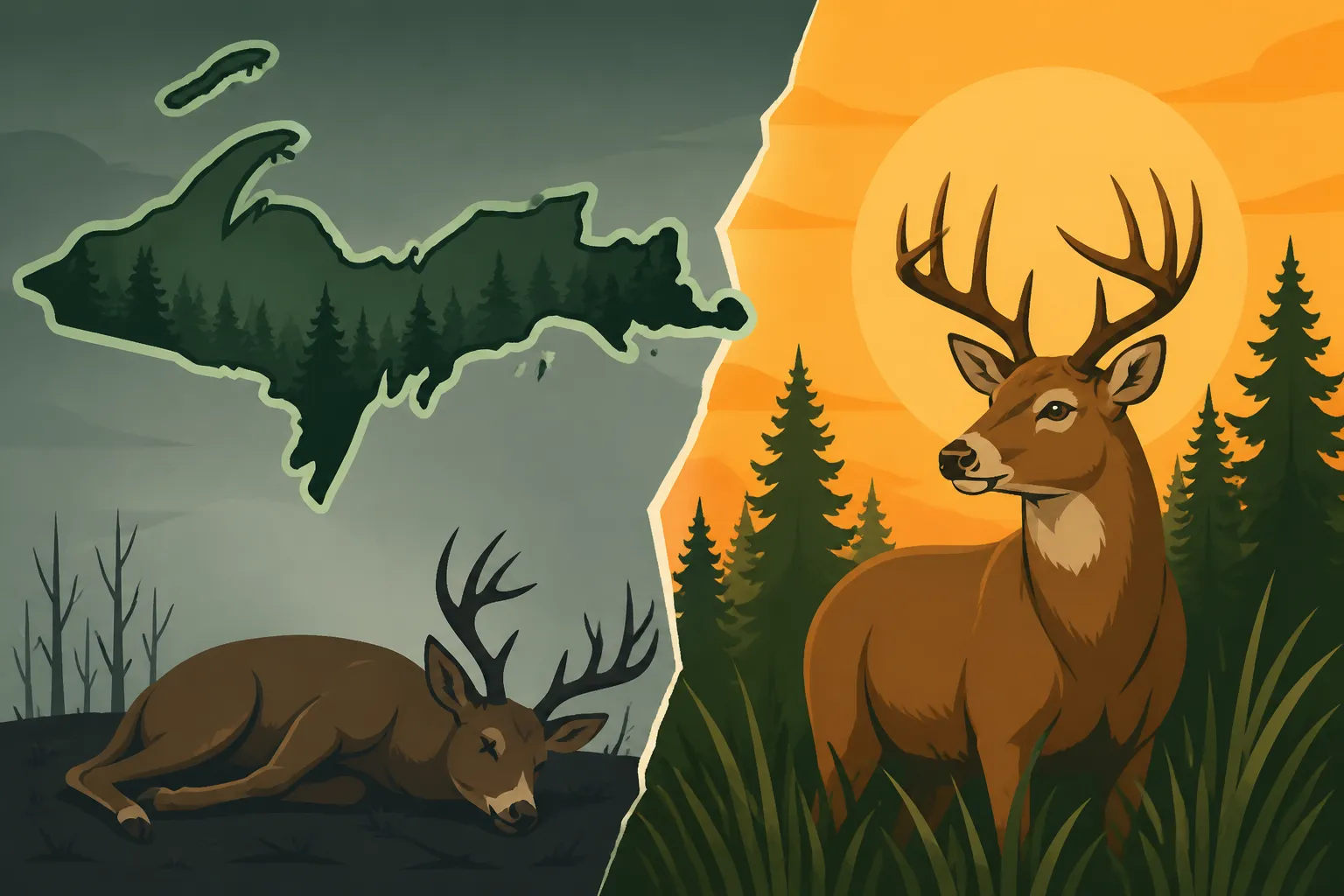
When Michigan's Upper Peninsula experiences a brutal winter, it's not just the hunters trudging through deep snow who feel the strain; the deer herd itself suffers immensely. Many of us who hunt the U.P. have witnessed the heartbreaking reality of deer struggling to survive, or found the stark evidence of those who didn't make it through. It's a constant concern for anyone who cares about the health of this iconic deer population. This guide will delve into the critical factors that lead to significant deer loss in the Upper Peninsula, how these losses are assessed, and what it all means for the future of hunting in our northern paradise.
The Harsh Reality: Why Michigan's Upper Peninsula Deer Face Unique Challenges
The Upper Peninsula, or U.P. as we Michiganders affectionately call it, is a land of stunning beauty, vast forests, and rugged wilderness. But beneath that beauty lies a challenge for white-tailed deer unlike anywhere else in the state. The sheer severity of winter is the undeniable heavyweight champion when it comes to deer mortality in the U.P. We're not talking about a couple of heavy snowfalls; we're talking about months of persistent, deep snow, often reaching depths that make it nearly impossible for deer to move, find food, or escape predators.
The Grip of Winter: Deep Snow and Freezing Temperatures
Imagine being a deer in the U.P. when the snow starts falling in November and doesn't let up until April or even May. When that snow piles up to three feet or more, a deer's ability to browse on critical forage plants is severely limited. Their short legs simply can't navigate through chest-deep drifts for long periods. Every step becomes an energy-draining struggle, and that energy is already in short supply. They might yard up in dense conifer cover, especially cedar swamps, seeking thermal protection and easier travel on packed trails, but even then, food inside those yards can quickly become depleted. This is why understanding Deer Yarding and Winter Movement is so crucial for U.P. hunters.
Beyond the physical barrier of snow, the relentless cold demands an immense amount of energy from deer just to stay warm. A lack of available high-energy food sources, combined with the caloric drain of fighting cold and snow, creates a dangerous deficit. Fawns and older deer are often the first to succumb, their bodies simply unable to maintain core temperature or find enough nutrition. Many veteran hunters can tell you tales of seeing deer in late winter that are little more than walking skeletons. It's a brutal, natural culling that underscores the phrase, "How Deer Starve in a Bad Michigan Winter."
Limited Forage and Habitat Constraints
The vast timberlands of the U.P., while beautiful, aren't always a banquet for deer, especially after decades of forest management practices that favored timber production over diverse browse. Mature hardwoods, while providing acorns in good years, often have limited understory browse once the snow gets deep. Clear-cuts and early successional forests offer excellent browse, but if they're not strategically located near wintering yards, or if the snow is too deep to access them, their benefit is diminished. The sheer scale of the U.P. means that good winter habitat—places with dense conifer cover, mixed with accessible hardwood browse—can be few and far between, especially in severe years. This combination of harsh weather and sometimes sparse winter food is a major driver of losses.
Tracking the Losses: How Biologists Estimate Winter Mortality and Population Trends
So, how do we actually put a number to "how many deer the Upper Peninsula lost"? It's not as simple as counting bodies, though that happens too. Biologists employ a range of methods to estimate population trends and winter mortality, painting a picture that helps guide management decisions. These numbers are vital for understanding the overall health of the herd and setting future hunting regulations.
The Winter Severity Index (WSI)
One of the most important tools in the U.P. is the Winter Severity Index, or WSI. This isn't some abstract scientific formula; it's a practical, real-world measurement that directly correlates to deer survival. The WSI tracks two main factors: days with 18 inches or more of snow on the ground, and days with temperatures below 0 degrees Fahrenheit. Each day a threshold is met, a point is added to the index. The higher the WSI, the more severe the winter, and the greater the expected deer mortality.
A WSI of 50-70 might indicate a moderate winter, but when you start seeing numbers climb into the 90s or even well over 100, that’s when biologists and hunters start to worry. A reading over 100 points, for instance, signals a truly severe winter with significant deer loss, especially among fawns and older animals. Tools like GoHunt can sometimes provide access to historical data or analyses that help visualize these trends over time, giving hunters a better understanding of what the numbers mean. This kind of data is critical to understanding What Severe Winters Do to Michigan Deer.
Here’s a simplified look at how the Winter Severity Index often correlates with deer mortality:
| Winter Severity Index (WSI) Score | Typical Winter Condition | Expected Deer Mortality Impact |
|---|---|---|
| 0-40 | Mild | Minimal direct winter mortality |
| 41-70 | Moderate | Some mortality, especially fawns |
| 71-100 | Severe | Significant fawn and adult mortality |
| 101+ | Extremely Severe | Very high fawn and considerable adult mortality |
Note: These are general guidelines; local conditions and habitat quality can influence actual impacts.
Harvest Data and Surveys
Beyond the WSI, harvest data from hunters provides another crucial piece of the puzzle. When deer numbers are down, fewer deer are harvested. The DNR tracks harvest numbers religiously, including total deer taken, antlered bucks, and antlerless deer, broken down by county and even deer management unit. A sustained drop in harvest, particularly in antlerless tags filled, can signal a declining population.
Additionally, biologists conduct various surveys. While aerial surveys are challenging and expensive in dense U.P. forest, other methods like pellet-group counts (counting deer droppings along transects) and winter track surveys can provide estimates of deer density and distribution. Hunter observations, though anecdotal, also contribute to the overall picture. When hunters consistently report seeing fewer deer, it often aligns with biological assessments of a reduced herd. These various data points help us understand Michigan Deer Population Estimate and how it fluctuates.
The Human Impact: What Declining Deer Numbers Mean for U.P. Hunters and Management
When deer numbers drop significantly in the U.P., it's not just a biological concern; it deeply affects the hunting community and necessitates changes in how the resource is managed. The frustration of seeing fewer deer, or having seasons curtailed, is a very real experience for those of us who cherish our time in the U.P. woods.
Season Adjustments and Tag Allocations
One of the most immediate and visible impacts of severe deer loss is on hunting regulations. To allow the herd to recover, the DNR might reduce or even eliminate antlerless deer permits in certain deer management units. They might also adjust season dates or implement more restrictive antler point restrictions (APRs) to protect younger bucks and allow them to mature, thereby bolstering the breeding population. These decisions are never made lightly, and they often spark passionate debates among hunters, but they are generally aimed at protecting the long-term health of the herd. Understanding Michigan Deer Seasons and Tags means staying up-to-date on these changes.
For example, after a particularly harsh winter, the number of antlerless tags available in a U.P. county might drop from several thousand to just a few hundred, or even zero. This directly impacts hunter opportunity and success rates. Hunters need to stay informed, perhaps using resources like GoHunt to track regulation changes year-to-year, ensuring they understand the current rules before heading afield.
Longer Recovery Times and Hunter Effort
A significant deer loss due to a severe winter isn't something the herd bounces back from in a single year. It often takes several mild winters and strong fawn crops for the population to rebound. This means hunters in the affected areas might experience several years of reduced deer numbers and tougher hunting conditions. It demands more patience, more scouting, and often a willingness to adapt tactics. You might find yourself Hunting Deer in Deep Upper Peninsula Snow for longer than expected, or spending more time just trying to locate sign.
Hunters often have to put in significantly more effort to find and harvest a deer. What might have been a relatively straightforward hunt in a good year becomes a true test of woodsmanship and perseverance. This can lead to decreased hunter satisfaction and, in some cases, a decline in hunter numbers in certain areas, as people seek more productive grounds. The long-term recovery of the herd is paramount, and patience from the hunting community is key to seeing the numbers return. Learning How Long a Deer Herd Takes to Recover helps manage expectations.
Beyond the Winter: Other Factors Affecting U.P. Deer Survival and Recovery
While winter is undoubtedly the most significant factor in U.P. deer loss, it's not the only one. A complex web of other influences also plays a role in the overall health and population dynamics of Michigan's northern deer herd. These factors can exacerbate the effects of a bad winter or hinder recovery.
Predation Pressures
The U.P. is home to a robust population of predators, including black bears, bobcats, and coyotes, all of which prey on deer, particularly fawns. Wolves, especially, are a natural part of the U.P. ecosystem and a consistent presence in some areas. While healthy deer herds can often withstand a certain level of predation, when a deer population is already weakened by a severe winter, or when fawn production is low, predation can have a more pronounced impact on the overall numbers. The debate over Do Wolves Drive Michigan Deer Numbers? is ongoing, but it's undeniable that they are a factor in the U.P. landscape.
It's a delicate balance. Predators play a vital role in natural ecosystems, culling the weak and sick. However, when deer numbers are already low due to other stressors, increased predation can slow down the recovery process. Understanding the role of What Wolves Eat in the Upper Peninsula helps us appreciate this complex dynamic.
Habitat Quality and Fragmentation
Beyond wintering yards, overall habitat quality across the U.P. also influences deer numbers. Areas with a good mix of mature timber, regenerating clear-cuts, and diverse understory vegetation tend to support healthier deer populations. However, habitat fragmentation due to development (even if limited in the U.P.), or large tracts of uniform, mature timber that lack diverse food sources, can limit a deer herd's potential. Efforts to improve habitat, through timber management, selective logging, and prescribed burns, are crucial for providing the food and cover deer need to thrive, especially in the years following a significant loss. This highlights What Biologists Say Limits U.P. Deer beyond just predator numbers.
Disease and Other Mortality Factors
While not as prevalent or widespread as in some other parts of Michigan, diseases can also contribute to deer mortality. Bovine tuberculosis (bTB) is largely confined to a specific area in the northeastern Lower Peninsula, but chronic wasting disease (CWD) has been detected in a few Lower Peninsula counties, although it has not had the same broad impact on overall deer numbers in the U.P. as winter has. Other factors like EHD (Epizootic Hemorrhagic Disease) occasionally cause localized die-offs, particularly in warmer, drier years. Vehicle collisions, though often overshadowed by winter, also contribute to annual mortality, especially on U.P. highways.
All these factors, when combined with the dominant force of winter, create a challenging environment for Michigan's Upper Peninsula deer herd. It's a testament to their resilience and the dedication of hunters and wildlife managers that these deer continue to thrive, even after the toughest years. By understanding these challenges, we can be better stewards of this incredible resource.
Disclaimer
This article is for general informational purposes only and does not constitute professional advice. Laws, prices and regulations vary by location and change over time. Consult a qualified professional for guidance on your specific situation.