Michigan Bear Harvest Numbers
It's an undeniable thrill to even think about hunting a Michigan black bear. For many of us, getting that elusive bear tag is half the battle, and once you have it, the real adventure begins. But before you even apply, understanding Michigan's bear harvest numbers can feel like trying to decipher an ancient code. You want to know your odds, where the bears are, and what factors truly influence success, which is exactly what this guide will help you unpack.
The Story Behind Michigan's Bear Harvest Numbers
When we talk about bear harvest numbers in Michigan, we're really looking at a snapshot of a meticulously managed system. Unlike deer hunting, where tags are readily available, bear hunting is a limited-entry affair, designed to keep populations healthy and balanced. This makes every bear harvested a significant event, and the annual numbers are a crucial barometer for wildlife managers and hopeful hunters alike.
The Permit System and How it Shapes Harvest
Michigan's bear hunting isn't an over-the-counter proposition. Hunters must apply for a limited number of permits in specific Bear Management Units (BMUs). This permit system is the primary control on how many bears can be harvested each year. The Department of Natural Resources (DNR) sets these quotas based on extensive biological data, aiming to maintain a sustainable population while offering hunting opportunities. It means that even if there are plenty of bears, the number of available tags directly caps the potential harvest. Understanding the intricacies of the Michigan Bear Licence Drawing is the first step for any aspiring bear hunter. You accumulate preference points, which improve your odds in future drawings, but it's still a tough draw in many of the prime units.
What "Harvest" Actually Means
When the DNR reports a "bear harvest," it's more than just the number of animals taken. It represents the total number of bears that have been legally killed, tagged, and most importantly, registered with the state. This registration process is absolutely critical for accurate data collection. Every hunter who successfully takes a bear is required to report their harvest within a specific timeframe, often 72 hours. This information – where the bear was taken, its sex, and sometimes its age – feeds directly into the DNR's population models, helping them make informed decisions for the next hunting season. Without complete and accurate reporting, it's like trying to navigate a dense cedar swamp blindfolded; the data just isn't there to make sound management choices. If you're fortunate enough to connect with a bear, knowing how to approach Handling a Bear After the Shot and promptly completing the Reporting a Michigan Harvest in 72 Hours are vital responsibilities.
Overall Trends and Fluctuations
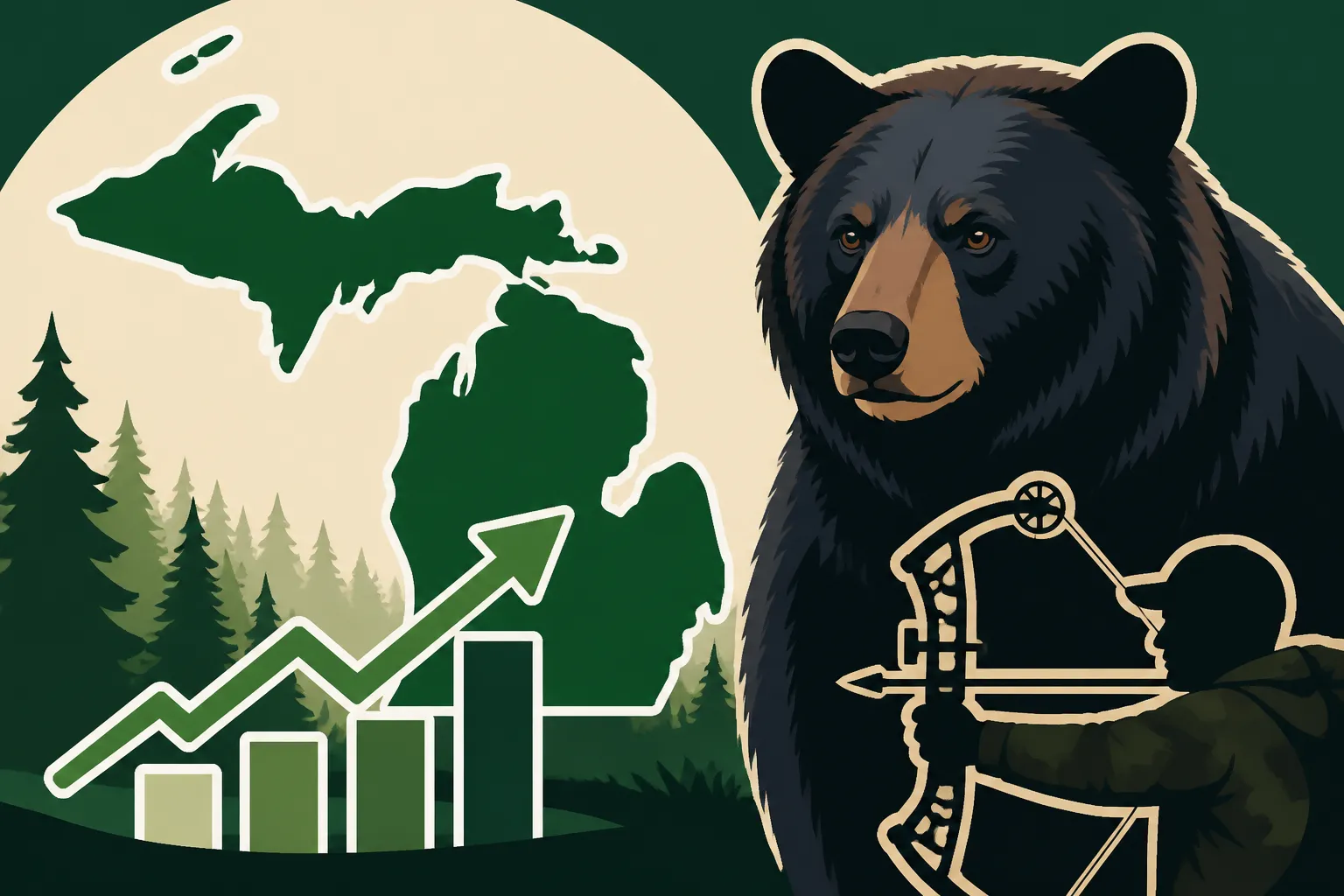
Bear harvest numbers in Michigan aren't static; they ebb and flow from year to year. While a general trend might show a stable or slowly increasing population, individual year-to-year numbers can fluctuate due to a variety of factors. A year with a record harvest might be followed by a slightly lower one, not necessarily because the bear population declined, but perhaps due to environmental conditions or hunter success rates. These trends, however, are closely monitored. For instance, if the harvest consistently declines over several years in a specific BMU, it could signal a need to adjust quotas or further investigate local population dynamics. Conversely, sustained high harvests might allow for increased permit numbers in the future. These long-term patterns, which are summarized in various Michigan Bear Harvest Trends reports, paint a clearer picture of the health and abundance of Michigan's Black Bear Population.
Key Factors Influencing Annual Bear Harvest
Several variables conspire each year to determine the final tally of Michigan's bear harvest. It’s a complex interplay of nature, human effort, and regulations, all coming together in the wild places we cherish. Understanding these influences can help hunters anticipate challenging years or capitalize on favorable conditions.
Weather Conditions During the Season
You wouldn't think weather would be such a dominant factor, but it absolutely is. A warm, dry fall, especially during the early archery or September firearm seasons, can make bears less active during daylight hours. They might not be hitting bait piles as frequently, or they could be denning up earlier if natural food sources are abundant. Conversely, an early cold snap or persistent rain can make bears more eager to feed before winter, potentially increasing their movement and visibility. Heavy winds can also make it incredibly difficult to hear a bear approaching or to detect movement in the dense cover they often inhabit. Imagine sitting in a treestand on a still, crisp morning versus a blustery, warm afternoon; the difference in bear activity can be night and day. These conditions can significantly impact overall hunter success, regardless of the number of bears available.
Hunter Effort and Participation
Even with a valid tag, whether a hunter actually goes out, and for how long, makes a huge difference. Factors like the economy, fuel prices, or even the popularity of other concurrent hunting seasons (like deer archery season) can influence overall hunter effort. If fewer hunters head into the woods, or if those who do spend less time afield, the harvest numbers will naturally reflect that reduced effort. Sometimes, the novelty of a drawn tag might encourage a hunter to put in more hours, but if the going gets tough, or if bad weather persists, even the most dedicated can be deterred. Bear hunting often requires significant scouting, baiting effort (where legal), and patience. A hunter who spends weeks tending bait or dedicating multiple full days to still-hunting will have a much higher chance of success than someone who only hunts a couple of afternoons.
Baiting Regulations and Hunter Success
Michigan has a nuanced approach to baiting, and these regulations profoundly affect harvest numbers. In some areas, baiting is a traditional and highly effective method for bear hunting, especially in the thick cover where bears live. It allows hunters to draw bears into a consistent location and offers a clearer shot opportunity. However, in regions where baiting is restricted or completely banned (often due to concerns about disease transmission like CWD, or just general management principles), hunter success rates can decline significantly. New hunters, in particular, may find it much more challenging to locate and harvest a bear without the aid of bait. The shift from relying on bait to other methods like still-hunting, tracking, or hunting over natural food sources requires a different skill set and often more extensive knowledge of bear behavior. This change in tactics, when imposed, often results in an initial dip in harvest numbers as hunters adapt. You can learn more about Baiting Bears in the Upper Peninsula for specific strategies where it is permitted.
Bear Population Health and Distribution
At the end of the day, you can't harvest what isn't there. The underlying health and density of the bear population in a given BMU are fundamental to harvest numbers. A robust, healthy population that is well-distributed across its habitat will offer more opportunities for hunters. The DNR conducts extensive research, including bait station surveys, den surveys, and harvest data analysis, to estimate How Many Michigan Black Bears There Are and assess the population's well-being. Factors like cub survival rates, food availability, and even severe winter conditions can influence the overall population. If a population is struggling, even with high hunter effort, the harvest will naturally be lower, and the DNR would likely reduce permit quotas to help the bears rebound. Understanding Where Michigan Bears Range is crucial for hunters to find productive areas.
Regional Breakdown: Upper Peninsula vs. Lower Peninsula Harvest
Michigan is a diverse state, geographically and ecologically, and nowhere is this more apparent than in its bear populations and harvest patterns. The vast northern forests and swamp systems provide prime bear habitat, creating distinct hunting experiences and, consequently, different harvest statistics between the Upper and Lower Peninsulas.
Upper Peninsula Dominance
When you look at Michigan's bear harvest data, one thing becomes immediately clear: the Upper Peninsula is the undisputed king of bear country. Year after year, the U.P. accounts for the vast majority of the state's total bear harvest. This isn't just a fluke; it's a reflection of the U.P.'s expansive, contiguous tracts of wilderness, its lower human population density, and its robust bear population. The U.P. offers extensive habitat that includes dense cedar swamps, mature hardwood ridges, and vast conifer stands – perfect for bears to thrive. Because of these factors, the DNR allocates a significantly higher number of bear permits to the U.P. BMUs compared to the Lower Peninsula. Hunters often face different challenges and traditions when Hunting the Michigan Upper Peninsula for Deer, and these can extend to bear hunting as well, from the sheer scale of the landscape to the weather.
Northern Lower Peninsula Opportunities
While the U.P. holds the lion's share, the Northern Lower Peninsula (NLP) has seen a steady increase in its bear population and, consequently, its harvest opportunities over the years. Bears in the NLP are often found in the more remote state forests and wild areas, particularly those with dense cover and good food sources. The NLP offers a different kind of hunting challenge, often characterized by more fragmented habitat and closer proximity to human development compared to the U.P. However, the growing bear numbers here mean that hunters are increasingly finding success. While the tag quotas remain lower than in the U.P., drawing a tag in a productive NLP unit can offer an excellent opportunity for a Michigan resident or even a non-resident. These are often units that are seeing their bear population expanding into new territories, providing new hunting hotspots.
Understanding Bear Management Units (BMUs)
Michigan's bear hunting regulations are structured around distinct Bear Management Units, or BMUs, each with its own specific permit quotas and season dates. These units are carefully delineated by the DNR to manage bear populations at a regional level, taking into account habitat, population density, and social acceptance. For example, some BMUs might have very high bear densities and thus higher tag allocations, leading to more significant harvest numbers. Others, perhaps with smaller populations or areas where bears are expanding, will have fewer tags. It's crucial for any bear hunter to thoroughly understand the specific rules and quotas for their chosen BMU. The success rate and overall harvest can vary wildly from one BMU to another, even if they are geographically close. Knowing your BMU, and the associated Michigan Bear Season Dates by Unit, is paramount to a successful hunt.
Here’s a simplified look at hypothetical bear harvest data by region and unit for a couple of years, illustrating the disparity:
| Year | Region | BMU Name | Permits Issued (Approx.) | Bears Harvested (Approx.) | Success Rate (Approx.) |
|---|---|---|---|---|---|
| 2023 | Upper Peninsula | Baraga/Iron | 800 | 350 | 44% |
| 2023 | Upper Peninsula | Red Oak | 700 | 300 | 43% |
| 2023 | Upper Peninsula | Bergland | 650 | 270 | 41% |
| 2023 | Northern Lower Pen | Baldwin | 250 | 80 | 32% |
| 2023 | Northern Lower Pen | Gladwin | 200 | 60 | 30% |
| 2024 | Upper Peninsula | Baraga/Iron | 820 | 365 | 45% |
| 2024 | Upper Peninsula | Red Oak | 710 | 310 | 44% |
| 2024 | Upper Peninsula | Bergland | 660 | 275 | 42% |
| 2024 | Northern Lower Pen | Baldwin | 260 | 85 | 33% |
| 2024 | Northern Lower Pen | Gladwin | 210 | 65 | 31% |
Note: These numbers are illustrative and do not represent actual historical data.
This table visually demonstrates how the Upper Peninsula generally offers more tags and higher harvest numbers, while the Northern Lower Peninsula provides fewer, but still significant, opportunities. Hunters looking to boost their odds might target areas with consistently higher success rates, or consider building up Michigan Bear Preference Points for a high-demand unit.
The Role of Harvest Data in Bear Management
For the Michigan DNR, harvest data isn't just interesting trivia; it's a cornerstone of their scientific, adaptive management strategy for black bears. These numbers, combined with other biological insights, are essential tools for ensuring the long-term health and sustainability of Michigan's bear population, while also providing recreational opportunities for hunters.
Setting Future Quotas and Regulations
Each year, after the hunting seasons conclude and all the harvest reports are in, DNR biologists pour over the data. They analyze the total number of bears taken, the sex ratio of the harvest, and even the age structure of harvested bears. This information is then integrated with other surveys, such as bait station visitation rates and den surveys, to get a comprehensive picture of the bear population in each BMU. If harvest numbers are consistently low despite high hunter effort, it might signal a need to reduce permit quotas for the following year. Conversely, if the population appears robust and harvest rates are healthy, they might increase permits. This careful balance ensures that hunting doesn't negatively impact the overall population while still providing opportunities. This data-driven approach is fundamental to managing Michigan's incredible Michigan Black Bear Hunting resource.
Monitoring Population Trends and Health
Harvest data serves as a vital indicator for broader population trends. By tracking the number of bears harvested over decades, biologists can identify periods of growth, decline, or stability. For example, a sudden, unexplained drop in harvest might trigger investigations into potential disease outbreaks, habitat loss, or other environmental stressors impacting the bear population. The sex ratio of the harvest is also important; a disproportionate harvest of females could indicate potential long-term impacts on reproduction. By monitoring these metrics, wildlife managers can detect issues early and implement corrective actions, such as adjusting hunting regulations or focusing on specific habitat improvements. This continuous monitoring helps to ensure that How Many Michigan Black Bears There Are remains healthy and sustainable for future generations.
Informing Hunter Strategies and Expectations
For hunters, looking at past harvest numbers can be incredibly insightful, helping them make more informed decisions when applying for tags and planning their hunts. While the DNR uses these numbers for management, hunters can use them to gauge their chances and identify potentially productive areas. Resources like GoHunt can compile and present this kind of detailed harvest data and draw statistics, allowing hunters to research success rates by BMU, analyze historical trends, and even see the number of preference points required to draw a tag in a particular unit. This helps manage expectations, allows hunters to strategize about Michigan Bear Preference Points, and decide which BMUs offer the best chance of drawing a tag versus the best chance of harvesting a bear once they do draw. While a high harvest might indicate a strong population, it's also worth looking at success rates to understand the difficulty level.
Adapting to Challenges
Finally, harvest data allows the DNR to adapt quickly to new challenges. If a particular BMU experiences a significant increase in nuisance bear complaints, or if a new disease emerges, the harvest data can help managers understand where these issues are most prevalent and how they might adjust hunting pressure to mitigate problems. For example, if a specific area shows a spike in bear-human conflicts, increasing the tag allocation in that BMU for a season or two could help reduce the local bear density and alleviate conflicts. It's a dynamic process, and the annual harvest numbers are a critical part of Michigan's ongoing commitment to responsible wildlife management, ensuring bears continue to thrive across the state for years to come.
Disclaimer
This article is for general informational purposes only and does not constitute professional advice. Laws, prices and regulations vary by location and change over time. Consult a qualified professional for guidance on your specific situation.