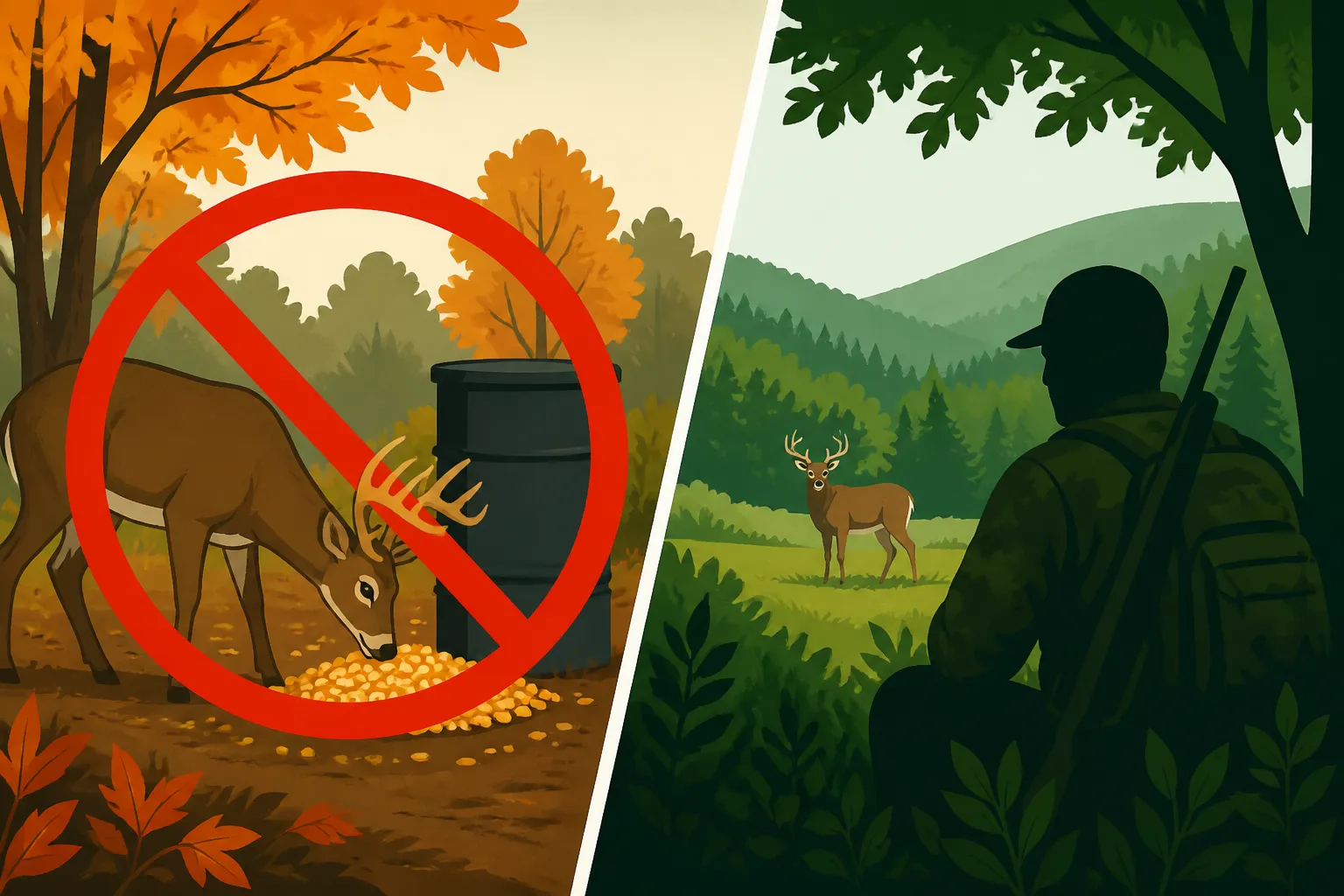
Baiting Rules on Michigan Public Land
One of the most common headaches for Michigan hunters, especially those new to a particular area or coming from other states, is navigating the ever-changing and often complex rules around baiting. It can feel like you need a law degree just to figure out what's allowed and what's not, and the last thing anyone wants is to unknowingly break a rule and face a hefty fine or lose their hunting privileges. This guide is here to untangle the Michigan baiting regulations, particularly as they apply to public lands, so you can hunt with confidence and stay on the right side of the law.
Understanding Michigan's Baiting Ban and Exceptions
Let's be honest, for decades, baiting deer was just a part of the hunting culture for many folks in Michigan. Spreading a pile of corn or apples was a time-honored tradition, especially in certain parts of the state. So, when the comprehensive baiting ban came into effect, it caused a lot of confusion and even some frustration. It wasn't just about taking away a tactic; it fundamentally changed how many people approached their deer season.
The Statewide Ban's Origins and Rationale
The primary driver behind Michigan's extensive baiting ban was the discovery and spread of Chronic Wasting Disease (CWD) and the long-standing issue of Bovine Tuberculosis (bTB) in specific regions. CWD, a fatal neurological disease affecting deer, elk, and moose, is highly contagious and spreads most efficiently when animals congregate closely. Imagine a feed pile or a mineral block; it becomes a hotspot for deer to share saliva, urine, and feces, making it a perfect vector for disease transmission. It's a tough pill to swallow when a long-standing tradition is taken away, but the scientific evidence pointed to baiting as a significant risk factor for accelerating disease spread within the deer herd. The state made a difficult decision, prioritizing herd health over a popular hunting method, hoping to slow the spread of these devastating diseases. You can learn more about Why Michigan Banned Baiting and Michigan CWD Rules and Test Sites if you want to dive deeper into the science and history.
Where Baiting Is Still Legal in Michigan
While the statewide ban is broad, it’s not absolute. Michigan's regulations delineate specific exceptions, mostly tied to geographic regions or the species being hunted. Generally speaking, the Upper Peninsula (U.P.) operates under different rules due to its lower deer density, different disease prevalence, and unique hunting traditions. In the U.P., baiting is typically allowed for deer, provided certain conditions are met, such as limits on the amount of bait and how it's placed. It's not a free-for-all, but it certainly offers U.P. hunters more flexibility.
Beyond the U.P., the rules for baiting for other species also differ. For example, bear hunters, particularly those utilizing the long-standing tradition of Baiting Bears in the Upper Peninsula, often have specific permits and regulations that allow for baiting during their season. Similarly, some furbearer trapping and hunting methods might involve attractants that aren't considered "bait" under the deer baiting ban. However, for deer in the Lower Peninsula, the ban is largely in effect, with only very specific, tightly regulated exceptions that usually do not apply to general public land hunting. Always double-check the current regulations for your specific hunt and location.
Distinguishing Baiting from Feeding
This is where a lot of confusion, and sometimes accidental violations, can occur. What exactly constitutes "baiting" versus "feeding" versus simply hunting over natural food sources? The Michigan Department of Natural Resources (DNR) defines bait as any material, including but not limited to corn, apples, sugar beets, or mineral blocks, that is used to attract deer or elk. The key is intent and quantity. Placing a large pile of apples is clearly baiting. If a single apple falls from your lunch bag by accident, that's likely not considered baiting, but it highlights the gray area.
Incidental feeding, like bird feeders in your yard, is generally treated differently for non-hunting purposes, but even those have restrictions in CWD areas to prevent deer congregation. The important distinction for hunters is that you cannot place any material to attract deer on public land in areas where baiting is banned. This includes traditional bait, mineral blocks, or even certain food attractants designed to lure deer. However, hunting over naturally occurring food sources—like a productive oak stand dropping acorns or a clearcut with regenerating browse—is perfectly legal and encouraged. These are not placed by humans, and deer seek them out naturally. The line can feel thin, but the rule focuses on human-introduced attractants.
Specific Rules for Public Land Hunters
Public land hunting is a fantastic resource in Michigan, offering millions of acres to pursue game. However, it often comes with more stringent rules than private land, particularly when it comes to activities like baiting, because the state has a vested interest in managing wildlife for the entire populace and controlling disease spread across large, accessible tracts.
General Prohibition on State and Federal Lands
For the vast majority of Michigan's public lands in the Lower Peninsula, the baiting ban for deer is a hard and fast rule. This includes all state game areas, state forests, national forests, and other state-managed lands. You simply cannot place any bait or attractants. Period. This means no corn piles, no apple dumps, no sugar beet feeders, and no mineral blocks. Even if you hear rumors or see evidence of others breaking the rules, it's crucial to remember that you are responsible for your own actions. Walking onto state land with a bucket of corn, even if you intend to just leave it for a few days, can lead to serious legal trouble. The intent to attract deer with human-placed food or minerals is the core of the prohibition. This applies to deer and elk hunting, with distinct rules for other species like bear as noted above. For detailed boundary information, resources like the Michigan Mi-HUNT Map and mapping apps such as onX Hunt are invaluable for understanding where you stand.
What Constitutes "Bait" on Public Land
Understanding the full scope of what's considered "bait" is crucial. It’s not just about corn. The regulations broadly cover any material used to attract or entice deer. This includes:
- Agricultural products: Corn, oats, wheat, soy, apples, sugar beets, carrots, potatoes, etc.
- Minerals: Salt blocks, mineral blocks, liquid attractants, or granular mineral supplements.
- Manufactured products: Deer pellets, commercially produced deer "lures" that are food-based, or processed feed.
- Scents/Lures with Food Attractants: While some scent lures (like urine-based estrus scents) are generally allowed, those that specifically mimic food sources or contain food particles often fall under the baiting rule if they're placed on the ground or in a manner that encourages consumption.
The rule aims to prevent deer from congregating, regardless of the specific item. If you have to carry it in with the intent of drawing deer to a specific spot, it’s highly likely to be considered bait. When in doubt, leave it out. The DNR's guidelines are designed to be comprehensive to close loopholes where certain items might be argued as "not technically corn."
The Role of Natural Forage and Food Plots
This is an important distinction, and it's where smart hunters can still find success legally. Hunting over natural food sources is not only permitted but encouraged. Deer are constantly on the move, seeking out the best available forage. This could be a patch of acorns in an oak stand, a regenerating clearcut full of browse, a natural wetland edge where preferred plants grow, or even a standing agricultural field adjacent to public land. The key difference is that these food sources are naturally occurring or commercially planted for harvest, not placed by hunters specifically to attract deer for hunting purposes.
For hunters looking to enhance their hunting grounds without baiting, developing legal food plots on private land is a fantastic alternative. While you generally cannot plant food plots on public land for your own hunting purposes, the DNR does manage some areas with wildlife food plots as part of their habitat management efforts. Hunting near these areas, if they are open to public hunting, is perfectly legal. On private land, however, initiatives like Food Plots Instead of Bait can be a highly effective way to draw and hold deer, offering a valuable, legal tactic that mirrors some of the benefits of baiting without violating the law. What Replaced Bait Piles for Michigan Hunters often comes down to smarter scouting and habitat understanding.
| Type of Attractant/Method | Lower Peninsula Public Land (Deer) | Upper Peninsula Public Land (Deer) | Private Land (Deer, General Rule) |
|---|---|---|---|
| Corn, Apples, Beets | Prohibited | Restricted (Max 2 gallons, scattered) | Restricted (Max 2 gallons, scattered) |
| Mineral/Salt Blocks | Prohibited | Restricted (same as above) | Restricted (same as above) |
| Liquid Attractants (Food-based) | Prohibited | Restricted (same as above) | Restricted (same as above) |
| Natural Acorn Falls | Permitted | Permitted | Permitted |
| Natural Browse | Permitted | Permitted | Permitted |
| Planted Food Plots (DNR-managed) | Permitted to hunt near | Permitted to hunt near | Permitted (on your private land) |
| Scents (non-food based) | Generally Permitted | Generally Permitted | Generally Permitted |
Note: This table provides a general overview. Always consult the current Michigan Hunting and Trapping Digest for precise, up-to-date regulations specific to your DMU and hunt type.
Navigating the Rules and Avoiding Violations
It’s easy to feel overwhelmed by the detailed rules and regulations, but a proactive approach will save you a lot of grief. Being well-informed is your best defense against accidental violations. The consequences of illegal baiting are not minor, and they can significantly impact your hunting future.
Researching Your Hunting Area Thoroughly
Before you even set foot in the woods, especially if you're exploring new public land, you absolutely must do your homework on the specific baiting rules for that area. Michigan's deer management units (DMUs) can have differing regulations, particularly concerning antler point restrictions or special antlerless seasons, but also sometimes for baiting. The DNR website is your first stop, offering the most current hunting and trapping digests. These documents clearly outline the statewide and DMU-specific rules.
Beyond that, digital mapping tools are an absolute game-changer. Apps like onX Hunt or GoHunt allow you to overlay property boundaries with land ownership details, showing you exactly where public land ends and private land begins, and even often indicating DMU boundaries. This is critical because baiting rules can change literally across a property line. You can even use these tools to confirm onX Layers for Michigan Land Status or reference the Michigan DNR Hunt Fish App for regulatory updates. There's no excuse for not knowing the rules when so much information is readily available at your fingertips. Take the time to understand your specific Michigan Deer Management Units and any nuances tied to them.
Consequences of Illegal Baiting
The penalties for illegal baiting in Michigan are no joke, and they reflect the state's serious commitment to managing wildlife diseases. A conviction for illegal baiting can result in significant fines, potentially hundreds or even thousands of dollars, depending on the specifics of the violation and whether it's a first offense. But it doesn't stop there. You could also face suspension of your hunting privileges, meaning you wouldn't be able to purchase a hunting license for a certain period, potentially missing out on several seasons. Additionally, any game animals taken while illegally baiting could be confiscated, and you might be required to pay restitution for the value of the animal.
Beyond the legal ramifications, there's the ethical side. Hunters are stewards of the land and its wildlife. Violating baiting laws undermines conservation efforts, contributes to the spread of disease, and casts a negative light on the entire hunting community. It erodes public trust and gives anti-hunting groups ammunition. If you witness illegal baiting, consider Reporting a Poacher in Michigan to help protect the resource for everyone. Understanding the Michigan Wildlife Violation Penalties can really drive home the importance of adherence.
Alternative Strategies for Attracting Deer Without Bait
Just because baiting is restricted doesn't mean you can't be an incredibly effective hunter. In fact, it often forces you to become a more skilled and knowledgeable woodsman. Focus on understanding deer behavior, habitat, and movement patterns.
Here are a few proven, legal strategies:
- Scouting for Natural Food Sources: Deer are constantly seeking food. Find the mast crops (acorns, beechnuts), browse (young shoots, saplings), and agricultural fields that deer are actively using. Late-season hunting, for example, often hinges on finding Late-Season Food Sources for Whitetails.
- Hunting Travel Corridors and Funnels: Instead of luring deer to a spot, intercept them as they naturally move between bedding, feeding, and watering areas. This means looking for saddles, creek bottoms, pinch points, and thick cover edges. A Hunting a Funnel Between Two Swamps or understanding Hunting Michigan Swamp Edges for Deer can be hugely effective.
- Utilizing Scrapes and Rub Lines: While you can't bait, you can enhance natural sign. Creating mock scrapes or freshening existing ones with deer urine or gland lures can pique a buck's curiosity, especially during the pre-rut and rut. This falls under the general category of Rattling and Grunting in Michigan and other active calling/attracting methods that don't involve food.
- Cover and Security: Deer, especially mature bucks, prioritize security. Find thick bedding areas, dense thermal cover, and areas with minimal human disturbance. Setting up on the edge of these sanctuaries can often put you in a prime position. Learn about Where Big Woods Bucks Bed in Michigan for deeper insights.
- Calling and Decoys (When Legal): During the rut, using grunt calls, rattling antlers, or even a doe decoy can draw in curious or aggressive bucks. Ensure you understand species-specific rules for decoys, as some restrictions exist for turkey or waterfowl.
- Patience and Persistence: Ultimately, success without bait often comes down to spending time in the woods, observing, learning, and adapting. The more you understand the nuances of the habitat and the local deer herd, the better your chances of encountering deer legally and ethically. For more ideas, check out Hunting Deer Without Bait in Michigan.
Frequently Asked Questions About Michigan Baiting Rules
Even with all the information out there, certain questions pop up time and time again. Let’s tackle some of the most common ones that hunters have regarding Michigan’s baiting regulations. The devil is often in the details, and clarification can prevent a lot of anxiety.
What About Minerals and Attractants?
This is a huge area of confusion, and it’s important to be crystal clear. In areas where deer baiting is prohibited, this prohibition extends to mineral blocks, salt blocks, and any liquid or granular attractants designed to draw deer through taste or smell. Many companies market "attractants" that aren't traditional feed but are still intended to be consumed or licked by deer. If it's something you place on the ground for deer to consume or repeatedly visit, it's considered bait. The rationale is the same: these items cause deer to congregate and increase the risk of disease transmission.
The only exception might be certain non-food-based scent lures, such as estrus urine or buck dominant scents, which are typically used to mimic deer presence rather than provide nutrition. However, if those scents are mixed with or mimic food products, they would likely fall under the baiting ban. Always err on the side of caution. If it's not a natural part of the environment, and you're placing it to draw deer in, it's probably illegal bait in restricted areas.
Can I Hunt Over a Neighbor's Bait Pile on Private Land?
This is a classic scenario that plays out in many areas where public and private lands, or multiple private landowners, abut each other. Let's imagine you're hunting legally on public land, or your own private parcel, and your neighbor on an adjacent property has a legal bait pile (e.g., in the U.P. or for another species, or perhaps they're in a specific area of the Lower Peninsula where the ban isn't in effect for their situation, or even illegally). Can you hunt deer that are drawn to that bait pile but cross onto your land?
The legal answer is generally yes, if the deer are on your legally accessible hunting ground and you are not in any way involved in placing or maintaining the bait, and you are hunting legally for your location. The key here is proximity and active participation. You cannot place bait on your side of the property line in a restricted area. You cannot hunt directly over their bait pile if you are on their property without permission, or if their bait pile itself is illegal. However, if deer are using your property as a travel corridor to and from a legal (or even illegal) bait source on another property, and you are hunting them according to all other laws on your land, that's typically permissible. This can be a sticky situation, however, and it's always best to be a good neighbor and avoid any appearance of impropriety. Focus on what you can control on your side of the fence.
Does This Apply to Other Game Species?
While the most common questions and strict regulations revolve around deer and elk, baiting rules can indeed apply to other game species, or at least differ significantly.
- Bear: As mentioned, bear hunting often involves baiting, but it is heavily regulated with specific permits, baiting periods, and quantity limits. This is a separate set of rules from the deer baiting ban. You cannot simply put out deer bait and expect it to be legal for bear. Michigan Black Bear Hunting has its own comprehensive rules.
- Turkey: For wild turkeys, placing bait to attract them is also generally illegal. This applies to both spring and fall seasons. You cannot scatter corn or other feed to draw in gobblers or flocks. Hunters must rely on calling, scouting, and understanding natural food sources.
- Small Game: For species like squirrels or rabbits, the idea of "baiting" isn't as prevalent, and general rules about attracting them with food for hunting are usually prohibited. However, some furbearer trapping might use lures or baits, again under specific regulations that differ greatly from deer hunting.
- Waterfowl: Baiting migratory waterfowl is a strict federal violation across the entire United States, including Michigan. This means you cannot hunt ducks or geese over any "baited area" where feed has been placed to attract them. This is a very serious offense.
In short, while the deer and elk baiting ban is extensive, it's not the only baiting rule in Michigan hunting. Each species comes with its own set of guidelines, and it's imperative to consult the current Michigan Hunting and Trapping Digest for any species you intend to pursue.
Disclaimer
This article is for general informational purposes only and does not constitute professional advice. Laws, prices and regulations vary by location and change over time. Consult a qualified professional for guidance on your specific situation.