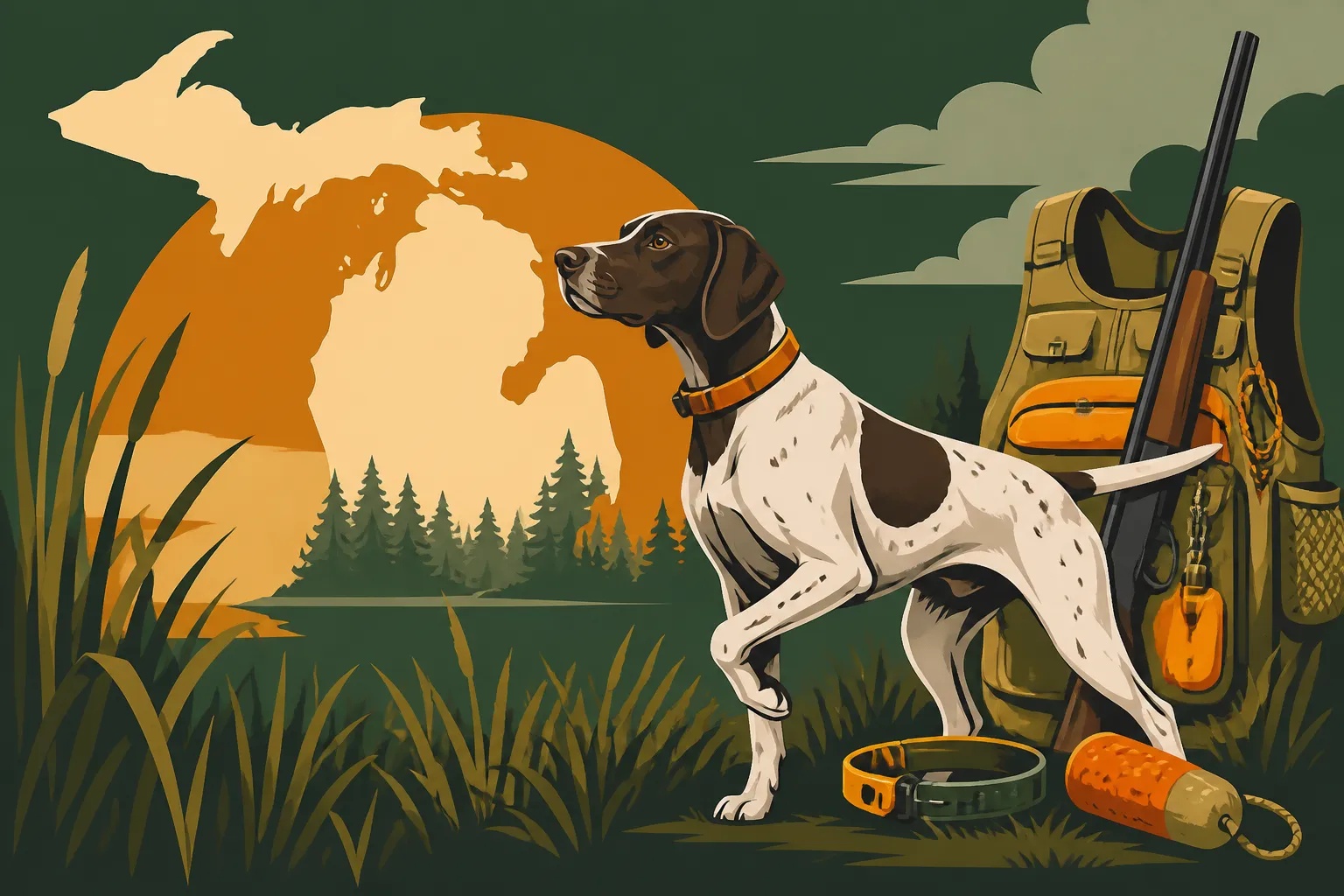
Bird Dog Gear for Michigan Cover
Hunting Michigan's diverse cover with a bird dog is an incredibly rewarding experience, but anyone who's spent a day slogging through alder swamps or pushing dense aspen cuts knows the toll it can take on both hunter and canine. From sharp thorns to icy water and unseen hazards, our four-legged partners face a gauntlet that demands proper protection and thoughtful gear choices. This guide is all about equipping your bird dog for success and safety across the varying and often challenging landscapes Michigan throws at us, ensuring they're comfortable, controllable, and ready to perform.
Essential Protective Gear for Your Bird Dog
Michigan's hunting grounds are beautiful, but they're not always kind to a dog's sensitive paws and exposed body. Whether you're busting through a thorny thicket for pheasants or pushing heavy cover for grouse, your dog needs protection to stay in the field and avoid injuries that could end a hunt, or worse, their career. Thinking ahead about the types of cover you'll encounter is crucial for selecting the right gear.
Boots and Paw Protection
The ground conditions in Michigan can vary wildly, even within a single day's hunt. You might start in soft grass, move into rocky terrain, cross a gravel two-track, and then dive into a cedar swamp filled with sharp sticks and frozen mud. A dog's paw pads, while tough, are not invincible. They can get cut, scraped, or even suffer from frostbite in extreme cold. Boots offer a layer of defense against these common field hazards, preventing injuries that lead to limping and early retirement from the hunt.
Choosing the right kind of paw protection is key. For light cover and general walking, simple fabric boots with reinforced soles might suffice. However, for the truly rugged Michigan cover—think the dense tag alders of the Upper Peninsula or the thorny multiflora rose patches of southern Michigan farmland—you'll want something more substantial. Look for boots with durable, puncture-resistant soles, often made from rubber or tough synthetic materials. The fit is paramount; boots that are too loose can chafe and fall off, while those that are too tight can restrict blood flow and cause discomfort. Many hunters opt for boots secured with Velcro straps, ensuring a snug fit that stays put even when your dog is tearing through thick brush. It's also a good idea to introduce boots gradually at home, letting your dog get accustomed to them before hitting the field, otherwise, you might have a very unhappy hunting partner.
Beyond preventing cuts, boots also protect against chemical irritants like road salt in early season snows or agricultural chemicals in farm country. For prolonged exposure to wet conditions, such as during a Great Lakes Waterfowl Hunting in Michigan excursion or when your dog is constantly retrieving from cold water, waterproof boots become essential to prevent skin irritation or even trench foot. Some hunters also carry a paw balm or wax as a supplementary measure, especially on days when boots aren't worn, to harden pads and prevent cracking. Always inspect your dog's paws at regular intervals during a hunt and immediately after to check for any signs of injury or irritation, even if they're wearing boots.
Vests and Chest Protection
Just as a hunting vest protects you from the elements and adds visibility, a protective vest for your bird dog is a game-changer in Michigan's challenging environments. From sharp stubble in cornfields to broken branches in logging areas and the ever-present thorny bushes, a dog's chest and belly are constantly exposed to potential injuries. A good vest acts as armor, deflecting many of these hazards and preventing nasty cuts or punctures that can require veterinary attention.
When considering vests, material choice is critical. Tough, abrasion-resistant fabrics like Cordura or ripstop nylon are excellent for preventing tears from brush and thorns. For heavier cover or areas with sharp stumps, some vests even incorporate a ballistic nylon layer or other rigid inserts for enhanced puncture resistance. The fit is crucial here too; a vest should be snug enough not to shift and cause chafing, but loose enough to allow for full range of motion. Pay attention to how the vest fits around the shoulders and leg openings, as these are common areas for rubbing if the design is poor. Many vests come in bright, highly visible colors, which brings us to our next point.
Beyond physical protection, vests can also provide thermal insulation and flotation. For hunting in colder conditions, particularly late-season pheasant hunts or early-season duck retrieves, insulated vests can help maintain your dog's core body temperature. If you're hunting near water or anticipate your dog making retrieves from ponds or rivers, a vest with integrated flotation can offer an extra layer of safety, helping them conserve energy and stay above water, especially if they're tired or injured. Always look for vests with strong, easily adjustable straps and buckles that won't come undone when your dog is powering through thick cover.
Reflective and Visibility Gear
Michigan's woods, especially during firearm deer season, can be a kaleidoscope of hunter orange. Even outside of deer season, visibility is paramount for your dog's safety, both from other hunters and from becoming lost. Imagine your dog disappearing into a thick aspen stand or a brushy hedgerow – a flash of orange or reflective material can make all the difference in locating them quickly.
High-visibility colors, primarily blaze orange or bright yellow-green, are the standard for canine visibility gear. Many protective vests double as visibility aids, coming in these vibrant hues. However, even if your dog isn't wearing a full vest, adding a bright collar, bandana, or vest strip is a non-negotiable safety measure. The goal is to make your dog stand out against the natural backdrop of the Michigan landscape, which can be surprisingly muted in the fall and winter. This is particularly important when Hunting the Michigan Rut in November or any time deer hunters might be in the woods, even if they are focused on different game.
Beyond daylight visibility, reflective materials are critical for low-light conditions. If you're walking out of the woods at dusk, or if your dog gets momentarily out of sight and darkness begins to fall, reflective strips on their collar or vest will catch the beam of your headlamp or flashlight. Some collars are even equipped with LED lights, offering active illumination rather than just reflection. This can be invaluable if your dog ranges wide or if you're trying to locate them after a retrieve that takes them deeper into cover as the light fades. Think of it as an extra insurance policy to ensure you and your hunting partner make it back to the truck safely.
Training and Control Tools for Michigan Cover
Even the best-trained bird dog needs consistent reinforcement and reliable control, especially when navigating the unpredictable wildness of Michigan's hunting cover. From dense undergrowth that swallows sound to the intoxicating scents of game birds, distractions are abundant. The right training and control tools help ensure your dog's safety and your ability to direct them effectively, enhancing the hunting experience for both of you.
E-Collars and Remote Training Devices
Electronic collars, or e-collars, are powerful tools for communicating with your bird dog at a distance, particularly in situations where verbal commands might be lost to wind, distance, or thick cover. For a dog that might be pushing too far ahead in a heavy Grouse Hunting Michigan Aspen Cover or breaking on a flush, an e-collar provides immediate feedback, allowing you to reinforce commands and keep your dog within your hunting strategy.
Modern e-collars offer a range of stimulation levels, from mild vibration or tone to static correction, allowing you to tailor the feedback to your dog's temperament and the specific situation. The key to effective e-collar use is proper training and consistent application; it's a communication tool, not a punishment device. Many hunters start with tone or vibration to get their dog's attention, only escalating to static correction if absolutely necessary, and always at the lowest effective level. Ensure you understand Michigan's regulations regarding E-Collar Use on Public Ground before heading out, as rules can vary. The range of the collar is also a critical factor; in dense Michigan cover, radio signals can be obstructed, so investing in a model with a robust range is wise.
Beyond basic obedience, e-collars are indispensable for safety. They allow you to recall your dog from dangerous situations, like running towards a road or venturing too close to other hunters, even if they're out of sight. They can also be used to reinforce "whoa" commands, preventing your dog from busting birds prematurely. Before using an e-collar in the field, spend ample time training with it in controlled environments. Your dog should understand what each stimulation level means and respond reliably to commands when wearing the collar. This builds trust and ensures the tool enhances, rather than detracts from, your hunting partnership.
Whistles and Lanyards
While e-collars provide long-distance control, a good old-fashioned whistle remains an invaluable tool for close-range communication and consistent command delivery. A whistle's sound carries well through cover and is less prone to vocal fatigue or emotional inflection than your voice. Plus, in a strong wind, your voice might barely carry, but a well-blown whistle cuts right through.
There are various types of whistles available, from traditional pea whistles to pealess designs favored by many dog handlers. Pealess whistles are often preferred for their consistent tone, even when wet, and their robustness in cold weather. It's crucial to select a whistle that produces a clear, distinct sound that carries well, and then use it consistently. Develop a set of whistle commands (e.g., two short blasts for "come," one long blast for "whoa") and stick to them. This consistency helps your dog understand and respond reliably, no matter the distraction of a fresh scent or a flushing bird.
A good lanyard is equally important. It keeps your whistle secure and readily accessible around your neck, preventing it from getting lost in the brush or fumbling for it when a crucial command needs to be given. Look for lanyards made from durable, comfortable materials that won't chafe your neck or easily break. Some lanyards also feature quick-release clips, which can be a safety feature if the lanyard gets snagged. Combining whistle commands with an e-collar, using the whistle for primary commands and the e-collar for reinforcement or urgent corrections, creates a robust communication system that will serve you well in Michigan's demanding hunting conditions.
Bells and Tracking Devices
In Michigan's dense cover, a bird dog can disappear from sight in a matter of seconds. While this is often the sign of a good, hard-hunting dog, it also presents a challenge: how do you know where they are and if they're on point? Bells and tracking devices offer solutions to this common dilemma, providing peace of mind and helping you keep tabs on your partner.
Bells are a traditional and simple way to keep track of your dog's movement. Attached to their collar, a bell rings with every step, giving you an auditory cue to their location. When the bell goes silent, it's often a clear signal that your dog is on point, locked up tight on a bird. This sudden silence is a thrilling sound to any upland hunter, indicating it's time to hustle in for the flush. Different types of bells produce different sounds – from the classic "sleigh bell" jingle to more muted "cowbell" sounds. Experiment to find one that you can hear well and that doesn't annoy your dog. Bells are particularly useful when Hunting the Michigan Upper Peninsula for Deer as you want to know where your dog is without visual confirmation in the vast woods.
For a more technologically advanced approach, or for situations where a bell might not be enough, GPS tracking devices are invaluable. These small units attach to your dog's collar and transmit their location to a handheld receiver, often showing their exact position on a map. Many modern systems also indicate whether your dog is moving or on point, providing real-time updates. This technology is a lifesaver in dense cover or when hunting in unfamiliar territory, ensuring you can always locate your dog, even if they range far or become disoriented. Systems like those compatible with navigation platforms such as GoHunt can even integrate dog tracking data with detailed topographical maps, helping you understand terrain features in relation to your dog's position, allowing for smarter hunting decisions and easier retrieves.
Transport and Field Comfort for Your Canine Partner
A successful hunting trip isn't just about the hunt itself; it's about the entire experience, from the journey to the field and back home again. Ensuring your bird dog's comfort and safety during transport and providing for their basic needs in the field is just as crucial as having the right hunting gear. A well-rested, hydrated, and healthy dog is a happy and effective hunting partner.
Dog Crates and Kennels
Safe and secure transport for your bird dog is non-negotiable, especially when traveling across Michigan's varied roadways to reach your hunting destination. An unsecured dog in a vehicle is not only a distraction to the driver but also a significant safety hazard in the event of a sudden stop or accident. This is where a high-quality dog crate or kennel becomes an absolute essential.
When selecting a crate, consider both safety and the specific needs of your hunting trips. For vehicle travel, crash-tested crates made from durable materials like aluminum or heavy-gauge plastic offer superior protection. These crates are designed to absorb impact and prevent injury to your dog, and often come with secure latches to prevent accidental escapes. Ensure the crate is appropriately sized for your dog, allowing them to stand up, turn around, and lie down comfortably. A crate that's too large can be less safe, allowing too much movement during a sudden stop, while one that's too small is simply inhumane for long journeys.
Beyond safety, crates provide a secure and familiar "den" for your dog, reducing stress during travel and offering a safe place to rest at camp or in the truck between hunts. This can be particularly useful if you're staying at a Michigan Deer Camp Traditions where a comfortable and defined space for your dog is beneficial. Proper ventilation is another key feature, especially during warmer early-season hunts. Look for crates with ample airflow to prevent overheating. Cleaning ease is also a consideration; removable pans and smooth, non-porous surfaces make it easier to maintain hygiene after a muddy day in the field.
Portable Water and Food Systems
A hard-working bird dog expends a tremendous amount of energy in the field. Dehydration and hunger can quickly diminish their performance and put their health at risk. Therefore, having a reliable system for providing fresh water and adequate food throughout your hunt is absolutely essential, regardless of the weather conditions.
Water is paramount. Dogs can overheat quickly, especially when working intensely in cover, and access to clean drinking water is vital for cooling and hydration. Forget those tiny, flimsy collapsible bowls; you need something more robust and with a larger capacity. Look for portable water bottles with integrated drinking troughs or large collapsible bowls made from durable, food-grade silicone that can hold a substantial amount of water. Carrying at least a half-gallon, if not a full gallon, of water per dog for a full day's hunt is a good starting point, and more is needed on hot days. Some hunters carry a hydration pack for themselves that also has a separate reservoir for their dog, making it easy to share water on the go.
While a full meal might not be necessary during a short hunt, high-energy treats or a small portion of kibble can provide a much-needed boost during a long day in the field. Pack these in a waterproof, resealable container to keep them fresh and free from moisture. Consider dog-specific energy bars or calorie-dense kibble designed for active dogs. Remember to introduce any new food or treats at home first to avoid upsetting your dog's stomach in the field. Always offer food and water during breaks, allowing your dog to rest and digest before resuming the hunt.
First-Aid Kits Tailored for Dogs
Accidents happen, especially when hunting in rugged Michigan terrain. A bird dog, with its boundless enthusiasm, is susceptible to cuts, scrapes, punctures, sprains, and even more serious injuries like heatstroke or snakebites. Being prepared with a comprehensive first-aid kit specifically designed for canines can make all the difference in stabilizing an injury and providing immediate care until you can reach a veterinarian.
Your dog's first-aid kit should contain items to address common field injuries. Essentials include antiseptic wipes or spray for cleaning wounds, sterile gauze pads and self-adhering vet wrap for bandaging, and adhesive tape. Tweezers or small pliers are useful for removing thorns, burrs, or ticks. Saline solution can flush eyes or wounds. Carry a small pair of blunt-nosed scissors to cut bandages or remove tangled fur. For pain management, ask your vet about appropriate over-the-counter pain relievers that are safe for dogs, as human medications can be toxic. A styptic pencil or powder can quickly stop bleeding from minor cuts, like those to a nail.
Beyond wound care, include items like anti-diarrhea medication (again, vet-approved) and Benedryl for allergic reactions, especially if your dog is prone to insect stings. A small thermometer can help monitor for fever or heatstroke. Knowing basic canine first aid techniques, such as how to apply a makeshift splint or perform CPR, is also invaluable. Consider taking a pet first-aid course. Remember, this kit is for immediate, temporary care. Always seek professional veterinary attention for any serious injury or illness your dog sustains in the field. Regularly check your kit to ensure all supplies are current and restock anything that's been used.
Navigating Michigan's Diverse Hunting Terrain
Michigan offers a stunning array of hunting habitats, from the vast cedar swamps of the Upper Peninsula to the rolling oak forests of the Lower Peninsula and the dense agricultural lands of the Thumb region. Each of these environments presents unique challenges and demands specific gear considerations for your bird dog to hunt effectively and safely. Understanding the terrain is key to a successful outing.
GPS Trackers and Handheld Units
When your bird dog is working hard in Michigan's often-impenetrable cover, it's incredibly easy for them to disappear from sight. The silence of a dog on point is a beautiful thing, but the prolonged absence of a working bell or the inability to locate your dog after a wide cast can quickly turn joy into anxiety. GPS trackers have revolutionized how hunters manage their dogs in these situations, providing real-time location data and peace of mind.
Modern GPS tracking systems for dogs typically consist of a collar-mounted unit that transmits data to a handheld receiver or, increasingly, to a smartphone app. These devices can show you your dog's exact position on a topographic map, indicate if they're moving or on point, and even track their distance and speed. This information is invaluable for understanding your dog's hunting style, learning their range, and, most importantly, ensuring you can always find them. Imagine hunting in a dense Michigan State Forest Hunting area where visibility is limited to a few yards; a GPS tracker becomes an extension of your eyes, allowing you to follow your dog's progress through the thickest parts of the woods.
When choosing a GPS tracker, consider battery life, signal reliability in heavy cover, and map features. Some systems offer detailed satellite imagery and pre-loaded topographic maps, which can be further enhanced by scouting tools from providers like GoHunt before you even step foot in the woods, helping you predict where your dog might be most effective. Range is another factor; in areas with significant terrain features or extremely dense vegetation, a system with a strong signal is crucial. Many hunters appreciate the ability to track multiple dogs simultaneously, a common scenario for those running multiple pointers or flushers. While they are an investment, the peace of mind and enhanced safety a GPS tracker provides for your hunting partner is well worth it.
Gear for Wet and Cold Conditions
Michigan's weather is notoriously fickle, and a clear, crisp morning can quickly turn into a cold, wet, or even snowy afternoon. Hunting in these conditions demands specific gear to keep your bird dog comfortable, warm, and performing at their best. Just like you layer up for a Michigan hunt, your dog needs protection from the elements.
For wet conditions, waterproof and water-resistant gear is essential. A good quality dog vest can provide a barrier against rain, sleet, and dew-soaked vegetation, helping to keep your dog's core dry. If your dog is retrieving from water, particularly in colder temperatures, a neoprene vest can offer crucial thermal insulation. Neoprene traps a layer of warm water against their skin, similar to a diver's wetsuit, preventing hypothermia. Always towel-dry your dog thoroughly after water retrieves, and consider bringing an extra towel to the field. Remember, a wet dog loses heat much faster than a dry one.
When the mercury drops, insulating layers become vital. While many bird dogs have thick coats, prolonged exposure to cold can still lead to hypothermia, especially during breaks or while riding in a cold truck. Insulated vests or jackets designed for dogs can provide an extra layer of warmth without restricting movement. Cold Weather Sitting Strategy applies to dogs too – if you're taking a long break, consider covering your dog with a blanket or putting them in a heated dog box. For extreme cold or hunting in deep snow, paw protection, such as dog boots designed for snow, becomes critical to prevent frostbite. Always monitor your dog for signs of shivering, lethargy, or reluctance to move, as these can indicate they're getting too cold.
Scent Detection and Retrieval Aids
A bird dog's primary tool is its nose, and their natural instinct to detect scent and retrieve game is what makes them such invaluable hunting partners. While training hones these abilities, certain aids can assist in both scent detection during training and the retrieval process in difficult cover. These aren't substitutes for proper training, but rather tools to enhance what your dog already does naturally.
For scent detection training, various tools exist. Scent-infused training dummies, often made with real bird feathers or synthetic scents, help accustom your dog to the smell of game birds. This is particularly useful in the off-season or for young dogs learning to associate a specific scent with their quarry. While your dog has an incredible nose, exposing them to the target scent repeatedly in controlled settings can build confidence and focus. This can be critical when working in areas where multiple types of game scents might be present.
When it comes to retrieval, especially from dense cover or water, certain aids can make the process easier and safer for your dog. For water retrieves, floating dummies or bumpers are essential training tools, teaching your dog to confidently enter the water and return with game. Some hunters use a retrieval aid, such as a long-handled hook, to help retrieve a bird from extremely thick brambles or deep muck without putting their dog in a potentially hazardous spot. The key is to support your dog's natural retrieving drive without creating dependence on these aids. A well-trained bird dog is a force multiplier in the field, making quick and efficient work of downed game in even the most challenging Michigan cover.
Selecting the Right Gear for Specific Michigan Game Birds
Michigan's diverse hunting landscape means that the "one-size-fits-all" approach rarely applies to bird dog gear. The challenges of hunting grouse in an aspen forest are vastly different from retrieving ducks from icy Great Lakes waters or busting pheasants in a thorny farm field. Tailoring your dog's gear to the specific game bird and habitat you're pursuing will optimize their performance, ensure their safety, and enhance your overall hunting success.
Ruffed Grouse and Woodcock Gear Considerations
Hunting ruffed grouse and woodcock in Michigan's dense forests and alder runs is a unique challenge. This type of hunting often involves pushing through thick tangles of brush, young aspen, and swamp edges, where visibility is limited and sharp sticks are abundant. Your dog needs to be agile, protected, and easily trackable in these conditions.
For grouse and woodcock dogs, emphasis should be placed on robust protective vests that can withstand constant abrasion and puncture from thick cover. Think about the thorny undergrowth in a fresh aspen cut or the dense willow and tag alder of a woodcock covert – these environments can quickly tear up a dog's chest and belly. Look for vests made from heavy-duty Cordura or similar rip-stop materials, possibly with an extra layer of protection around the chest. Due to the high-energy, fast-paced nature of grouse hunting, the vest should also be lightweight and allow full range of motion, not hindering your dog's ability to weave through the brush. You don't want anything to slow them down when they're tracking a running bird or locking up on a point.
Visibility and tracking are paramount in these tight quarters. A bright orange vest or collar is non-negotiable, ensuring you can spot your dog even for a fleeting moment through the leaves. GPS tracking collars are particularly valuable here, as your dog will often be out of sight for extended periods. A sudden "point" alert on your handheld unit allows you to move in quietly, anticipating the flush. Many grouse and woodcock hunters also rely heavily on a bell attached to their dog's collar; the sound of the bell stopping suddenly in the silence of the woods is the classic signal that your dog is on point, allowing you to carefully approach the bird. Remember, these birds hold tight, and you'll often be walking right up to a staunch point. Using these tools together creates a highly effective system for Grouse and Woodcock Hunting in Michigan.
Pheasant Hunting Gear Needs
Pheasant hunting in Michigan often takes place in different types of cover than grouse – think CRP fields, standing corn, cattail marshes, and brushy fence rows found in Southern Michigan Farm Country Deer Hunting areas. While some of these might seem less "rugged" than big woods, the cover can be incredibly dense, and often contains sharp stubble, thorns, and hidden hazards. Pheasant dogs need durable protection and the ability to work effectively in open, yet often thick, spaces.
For pheasant dogs, a durable, thorn-resistant vest is still highly recommended. Corn stubble can be like razor blades on a dog's belly, and multiflora rose bushes in fencerows are notorious for snagging and cutting. The vest should be high-visibility orange to stand out against the often-monochromatic backdrop of harvested fields or golden grasses. Paw protection, such as durable dog boots, is also very important, especially when working over abrasive corn stubble or frozen ground. This type of cover can be incredibly hard on paw pads, leading to cuts and soreness that will quickly take your dog out of the hunt.
Due to the more open nature of some pheasant fields, your dog might range wider than a grouse dog. A reliable e-collar with good range is crucial for maintaining control and ensuring your dog doesn't bust birds too far out or venture onto adjacent private property without permission. The ability to give a quick tone or vibration command to bring them back into range is invaluable. Whistles are also important for communication over distance. Finally, hydration is key on these hunts; pheasant fields can be long, and the sun can be intense. Ensure you have ample water and a portable bowl to keep your dog hydrated throughout the day. These preparations allow your dog to focus on what they do best: finding and flushing those wily Michigan pheasants.
Waterfowl Dog Gear Essentials
Waterfowl hunting in Michigan presents a completely different set of challenges for your dog. Instead of dense upland cover, they face cold water, mud, ice, and long periods of inactivity in a blind, followed by explosive, strenuous retrieves. The gear for a waterfowl dog needs to prioritize thermal regulation, flotation, and comfort in wet, cold environments.
The absolute cornerstone of waterfowl dog gear is a good neoprene vest. Unlike upland vests, a neoprene vest's primary purpose is thermal insulation. It helps your dog maintain their core body temperature when repeatedly entering cold water for retrieves, crucial for preventing hypothermia. Look for vests that fit snugly, allowing a thin layer of water to warm between the vest and your dog's body, but not so tight that they restrict movement. The vest should also provide some measure of buoyancy, which helps your dog conserve energy during long swims. Many neoprene vests come in camouflage patterns to help your dog blend into the hunting environment, whether it's a marsh, shoreline, or Field Hunting Geese in Southern Michigan.
Beyond the vest, comfort in the blind is important. A dog blind or elevated dog stand can keep your retriever out of icy water or cold, muddy ground, helping them stay warm and ready for action. These also provide concealment, allowing your dog to stay hidden until it's time to retrieve. Towels are also essential; bring multiple large, absorbent towels to dry your dog thoroughly after each retrieve, especially on colder days. For particularly cold water or icy conditions, some hunters use waterproof dog boots to protect paws from ice abrasion and extreme cold. Remember, waiting patiently in a blind for hours, then making a powerful retrieve from icy water, takes a tremendous toll on a dog. Proper gear ensures they can perform their duty effectively and safely throughout the Michigan waterfowl season.
| Gear Type | Key Benefit | Typical Michigan Use Cases | Specific Features to Look For |
|---|---|---|---|
| Protective Vests | Prevents cuts, punctures; increases visibility | Grouse, pheasant, thick brush, corn stubble | Durable, thorn-resistant fabric (Cordura); high-visibility orange; good fit around legs/shoulders |
| Dog Boots | Paw protection from cuts, abrasions, ice, chemicals | Rocky terrain, corn stubble, ice, road salt, swamps | Puncture-resistant soles; secure fastening (Velcro); waterproof for wet conditions |
| GPS Trackers | Real-time location; on-point alerts; safety | Dense cover, wide-ranging dogs, unfamiliar areas | Long battery life; robust signal; detailed mapping; multi-dog tracking |
| E-Collars | Remote communication; reinforces commands; safety | Wide-ranging dogs, obedience, recall, breaking point | Multiple stimulation levels (tone, vibe, static); good range in cover; waterproof |
| Whistles | Consistent communication; cuts through noise | All bird hunting, close-range commands, working wind | Pealess design for consistency; loud, clear tone; durable lanyard |
| Bells | Auditory tracking; signals "on point" | Grouse, woodcock, thick woods where dog is out of sight | Clear sound; securely attaches to collar; distinct sound vs. environment |
| Neoprene Vests | Thermal insulation; flotation; concealment | Waterfowl hunting, cold water retrieves | Snug fit; strong zippers/buckles; camouflage; buoyancy |
| First-Aid Kit | Immediate care for injuries | All hunting trips, especially remote areas | Antiseptics, bandages, vet wrap, tweezers, saline, pain relief (vet-approved) |
| Portable Water System | Hydration in the field | All hunting trips, especially long days or warm weather | Large capacity bottle/collapsible bowl; durable; easy to access |
| Crates/Kennels | Safe transport; secure resting place | All travel to and from hunting areas; camp stays | Crash-tested; proper size; good ventilation; secure latches |
Disclaimer
This article is for general informational purposes only and does not constitute professional advice. Laws, prices and regulations vary by location and change over time. Consult a qualified professional for guidance on your specific situation.