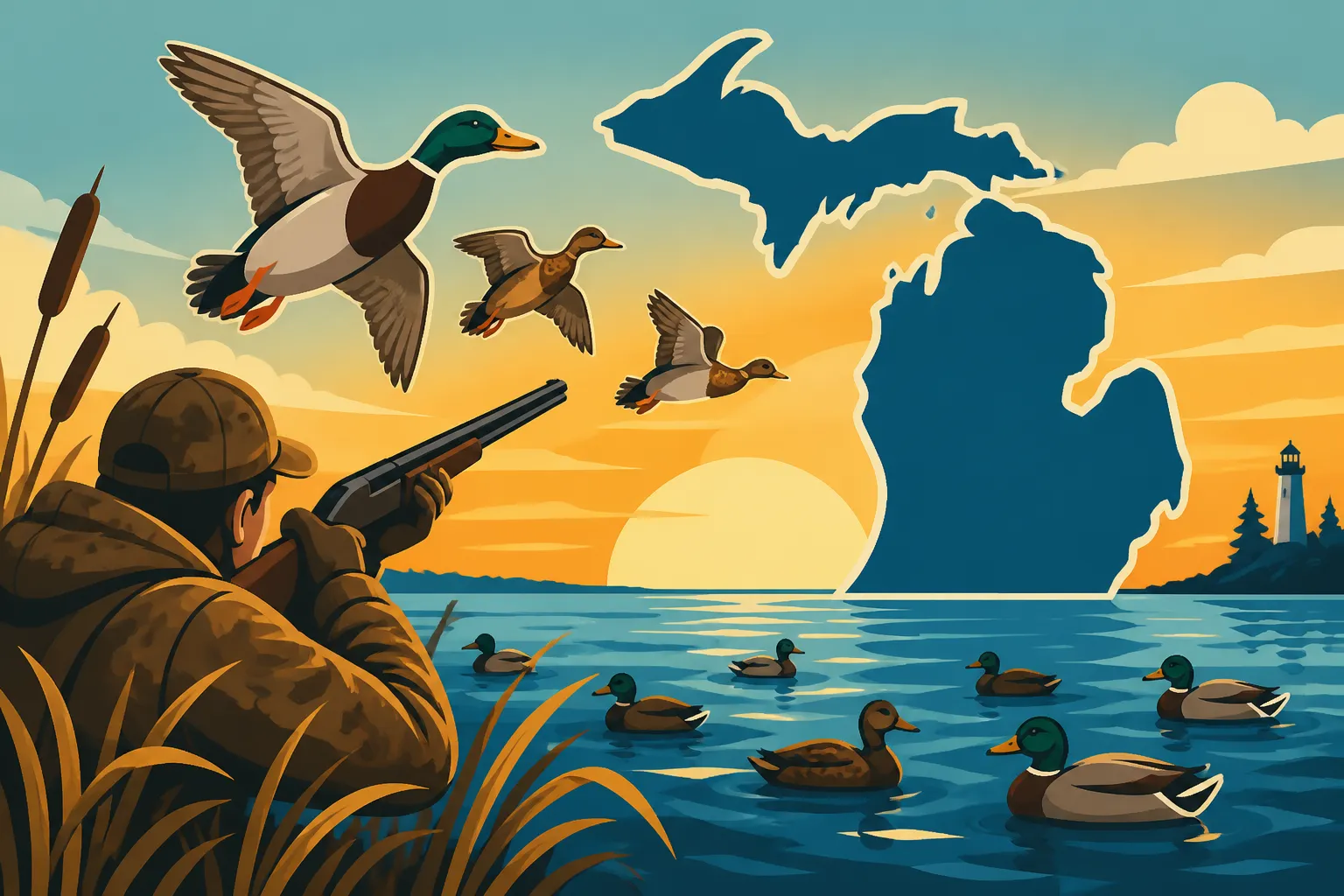
Michigan Waterfowl on the Great Lakes
Hunting waterfowl on Michigan's vast Great Lakes can feel like an entirely different ballgame compared to marsh hunting or field shooting. The sheer scale of the water, the unpredictable weather, and the unique behaviors of big-water ducks and geese present distinct challenges that can intimidate even seasoned hunters. This comprehensive guide will equip you with the knowledge, strategies, and safety protocols needed to successfully pursue migratory birds across Michigan's magnificent Great Lakes, turning daunting challenges into rewarding experiences.
Understanding Michigan's Great Lakes Waterfowl Habitat
Michigan’s position in the heart of the Great Lakes Flyway makes it a prime destination for waterfowl hunters. But hunting these massive inland seas isn't like jump shooting a beaver pond or setting up in a flooded cornfield. The Great Lakes offer a unique set of habitats that attract and hold different species of ducks and geese, and understanding these nuances is your first step toward success.
The Unique Ecology of Great Lakes Shorelines
The shorelines of the Great Lakes are incredibly diverse, ranging from vast, shallow bays to rocky points, sandy beaches, and dense marshlands. This variety in habitat directly influences which waterfowl species you'll encounter. For instance, shallow, protected bays with abundant aquatic vegetation, like Wild Fowl Bay on Saginaw Bay, are often magnets for dabbling ducks and geese, as they provide easy access to food and shelter from rough water. These areas might have a soft, mucky bottom, rich with submerged plants and invertebrates, perfect for ducks that tip up to feed.
Conversely, the deeper, more open waters off rocky points or shoals are the domain of diver ducks. These birds feed on mollusks, crustaceans, and fish, often diving to impressive depths to find their meals. The wave action and strong currents found in these exposed areas also mean hunters need specialized gear and a heightened awareness of safety. Knowing the underwater contours and vegetation maps, often available through platforms like GoHunt, can reveal critical feeding and loafing areas that aren't visible from shore. It's a stark contrast to the small, intimate settings many hunters are used to, demanding a different kind of scouting and strategy.
Important Bays, Marshes, and Nearshore Structures
Michigan is blessed with numerous bays and estuaries that act as critical staging and feeding grounds. Saginaw Bay, Lake Erie’s western basin, and parts of Lake St. Clair are renowned for their extensive marsh systems and shallow waters, making them waterfowl paradises. These areas attract huge numbers of both dabblers and divers, as well as geese, particularly during the peak of migration. Think of these as the grocery stores and rest stops for migrating birds – they’re where the action often is.
Beyond the well-known bays, countless smaller coves, river mouths, and nearshore structures like submerged islands or reefs can hold birds. These less obvious spots often offer a reprieve from hunting pressure found in more popular areas. Even a seemingly featureless stretch of open water can have subtle characteristics, like a slight depth change or a submerged weed bed, that act as a focal point for ducks. Understanding these subtle structures, often only discoverable through detailed mapping or firsthand observation, can be the key to finding unpressured birds. Pay close attention to current breaks and sheltered areas behind points, as these often provide calm water and staging areas for resting birds, especially on windy days.
Impact of Water Levels and Invasive Species
Water levels on the Great Lakes are notoriously dynamic, fluctuating significantly year to year and even season to season. These changes have a profound impact on waterfowl habitat. High water levels can flood out traditional feeding areas, making them too deep for dabbling ducks or covering crucial vegetation. Conversely, low water levels can expose mudflats, creating new feeding opportunities for shorebirds and some dabblers, but potentially isolating traditional boat launches or limiting access to certain areas. A marsh that was productive last year might be bone dry or too deep this year, so scouting isn't just about finding birds, but understanding the current conditions of their environment.
Invasive species also play a significant, often detrimental, role. Zebra and quagga mussels, for example, have dramatically altered the Great Lakes ecosystem. While they have increased water clarity in some areas, which can be a boon for diver ducks that rely on visual feeding, they've also removed vast amounts of plankton, impacting the base of the food chain. Phragmites, an invasive reed, chokes out native marsh vegetation, reducing habitat diversity and making access difficult for hunters. These changes require hunters to be adaptable, constantly re-evaluating traditional spots and understanding how these ecological shifts influence waterfowl distribution and behavior. Staying informed about these environmental changes, often reported by state agencies and conservation groups, is crucial for long-term success on the Great Lakes.
Key Waterfowl Species Hunted on the Great Lakes
When you venture out onto the Great Lakes, you'll encounter a distinct cast of characters compared to inland hunting. Divers, in particular, dominate the big water, but a mix of puddle ducks and geese also utilize these vast stretches. Knowing your species helps you tailor your spread, calls, and hunting approach.
Diver Ducks: Canvasbacks, Redheads, Bluebills
Diver ducks are the quintessential big water birds. Species like Canvasbacks, Redheads, and Scaup (often called "Bluebills") thrive in the deeper, more open waters of the Great Lakes. Canvasbacks, with their distinctive sloped profiles, are often considered the king of the divers, known for their speed and wariness. They feed primarily on tubers and rhizomes of aquatic plants, often found in shallow, expansive bays with healthy vegetation. Redheads, easily identified by the male's reddish head and blue bill, favor shallower bays and marshes, often feeding on seeds and submerged vegetation, sometimes dabbling like puddle ducks.
Bluebills (Greater and Lesser Scaup) are perhaps the most numerous divers on the Great Lakes. Greater Scaup prefer larger, deeper bodies of water, while Lesser Scaup are often found in shallower waters, even sometimes in marshes. Both are mussel and aquatic invertebrate eaters, their populations sometimes influenced by the abundance of invasive mussels. Hunting divers often means setting large, realistic decoy spreads, sometimes in rough conditions. Their flight patterns are fast and often low over the water, making for challenging shots. Understanding their specific feeding habits and preferred depths is vital. For example, a large spread of decoys placed over a submerged shoal where zebra mussels are abundant might be perfect for Bluebills, whereas a different setup targeting plant beds would be better for Canvasbacks.
Puddle Ducks: Mallards, Black Ducks, Widgeon
While divers are the stars of the Great Lakes, don't overlook the puddle ducks that utilize the vast bays and sheltered nearshore areas. Mallards, with their iconic green heads, are incredibly adaptable and will readily feed in the shallower margins of the Great Lakes, especially in protected bays and river mouths where wild rice, smartweed, and other emergent vegetation thrive. Black Ducks, often found alongside Mallards, are particularly wary and are prized by many hunters. They favor similar habitats but often prefer more secluded, brackish areas.
American Widgeon, with their distinct white patches on their wings (males also have a green eye-patch and white crown), are another common sight. They're often found grazing on submerged aquatic vegetation, sometimes stealing food from diving ducks or coots that bring plants to the surface. These puddle ducks are typically hunted in shallower water, often from shore blinds or smaller boats, closer to emergent vegetation. Their flight tends to be slower and more agile than divers. When targeting these birds, focus your scouting on areas where freshwater rivers meet the Great Lakes, or in protected marshes like those found in the Saginaw Bay watershed. Knowing the optimal spots for Michigan Duck Daily Bag Limit can definitely influence where you set up your spread.
Geese and Other Migratory Birds
Canada Geese are frequent visitors to the Great Lakes shorelines, especially in agricultural areas adjacent to large bodies of water. They utilize the open water for resting and security, flying to nearby fields to feed. Giant Canada Geese, a resident population, are particularly abundant in many areas, but migratory flocks also pass through during the fall. Field hunting for geese near the Great Lakes often involves scouting their flight lines between large bodies of water and feeding fields.
Beyond ducks and geese, Michigan’s Great Lakes are also crucial for other migratory birds that hunters encounter. Sandhill Cranes, though not hunted in Michigan, are a majestic sight and indicate healthy wetland ecosystems. Coots, often mistaken for ducks, are another common inhabitant, feeding on aquatic vegetation. While they might not be the primary target, their presence is part of the rich tapestry of waterfowl life on the Great Lakes. Understanding the overall ecosystem helps paint a more complete picture of the migration and can provide clues to where target species might be. You'll also want to familiarize yourself with Michigan Goose Management Unit Rules to ensure you're hunting legally within specific zones.
Essential Gear and Safety for Great Lakes Waterfowl Hunting
Hunting on the Great Lakes is a serious undertaking that demands specialized gear and an unwavering commitment to safety. The vastness of the water, coupled with sudden weather changes, means you need to be prepared for anything. This isn't your average puddle jump.
Boats, Layouts, and Watercraft Requirements
A reliable boat is perhaps your most critical piece of gear for Great Lakes waterfowl hunting. For many, a sturdy deep-V hull boat, typically 16-20 feet, with a dependable outboard motor, is the workhorse for transporting gear, decoys, and hunters to desired locations. Stability is key, as conditions can change rapidly. Make sure your boat is well-maintained, with all safety equipment in working order – flares, air horn, extra fuel, and a properly sized anchor are non-negotiable. Don't forget a backup trolling motor or oars, just in case.
For those targeting diver ducks in open water, a layout boat is often the preferred method. These low-profile boats, designed to be nearly invisible on the water, allow hunters to lie down just above the surface, surrounded by a large spread of decoys. They are typically deployed from a larger "tender" boat, which serves as a mobile command center and safety vessel. Operating a layout boat requires a tender boat and at least two hunters for safety. Always ensure your tender boat is equipped with a strong engine, plenty of fuel, and the capability to quickly retrieve the layout boat and its occupants in worsening conditions. For detailed guidance on this specialized approach, check out our article on Layout Hunting Michigan Big Water. Remember, safety should always be your absolute priority on the big water; never take unnecessary risks.
Decoys, Spreads, and Motion Devices
Great Lakes waterfowl hunting often calls for large decoy spreads. Divers, in particular, respond well to numbers. Spreads of 50, 100, or even more decoys are common, mimicking a large raft of birds resting on the open water. For diver hunting, long lines are frequently used, where multiple decoys are strung together on a single line with an anchor at each end. This allows for quick deployment and retrieval of large numbers of decoys. Mix in different species of diver decoys – Canvasbacks, Redheads, Bluebills – to create a realistic spread that appeals to a variety of birds.
For puddle ducks in shallower bay areas, smaller spreads might suffice, but realism is still paramount. Use high-quality decoys that accurately represent species like Mallards and Black Ducks. Motion decoys, such as spinning wing or flapping wing designs, can add crucial realism and attract distant birds. Consider using a few oversized goose decoys in your duck spread to add confidence to incoming birds, or a separate goose spread if you're targeting geese in fields adjacent to the water. Keeping your decoys clean and free of glare is also important. No matter the type of decoy, remember that a natural-looking spread, even if smaller, will almost always outperform a messy, unrealistic one. You'll find a wealth of information on effective setups in our piece on Diver Decoy Spreads and Long Lines.
Cold Weather Clothing and Personal Safety Equipment
Michigan's Great Lakes weather can be brutally cold and unpredictable. Layering is not just a suggestion; it's a necessity. Start with a moisture-wicking base layer, add insulating mid-layers like fleece or wool, and top it off with a waterproof, windproof outer shell. Neoprene or GORE-TEX waders are essential for anyone wading in shallow water or deploying decoys. Look for models with good insulation and sturdy boots. Beyond just staying warm, wearing hunter orange when regulations require it is crucial for visibility, especially if you’re traveling in open water around other boaters.
Personal safety equipment is paramount. Everyone on the boat, especially in layout boats or while deploying decoys, must wear a Coast Guard-approved life jacket or PFD. Don't just have them on board; wear them. Hypothermia is a silent killer on the Great Lakes, and a PFD can buy you critical time if you go overboard. Carry a fully charged cell phone in a waterproof case, and consider a satellite communication device for areas with no cell service. A first-aid kit, emergency blankets, a spotlight, and backup lights are also crucial. Always file a float plan with someone on shore, letting them know your intended location and return time. GoHunt’s mapping features can even help you pinpoint areas with stronger cell service or potential emergency rendezvous points. Remember, the big water demands respect, and preparedness is the best form of respect. For more on staying warm and safe, our guide on Life Jackets for Layout Hunting is a must-read.
Strategies for Hunting Great Lakes Ducks and Geese
Successfully hunting waterfowl on the Great Lakes requires more than just good gear; it demands keen observation, strategic thinking, and adaptability. The sheer scale and dynamic nature of this environment mean your tactics need to be as robust as your boat.
Scouting and Reading Waterfowl Movement
Effective scouting is the bedrock of Great Lakes waterfowl hunting. This isn't a one-and-done affair; it's an ongoing process. Before the season, spend time observing key areas. Use binoculars or a spotting scope from elevated vantage points or from your boat in areas where you won't disturb birds. Look for patterns: where are birds feeding? Where are they resting? What are their flight paths between these areas? Pay close attention to current wind conditions and how they influence bird movement and decoy behavior. A strong onshore wind might push birds closer to sheltered bays, while an offshore wind might make them raft up further out.
During the season, scout just before your hunt, ideally the day before. Waterfowl habits can change daily due to pressure, weather shifts, or new food sources. Utilize resources like the Michigan DNR's waterfowl reports and local fishing reports, which can sometimes offer clues about bird activity. A good mapping app, like those integrated with GoHunt, can help you identify subtle changes in depth, weed lines, or submerged structure that might be holding birds. Mark potential setup locations and entry/exit routes. Remember, the birds are trying to conserve energy; they'll take the path of least resistance and utilize the most abundant food sources. By understanding these tendencies, you can predict their movements and place yourself in their flight path.
Setting Up Decoy Spreads for Big Water
Decoy spreads on the Great Lakes are often larger and more complex than typical inland setups. For diver ducks, creating a "V" or "J" hook pattern with your long lines can be incredibly effective. The open end of the "V" should face into the wind, guiding incoming birds directly into your shooting zone, especially if you're in a layout boat. Incorporate a variety of diver species, paying attention to the colors and sizes to create a realistic raft. Many hunters use confidence decoys like Canada Geese or swans on the outer edges of their diver spread to make the area appear safer and more appealing to wary ducks.
When targeting puddle ducks in shallower bays or near river mouths, a more traditional "U" or "J" shaped spread can work well, again with the open end facing into the wind. Mix in dabbler species like Mallards, Pintails, and Widgeon. Consider adding a few goose decoys if geese are also active in the area. Motion decoys, whether spinning wings or jerk strings, can add a lifelike element that is often crucial in attracting birds that have seen plenty of static spreads. Always consider the sun's position to minimize glare off your decoys and keep your blind hidden. The goal is to make your spread look as natural and inviting as possible, enticing birds to finish their flight right over your gun. Our article on Hunting the Michigan Rut in November talks about deer movement, but the principle of understanding natural movement applies to birds as well.
Hunting from Layout Boats and Shore Blinds
Hunting from a layout boat is a unique and incredibly effective method for targeting diver ducks on the open water. Once your large decoy spread is deployed, the low-profile layout boat allows you to blend seamlessly into the spread. This method requires absolute stillness and patience. Incoming birds often commit hard to the spread, offering close-range shots. Communication with your tender boat operator is crucial, especially for retrieving downed birds and ensuring safety. The tender boat should always stay within sight but far enough away not to flare birds.
For puddle ducks and geese, or in shallower, more protected Great Lakes bays, shore blinds or natural cover can be very effective. This could involve brushing in a portable blind along a vegetated point, utilizing existing cattail stands, or even digging a pit blind in a sandy beach if permitted. The key here is concealment. Break up your outline, use natural vegetation to blend in, and avoid sudden movements. Waders are often essential for setting up and retrieving birds from shore blinds, especially in areas with mucky bottoms. Whether in a layout or a shore blind, calling plays a vital role. Learn to use a variety of calls for different species and situations, from soft quacks to aggressive hails, to finish birds and draw their attention to your spread. Remember that even small details, like a poorly brushed blind, can be the difference between birds circling and committing.
Navigating Regulations and Access for Great Lakes Waterfowl
Hunting on the Great Lakes comes with its own set of rules and access considerations. Michigan’s regulations are designed to manage waterfowl populations sustainably and ensure safety, so understanding them is non-negotiable.
Michigan Waterfowl Seasons and Zones
Michigan is divided into distinct waterfowl zones, each with its own specific season dates. These zones—the North Zone, Middle Zone, and South Zone—are designed to account for varying migration patterns and duck production across the state. The Great Lakes themselves often straddle these zones, meaning you need to be acutely aware of which zone you are hunting in, as opening and closing dates can differ by weeks. For instance, the waters of northern Lake Huron would fall under the North Zone, while Lake Erie falls under the South Zone.
It’s crucial to consult the current year’s Michigan Waterfowl Hunting Digest, published annually by the DNR. This document provides the official dates for all duck, goose, and other migratory bird seasons. Pay close attention to species-specific limits and bag limits, which can vary not only by zone but also by the type of duck (e.g., Mallard limits often distinguish between hens and drakes, and there are specific limits for species like Canvasbacks or Pintails). Ignorance of the law is never an excuse, so keep that digest handy. You can easily find information on Michigan Duck Zone Boundaries and Michigan Goose Seasons and Units within the DNR resources or helpful apps like GoHunt.
Licensing, Stamps, and HIP Certification
Before you even think about setting foot (or boat) onto the Great Lakes for a waterfowl hunt, you need to ensure all your licensing is in order. This starts with a valid Michigan hunting license. On top of that, all waterfowl hunters aged 16 and older are required to purchase a Michigan waterfowl license. This state-specific license helps fund Michigan's waterfowl management programs.
Beyond the state requirements, federal regulations also apply. Every waterfowl hunter aged 16 and older must possess a valid Federal Migratory Bird Hunting and Conservation Stamp, commonly known as a Federal Duck Stamp. This stamp is an essential part of conservation efforts across the nation, with 98% of the purchase price going directly to acquire and protect wetland habitat for ducks, geese, and other wildlife. Finally, all migratory bird hunters, regardless of age, must be Harvest Information Program (HIP) certified. This involves answering a few simple questions about your previous year's hunting success, which helps the U.S. Fish and Wildlife Service gather critical harvest data. Without all three—Michigan hunting license, Michigan waterfowl license, Federal Duck Stamp, and HIP certification—you are not legally hunting migratory birds in Michigan. Make sure to check out Michigan Federal Duck Stamp Rules and Michigan HIP Certification for Bird Hunters for complete details.
Public Access and Managed Waterfowl Areas
Michigan boasts extensive public access to the Great Lakes, but knowing where you can launch, hunt, and what specific rules apply is key. Many state-owned boat launches provide direct access to the Great Lakes and their connecting bays. However, some areas might have specific regulations regarding hunting hours, types of blinds, or decoy placement. Always look for signage and consult the DNR website or the hunting digest for area-specific rules.
Michigan also has several highly productive managed waterfowl areas, such as Pointe Mouillee State Game Area, Nayanquing Point State Wildlife Area, and Fish Point State Wildlife Area. These areas, often situated on the Great Lakes or their tributaries, offer exceptional hunting opportunities but typically operate on a draw system, especially during peak season. Applying for a draw usually involves a specific application period and a lottery system for blind assignments. While these areas can offer incredible hunting, they require planning and often an early morning commitment. For more information on how these draws work, our article on Hunting a Michigan Managed Waterfowl Draw is a fantastic resource. Even if you don't hunt these managed areas, understanding their existence and impact on bird distribution can help you scout adjacent public lands more effectively. Always be mindful of other users of the Great Lakes – anglers, boaters, and other hunters – and practice good sportsmanship.
Conservation Efforts and Future of Michigan Waterfowl Hunting
Waterfowl hunting, by its very nature, is inextricably linked to conservation. Hunters are often the most passionate advocates and funders for habitat preservation and restoration. On the Great Lakes, these efforts are particularly vital for ensuring healthy populations for future generations.
The Role of Ducks Unlimited and Local Groups
Organizations like Ducks Unlimited (DU) play an absolutely monumental role in waterfowl conservation, not just in Michigan but across North America. DU, funded largely by hunters, focuses on wetland restoration, enhancement, and protection. On the Great Lakes, this translates to projects aimed at improving marsh health, controlling invasive species, and ensuring adequate feeding and resting habitat for migrating birds. Their work directly benefits Michigan waterfowl hunters by creating and sustaining the very environments where ducks and geese thrive. Many local chapters across Michigan actively raise funds and organize volunteer efforts for these projects, proving that conservation is a community effort.
Beyond DU, numerous smaller, local conservation groups and watershed councils are working tirelessly to protect and restore Great Lakes tributaries and nearshore habitats. These groups might focus on specific issues like erosion control, water quality improvement, or native plant restoration. Hunters often participate in these efforts, understanding that a healthy ecosystem benefits all wildlife. Supporting these organizations, whether through membership, donations, or volunteering, is a direct investment in the future of Michigan waterfowl hunting. Their on-the-ground efforts are critical for mitigating the challenges posed by development and environmental changes.
Habitat Restoration and Wetland Protection
Wetland loss is one of the most significant threats to waterfowl populations. Historically, vast tracts of wetlands around the Great Lakes were drained for agriculture or development. Habitat restoration projects aim to reverse this trend, re-creating functional wetlands where they once existed. This can involve restoring natural hydrology, planting native vegetation, and creating diverse shallow water habitats. These restored areas provide crucial nesting grounds, brood-rearing habitat, and migratory stopovers.
Protecting existing wetlands is equally important. This involves advocating for strong environmental policies, monitoring development proposals, and sometimes acquiring land for permanent conservation. Many state game areas and wildlife areas around the Great Lakes exist specifically because hunters and conservationists pushed for their protection. Healthy, interconnected wetland systems are vital for the entire lifecycle of waterfowl, from breeding to migration and wintering. These efforts aren't just about ducks; they benefit countless other species, from fish to amphibians and other migratory birds, making them ecological powerhouses.
Monitoring Populations and Harvest Limits
The continued ability to hunt waterfowl sustainably on the Great Lakes relies heavily on robust scientific monitoring. State and federal agencies, like the Michigan DNR and the U.S. Fish and Wildlife Service, conduct extensive surveys each year to estimate waterfowl populations. This includes breeding ground surveys in the northern states and Canada, as well as wintering ground surveys. This data is critical for setting annual harvest limits and season lengths. When populations are strong, hunting opportunities are generally more liberal. When populations show declines, regulations become more conservative to ensure sustainability.
Hunters also play a direct role in monitoring through the Harvest Information Program (HIP) and by accurately reporting their harvests. This data helps biologists understand harvest impacts and make informed management decisions. Furthermore, banding programs, where biologists place numbered leg bands on birds, provide invaluable information on migration routes, survival rates, and population dynamics. Recovering a banded bird is not only an exciting experience for a hunter but also a direct contribution to scientific understanding. This science-based management is why Michigan, and North America as a whole, still has robust waterfowl populations despite increasing challenges, ensuring that generations to come can experience the thrill of Great Lakes Waterfowl Hunting in Michigan.
Weathering the Elements on Michigan's Big Water
Hunting the Great Lakes isn't for the faint of heart. The weather can be a formidable adversary, turning a calm morning into a dangerous situation in a matter of minutes. Respecting the elements and preparing for the worst is a fundamental aspect of hunting Michigan's big water.
Understanding Wind, Waves, and Weather Patterns
The Great Lakes are famous for their unpredictable weather. Wind is arguably the most significant factor, directly influencing wave height and direction. A shift in wind direction or an increase in speed can quickly transform placid water into a treacherous chop. Always check multiple weather forecasts before heading out, paying close attention to wind predictions, wave height advisories, and sudden temperature drops. NOAA marine forecasts are often more accurate for specific Great Lakes conditions than general land-based forecasts.
Beyond wind, fog can roll in rapidly, disorienting even experienced boaters, while squalls can bring sudden downpours, lightning, and strong gusts. Knowing how to read the sky – watching for dark clouds, changing wind patterns on the water, or a sudden drop in barometric pressure – can provide critical warnings. Don't hesitate to cut a hunt short if conditions deteriorate. No duck is worth risking your life. Having reliable navigation equipment, like a GPS or a charting app on your phone (like GoHunt, which often has weather overlays), is crucial for maintaining your bearing in low visibility or rough water. Our article on Big Water Safety in a Layout Boat goes into more detail on how to mitigate these risks.
Dealing with Ice and Extreme Cold
Late-season Great Lakes waterfowl hunting often brings extreme cold and the threat of ice. Shallow bays and sheltered areas can freeze over quickly, trapping boats or making access impossible. Always scout ice conditions carefully and be aware of areas where currents might keep water open but create dangerous, unstable ice. Even in open water, extreme cold poses significant risks. Exposed skin can suffer frostbite rapidly, and gear can freeze up, making it difficult to operate.
Maintaining body heat is paramount. Dress in layers, as discussed earlier, and ensure your outerwear is completely waterproof to combat spray and sleet. Carry extra dry clothing in a waterproof bag, along with emergency blankets and hand warmers. Your boat's fuel lines can freeze, and engines can become temperamental in frigid temperatures, so ensure your engine is properly winterized and carry fuel additives if necessary. The mental toll of extreme cold can also be significant; fatigue and impaired judgment are real dangers. Always hunt with a partner in these conditions, and keep a close eye on each other for signs of hypothermia or frostbite.
Emergency Preparedness and Communication
On the vastness of the Great Lakes, help can be a long way off. Therefore, comprehensive emergency preparedness is non-negotiable. Beyond the PFDs, flares, and first-aid kit, always carry a means of communication. A marine band VHF radio is often more reliable than a cell phone on open water, especially for contacting the Coast Guard or other nearby vessels. Ensure it's charged and functioning before you leave. A backup cell phone in a waterproof case is also a good idea. Consider a Personal Locator Beacon (PLB) or Emergency Position Indicating Radio Beacon (EPIRB) for truly remote locations; these devices transmit your location to rescue services in an emergency.
Have a detailed float plan and share it with a trusted person on shore. This plan should include your exact hunting location, expected return time, boat description, and the names of everyone in your party. If you don't check in by your designated time, they know to initiate a search. Familiarize yourself with emergency procedures, such as what to do if your boat capsizes or if someone falls overboard. Practice man overboard drills. Knowing how to react calmly and efficiently in an emergency can be the difference between a close call and a tragedy. The Great Lakes are majestic, but they demand respect and thorough preparation.
Michigan Waterfowl on the Great Lakes: A Hunter's Table
To help you visualize the different opportunities and requirements for hunting waterfowl on Michigan's Great Lakes, here's a handy table outlining key aspects of common species and hunting methods.
| Species Group | Preferred Habitat (Great Lakes) | Typical Decoy Spread | Key Gear Considerations | Special Tactics |
|---|---|---|---|---|
| Diver Ducks (Canvasbacks, Redheads, Scaup) | Open water, deeper bays, submerged shoals, mussel beds | Large (50-100+), long lines, "V" or "J" patterns | Layout boat, tender boat, heavy anchors, VHF radio, PFDs | Open water scouting, rapid deployment, deep water retrieves |
| Puddle Ducks (Mallards, Black Ducks, Widgeon) | Shallow, protected bays, marsh edges, river mouths, emergent vegetation | Medium (2-4 dozen), "U" or "J" patterns, some motion decoys | Shallow water boat, waders, shore blinds, dog for retrieves | Focus on sheltered areas, wind lanes, food sources |
| Canada Geese | Agricultural fields adjacent to bays, large open water for loafing | Large (2-5 dozen) full-body or shell field decoys, silhouettes | Field blinds, layout blinds (field), calls, scouting flight paths | Field scouting, securing permission, decoying to landing zones |
Disclaimer: Hunting regulations, season dates, and specific rules can change annually. Always consult the current Michigan Department of Natural Resources (DNR) hunting digest for the most up-to-date information before planning any hunting trip. This guide is for informational purposes only and does not supersede official regulations. Safety should always be your top priority when hunting on the Great Lakes.